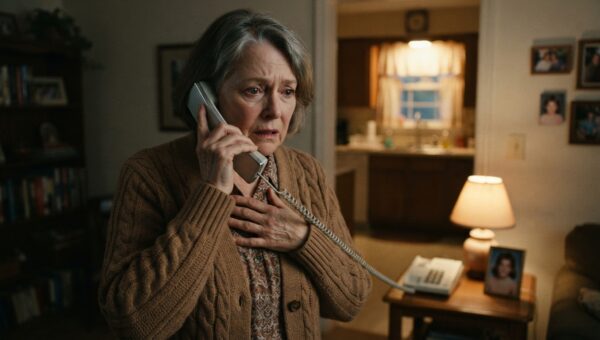
My thumb was halfway across the screen of my phone, hovering over the dismiss button, when the harsh buzz of the second ring rattled against the laminate kitchen counter. The emergency room smelled of rubbing alcohol and cold zinc when I finally dropped the receiver back onto its cradle and hurried out to the driveway. My daughter Monica was fifteen, quiet, and the kind of kid who would rather eat lunch alone behind the gymnasium than argue with a cashier over a wrong order.
When I got to the hospital, the school nurse handed me a clipboard with a notched corner and told me Monica had taken a bad spill on the concrete stairs between third and fourth periods. The school administration called it an awkward misstep, a clumsy tumble down twelve steps that left my girl with a fiberglass cast stretching all the way up her left thigh.
We spent the next seven days in the quiet hum of our living room. Monica sat propped up on three pillows with her leg elevated on a gray wool ottoman, staring blankly at her algebra textbook while the afternoon sun crawled across the hardwood floor. I brought her chicken soup and ginger ale, trying to fill the dead air with cheerful talk about what movie we might watch once the swelling went down. She just nodded, her eyes fixed on the pages, giving me those short, clipped answers teenagers use when they want you to go away.
I figured she was just embarrassed about falling in front of half the sophomore class. Kids at that age treat clumsiness like a fatal disease, and I wanted to give her space to lick her wounds without making a big production out of it.
Then came the Friday afternoon a week later when the doorbell rang twice in rapid succession. I wiped my hands on a dish towel and opened the front door to find three of Monica’s classmates standing awkwardly on the porch holding a large poster board covered in multicolored signatures and crude hand-drawn smiley faces. They were nice enough kids on the surface, stepping back politely as I took the cardboard card and thanked them for coming by to check on their classmate. Two of them waved toward the front window and trotted down the concrete steps toward the street, laughing about some inside joke before they even reached the sidewalk.
But Oliver stayed behind. He jammed his hands deep into the pockets of his oversized canvas jacket and stared hard at the grain of our wooden porch boards.
I noticed his hesitation right away because he didn’t turn around with the others, his shoulders hunched against the damp autumn wind. He looked up, his eyes darting toward the front window before he leaned in close enough for me to smell the damp wool of his coat. I think you should know what really happened, he whispered. They are calling it an accident because no teacher was standing in the stairwell when it happened. He swallowed hard, his Adam apple bobbing once before he forced the rest of the words out. Three girls had been cornering Monica between lockers for weeks, and on the stairs during third period, one of them shoved her backpack hard from behind while the others laughed. She lost her footing completely and went down the flight sideways.
The front door stayed open a fraction too long, letting a cold draft sweep across the entryway while my brain tried to process what he had just told me. Oliver didn’t wait for me to ask questions, just mumbled something about having to catch up with his friends and bolted down the stairs, his sneakers crunching loudly against the gravel driveway. I stood there holding that heavy cardboard get-well card with its bright neon markers, feeling a slow, heavy drop in my stomach that had nothing to do with medical bills or missed homework assignments. I walked slowly back into the living room where Monica was staring at the television with the sound turned down low. I sat down on the edge of the ottoman, careful not to jostle her cast, and asked her straight out why she hadn’t mentioned the girls on the stairs. She didn’t look at me for a long time, her fingers picking nervously at the frayed fringe of the sofa throw blanket. I didn’t want to make it worse, she whispered, her voice so thin I almost missed it. If I told you or the principal, they would have just called me a snitch, and the hallway would have gotten twice as loud by Monday morning.
That quiet confession broke something inside me, replacing my usual cautious patience with a cold, hard anger that tasted like copper in my mouth. I didn’t sleep well that Friday night, turning over every detail in my head while the digital clock on the nightstand clicked past three in the morning. By Monday at 7:45 AM, I was standing inside the main office of Lincoln High School before the custodial staff had even finished wet-mopping the front linoleum. Vice Principal Miller looked up from his stack of attendance reports with a practiced, weary expression that clearly telegraphed he had thirty other crises waiting for him before first period. He adjusted his wire-rimmed glasses and gave me a polite, patronizing smile that told me he expected a routine parent complaint about cafeteria food or locker assignments. I told him straight out that his office report about an accidental stairwell slip was a lie, and that three specific students had deliberately shoved my daughter down a flight of concrete stairs.
Mr. Miller leaned back in his leather chair, the springs groaning under his weight as he tried to smooth over the tension with soothing administrative language. Parents are often protective after a bad fall, he said, his voice dropping into that irritatingly calm register school administrators use when they want you to go away. The stairs are slick during morning transit, and without an eyewitness or a direct report from a faculty member, we have to rely on the standard incident log. I slammed my hand down on the edge of his mahogany desk, hard enough to make his coffee cup rattle against its saucer. I told him I had a named student witness standing outside who saw the backpack get shoved, and I wanted those hallway cameras reviewed before the weekly data overwrite wiped the hard drives clean. The vice principal stared at me for three long seconds, realizing I wasn’t going to let him dismiss this with a polite memo and a pat on the shoulder. He finally stood up, muttered something about checking technical access, and gestured for me to follow him down the fluorescent-lit corridor toward the security office.
The security room smelled of hot electronics and stale air conditioning, small and windowless with banks of monitors glowing against the back wall. The technician on duty, a quiet man named Greg with ink stains on his knuckles, tapped a few keys and brought up camera angle twelve facing the north stairwell from eleven days prior. We watched the timestamp tick upward in white digital letters toward 10:14 AM, right between third and fourth periods when the hall was choked with students moving between classes. At first, all we saw was the usual press of backpacks and blue jeans, a chaotic blur of teenagers shifting against the concrete block walls. Then Monica appeared near the top landing, walking alone with her head down, carrying a heavy canvas tote bag over her left shoulder. Three girls in identical varsity letter jackets drifted in right behind her like shadows, whispering and glancing sideways at one another with sharp, cruel grins.
The screen didn’t capture any audio, but the physical reality of the footage was worse than anything Oliver had described on the porch. The tallest girl, a sophomore named Chloe whose mother headed the booster club, reached out with both hands and gave Monica’s backpack a vicious, deliberate heave forward. Monica’s arms pinwheeled wildly as her feet went out from under her, and she vanished over the edge of the top step in a tangle of limbs and flying papers. The three girls didn’t stop to look, didn’t gasp or reach out a hand; they simply stepped around her flailing body, laughing behind their hands as they continued down toward the cafeteria. Mr. Miller stood entirely motionless beside the desk, the blue light from the monitor reflecting off his glasses as the final frame of the recording played out in total silence. He didn’t look at me for a long time, his mouth opening slightly before he cleared his throat and muttered that he would need to copy the file for the disciplinary committee immediately.
The administrative fallout came fast once the digital evidence was locked down and placed on the superintendent’s desk. Chloe and her two friends were given immediate out-of-school suspensions pending a formal expulsion hearing, and the district issued a formal written correction regarding the original misreported stairwell incident. Parent emails started circulating through the community groups, and the school board held an emergency session where they finally admitted that hallway monitoring during shift changes had been dangerously inadequate. By the following month, the district introduced a mandatory anti-bullying protocol that included permanent hallway proctors and secure digital reporting terminals where students could log complaints anonymously without fear of retaliation. The school’s public relations attempt to minimize the injury dissolved completely under the weight of the undeniable video proof, forcing the administration to prioritize student safety over institutional reputation.
The physical healing took months of tedious physical therapy, watching Monica flex her ankle against a resistance band while the muscles in her left calf slowly regained their strength. What took much longer was helping her unlearn the quiet terror that speaking up would only make her life worse. We sat at the kitchen table late one evening after her cast finally came off, going over her school schedule for the return date next semester. She looked down at her hands, her fingers tracing the edge of the smooth wooden tabletop where the old scratch marks from her childhood art projects were still visible. I told her that she didn’t have to carry anyone else’s secrets anymore, and that protecting herself wasn’t causing trouble, it was simply claiming the space she deserved to take up in the world. She looked up at me then, her eyes clear and steady in a way I hadn’t seen since she started high school.
Six months after the phone call from the emergency room, I watched from the kitchen window as Monica walked down our driveway toward the school bus on a crisp Tuesday morning. She walked without crutches, her shoulders back and her head held high as she crossed the gravel without shrinking away from the neighbors walking their dogs along the curb. She didn’t look back at the house as she reached the corner, stepping forward into the morning sunlight with a quiet, steady assurance that nobody would ever push her down again.