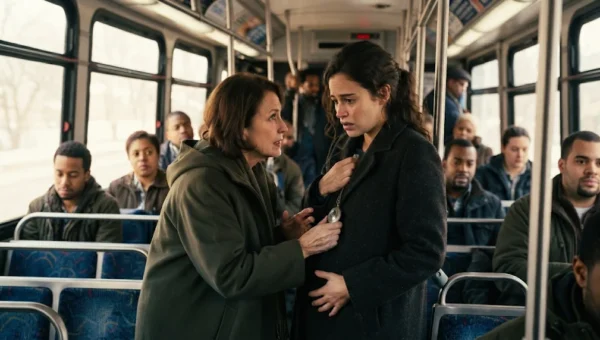
“He had not bought the restaurant. He had taken it.”
That was what Clara said to me right there in the narrow hallway beside the walk-in cooler, her voice barely carrying over the hum of the compressor. I was standing in the middle of a dining room I no longer recognized, surrounded by light-wood tables and linen-less tops where red vinyl booths had stood for fifty years.
My son, Tyler, had told me during Sunday pot roast three months ago that the old place was dying. He told me the neighborhood demographics had shifted, that the lunch crowd wanted avocado toast and espresso instead of meatloaf and iced tea, and that Dad’s name on the shingle was dragging the property value down into the dirt.
I believed him because he was my only boy, and because he wore pressed shirts and carried himself with the kind of smooth confidence his grandfather never possessed. Amos had built that restaurant piece by piece back in 1974, hammering every booth frame with calloused hands that smelled of raw onions and wood glue. When Amos passed away, leaving the deed split between me and Tyler’s college fund trust, I thought the roof was secure. I thought keeping the family in the business meant letting the next generation steer the ship when the compass started spinning.
Instead, Tyler had engineered a neat little shell corporation, sliding transfer permissions into a stack of municipal compliance forms while I was half-blind with exhaustion after my cataract surgery. He told me the lawyer needed my signature on page four for the health department variance. I signed it in good faith, leaning over the Formica counter in my kitchen while the morning sun hit the sugar bowl Amos had thrown on a pottery wheel in Vermont.
The text message came at 8:42 on a Tuesday morning while I was scrubbing grease off the lint trap in my dryer. It was a single photograph from Clara, who had worked our line for twenty-four years, wrapping pie crusts with lard and flour before her knuckles swelled up with arthritis. The picture showed a sleek, minimalist wooden sign mounted above the front doors where the heavy iron scrollwork used to hang. The letters burned into the birch read Tyler’s Tavern.
Not Amos’s Place. Not even our family name. Just his, stamped in bold modern sans-serif like a corporate franchise opening in an airport terminal.
I didn’t call him right away. I didn’t scream into my phone or throw a ceramic mug against the refrigerator. I just put my sneakers on, walked out to my old Buick, and drove the twelve miles down into town with my hands locked at ten and two on the steering wheel until my thumbs went numb.
The dining room smelled different when I walked in during the lunch rush. It didn’t smell like rendered bacon and fifty-year-old seasoning iron. It smelled like expensive truffle oil and bleach. A hostess with a silver nose ring and an oversized denim apron blocked my path before I could make it past the host stand.
“Do you have a reservation, ma’am? We are booked out through the afternoon,” she said, her voice dripping with the practiced sweetness of someone who thought thirty-five was ancient history.
I looked past her shoulder toward the kitchen swinging doors. “I’m looking for Clara.
She’s been here since the linoleum was laid. Go tell her Martha is at the front.”
Before the girl could draw breath to argue, the kitchen door pushed open and Clara stepped out carrying a tray of small-plate sliders that looked nothing like the half-pound burgers Amos used to flip on the flat-top. She took one look at my face, set the tray down on the nearest empty table without a word, and walked straight past the hostess.
“Back office,” Clara muttered under her breath, her eyes darting toward the hallway. “The lock’s been changed, but he left the spare key hanging behind the ledger shelf where Amos always put it.”
I didn’t wait for permission. I walked back through the swinging door, past two young line cooks who didn’t even look up from their squeeze bottles, and pushed open the heavy oak door to the back office. The room was smaller than I remembered, choked with boxes of modern POS terminals and cases of imported craft beer. The old metal filing cabinet Amos had dragged up from the basement in the eighties sat in the corner, and sure enough, hanging from a brass cup hook behind the ledger shelf was the small brass key with the notched top.
It took three tries to get the brass key to turn in the rusted drawer lock. The drawer slid open with a sharp metallic screech that made my teeth ache. Inside sat a thick red vinyl binder, identical to the ones Amos used to keep his daily receipts and payroll ledgers in, but this one was brand new, the spine uncracked and stiff.
I flipped the cover open with a trembling finger. Right there on the first page, under a notarized asset transfer agreement dated three months prior, was Tyler’s signature, looping and bold, alongside a corporate buyout clause I had never seen before in my life. He hadn’t just taken over management. He had bought me out for one lump sum of zero dollars, categorizing my ownership share as a voluntary dissolution of family trust assets due to medical incapacity.
That was when Clara stepped into the doorway, wiping her flour-dusted hands on her apron.
“He told the new buyer you were moving into an assisted living home, Martha,” Clara whispered, her voice shaking with a rage that matched my own. “He told him you didn’t have the stomach for the debt anymore. And that’s not even the worst part. Look at the back pocket of that binder.”
I reached inside the rear sleeve of the red binder and pulled out a stapled stack of laminated index cards. My throat tightened until I couldn’t swallow. They were Amos’s handwritten recipe cards, the ones with the grease-stained corners and the little notes in the margins about oven temperatures on rainy days. The spice rub for the brisket, the sourdough starter proportions he had brought back from his uncle’s bakery in Chicago, the secret base for our signature chili that people drove from three counties away to taste. Every single one of them had been photocopied, laminated, and distributed to the new kitchen staff as proprietary intellectual property belonging to Tyler’s hospitality group.
“He sold the recipes, Clara?” I asked, my voice barely audible over the hum of the office ventilation fan.
“He sold the whole package,” Clara said, leaning against the doorframe. “And he brought the new owner in last week. A fellow from the city named Julian. Let me tell you what he told Julian about why your dad left this place back in ninety-two.”
Before she could finish, the office door swung open wider, and a tall man in a tailored gray vest stepped into the room, holding a clipboard. He stopped dead when he saw me standing by the open filing cabinet with Amos’s ledger in my hand.
“Can I help you?” Julian asked, his brow furrowing as he looked from my face down to the red binder. “This is a private administrative area. Are you with the health inspector?”
I didn’t answer right away. I just looked at him, taking in the expensive watch on his wrist and the way his hair was gelled back into a neat, modern fade.
“You’re Julian,” I said, my voice dropping into the register Amos used to use when a supplier tried to short us on grade-A beef. “You’re the one who bought Amos’s Place.”
Julian blinked, shifting his weight from one foot to the other. “Well, I purchased the assets from Tyler. We’re rebranding as a modern farm-to-table gastro-pub. Though, to be honest with you, your son told me a rather tragic story about why the original founder, Amos, walked away from the stove all those years ago.”
My chest went cold. “What did Tyler tell you?”
Julian adjusted his collar, looking slightly uncomfortable under my gaze. “He said… well, he said Amos didn’t retire by choice. He said Amos drank away the original capital, lost the lease on the building next door, and left the family in such financial ruin that your mother had to pay off his debts by selling off half the property. He said he was rescuing the family name from embarrassment by wiping the slate clean.”
The silence in that small back office was heavier than any grief I had carried since Amos was lowered into the red clay behind the Baptist church. Amos hadn’t lost the lease. He had sold the adjacent lot to pay for Tyler’s private school tuition when the boy got kicked out of public seventh grade for fighting. He had worked seventeen-hour days until his knees gave out just so Tyler could go to college and learn how to wear a tailored vest and look people in the eye while he lied to them.
“My husband didn’t drink away a damn thing,” I said, my voice rising until the two line cooks outside the door stopped rattling their pans. “He broke his back on that line so my son wouldn’t have to carry a fifty-pound sack of flour before dawn. And my son just traded his grandfather’s grave for a down payment on a trendy downtown loft.”
Julian stared at me, his mouth opening slightly as the pieces started clicking together behind his eyes. He looked down at the red binder in my hands, then back to Clara’s set jaw in the doorway.
“He told me the transfer was entirely clean,” Julian said, his voice dropping an octave. “He showed me signed releases from every member of the primary trust.”
“He forged my signature on the incapacity clause, and he left out the reversionary rights clause that Amos drafted into the original 1974 deed,” I said, snapping the red binder shut with a sound like a pistol shot. “Which means this building, these recipes, and every square inch of that dining room still belong to the Amos estate. And right now, the executor of that estate is standing in your back office.”
Julian didn’t argue. He didn’t puff out his chest or threaten to call the police. He just laid his clipboard down on the corner of a cardboard box, rubbed the back of his neck, and let out a long, slow breath.
“If those reversionary rights are valid,” Julian said quietly, “then I’ve been sold stolen property.”
“You have,” I said. “And you can either pack up your truffle oil and your modern signage by sundown, or you can sit right there while I call my brother’s firm downtown and let them explain to you what wire fraud and forgery mean in the state of Arizona.”
I left Julian standing in the office with his clipboard and walked out through the dining room without looking at a single customer. Clara walked me all the way to the front door, her hand resting briefly on my shoulder as we stepped out into the bright afternoon glare.
“What are you going to do when he answers his phone, Martha?” she asked softly, shading her eyes against the sun.
“I’m going to invite him to Sunday pot roast,” I said, pulling my car keys from my pocket. “And then I’m going to show him what happens when you try to lock your own mother out of her own kitchen.”
I drove straight to my brother Arthur’s office on Fourth Street, the red vinyl binder sitting on the passenger seat between us like a loaded weapon. Arthur didn’t even look up from his desk when I dropped the heavy book onto his blotter. He just smelled the faint scent of old grease and vinegar rising from the cover, reached for his reading glasses, and asked me which page Tyler had signed first.
We filed the injunction before the dinner rush even started. By 5:00 PM, the county sheriff’s deputy was pinning a temporary restraining order to the front doors of Tyler’s Tavern, halting all business operations pending a forensic audit of the estate transfer.
Tyler called me at 7:15 that evening while I was sitting at my kitchen table with a cold cup of chamomile tea. His voice wasn’t smooth anymore; it was high, cracking at the edges with the raw panic of someone who had just realized his house of cards was made of balsa wood.
“Mom, what did you do?” he shouted through the speakerphone. “Julian called me saying the sheriff shut the doors. Do you have any idea how much money I’ve already sunk into the rebranding? The investors are going to sue me into the ground!”
“Let them,” I said, my voice as steady as the oak table beneath my elbows. “You wanted to wipe the slate clean and start fresh without your grandfather’s shadow hanging over you. Consider your wish granted.”
“Mom, please, we can sit down and talk about this,” he stammered, the polished executive persona dissolving into the whining boy who used to break curfew and expect me to cover for him with his father. “It was just business. Everyone does it. You don’t understand how hard it is out there for my generation.”
“I understand plenty, Tyler,” I said, looking out the kitchen window toward the garage where Amos’s old brass nameplate sat on the workbench, wrapped in an old flannel shirt. “You took your grandfather’s name off the wall. Now you get to find out what it’s like to build something of your own without it.”
I hung up the phone before he could draw another breath, turned the ringer off, and walked out to the garage. I picked up the heavy brass plaque, wiped a speck of sawdust off the polished lettering with my thumb, and carried it inside.
There was a blank space on the mantel right between the wedding photograph of Amos and me and the small ceramic crock our friends gave us when we opened our doors back in seventy-four. I set the heavy brass plate down right in the center, flanked by the closed red folder of forged papers, and finally let myself sit down in the quiet dark of my own living room.