My daughter handed me the graduation program at the entrance and said, “They had to keep the family section small.”
I opened it while people were still finding their seats.
Her name was there. Her husband’s name was there. His parents’ names were there. Under Grandparents, there were four names printed in careful black letters.
Mine was not one of them.
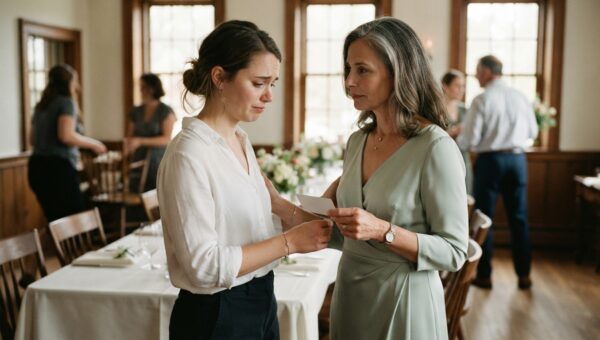
“I am sorry,” Marissa said. “It was just a space issue.”
There were six names on the line. I counted them twice.
“It is all right,” I told her.
That was what I had said for eighteen years whenever the truth was too awkward to put in the middle of a family gathering.
My name is Diane Holt. I am sixty-seven, and the boy walking across that stage was my grandson, Eli.
I did not raise Eli by myself. His mother did that. I have never wanted to take that away from her.
Marissa worked nights when Eli was little. She stocked shelves at a grocery warehouse, then trained as a medical assistant, then moved into a clinic where her schedule changed every few months. She worked hard. She paid bills that scared her. She showed up to parent conferences with coffee in one hand and her phone buzzing in the other.
I know what she did because I saw it.
I also saw the parts she could not do.
I was the one who met Eli at the elementary school when Marissa’s shift ran late. I was the one who sat beside him at the kitchen table while he sounded out words from a book about whales. I learned which teacher liked emails and which teacher needed a phone call. I kept a spare shirt in my hall closet because a child who played outside in April could not always be trusted to come home clean.
None of that made me his mother.
It made me the person who was there.
Eli was ten when Marissa married Patrick. He was a good man in many ways. He fixed things, remembered birthdays and never raised his voice. He also had a way of speaking about the years before him as if they were an embarrassing storage room everybody had agreed not to open.
“We are trying to make a fresh start,” he told me once when I brought Eli home from school.
I looked at the child asleep in the back seat.
“Fresh starts are easier when nobody has to pretend the old life did not happen,” I said.
Patrick smiled politely. Marissa changed the subject.
Over time, the family photographs changed. The early ones stayed in boxes. The new ones showed Marissa, Patrick and Eli in matching shirts at a lake, in front of a Christmas tree, beside a rented cabin where the children slept in bunks.
I took photographs too, but they lived on my phone.
Eli in a paper crown at seven. Eli with a missing front tooth. Eli asleep over a math book at my kitchen table. Eli at fourteen, taller than me, carrying the trash cans because he said my shoulder hurt.
I never asked for a place in the frame.
There were things Marissa did that I never wanted Eli to forget.
When he was twelve, he was suspended for bringing a pocketknife to school. He had found it in Patrick’s truck and forgotten it was in his backpack. Marissa came straight from a night shift and sat beside him in the principal’s office with her hair still tied under a blue cap.
She did not let him blame the pocketknife on anybody else. She also did not let the principal decide he was a bad child because he had made a stupid choice.
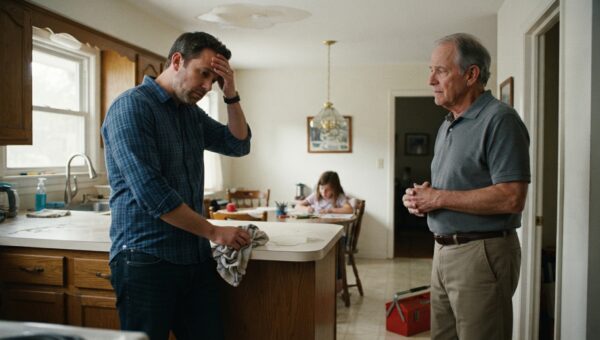
On the drive home, she pulled into my driveway and rested her forehead against the steering wheel.
“I cannot keep arriving after something happens,” she said.
I opened the passenger door.
“You arrived.”
“After the meeting.”
“You were at work.”
“That is not the same as being there.”
I did not tell her that Eli had asked for her before the principal called me. I did not tell her that he had said, “My mom will know what to do,” even though she was still forty minutes away.
Some truths do not need to compete with each other.
Marissa was his mother.
I was the person who filled the hours around her work.
Both facts belonged in the family story.
At the graduation ceremony, Marissa sat between Patrick and his parents. I sat at the end of the row because Eli had saved me a seat with a little folded card that said GRANDMA DIANE in blue marker.
I kept the card in my purse.
When the principal stepped to the microphone, the gym became quiet. The seniors had already been called one by one, and families were beginning to lean forward with their phones raised.
Principal Harris adjusted the papers in front of him.
“Before we close,” he said, “I want to recognize this year’s recipient of the Personal Courage Essay Award.”
Eli turned in his seat.
He looked at me.
I thought he had forgotten something in my car.
“The essay is called ‘The Person Who Taught Me to Stay,'” Principal Harris continued. “It was written by Eli Moreno.”
The applause began before Eli stood. He walked to the stage with his shoulders held too straight, the way he did when he was trying not to cry.
Marissa leaned toward him as he passed.
“What is this?” she whispered.
Eli did not stop.
Principal Harris handed him the microphone.
“I wrote about my grandmother,” Eli said.
The gym settled into a different kind of quiet.
He did not look at the printed program. He looked at me.
“When I was six, I thought people who kept showing up were just doing what everybody did. My grandmother taught me that showing up is a choice. She chose it so many times that I did not understand how difficult it was until I got old enough to notice what she was giving up.”
Marissa’s hand moved to her mouth.
Eli continued.
“She stood at the bus stop with me when it was dark because my mom worked before sunrise. She learned my spelling words even though she said the word ‘necessary’ had too many letters and should be retired. She signed every reading log. She came to the school when I was sick. She did not tell me my mother was failing. She told me my mother was working. Both things can be true.”
I heard someone behind me breathe in sharply.
Eli unfolded another page.
“My grandmother never asked me to choose between the people who loved me. She made room for everyone, even when nobody made room for her. The reason I know how to stay is because she stayed without making me feel guilty for needing her.”
He stopped there.
The applause was loud, but I could not hear all of it. My ears had filled with the sound of the first winter he had waited for the bus in a thin sweatshirt. I had taken my coat off and wrapped it around him. He had complained that I was cold.
I had lied and told him I was not.
When Eli returned to his seat, he did not look at his mother.
Patrick leaned over him.
“Was this submitted for the award?” he asked.
Eli nodded.
“You should have told us.”
“I did not know I needed permission to write about my own life.”
The sentence was quiet, but I heard it.
Marissa turned toward him. Her eyes were wet, and her face was angry in the way people look when they have been hurt by something they know is true.
“That is not fair,” she said.
Eli looked at her. “I did not say you were not there.”
“You did not have to.”
The ceremony ended with caps in the air and families filling the aisles. I waited until the row cleared before standing. Eli found me near the side door, still holding the essay.
“I did not know they would read it,” he said.
“Did you know my name was not in the program?”
He looked down.
That was answer enough.
“I asked them to put you in,” he said. “Mom said the program was for immediate family.”
I watched Marissa across the gym. She was hugging people who had arrived after the ceremony. Her smile looked practiced and tired.
“Your mother worked hard,” I said.
“I know.”
“Do not let anybody turn this into a story where she did nothing.”
“I am not doing that.”
“People will think you are.”
Eli folded the pages. “People think whatever makes them comfortable.”
That sounded like something I would have said. It made me proud and worried at the same time.
Marissa approached us after most of the families had left. Patrick stayed a few steps behind her.
“You could have told me,” she said to Eli.
“About the essay?”
“About all of it.”
Eli looked at me. I shook my head slightly.
“This is between you and your mother,” I said.
Marissa laughed once, without humor.
“It has always been between us. You just made sure he had somewhere else to go when I could not do everything.”
“That is true,” I said.
She looked at me as if she had expected me to defend myself.
“You do not get to say that like it is nothing,” she said.
“I did not say it was nothing.”
“You were there for every important thing, Diane. Every teacher, every scraped knee, every Christmas concert. Do you know what it feels like to be the mother and still feel like you are arriving late to your own child?”
I did not answer quickly.
“No,” I said. “I know what it feels like to be the person who fills the gap. That is not the same thing.”
Her face changed. The anger stayed, but something underneath it loosened.
Patrick stepped forward.
“Nobody is saying you did not help,” he said.
“Help is a small word for eighteen years,” I answered.
He looked away.
Marissa held the program against her chest.
“I was trying to protect him from being pulled backward,” she said.
“From what?”
“From the version of me I was when he was little.”
There it was. Not an accusation against me. A confession about herself.
Marissa had spent years trying to become a woman who did not need her mother. In doing so, she had begun erasing the evidence that she ever had.
“You did not have to erase me to become his mother,” I said.
She looked at the names in the program.
“My parents helped too,” she said.
“I know.”
“They were there when I was at work.”
“Sometimes.”
“You always have to add that word.”
“Because it matters.”
Eli stepped between us.
“Grandma is not asking to be the only one,” he said. “Why are you acting like she is?”
Marissa stared at him.
“Because I am tired of feeling like the bad mother in a story everyone else gets to tell,” she said.
“Then tell your story,” Eli answered. “Do not delete hers.”
No one had anything to say after that.
We went to dinner at a small restaurant near the school. Patrick sat beside Marissa. Eli sat between us and kept his graduation cap on the empty chair until the waiter asked him to move it.
For the first ten minutes, we discussed food.
Then Marissa said, “I did not know about the coat.”
Eli looked at her.
“The bus stop,” she said. “I did not know Mom gave you her coat.”
“You were working,” I said.
“I know I was working. I am saying I did not know.”
I put my hands around my water glass.
“You do not need to know every detail to be his mother,” I said. “But you cannot ask him to forget details because they make you uncomfortable.”
She nodded without looking at me.
After dinner, Eli walked me to my car.
“The college form asks for an emergency contact,” he said.
“Put your mother.”
“I am putting both of you.”
“You can do that?”
“There are two lines. I checked.”
I laughed, and he did too.
Before he left, he handed me the essay.
“Keep it,” he said.
“You should keep your first award.”
“I have it saved. I want you to have the paper one.”
I put it in my purse beside the folded card that said GRANDMA DIANE.
The next week, Marissa came to my house alone. She brought the graduation program, but she did not bring an explanation.
She set it on the table and opened it to the family page.
With a blue pen, she had written my name beneath the printed list.
It was not the same as having it printed there. We both knew that.
“I know this is small,” she said.
“It is not nothing.”
She sat down.
“When I was nineteen, I thought needing help meant I had failed,” she said. “When I was twenty-five, I thought if I did everything myself, nobody could call me a failure. By the time Eli graduated, I had forgotten that you were helping because you loved us, not because I was being judged.”
I did not reach across the table. I wanted to, but I did not want to turn her confession into something she had to comfort me for.
“I should have put your name there,” she said.
“Yes.”
She nodded. “I know.”
“And you should tell Eli the parts of your story that belong to you.”
“I will.”
“Do not ask him to make me smaller so you can feel like a good mother.”
She pressed her lips together.
“I will try.”
That was more honest than a promise.
We did not repair eighteen years in one afternoon. Marissa did not suddenly become comfortable with the way Eli looked at me. I did not suddenly forget the program or the years when she called only after she had made other plans.
But she began asking questions.
What book did he read in third grade? Which song did he play at the spring concert? What did he eat when he was nervous? I answered without making a list of what she had missed.
Eli left for college in August. He put both our names in his phone under Emergency Contacts, then added a note that said, “Call Grandma Diane first if the problem involves food.”
The printed graduation program stayed in my desk drawer. My name was still absent from the official page.
But the essay was there beside it, with a crease down the middle from being carried in my purse.
I had spent years telling myself it was enough to be present even when nobody named what I had done.
That was only partly true.
Being present mattered.
So did being seen.
Eli had not made me the only person who loved him. He had simply refused to let the family story leave me out. And for the first time, neither did his mother.