My husband laughed when I told him I wanted to go back to school.
He didn’t laugh for long. He saw my face and stopped. But the sound had already landed.
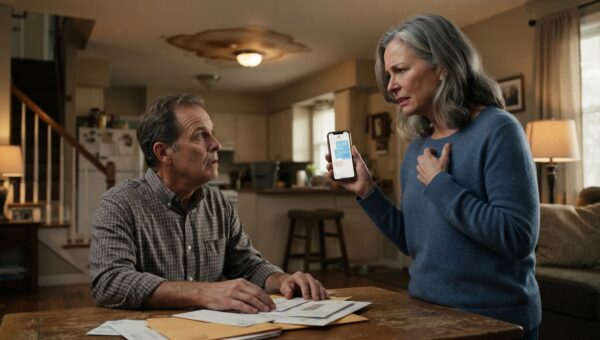
“You’re fifty-eight,” Dale said. “What would you do with a degree?”
I had brought home a brochure from the community college and set it on the table between us. The program was for adults who had completed some college but never finished.
I was three classes short of an associate degree in early childhood education.
“I don’t know what I’d do with it,” I said. “I want to finish.”
Dale leaned back in his chair. “I thought we were going to enjoy retirement.”
I had retired from the elementary school office six months earlier. Dale had been retired for two years. Our daughter lived in another state, and our son had two young children. We had talked about taking trips and fixing up the guest room. We had not talked about what I wanted to do with my own days.
“I can enjoy retirement and take classes,” I said.
“Maybe. I didn’t mean to make fun of you.”
“You did.”
He looked down at the brochure. “I just don’t understand why you’d put yourself through exams now.”
I folded the paper in half. “I’ll think about it.”
I did not think about it for another three months.
I had started college at eighteen. My mother worked nights at a nursing home, and I helped take care of my younger brothers.
I made it through two semesters before I met Dale. We married when I was twenty, and when I had our first child, I dropped out. I told myself I would go back when the children were older.
When they were older, Dale’s father had a stroke. I helped his mother with appointments. Then I started working at the school. I liked the job. I liked the children and their parents. I did not resent any of the choices I had made.
But sometimes I wondered what it would feel like to finish something I had begun.
For years, the school office had been the place where people brought small emergencies. A child lost a mitten. A parent forgot a lunch. A teacher needed help speaking with a family that had just moved to town. I learned how to calm a nervous kindergartner and how to explain a permission slip without making a parent feel foolish.
One afternoon, a first-grade teacher asked whether I had ever considered becoming a classroom aide. “You’re good with the children,” she said. “You know how to make them feel safe.”
I thanked her, then told myself it was too late to start over. Dale had just been promoted to a shift supervisor. We were paying for our son’s braces. My mother needed rides to her appointments. There was always a practical reason to wait.
The truth was that I had grown used to being the person who helped other people complete their days. I was good at it. I could not picture asking for a place in a classroom myself.
When Emma asked why I had not finished school, I told her, “Life got busy.” She said, “It still looks busy now.”
She was right. The difference was that I had stopped waiting for life to become empty before I gave myself permission to do something.
The brochure stayed in a kitchen drawer under takeout menus and coupons. When I opened the drawer for a pair of scissors, I saw the blue cover and closed it again.
In May, my granddaughter Emma asked what I planned to do during the summer.
“I don’t know,” I said. “Maybe take a class at the library.”
“Why not go back to college?”
I laughed. “Your grandpa thinks I’m too old.”
She frowned. “That’s stupid.”
“Your grandpa is not stupid.”
“I didn’t say he was. I said what he said was stupid.”
I did not correct her. She was eleven and had the confidence of a person who had not yet learned to protect grown-ups from the consequences of their words.
That afternoon, I called the college and asked whether the program was still accepting students. The woman on the phone told me classes began in September. I had enough old credits to finish the associate degree in three semesters if I took one course at a time.
I wrote the dates on the calendar.
When Dale noticed, I said I had called the school.
He put down his newspaper. “You’re enrolling?”
“I’m looking at it.”
“Didn’t you say you’d think about it?”
“I did.”
“And?”
“I’m thinking about it.”
He folded the newspaper. “We’ve been talking about going to Vermont in September.”
“We can go in June.”
“You didn’t say anything about the class.”
“I did. You laughed.”
He looked at the kitchen drawer. “I said I didn’t understand. I didn’t mean you couldn’t.”
“It sounded like you thought it was pointless.”
He rubbed his jaw. “I thought we had both worked hard. I thought we were going to have time together.”
“We have time together. I’m not asking to leave.”
He stood and walked to the window. “You’ve been home since January. We’ve eaten breakfast together every morning. We’ve gone to the hardware store, the garden center, and your sister’s house. I thought you liked it.”
“I do like some of it.”
“Some of it?”
“I like you. I like being with you. I also don’t want my whole day to be built around whether you need something done.”
He turned. “I don’t ask you to do anything.”
“You don’t have to ask. I see the dishes. I see the laundry. I hear you say you’re hungry. You put off the doctor because you want me to call. We’ve been married for thirty-eight years. I know how to take care of things before anyone asks.”
“Are you saying I take you for granted?”
“I’m saying I’ve taken myself for granted.”
He sat down again. The silence stretched between us. I expected him to argue. Instead, he looked at the brochure.
“What would the class be?”
“Child development.”
“That’s what you studied before?”
“Yes.”
“You could work at the preschool.”
“I don’t know if I want to work. I want to learn.”
He nodded slowly. “I didn’t realize that was the reason.”
“It’s been the reason for a long time.”
He ran his thumb along the edge of the brochure. “I’m sorry I laughed.”
“Thank you.”
“I don’t want you to think I’m against you doing something.”
“Then ask me why I want to do it before you tell me it doesn’t make sense.”
He looked up. “I can do that.”
I applied the next week. The college accepted my old credits and gave me a schedule. I would take one evening class on Tuesdays and one online course in the spring. It cost more than I expected, but I could pay from the savings we had set aside for home projects. Dale asked to look at the budget with me. This time, he did not treat the numbers as a reason to say no. We decided to delay repainting the guest room.
On the first day of class, I stood in the parking lot and nearly drove home. My hands were sweaty. The other students looked younger, though one woman had gray hair and a toddler seat in the back of her car.
Dale texted me: You can leave if you want. You can stay if you want. I’m proud of you either way.
I read it twice, then walked into the building.
I was older than most of the students. I took notes by hand, and my back hurt by the end of the evening. The instructor asked us to introduce ourselves and explain why we were taking the course. I said I had started a degree years ago and wanted to finish it.
A young man in the back said he was there because his daughter had started kindergarten and he wanted to understand how children learned. I liked that answer.
The first exam went poorly. I had not studied the right chapters, and I got a C-minus. I was embarrassed. At dinner the next night, I told Dale.
“I knew it would be hard,” he said.
“I don’t need you to tell me that.”
“I wasn’t trying to.”
For a few days after that test, I considered withdrawing. I knew the material, but the college website showed a deadline to drop the course without a mark, and it was close. I told myself I had made a foolish choice. Then I thought about the woman with gray hair in the parking lot. She had a toddler seat, a stack of folders, and a look on her face that said she was used to doing difficult things.
I stayed after class and spoke with the instructor. She showed me how to read the exam questions more carefully and suggested I join a study group. I had been embarrassed to ask. The other students were generous. Gloria had already taken a similar course, and a young father named Luis had a knack for remembering the terminology.
The next week, I got a B on a short quiz. It was not a prize. It was proof that one bad exam had not answered the whole question.
Dale asked if I wanted him to come to the library with me while I studied. I said I would rather go alone.
“All right,” he said.
He did not take it personally. He put a sandwich in the refrigerator for me and asked what time I expected to be home. It was a practical kind of support, but it felt different from a joke at the kitchen table. I was not being talked out of the work. I was being trusted to decide how to do it.
“Then what were you trying to say?”
He put down his fork. “I was going to ask whether you wanted help making a study schedule.”
I paused. “That would help.”
He made a calendar with me. We agreed that Tuesday nights were mine, and Wednesday evenings he would make dinner. He was not good at cooking. His first try was baked chicken that had dried out. I thanked him for making it. He ordered pizza the next week and called it a course correction.
We started to live differently. I had a reason to get dressed and leave the house. Dale made his own lunch. He went to the doctor without asking me to arrange it. He learned how to use the washing machine without mixing the dark and light clothes. I was surprised by how much of our routine had depended on me being available.
The class was not easy, but I did well in the next term. I made a friend named Gloria, who was taking courses to become a preschool aide. We studied at the library and compared notes. I began to see that I had not lost my ability to learn. I had lost the habit of believing my interests deserved a place on the calendar.
Dale came to the end-of-year student presentation. I talked about how young children use play to practice problem-solving. I had printed my notes and highlighted the main points. My voice shook at the start, then steadied.
Afterward, Dale waited near the door.
“You sounded like you knew what you were talking about,” he said.
“I did.”
“I’m proud of you.”
“Thank you.”
He hugged me. “I’m sorry I thought retirement meant we had to do everything together.”
I rested my head against his shoulder. “I’m sorry I waited so long to tell you what I wanted.”
“You did tell me.”
“I did.”
“I should have listened.”
“Yes.”
We did not fix thirty-eight years in one conversation. But he began asking what I wanted before he assumed. I began saying no when I meant no. We planned the Vermont trip for the week between terms. Dale brought the map. I chose the stops.
I finished my degree the following spring. My classmates were in their twenties and thirties, and one woman was seventy. We took a picture outside the student center. Dale stood beside me, holding the small bouquet Emma had picked from our garden.
That evening, he made dinner. It was a little salty, and he had cooked the green beans too long. I ate it anyway.
“Are you going to work in a preschool?” he asked.
“Maybe. I want to volunteer first and see what fits.”
He nodded. “That sounds good.”
I put my certificate on the refrigerator beside Emma’s drawing of our family. Dale did not ask how long I planned to keep it there.
The next morning, we had breakfast together. Afterward, he took his coffee to the garage. I opened the community center website and signed up to volunteer in the toddler reading room.
I had not gone back to school to earn a new identity. I had gone back because there was one part of myself I had set aside and never finished listening to.
Dale was still my husband. Retirement was still ours. But my days belonged to me, too.
In October, I began volunteering at the toddler reading room. The first morning, a little boy refused to sit on the rug and hid behind his grandmother’s legs. I remembered how to kneel without crowding him. I let him look at the book from where he stood.
After a few minutes, he came closer. He pointed at a picture of a duck and made a sound that might have been a quack. I laughed, and he laughed back.
When I told Dale about it at dinner, he listened without trying to turn it into a job plan or a reason to apply somewhere else. He asked what book I had read.
“The one with the duck,” I said.
He nodded seriously. “A good choice.”
Then he asked if I wanted to go for a walk after dinner. I said yes. We still shared our evenings. I had simply stopped believing that sharing a life meant giving up the parts that were mine.
The next morning, my course notebook stayed on the table beside Dale’s coffee mug. He moved his newspaper to make room for it. I noticed, and he noticed me noticing. Neither of us needed to say anything.
The following week, I took Emma to the reading room. She sat beside me while I read the duck book to a circle of toddlers. Afterward, she said she liked hearing me talk about school again. I told her I liked having something to tell her. We walked to the car together, both carrying books.
That night, I put the books back in my tote bag and set it by the door. I would use them again the next morning.
Dale filled the kettle while I checked the reading list. We had found a rhythm that left space for both of us.