The morning sun hit the blue laminate of my kitchen counter at exactly seven-fifteen, throwing a long, thin shadow across the white linoleum where I stood scraping burnt toast into the trash. Down the hall, the low, steady hum of the electric drill reminded me that the nursery was still half-finished, a pile of sawdust sitting right where the rocking chair was supposed to go. I had spent three entire weekends sanding that oak rocker down to the grain, oiling it twice with lemon wax until it smelled like a church pew on Easter Sunday. I did not care that my ankles were swollen up like two biscuits or that my back felt like somebody had taken a ball-peen hammer to my lower vertebrae at four in the morning. That room was mine to build.
Then the front door clicked open and the heavy smell of peppermint and stale coffee rolled into the hallway before Brenda even stepped onto the rug. My mother-in-law did not believe in knocking, not since Arthur gave her the spare brass key for emergencies back when we first moved into the brick ranch on Cedar Street. She was carrying a canvas tote bag slung over one arm, her blue raincoat damp from the drizzle outside, her heels clicking sharp and fast against the hardwood. She walked straight past me into the spare bedroom without even hanging up her coat. I heard the muffled scrape of wood sliding across the floorboards, followed by a dry, splintering thud that made my coffee mug rattle against the counter.
I wiped my hands on my dish towel and followed her down the hall, my breath catching short in my throat because I already knew what the empty space by the window looked like. The iron crib we had spent four hours bolting together just last Tuesday was gone, leaving behind four faint scuff marks in the shape of little square feet on the pale blue paint. Brenda was standing right in the middle of the empty patch, brushing a speck of gray dust off the sleeve of her wool sweater like she owned the mortgage and the ground underneath it. She looked me dead in the eye without a flicker of shame, her mouth tightening into that thin, pinched line she always used when she decided I was making a mess of things.
“You need to stop fussing over cheap furniture, Clara,” Brenda said, her voice dropping into that smooth, condescending register that used to make me cry back during my first trimester. “I ordered you a better one. Say thank you.”
I did not raise my voice, and I did not let my hands shake against the sides of my maternity top. I had learned a long time ago, mostly from watching my own father lose every argument he ever started while my mother just stood there with her tea, that shouting only gives people time to change their story. Brenda stood there waiting for the tears, waiting for the cracked voice and the trembling chin so she could tell Arthur that his wife was losing her mind again. I just stared at the empty floorboards where my baby was supposed to sleep in twelve short weeks. The iron crib was gone, but the little square scuff marks stayed right where they were.
“Where is it, Brenda?” I asked, keeping my voice down to the level of a church whisper.
“Downstairs in my trunk,” she lied without missing a beat, though her eyelids fluttered just a fraction of an inch too fast. “Going to the charity yard off Maple. They take old metal frames if you strip the padding. I told Arthur it was an eyesore the minute I walked in here. You have zero eye for quality when your hormones get the better of you, dear.”
She patted my shoulder with a cold, dry hand, the smell of her mints pressing into my nose until my stomach gave a heavy, sour roll. Brenda always called it looking out for us, as if my twenty-nine years of life had somehow left me entirely incapable of buying a metal bed for an infant. Arthur had inherited that exact same habit of talking around me as if I were a piece of furniture he was thinking about trading in for a newer model. I watched her walk back down the hall, her heels clicking out a steady, rhythmic march that signaled she considered the conversation thoroughly closed.
Three hours later, the house was dead quiet except for the hum of the refrigerator and the steady dripping of the kitchen faucet that Arthur still hadn’t fixed despite me asking him four weekends in a row. I was sitting at the kitchen table with my phone flat against the laminate, staring at the little battery icon in the corner while my brain turned over the same three details like stones in a creek bed. Brenda did not drive a car big enough to fit an entire disassembled crib into the trunk without folding the back seats down, and she hadn’t touched her back seats since she hauled three bags of potting soil home back in May. The charity yard off Maple didn’t take metal frames on Tuesdays, either, because their sorting dock was always closed for municipal inspection on the second and fourth weeks of the month.
I unlocked the screen with my thumb and opened up the local marketplace app, the one with the blue icon that half the county used to get rid of old lawnmowers and mismatched dining sets. I typed in iron crib into the search bar, set the distance filter to five miles, and scrolled past three plastic bassinets and a stack of board books until my thumb caught on a picture that made the hair on my arms stand straight up. There it was, sitting on a gravel driveway I recognized instantly by the oil stain shaped like a sideways horseshoe near the left-hand corner: our iron crib, the bolt caps missing from the left front leg, photographed against the side of Arthur’s second cousin’s red pickup truck.
The listing had been posted at eight-thirty that morning, exactly twelve minutes before Brenda unlocked our front door with her emergency key. The asking price was $185 cash only, no delivery, must pick up today before noon. I did not call Arthur, and I did not call Brenda to scream down the line until my throat bled. Instead, I tapped the message seller button, my thumb moving with a cold, mechanical precision that felt like it belonged to somebody else entirely standing behind my shoulder.
“Is this still available?” I typed out, keeping the words neutral and flat. “I can be there in twenty minutes with cash.”
The reply came back almost before I could lay the phone flat on the table, the three little gray dots dancing for half a second before the text popped up in bold black letters. “Yes, ma’am,” the buyer wrote. “Come on by. My husband just dropped it off an hour ago and we need it gone before the rain starts.”
I stared at those words for a long, quiet minute, listening to the grandfather clock in the hall tick off the seconds with a heavy, wooden thud. My husband had not been at the hardware store like he told me when he left for work at seven. He had been standing in our driveway hauling our baby’s bed into the back of a truck while I was upstairs trying to scrape burnt toast out of a skillet. I did not bother replying to the seller, but as I sat there with the screen glowing against my palms, a new notification pinged at the top of the glass. It was a message from a different user profile, somebody named Gary who had messaged the seller about a bassinet and a wooden stroller, asking if the bundle discount still applied to the whole nursery lot.
I tapped on Gary’s profile name, and the app loaded a public seller history page that listed four active ads and eight completed ones over the last three weeks alone. There was our changing table with the chipped corner from where Arthur dropped it moving in. There was the box of newborn clothes my sister mailed from Ohio, still in their plastic wrappers with the tags attached. And right at the top of the sold list, marked down from $120 to $80, was the cedar rocking chair I had spent two whole weekends sanding down to the grain with my own two hands.
The front door swung open at five past six, the latch clicking home with that familiar, heavy thud that used to mean Arthur was home from his desk job at the county sanitation office. He walked into the kitchen carrying a brown paper bag from the deli down on Elm Street, his tie loosened around his neck and his hair slightly damp from the evening mist. He looked tired in that particular way men look when they have spent all day lying to people and are finally hoping for a soft place to land where nobody asks any hard questions. He dropped his keys into the ceramic bowl by the door and smiled that wide, easy grin that used to make me feel like I was the only person in the county who mattered.
“Hey, honey,” Arthur said, tossing the deli bag onto the kitchen table right beside my phone, which was lying face up with the marketplace screen still lit. “Traffic on Route Four was an absolute nightmare. I swear they’re paving that stretch with molasses.”
I didn’t move an inch. I didn’t stand up to kiss his cheek like I usually did, and I didn’t reach into the paper bag to see if he remembered to get the turkey on rye without the heavy mustard. I just reached out one finger and tapped the screen so the photo of our iron crib sitting in the gravel driveway came back up to full brightness. Arthur stopped dead halfway across the linoleum, his left hand still hovering over the strap of his leather work bag like he had been caught halfway through a magic trick.
“What’s that?” he asked, his voice pitching up just a half-step higher than normal as he tried to peer down at the glass.
“Your mother told me she took it to the charity yard on Maple,” I said, my voice sounding flat and distant, like I was talking to a stranger across a counter at the post office. “She said the metal frames were too old for a modern baby. But the lady who bought it said you dropped it off yourself at eight o’clock this morning before you went to work.”
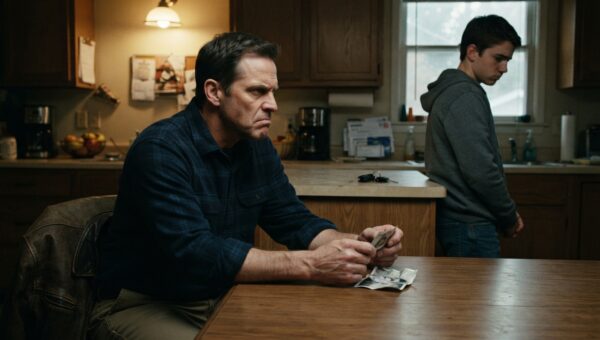
Arthur’s face didn’t go white like it does in the movies, and he didn’t drop his keys or start stammering about a misunderstanding. He just let out a long, slow breath through his nose, his shoulders dropping two inches as if the weight of whatever he had been carrying for the last six months had finally hit the floor all at once. He pulled out the wooden kitchen chair opposite me, the legs scraping harsh against the linoleum, and sat down without taking off his coat. He looked down at his hands, his knuckles red and raw from whatever stress had been eating him alive behind my back since the spring.
“We were behind on the truck payment, Clara,” Arthur said, his voice dropping into a low, rumbling mumble that barely carried over the hum of the refrigerator. “And the tax assessment on the back acre came in three hundred dollars higher than we budgeted. If I didn’t clear out some of the excess inventory before the quarter ended, the credit union was going to slap a lien on my wages.”
“You sold the crib,” I said, repeating the words back to him as if I were trying to teach them to a slow child. “You sold our baby’s bed to a stranger on the internet while I was sitting upstairs making breakfast.”
“I was going to replace it,” he said, his eyes finally lifting to meet mine, desperate and watery around the edges in a way that used to break my heart every single time. “Mom agreed to front the cash for a new one once my tax refund cleared in July. It was just temporary storage, Clara. I swear to God I didn’t mean for you to find out this way.”
I didn’t scream, and I didn’t throw the deli bag at his head or start breaking the ceramic mugs we got for our wedding four years ago. I just reached over and slid my phone across the smooth blue laminate until it rested right against his knuckles, displaying the active list of every single nursery item he had liquidated over the last three weeks. There was the changing table, the stroller, the bassinet, and the cedar rocking chair I had spent two whole weekends oiling with lemon wax until it smelled like a church. He stared at the little green sold icons like they were snakes coiled up on the table waiting to strike.
“You didn’t just sell the furniture, Arthur,” I said quietly, my hand resting flat and steady over my stomach. “You sold the space we made. And you let your mother walk into my house and lie to my face while you waited for me to be too tired to check.”
He didn’t have an answer for that because there wasn’t one left in the room that wouldn’t sound like trash. He sat there staring at the table while the refrigerator hummed its heavy, mechanical song against the wall, the silence between us stretching out until it felt thicker than any argument we had ever had in our lives. I stood up slowly, my lower back aching with a sharp, familiar pinch, and walked past him down the hall without looking back to see if he was following me. My go-bag was already sitting zipped in the hall closet beside the winter coats, packed with three changes of comfortable clothes and the blue folder containing my birth certificate and my savings account statements from before the marriage.
I carried it out to the front porch and set it beside the screen door, listening to the light evening drizzle pattering against the plastic roof tiles above my head. Brenda’s spare brass key was sitting right where she always dropped it, tucked inside the hollow belly of the cast-iron frog beside the porch steps where my father had put it the summer he built the deck. I picked it up with two fingers, walked inside, and laid it right on the center of the kitchen table beside Arthur’s car keys without saying another word.
“You can stay here and figure out how to pay back the credit union,” I told him as I pulled my raincoat off the brass hook by the door. “I’m going to my sister’s place in Lansing until you clear your name off the deed and the joint accounts are split down the middle. Don’t call my phone unless it’s about the lawyer.”
The following afternoon, the sun broke through the gray lake clouds just as a delivery truck pulled up our gravel drive and parked by the side porch. I was sitting on the front steps of my sister’s rental house with a cup of cold tea when the driver hopped down from the cab and hauled a heavy cardboard carton out of the bed, setting it down with a solid, reassuring thud right on the welcome mat. I didn’t wait for Arthur, and I didn’t ask Brenda for permission or help from anyone else in that county. I spent two hours on the back patio with a socket wrench and a tube of wood glue, tightening every single bolt myself until the new maple frame stood solid and square against the wall. When the last screw was locked down tight, I wiped the sawdust off my palms, walked over to the front door, and turned the deadbolt twice until the brass tongue seated itself deep into the iron frame.