Five years is a long time to stay mad at a ghost. That is the thought that kept running through my head as I pulled another yellow plastic garbage bag from the box under Daniel’s kitchen sink and tied it off with a double knot.
The apartment smelled like stale instant coffee and the kind of laundry detergent you buy in bulk at the discount barn down by the river. It was the same smell it had carried every Sunday afternoon I went over there to drop off a casserole dish or fold his work shirts, except now there was a thin layer of gray dust settling over everything because he had not been through that front door since Tuesday night.
Daniel was thirty-four when his heart decided to stop working while he was standing in his hallway trying to lace his work boots. The paramedics told me it was an electrical failure, some hidden quirk in his chest wall that nobody knew was there, not even him. Just a short circuit in the wiring and he was gone before he hit the linoleum.
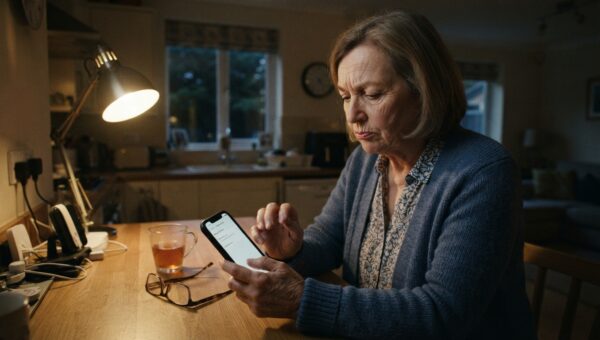
I had been sitting in my own kitchen when the county coroner called me at 6:15 in the morning, right around the time I usually put the kettle on for my first cup of black tea. You do not expect to outlive your children, especially not the steady one, the boy who stayed behind in our mill town while everyone else packed up and moved south for the warehouse jobs.
Chloe had not spoken to her brother since June 14th, five years ago. That was the day of her wedding at the little Methodist chapel over on 4th Street, the one with the drafty wooden pews and the stained glass window of the fisherman that always looked a little cross-eyed in the afternoon light.
Daniel had called her at 7:00 in the morning that day to say a pump had blown out at the water treatment plant where he worked as a shift supervisor, and that corporate had him chained to the console until midnight. Chloe had screamed right down the line until the plastic casing rattled. She told him he was dead to her, that if he could not take four hours off to watch his only sister sign her name in a ledger, he should not bother calling her ever again when things went wrong.
Daniel had taken it. He did not yell back. He just stayed quiet until she slammed the receiver down, and then he spent the next five years living three miles away from her house, watching her car drive past the grocery store window without ever turning his head to look.
I stayed neutral because that is what mothers in our county are supposed to do when their children draw a line in the dirt and refuse to cross it. I went to Chloe’s baby shower for her little girl, and I went to Daniel’s birthday dinners where he ate pot roast by himself off a blue stoneware plate, and I pretended I did not feel the draft blowing right through the middle of our family.
It was Wednesday afternoon when I finally worked up the nerve to clear out the small pine desk in Daniel’s bedroom. The drawers were packed just the way he lived his life, neat stacks of utility bills and service manuals for pumps that had been out of production since the Reagan administration.
Behind the false bottom of the lower drawer, tucked underneath a stack of old high school track ribbons, was a square envelope made of heavy linen paper that did not belong in that house. It was thick enough that you could tell it had not been through the postal service, and across the front, written in Daniel’s tall, upright printing that looked like architectural drafting, was Chloe’s married name.
I didn’t open it right there in the dust. My fingers felt stiff, like they belonged to someone else, and my heart was beating a little too hard against my ribs.
I carried the envelope out to the kitchen, set it down next to the cold drip coffee maker, and pulled my cell phone off the counter charger. My thumb shook twice before I got the digits right for Chloe’s number.
She picked up on the third ring, her voice clipped and busy with the sound of a toddler banging a wooden spoon against a high chair tray in the background. “Mom, I told you I can’t do Thursday. Liam has his ear appointment at three and I have to pick up the dry cleaning.”
“You need to drive over to Daniel’s place right now,” I said. My voice didn’t sound like mine. It sounded thin, like dry paper tearing in the wind.
“Oh, for heaven’s sake,” Chloe groaned, and I could hear the exact moment she rolled her eyes clear across town. “If this is about his winter tires again, I told you I’m not paying the disposal fee. Let the landlord deal with them.”
“Chloe, stop,” I said, and the sharp drop in my tone made the noise in her kitchen stop instantly. “I found something in his desk. It has your name on it. You need to get in your car right now.”
“I am not going into that apartment, Mom. You know why.”
“I have proof he didn’t lie to you about the wedding,” I told her, and the words just sat there between us in the wire of the phone line, heavy as an iron skillet.
There was a long stretch of silence where all I heard was the refrigerator humming in Daniel’s quiet kitchen. Then she let out a short, jerky breath that told me her armor had just cracked. “I’ll be there in twenty minutes.”
She arrived in a gray sedan with a dented passenger door, her hair pulled back into a messy clip and her face pale underneath the freckles she got from her grandmother. She didn’t look at me when she pushed the front door open; she just stood in the hallway with her arms crossed tight over her chest like she was bracing for a cold wind.
“Well?” she said, her voice shaking just enough to give her away. “Where is it?”
I didn’t answer with words. I just walked over to the Formica table and laid out the three things I had pulled from that linen envelope.
First was an airline ticket from a regional carrier, dated five years ago to the exact Saturday of her wedding, showing a one-way flight out of the county airport to a specialist clinic in Philadelphia that left at 11:15 in the morning.
Second was a faded white plastic hospital wristband, yellowed around the edges where the adhesive had dried out, stamped with Daniel’s full name and a time-of-admission entry that read 8:42 A.M.
Third was the letter.
Chloe walked over to the table slowly, her sneakers making a soft squeaking sound on the linoleum. She picked up the plastic wristband first. She turned it over once in her palm, her fingers tracing the tiny raised letters of the hospital ID number like she was trying to read Braille in the dark.
“What is this?” she whispered. Her eyes were wide now, fixed on the little strip of plastic. “He told me he was at the plant. He told me the main pump blew out.”
“He lied,” I said softly.
“Why would he lie about being in the hospital?” She looked up at me, and her face was starting to crumple around the edges, the anger melting away into something much colder and sharper. “If he was sick, why didn’t he call me? It was my wedding day, Mom. He could have told me.”
“Open the letter, Chloe.”
She reached out with a hand that wouldn’t steady and pulled the heavy flap of the envelope open. She slid out two folded sheets of lined notebook paper covered in that same neat, upright handwriting.
She dropped her chin toward the paper, her lips moving silently as she read the opening lines. I watched her shoulders drop about two inches, and then she let out a sound, half gasp and half sob, that made me want to grab her and pull her back twenty years to when they were little kids sharing a box of crackers on the back porch.
“I need you to know why I told Mom it was work,” she read aloud, her voice cracking right down the middle on the words, “and why the man who brought me to the hospital was Arthur.”
The name hung in the quiet room like a dropped dish.
Arthur.
The man who had left us when Chloe was three and Daniel was six, the man whose name was never spoken in our house again after he walked out the screen door with a canvas duffel bag and a greyhound bus ticket to Ohio.
Chloe dropped the paper onto the table as if it had burned her fingers. She backed up two steps until her lower back hit the edge of the kitchen counter. “Arthur? What was Arthur doing here? How did he even know where Daniel lived?”
“Keep reading,” I told her, though my own throat felt like it was lined with dry sand.
She picked the paper back up, her hands shaking so hard the sheets rattled like dry leaves in an autumn gale. She read the rest of it in a low, broken mumble, her eyes jumping from line to line.
Daniel had been standing in his hallway trying to tie his boots when his chest seized up. Not a normal cramp, but the kind of sudden, crushing pressure that makes you drop to your knees before you can even catch your breath. He had dragged himself as far as the front door, trying to reach his phone on the hall table, when someone had pounded on the outside wooden landing and turned the knob.
It was Arthur. He was passing through town on his way back from a drywall job up in Erie, and something, call it bad luck or old ghosts, had made him pull his truck into Daniel’s gravel drive to drop off a box of old family photos he’d found in his mother’s attic.
Arthur had found Daniel lying on the mat, grey-faced and barely breathing. He didn’t wait for an ambulance. He hauled my boy down the wooden stairs, threw him into the passenger seat of his beat-up Ford pickup, and drove eighty miles an hour straight to the emergency room at St. Jude’s, screaming at the nurses until they rolled out the gurney.
When Daniel woke up three hours later with a tube in his arm and an oxygen clip under his nose, the first thing he asked the nurse was what time it was.
It was 10:15. Chloe was already walking down the aisle toward the altar with her father-in-law’s arm linked through hers.
The doctor told Daniel his heart had gone into an erratic rhythm called ventricular tachycardia, and that if he had stayed on that floor another ten minutes without someone shocking him back into place, he wouldn’t have made it to thirty. They told him he needed to catch a flight to Philadelphia the next week for a specialized procedure, and they told him to take it easy for the rest of his natural life.
And Daniel had looked at the doctor, and then he had looked at Arthur sitting in the plastic chair by the door looking older and smaller than he used to, and he made his choice.
He knew what kind of girl Chloe was. If she had known her brother was dying on an operating table fifty miles away while she was saying her vows, she would have walked right out of that chapel in her white dress and sat in a hospital waiting room until her shoes wore out. She would have spent the rest of her life looking at her wedding album and seeing a funeral instead of a beginning.
So Daniel swore Arthur to secrecy. He paid the old man back for the gas money, told him never to come back to this county again, and then he called me from his hospital bed with a steady voice and told me the lie about the water pump.
He spent five years carrying the weight of his sister’s hatred like a sack of wet salt. He watched her from a distance, bought her little girl a tricycle for her third birthday and had the hardware store drop it off anonymously, and kept the unmailed letter locked in his desk because he was always waiting for the right year to tell her the truth.
The year never came.
Chloe slid down the side of the kitchen counter until she was sitting flat on the old linoleum, her knees pulled up to her chest and her face buried in her hands. She wasn’t crying the way she had cried five years ago when she screamed at him down the telephone wire. This was a quiet, ragged sort of grief that came up from the floorboards, slow and heavy and absolute.
“He let me hate him,” she whispered into her knees. “He let me hate him for five whole years.”
I walked over and sat down on the cold floor beside her, sliding my arm around her narrow shoulders. She leaned her head against my collarbone, and for the first time since that wedding day, we felt like the same family again.
The unmailed letter lay open on the table above us, right next to the faded white hospital wristband, catching the last pale slant of the afternoon sun as it slipped down behind the water tower across the railroad tracks. Daniel’s writing looked clear and steady under the light, as if he were still sitting right there across from us, making sure we finally understood the cost of keeping a secret to protect the people you love.