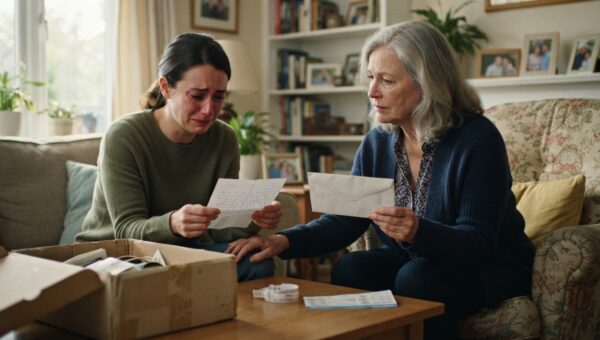
The floorboards in the hallway always creak right by the cedar chest, a little sharp groan that lets you know when the wind is shifting off the creek. I have lived in this house on Mill Street for thirty-four years, ever since Arthur passed and left me with the porch swing he built out of seasoned oak and a mortgage I paid off working double shifts at the county library.
People around here think once a woman hits sixty-five and lives by herself, she turns into a piece of the furniture, quiet and dusty and waiting for someone to move her. Nathan is my only boy, and for a long time I thought he understood how I liked my mornings, slow and empty with just the radio playing old gospel tunes and the smell of chicory coffee floating off the stove. Then came my sixty-sixth birthday in October, and he showed up at my front screen door carrying a small white box with a picture of a little black camera on the front.
He stood right there on the welcome mat, wiping his boots on the coir fibers like he always did, looking so proud of himself. “Ma, you need this,” he said, handing me the box before I even had my apron off. “It links right to your phone.
If anyone comes to the door when you are upstairs or out in the garden, you will see them plain as day. Chloe insisted we get it for you because of the break-ins over on Walnut Avenue.” I kissed his cheek and thanked him because he looked so earnest, his hazel eyes just like his father’s when they were trying to solve some little puzzle. We spent an hour screwing the black plastic box to the brick molding beside the oak front door, downloading the app onto my old phone, and testing the chime until it sounded a cheerful ding through the pantry. I thought it was a sweet gesture from a son who worried too much about his mother rattling around an empty house.
For the first few weeks, the little camera just sat there doing what it was supposed to do, or so I figured. I got alerts when the mail carrier dropped off circulars or when the stray calico cat from next door stalked across the top step.
But then the small things started piling up, the kind of things that make the hair on the back of your neck stand straight up if you pay attention long enough. Nathan would call on a Tuesday afternoon while I was scrubbing the linoleum and say, “Did you end up getting your blood pressure pills, Ma? I noticed you were out around two.” Or he would drop by on a Thursday with a bag of groceries and mention, “I saw Mrs. Gable stopped by for coffee yesterday morning.” I asked him once if he was checking the camera every time it made a noise. He shrugged and told me he only looked when the push alerts came through on his phone during his lunch break at the hardware store. I let it go because Nathan always was a busybody who liked to keep tabs on everyone, inheriting half of that fretful energy from me and the other half from his late uncle Joe.
The shift came on a clear Wednesday evening when I invited Clara over for supper. Clara and I taught third grade together at the consolidated school before they tore it down for the parking lot, and we still like to sit on the back porch when the weather holds, drinking iced tea and talking about people who have been dead for twenty years. We had a pot of white beans simmering on the stove and some cornbread in the cast-iron skillet, and we sat at the kitchen table until past eight o’clock just catching up on who had knee replacements and whose grandchildren were moving to Atlanta. The front porch light stayed on the whole time, casting a warm yellow square right out onto the azalea bushes, and the little camera by the door clicked quietly every time one of us walked past to let Clara out to her Buick. I did not give the camera another thought until the next morning at 7:42, right when I was reaching into the cupboard for my coffee mug.
My phone buzzed against the white laminate counter so hard it rattled the spoon rest. I picked it up, and Nathan’s name flashed across the screen with that little red dot that means he is calling twice back-to-back. When I swiped to answer, he did not even say good morning. “Who was the man here last night, Ma?” he demanded, his voice tight and thin through the little speaker. I stood there with my hand on the cupboard door, my fingers freezing on the smooth wood. “What on earth are you talking about, Nathan?” I asked, keeping my voice level even though my stomach gave a heavy, sickening lurch. “Don’t play games with me,” he snapped back, his breath hissing in the receiver. “I saw him leave at eight o’clock. An older guy with a gray coat. Who is he?” I told him it was none of his business, that I was a grown woman in my own home, and he had no right keeping tabs on my visitors like a suspicious warden. That was when he said the sentence that made the whole kitchen go cold around me. “It is when I’m responsible for you.”
That sentence sat in the room like a dead weight, heavy and sour, long after I hung up the phone on him. “Responsible for you.” Those four words scraped against everything I had built since Arthur died, every year I kept this house repaired, paid the taxes out of my own checking account, and drove through Missouri ice storms without asking a soul for help. Nathan did not talk like that on his own, not unless someone was whispering those exact syllables in his ear while he poured his morning coffee. I set the phone down on the oilcloth table and walked straight over to the front door, staring at the little black plastic box screwed into the brickwork. If he was seeing every visitor and every trip to the pharmacy, it wasn’t because he happened to glance at his phone during a lunch break at the hardware store. It was because he had a window into my front room that I never agreed to open for anyone else.
I sat down at the kitchen table with my glasses pushed up on my forehead and unlocked the phone Nathan had set up for me on my birthday. I tapped on the little gear icon for the doorbell settings, scrolling past my own name and email address until I hit the tab marked shared users and account management. My thumb hovered over the screen for a second while the kitchen clock ticked against the wall, loud as a hammer. There it was, right underneath Nathan’s name, sitting plain as day in neat little digital letters. A secondary administrator account with full access to live feeds, motion history, and chime settings. The email address attached to it did not belong to my son, and it certainly did not belong to my daughter-in-law Chloe, though I would not have been surprised by her fingerprints on it. It belonged to Brenda Vance. Brenda was Chloe’s mother, a woman who lived forty miles away in a brick subdivision with an HOA and a manicured lawn, and who apparently liked to spend her mornings reviewing who walked up my front steps.
The realization hit me not like a sudden lightning strike, but like water slowly rising over the floorboards until your shoes are soaked before you even notice. Chloe had been the one pushing for the doorbell gift from the very beginning, insisting that an old woman living alone needed modern protection. But protection was just a polite word for control, for keeping an eye on the assets and the routines of an aging mother-in-law to make sure I wasn’t doing anything that might upset their quiet little calculations about the property or my independence. Brenda wasn’t just checking in; she was logging my life like an auditor taking inventory of a failing store. Every visitor, every grocery run, every quiet evening on the porch with Clara had been filtered through Brenda’s living room tablet while she sat in her plush armchair drinking her morning decaf. I did not yell, and I did not pace the floor. I just felt a very cold, very clear resolve settle right into my bones.
I sat there at that table for twenty minutes, tapping the small red buttons on the phone screen with deliberate, steady strokes. First I clicked on Brenda Vance’s email address and hit the option to remove user permissions, watching the little spinning wheel turn twice before her name vanished from the list entirely. Then I did the same to Nathan’s access, stripping away the live feed and the motion alerts down to the bare metal, leaving the device registered to my sole account and nothing else. I walked over to the front door, unclipped the plastic housing from its mounting plate, pulled out the rechargeable battery pack with a firm click, and carried the whole apparatus back to the kitchen counter. I did not throw it away, and I did not smash it against the floor like they do in the picture shows. I simply opened the bottom drawer of the pantry where I keep the old twine, the spare lightbulbs, and the battery charger, and dropped the black plastic box right down among the dust and the forgotten receipts.
Nathan came by two days later on a Saturday afternoon, walking up the front path with that tight, defensive set to his jaw that he always got when Chloe had sent him off to fix something he didn’t want to touch. He knocked once on the screen door before pushing it open without waiting for me to answer from the kitchen. “Ma, what did you do to the app?” he asked right away, his voice rattling off the wallpaper in the small hallway. “Brenda said she lost the connection to your front door on Thursday morning. She was worried sick thinking something happened to you.” I stayed right where I was at the kitchen table, folding a linen dish towel into quarters and smoothing the creases with the side of my hand. “Nothing happened to me, Nathan,” I said, looking right up at him through my reading glasses. “Except that I finally got some peace and quiet in my own house.”
He stepped all the way into the kitchen, his face flushing that blotchy pink color he gets when he knows he is in the wrong but wants to roar his way out of it anyway. “Chloe and her mother were just trying to keep an eye out for your safety, Ma,” he said, throwing his hands up toward the ceiling. “Why do you have to make a federal case out of everything? You’re getting older, and people take advantage of women living alone out here.” I folded the last dish towel, placed it neatly on the stack beside the breadbox, and stood up from the chair without hurrying myself at all. “Nathan, if I need someone to watch the front door, I will hire a watchdog or I will look out the window myself,” I told him, keeping my voice lower than his so he had to quiet down just to hear the words. “Your mother-in-law has no business reviewing my visitors while she eats her breakfast forty miles away. That account is gone, and it is not coming back.”
He stood there in the middle of my kitchen, opening and closing his mouth like a fish out of water, realizing that the narrative about his poor, helpless mother had just cracked right down the middle. “She was just worried,” he muttered, his voice dropping an octave as the bluster finally drained out of him. “She cares about you, Ma.” “There is a difference between caring and managing, Nathan,” I said, walking past him toward the hallway to check the deadbolt on the front door. “And you tell Chloe that if she wants to know who is visiting my house, she can drive down here and ask me herself like a decent neighbor.” He didn’t have an answer for that. He lingered by the screen door for another minute, shuffling his boots against the mat, before he muttered something about having to get back to the hardware store and let himself out without another word about the camera.
The house has been wonderfully quiet since that Saturday afternoon, with no little red lights blinking in the hallway and no digital chimes going off when the paper carrier tosses the daily circular onto the concrete. I unplugged the indoor chime module from the pantry outlet, wrapped the white cord around it neatly, and placed it quietly in the back of the drawer beneath the spare rolls of tape. When the afternoon sun slanted through the living room window a few days later, turning the dust motes gold above the arm of Arthur’s old armchair, I sat down with a fresh cup of chicory coffee and watched the blue jays fighting over the suet feeder in the oak tree by the fence. There was no red recording indicator glowing from the doorframe, no invisible eyes watching the gravel drive, and no one keeping score of who came to sit at my table. For the first time in thirty-4 years, the front porch belonged entirely to me, and the only sound in the hallway was the wind off the creek making the old cedar chest groan just enough to let me know the house was still mine.