Grief has a way of making the edges of the world go soft and grey, like smoke hanging low over the Hudson after a damp autumn rain. For the first two months after we buried Mom, I walked through her empty house in Poughkeepsie feeling like I was moving underwater. Every room still smelled faintly of her lavender talcum powder and the peppermint teas she used to brew when her arthritis flared up.
I couldn’t focus on the mail piling up by the front door or the blue utility envelopes that seemed to multiply every time I opened the kitchen drawer. When Clara offered to take over the administrative weight of the estate, I felt an immense wave of gratitude that nearly brought me to my knees.
Clara had always been the organized one, the sister who kept a color-coded calendar on her refrigerator and balanced her checkbook to the penny before online banking made it easy. She sat across from me at Mom’s oval oak table on a Tuesday afternoon in November, her blonde hair pulled back in a neat clip that never seemed to slip. She slid her coffee mug aside and reached for the stack of unopened notices I had left beside the bread box.
“You’re in no shape to look at probate figures right now, Brenda,” Clara said, her voice dropping into that smooth, soothing register she used whenever she wanted to manage a situation. “Let me take the folders, the passwords, and even the small notebook where Mom kept her account numbers. I’ll handle the bills and the final cleanup.”
I didn’t argue because arguing took a kind of energy I simply didn’t possess. I remember nodding and sliding the small black spiral notebook across the smooth wood grain toward her. It had a frayed green elastic band holding the cover shut and contained every routing number Mom had accumulated over forty years of local banking.
“Just let me know if the funeral home balance clears,” I murmured, staring down into the dark dregs of my coffee.
“Don’t worry about a thing,” Clara said, her hand resting briefly and warmly over mine before she gathered the paperwork into a thick canvas tote bag. “My sister said it was an old mistake.”
Looking back, that was the first hairline fracture in the masonry, though I was too dulled by loss to hear the sound it made. She hadn’t even been answering a question when she said it; she had muttered it under her breath while flipping through a stack of medical bills from St. Francis Hospital, as if preemptively brushing away some minor clerical glitch she had already spotted.
At the time, my brain skated right past the phrasing. I assumed she meant some duplicate charge from the ambulance crew or an old subscription Mom had forgotten to cancel.
The months drifted past in a dull blur of changing seasons and empty weekends. Clara sent me occasional text updates with cheerful little emojis, assuring me that the utilities were transferred, the final taxes were being calculated by the CPA in town, and that everything was proceeding according to Mom’s quiet, unassuming wishes. I went back to my job at the community college library, trying to find some anchor in the routine of stamping overdue slips and shelving biographies. I trusted Clara because she was blood, because she was our mother’s eldest daughter, and because the alternative, admitting that my own family might have an agenda, felt far too exhausting to contemplate.
Then came the letter in late May. It arrived on a Thursday morning, thick cream-colored cardstock bearing the embossed letterhead of the Hudson Valley Wildlife Sanctuary.
I tore it open by the front door, expecting a standard receipt for a memorial bench or a small plaque in the botanical gardens. Instead, the letter thanked me with effusive warmth for what it termed a transformative legacy designation, specifically referencing a multi-thousand-dollar quarterly distribution from an individual retirement account ending in figures I recognized as Mom’s primary savings vehicle.
I stood in my hallway for a long moment, the paper trembling slightly between my fingers, trying to reconcile the sanctuary’s gratitude with the fact that Mom had never mentioned any such endowment, nor had Clara ever brought up a wildlife charity during our exhaustive discussions about the estate assets.
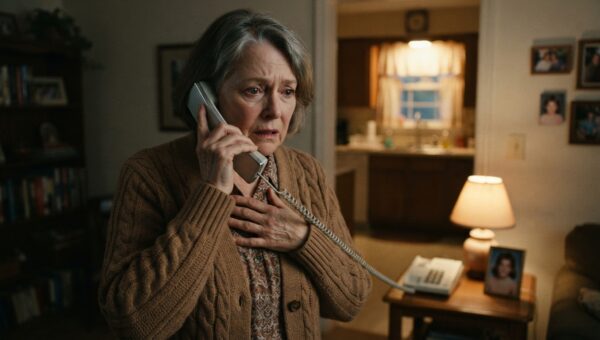
My phone rang before I could even set my car keys down on the entryway table. The caller ID displayed a local area code with a name I didn’t know: Elena Vance.
I swiped the screen and pressed the phone to my ear, my chest tightening with a sudden, cold premonition. “Hello?”
“Is this Brenda Miller?” a crisp, professional voice asked. “My name is Elena Vance. I’m the executive director over at the sanctuary. I’m calling because we received our second scheduled transfer from your late mother’s account, but our compliance officer flagged something unusual in the paperwork trail.”
“Unusual?” I repeated, the word tasting like dry metal in my mouth.
“Well, yes,” Elena said, pausing as if hesitant to cause unnecessary friction. “We’re just trying to verify the exact donor profile. The deposits have been coming in regularly over the last six months, but the authorization forms and the associated checking drafts list the primary account holder under a slightly different spelling and an unfamiliar middle name. We wanted to confirm why your mother, Eleanor Vance, was making deposits under the name Eleanor V. Sinclair.”
The silence in my kitchen grew so heavy I could hear the hum of the refrigerator in the corner. Sinclair was our maternal grandmother’s maiden name, a name our mother hadn’t used or mentioned in decades, and certainly not a name that appeared on any valid identification or modern banking profile.
“That’s… that’s not right,” I managed to say, my throat suddenly dry as dust. “My mother’s name was Eleanor Mary Miller. There was no Sinclair.”
“Let me email you the scanned check we received for last month’s distribution,” Elena said gently. “It might help clear up whatever clerical mix-up happened on the bank’s end before we have to audit the transfer trail.”
The email pinged on my phone within thirty seconds while I was still standing by the kitchen counter. I tapped the notification, opened the high-resolution PDF attachment, and zoomed in on the scanned check issued from Mom’s retirement account at the Rhinebeck Savings Bank.
There was the routing number. There was the correct account sequence. But down in the signature field, scrawled in a tight, familiar left-leaning slant that I had seen on grocery lists and birthday cards my entire life, was a name that made my stomach drop into a bottomless well. It wasn’t Mom’s shaky, cursive script from her final months. It wasn’t even a clumsy attempt at forgery by a stranger. It was Clara’s handwriting, executing a careful, deliberate hybrid of our grandmother’s old signature, designed to siphon funds straight past probate oversight and into a separate entity entirely under the radar of the family settlement.
The pieces didn’t fall into place neatly like a movie revelation; they crashed down like jagged shards of plate glass. I stared at the screen until the little blue letters blurred together into meaningless streaks of light. Clara hadn’t taken the folders and the passwords out of sisterly charity or to shield me from the burdens of grief. She had taken them because she needed absolute, unobstructed control over the digital architecture of Mom’s remaining wealth during those critical months when everyone else was looking the other way.
I didn’t call Clara immediately. I spent the next two hours pulling up every bank statement I could find in the bottom drawer of Mom’s desk, cross-referencing the deposit dates with the text messages Clara had sent me during the winter. The cheerful emojis, the updates about the CPA, the reassuring reassurances about how well everything was being managed, they were all part of a quiet, calculated staging.
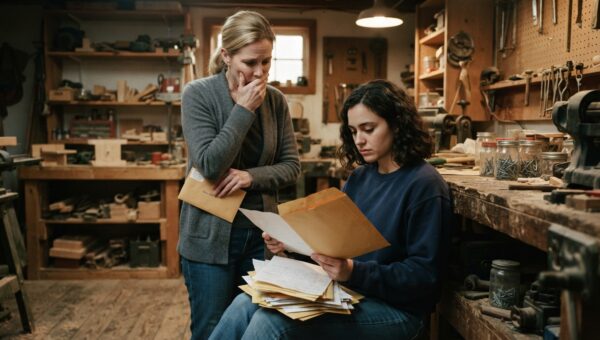
By four o’clock in the afternoon, I had printed out four years of transaction histories and the sanctuary’s scanned check, laying them out in a neat, orderly grid across the oak table where Clara had sat six months earlier. I called her phone and kept my voice remarkably flat when she answered on the third ring.
“Clara,” I said. “I need you to come over to Mom’s house. Right now.”
“Brenda? Is everything okay? I’m right in the middle of making dinner,” Clara replied, her tone carrying that familiar edge of defensive annoyance that she always used when interrupted.
“It’s about the retirement account,” I said. “The one you said was completely settled.”
There was a sharp intake of breath on the other end of the line, followed by a beat of heavy, dead silence. “I’m on my way,” she said, and the line went dead with a click.
She arrived twenty minutes later, striding through the front door with her car keys already jingling in her hand and a tight, rehearsed frown on her face. She took off her jacket and tossed it over the sofa chair, walking into the kitchen as if she were inspecting an employee’s substandard work.
“What is this grand emergency, Brenda? You sounded entirely dramatic on the phone,” Clara said, stepping up to the table before freezing mid-stride as her eyes landed on the printed bank records and the enlarged printout of the scanned check.
“Elena Vance called me this morning,” I said, my voice unnaturally steady as I looked up at her. “From the wildlife sanctuary. She wanted to know why Mom was making deposits under the name Eleanor Sinclair.”
Clara’s face didn’t turn pale, but her jaw tightened so hard I could see the muscle twitch near her ear. She crossed her arms over her chest, the defensive armor snapping instantly into place. “Oh, that. That’s just an old mistake. A clerical error by the bank’s automated processing department that I’ve been meaning to sort out once probate closed.”
“My sister said it was an old mistake.”
The words echoed in the quiet kitchen, but this time they didn’t sound like a casual dismissal. They sounded like what they truly were: a prefabricated lie designed to cover up a six-month financial extraction scheme.
“Don’t lie to me, Clara,” I said, standing up from my chair so we were eye-to-eye across the wood grain. “I have the deposit slips. I have the audit trail from the bank showing your IP address on the online transfer portal. You didn’t make a clerical error. You forged grandmother’s name to route Mom’s retirement funds into a separate holding account while pretending to help me settle the estate.”
Clara stared at me for a long, ugly second, her eyes hardening into cold glass. All the sisterly warmth she had feigned since the funeral vanished, leaving behind only the sharp, entitled stranger she had always been when things didn’t go her way.
“You have no idea what it took to keep this family afloat while you were sitting around crying for three months,” Clara snapped, her voice rising sharply in the small room. “Mom promised me that addition money back when we remodeled my kitchen in Troy. She just never got around to updating the formal paperwork before she went downhill. I was only collecting what was rightfully owed to me before the state and the lawyers took every last dime in taxes.”
“She didn’t promise you a damn thing,” I said, the quiet anger finally breaking through the numbness that had held me for half a year. “And you didn’t just take an addition allowance. You looted her primary survival fund using a dead woman’s maiden name.”
“You can’t prove intent,” she spat back, grabbing her jacket from the sofa chair with a violent jerk. “You’ll look like a bitter, unstable mess if you try to take this to court, and you know it. Enjoy cleaning up the rest of Mom’s house by yourself, because as far as I’m concerned, you’re dead to me.”
She turned on her heel and slammed the front door hard enough to rattle the leaded glass in the hallway cabinet.
I stood alone in the quiet kitchen for a long time as the evening shadows stretched across the floorboards. My hands didn’t shake anymore. The heavy fog that had clung to my shoulders since November finally lifted, replaced by a cold, sharp clarity that felt like breathing crisp winter air.
I walked over to the mahogany desk in the corner, reached into the bottom drawer, and pulled out the small black spiral notebook with the frayed green elastic band that Clara had left behind on the counter during her hurried exit. I laid it squarely in the center of the clean oak table beside a freshly brewed cup of hot tea, letting the silence settle around me like a shield. It wasn’t a symbol of lost control anymore, but the closing of a long, dark chapter, and the quiet, unshakeable beginning of standing on my own two feet.