FULL STORY — PART 2
I took a deep breath, forcing my hands to stop trembling, and began to read the application. I wanted to look at this purely as a banker. I wanted the numbers to justify the sudden, fierce surge of vindication that was rising in my chest.
It didn’t take long to see why David had flagged the file. From a financial standpoint, Mark Harrison’s application was a disaster. His credit score was abysmal, dragged down by a history of late payments and maxed-out credit cards. He had practically no savings left. He was requesting an unsecured personal loan of fifty thousand dollars, but he had absolutely no collateral to offer. He didn’t own his home, and his vehicle was already financed to the limit.
By every metric, rule, and regulation my bank operated under, this was an easy, undeniable rejection.
I leaned back in my chair, staring at the ceiling. Karma was a strange, patient thing. After two decades of carrying the weight of that nickname, of working twice as hard to prove my worth, the universe had placed Mark’s fate directly into my hands. All I had to do was press the heavy red ‘REJECTED’ stamp onto the final page, initial it, and send it back to David. Mark would receive a polite, standard letter in the mail, and I would never have to see his face.
I reached for the red stamp, gripping its wooden handle. It felt heavy and satisfying. But as I pulled the final page toward me, my eyes snagged on a section of the application I hadn’t fully processed yet.
*Purpose of Loan.*
Usually, in the rare cases someone asked for this kind of money, it was to start a risky business, consolidate overwhelming debt, or pay off a legal settlement. But Mark had written only three words in the small rectangular box.
*Daughter’s medical emergency.*
My hand froze over the paper. Frowning, I flipped past the financial disclosures to the back of the file, where a small stack of supporting documents had been stapled together. They weren’t business plans or legal notices. They were medical records.
Mark had an eight-year-old daughter named Lily. According to the letters from a pediatric cardiology unit, Lily had been born with a severe congenital heart defect. For years, it had been managed with medication, but her condition had suddenly deteriorated. She needed emergency, highly specialized open-heart surgery.
The procedure could only be performed by a specific surgical team out of state, and because it was considered an out-of-network, experimental approach, his insurance company had denied the coverage. The hospital required a fifty-thousand-dollar deposit to schedule the life-saving operation.
I stared at a grainy photocopy of Lily’s hospital intake photo. She had pale skin, dark circles under her eyes, and a brave, fragile smile.
The red stamp suddenly felt like a block of ice in my hand. I set it down slowly.
This wasn’t about Mark anymore. It was about an eight-year-old girl who was running out of time. If I denied this loan—which I was completely justified in doing—Mark wouldn’t be the only one paying the price. His daughter would pay for the sins he committed in a high school chemistry class twenty years ago.
I closed the file, the silence of my office pressing in on me. The easy rejection had vanished, replaced by an agonizing moral weight. I picked up my desk phone and pressed the intercom button for my assistant.
“Carol,” I said, my voice remarkably steady. “Please call Mr. Harrison. Tell him the bank president needs to meet with him in person regarding his application. Ask him to come in at three o’clock today.”
FULL STORY — PART 3
At exactly three o’clock, the door to my office opened.
When Mark walked in, I barely recognized him. The arrogant, broad-shouldered boy who had terrorized the school hallways was gone. In his place was a man who looked thoroughly defeated by life. His shoulders slumped beneath a worn, slightly oversized suit jacket. His hair was thinning, and deep lines of exhaustion and chronic stress bracketed his mouth and eyes. He looked like a man who hadn’t slept a full night in months.
I sat behind my large desk, wearing a tailored navy blazer, my hair pulled back into a sleek, professional knot. I had built a life of authority and grace, and as Mark sat down in the leather chair opposite me, it was immediately clear he had no idea who I was. To him, I was just a nameless executive holding the keys to his daughter’s life.
“Thank you for seeing me, ma’am,” he said, his voice rough and quiet. “I know my file looks terrible. I know my credit is bad. I’ve sold everything I can. I’ve emptied my retirement. But my daughter… Lily… she needs this surgery by the end of the month.”
He leaned forward, twisting his hands together in his lap. “I have a steady job. I’ll work double shifts. I will pay you back every single cent, even if it takes me the rest of my life. I’m begging you. Just look at her medical file.”
I looked at him for a long, silent moment. I let the quiet stretch out, filling the space between us, until he began to shift uncomfortably under my gaze.
“I’ve read her medical file, Mr. Harrison,” I said, keeping my tone perfectly measured. “I also read your financial history. You have no collateral, no assets, and a history of default. By all standard banking practices, this meeting shouldn’t even be happening.”
He squeezed his eyes shut, a look of pure despair crossing his face. “Please,” he whispered.
I folded my hands on the desk. “I have a question for you first. Do you remember growing up around here?”
Mark opened his eyes, looking confused. “Yes. I lived here my whole life.”
“Then perhaps you remember a girl you went to high school with,” I said softly. I didn’t raise my voice, but the words felt heavy enough to shatter the glass walls. “Sophomore chemistry was a long time ago.”
Mark froze. He stared at my face, his eyes searching my features, looking past the confident woman in the suit to find the fifteen-year-old girl hidden beneath. I watched the exact second the realization hit him. All the remaining color drained from his face, leaving him a sickly, chalky white. He stopped breathing.
His eyes dropped to my desk, perhaps remembering the industrial glue, the scissors, the laughter. He remembered the nickname.
“Oh, God,” he breathed out, his voice trembling. He shrank back into his chair, utterly paralyzed. He knew I had total control. He knew that the girl he had humiliated beyond repair was now the woman who held his daughter’s survival in a manila folder.
Tears instantly welled in his eyes, spilling over his lashes and tracking down his hollow cheeks. He didn’t try to defend himself. He didn’t try to make excuses.
“I know what I did,” he whispered, his voice cracking with a raw, broken shame. “I was a monster. I am so, so sorry. Do whatever you want to me. Humiliate me, ruin me, I deserve it all. But please… please don’t punish my daughter for my cruelty.”
I looked down at the desk. Beside the file sat my two wooden stamps. The red one for rejection. The green one for approval.
ENDING
The silence in the office was deafening, broken only by the sound of Mark’s ragged breathing. He sat completely still, waiting for the axe to fall, bracing himself for the revenge I had every right to take.
I looked at the red rejection stamp. It would be so easy to push it down, to let the rules dictate the outcome, and let him walk out of here carrying the same heavy humiliation he had once forced upon me.
But as I looked at him, I didn’t see the bully from sophomore chemistry anymore. I just saw a terrified father fighting for the person he loved most in the world. If I took my revenge now, I wouldn’t be teaching him a lesson. I would just be turning myself into the monster he used to be.
I reached out and picked up the green stamp.
I pressed it firmly onto the bottom of the final authorization page. The loud *thud* echoed in the room. Beside it, I took my fountain pen and wrote in bold, clear letters: *Approved. Full amount. $0 Interest.*
But I didn’t stop there. Beneath the financial terms, I wrote one single, non-negotiable condition.
I closed the folder, slid it across the mahogany desk, and stopped it right in front of him. “Sign it,” I said quietly.
Mark opened the file with shaking hands. His eyes dropped to the green approval stamp, widening in shock, before moving to the handwritten terms at the bottom. When he read the condition I had written, a sharp gasp tore from his throat.
*Condition of Loan: When your daughter is fully recovered, you will sit her down and tell her the story of what you did to a girl named Patch. And you will promise me that you will teach her to always stand up for the people that others try to tear down.*
Mark covered his mouth with his hand, a heavy, wrenching sob breaking free. He wept—deep, ugly tears of absolute relief and profound gratitude. He nodded frantically, unable to speak, and picked up the pen to sign his name.
“I will,” he finally choked out, looking up at me with profound reverence. “I swear to you, I will.”
Two weeks later, Lily had her surgery. The procedure was a complete success.
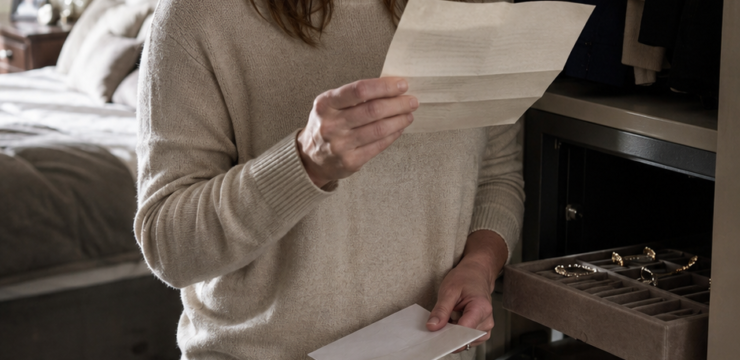
I didn’t hear from Mark again until almost a year later. A thick envelope arrived on my desk on a quiet Friday afternoon. Inside was the final payment for the loan—he had worked three jobs to pay it off early—along with a photograph. It showed a vibrant, smiling nine-year-old girl with a bright scar down her chest, holding a sign that read: *Thank you for my heart.*
On the back of the photo, in Mark’s handwriting, was a simple message: *She knows the story. And she thinks you are the bravest woman in the world.*
I placed the photo in the top drawer of my desk. For twenty years, I had built my life around proving that I was no longer a victim. But looking at that little girl’s smile, I realized that true power isn’t about destroying the people who hurt you. It’s about having the strength to break the cycle, and making sure the future is kinder than the past.