PART 2
The next morning at nine o’clock, I took a half-day off from my library job and drove straight to the main downtown branch of First Community Bank, where Mama had kept her accounts for forty-five years.
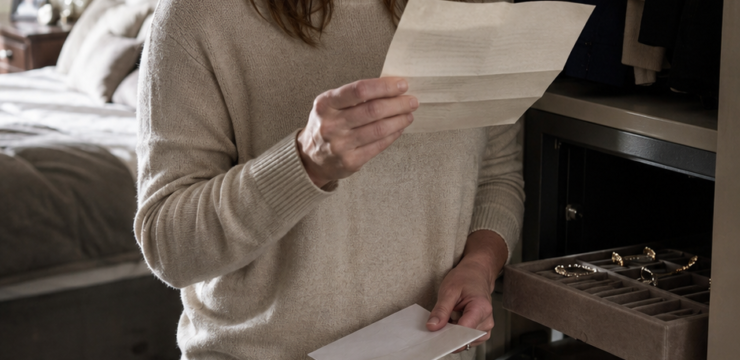
The lobby was quiet, smelling faintly of furniture polish and fresh coffee. I walked up to the counter and presented my certified medical and legal power-of-attorney documents, along with Mama’s bank account numbers and my own driver’s license.
A young teller named Sarah examined my paperwork, verified my identity on her computer screen, and pulled up Mama’s complete financial portfolio.
“Mrs. Miller,” Sarah said, looking up from her terminal with a polite smile. “What can I help you with regarding your mother’s account today?”
“I’m reviewing my mother’s statements,” I explained, leaning over the counter. “There is a recurring four-hundred-dollar automatic transfer leaving her checking account on the sixteenth of every month. Can you tell me where those funds are going?”
Sarah typed for a few seconds, her eyes scanning the monitor. “Yes, ma’am. That’s an internal recurring transfer to a second secondary checking account. It’s hosted right here at our bank, at the Eastside branch across town.”
“A second account?” I asked, my heart thumping against my ribs. “Who opened a second account in my mother’s name?”
“The secondary account was opened two years ago, in June,” Sarah replied, clicking through the screens. “It is registered under your mother’s primary Social Security number, but it lists a separate mailing address—a post office box on Elm Street.”
My blood ran cold. I knew that Elm Street P.O. box. It was the same business mailing address printed on the side of my brother Dale’s contractor truck.
“I need to see the original signature card for that second account,” I said, my voice dropping into an iron-firm register that surprised even myself. “I hold full power of attorney, and my mother never authorized a secondary account.”
Sarah hesitated, noticing the intensity in my eyes. “Let me call my branch manager over to authorize the record pull, Mrs. Miller. Just give me one moment.”
A few minutes later, the manager printed out a high-resolution scan of the original signature card used to open the secondary account two years ago. He handed the paper across the counter to me.
I looked down at the signature line.
My mother had attended St. Stanislaus parochial school in the 1950s, where the nuns had drilled strict penmanship into her hands. For seventy years, Mama had written her name in a distinct, fluid cursive with a heavy backward slant—a signature so unique that anyone in our family could recognize it instantly.
The signature printed on the card in front of me was not cursive.
It was written in clean, deliberate, all-caps block lettering: *CLARA MILLER*.
It was Dale’s hand. He had printed her name in his unmistakable draftsman block letters—the exact same handwriting he used on his carpentry blueprints and job estimates. He hadn’t even bothered to attempt a cursive forgery; he had simply printed her name, signed his own name below as a secondary authorized user, and walked out with access to her money.
I stared at the paper in total disbelief. My brother had systematically diverted $400 every single month from our eighty-one-year-old mother’s fixed income, letting her believe that inflation was eating her savings while he used her money to fund his own life.
“I asked for a copy of the card,” I said, looking up at the teller.
The teller looked at me, looked down at the block-printed card, and then looked toward her manager.
“Mrs. Miller,” the teller whispered softly, her eyes wide with deep sympathy. “I shouldn’t be saying this, but that second account… it has a linked debit card attached to it. Every single month, within hours of that four-hundred-dollar transfer clearing, that card is used at the Oakridge Country Club golf shop and a local sports lounge.”
PART 3
A wave of icy, sharp rage washed over me. While my mother was skimping on her favorite brand of tea, cutting her thermostat back in the winter to save thirty dollars on heating, and worrying that she was becoming a burden to her children, my brother was playing golf and drinking at a sports lounge on her Social Security check.
“I want that secondary account frozen immediately,” I told the bank manager, handing him my legal power-of-attorney documents. “And I want a certified transaction history for the entire twenty-four months printed out right now.”
The manager worked quickly, printing out a thick stack of bank records that detailed every single withdrawal, debit purchase, and transfer made from the secondary account over the last two years. The total stolen from Mama came to exactly $9,600.
I didn’t call Dale. I didn’t send him an angry text message. I drove straight back to Mama’s house, sat down beside her at the kitchen table, and laid out the bank statements, the signature card, and the transaction history in front of her.
I explained everything gently, step by step. I watched as the confusion on my mother’s face turned into a quiet, profound heartbreak.
“Dale did this…?” Mama whispered, her voice trembling as her fingers touched the block-printed signature on the paper. “My own son took my money?”
“Yes, Mama,” I said, holding her hand tightly. “He took nine thousand six hundred dollars from you while telling you that groceries were too expensive.”
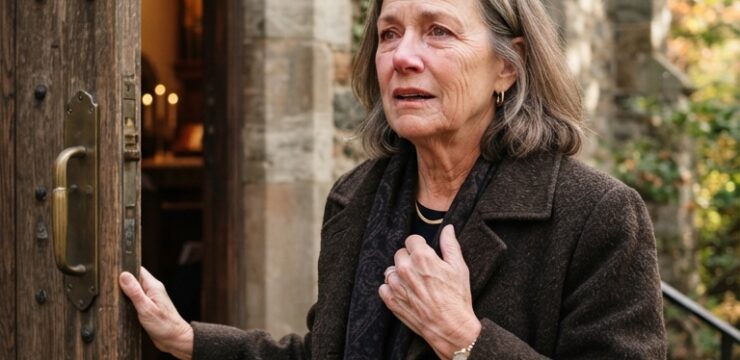
Mama sat in silence for a long time, looking out the kitchen window at the garden she used to tend. She didn’t cry. She was from a generation that bore pain with dignity, but when she looked back at me, her soft blue eyes had turned to steel.
“Evelyn,” Mama said, her voice completely steady. “Call your brother. Tell him to come to this house right now. Tell him I need help moving a heavy chest of drawers.”
An hour later, Dale’s red contractor truck pulled into Mama’s gravel driveway. He walked up the back porch steps humming a tune, carrying a small toolbox, completely unaware of the storm waiting for him inside.
He opened the kitchen door with a broad, cheerful smile. “Hey Mama, hey Evelyn! What needs moving?”
He stopped dead in his tracks.
Sitting flat on the center of the kitchen table were the certified bank statements, the enlarged copy of the block-letter signature card, and a formal, un-filed police report I had drafted on my laptop two hours earlier.
Dale’s smile didn’t just fade; it evaporated. The color drained from his face so fast he looked like he was about to pass out right there on the linoleum.
“Dale,” Mama said, sitting posture-straight in her wooden chair, her hands folded over her lap. “Sit down.”
“Mama… what is this?” Dale stammered, his eyes darting frantically from the signature card to my face. “Evelyn, what did you do?”
“I didn’t do anything, Dale,” I said quietly, leaning against the counter. “You did. For twenty-four months.”
Dale dropped his toolbox onto the floor with a loud metallic clatter. He sat down heavily in the chair across from Mama, his hands trembling as he looked at his own draftsman handwriting printed on the bank document.
“Mama, listen to me—it’s not what it looks like!” Dale pleaded, his voice rising in high-pitched panic. “My business was going under two years ago! I was going to lose my truck! I just borrowed a little bit every month to keep the equipment payments current! I was going to pay it all back as soon as my big commercial contract cleared!”
“With golf clubs and sports bars, Dale?” I asked, tossing the debit card transaction log right in front of his face. “You bought nine thousand six hundred dollars worth of golf gear and drinks on Mama’s Social Security.”
Dale swallowed hard, his jaw tightening as he realized he was trapped with nowhere left to run.
ENDING
The silence in the kitchen was suffocating. Dale looked at our mother, his eyes pleading for the soft, easy forgiveness she had given him his entire life.
“Mama, please,” Dale rasped, tears welling up in his eyes. “You aren’t going to call the police on your own son, are you? It would ruin my business. It would ruin my name in this town.”
Mama looked at her son for a long, painful moment. The grief in her eyes was deep, but her resolve was absolute.
“You ruined your own name, Dale, the day you wrote my name in block letters on a bank card,” Mama said, her voice dropping into a cold, quiet tone he had never heard from her before. “You let me sit in this house worrying that I was running out of money. You watched me cut back on my medicine and my food so you could play golf.”
Mama reached across the table and picked up the police report.
“Here are your choices, son,” Mama continued, looking him dead in the eye. “You have thirty days to sell your second contractor trailer and transfer nine thousand six hundred dollars directly back into my primary account. Furthermore, you will sign a legal agreement revoking all access to my accounts, my mail, and my home. If every single penny is not returned by the thirtieth day, Evelyn will walk this report directly into the sheriff’s department.”
Dale stared at our mother, realizing that the gentle woman he had taken advantage of for two years was gone. He was no longer dealing with a frail old woman; he was dealing with a mother who had drawn an immovable line in the sand.
“I’ll… I’ll sell the trailer,” Dale whispered, his head hanging low in complete, humiliated defeat.
Thirty days later, a cashier’s check for $9,600 cleared into Mama’s primary checking account.
Dale paid back every single dime, but the trust he had destroyed was gone forever. He no longer handles Mama’s errands, nor does he hold a key to her front door. He visits occasionally on holidays, sitting quietly in the corner, unable to meet his mother’s eyes.
I took over Mama’s weekly errands and financial management completely. With her savings fully restored, Mama no longer worries about her monthly bills. We go out for afternoon tea every Friday, and she buys her favorite brand of Earl Grey without ever looking at the price tag.
I kept that copy of the signature card. It sits tucked inside my home desk folder—a silent, permanent reminder of the day I stood up for my mother’s dignity.
I learned a bitter lesson through those two years of quiet theft: betrayal rarely comes from strangers breaking through the front door. Sometimes, it comes from the people we trust most, hiding behind comfortable promises and neat block letters. But I also learned that standing up for the people you love—and protecting their dignity in their twilight years—is the highest duty a daughter can ever fulfill.