PART 2
I drove to the church with a knot of anxiety tightening in my stomach. Why couldn’t Martha just fix the error over the phone? Had someone been using my name? Was there a deeper issue with the church’s finances that I had accidentally stumbled into?
By the time I pulled into the empty parking lot and walked up the steps to the administrative wing, my mind was racing with worst-case scenarios.
Martha was waiting for me in her small, windowless office. The desk was remarkably neat, save for one massive, heavy bound ledger resting squarely in the center of her blotter. She offered me a warm but nervous smile and gestured for me to sit in the armchair opposite her.
“I’m sorry to make you drive all the way down here,” Martha said, folding her hands over the closed ledger. “But this isn’t something I could explain over the phone. And it’s not something I was ever supposed to explain at all.”
“Martha, you’re scaring me,” I admitted, clutching my purse to my lap. “I just don’t want to claim a tax deduction for money I didn’t give. I only give twenty dollars.”
“I know,” she said gently. “And your twenty dollars is recorded accurately.”
She opened the heavy cover of the ledger and flipped past the general congregation records, turning to a specific tab near the back. I had seen this ledger before during annual business meetings, but I had never seen this particular section.
Martha turned the heavy book around so it faced me.
“Look here,” she instructed, pointing a manicured finger at the page.
I leaned in, adjusting my glasses. The page was neatly divided into columns. Down the left side was a list of names. I recognized every single one of them. Sarah Jenkins. Betty Miller. Clara Higgins. And there, halfway down the page, was my own name.
Every name on the list belonged to a widow in our church.
I looked at the columns next to my name. Under the heading for the weekly offering, there was my twenty-dollar amount, written in neat black ink. But right next to it, in a separate column, was another entry for twenty dollars. Beside that second amount were three letters written in red ink: “Matched, D.B.”
I scanned the rest of the page. Beside Sarah’s ten dollars, another ten was matched. Beside Clara’s five dollars, another five was matched. Every single widow’s contribution had a red entry right beside it. Matched, D.B.
“What is this?” I whispered, my heart beginning to pound. “Who is D.B.?”
Martha took a deep breath, her eyes shining with unshed tears. “D.B. stands for the Deacon Board.”
PART 3
I sat back in my chair, utterly stunned. “The deacons?”
“Yes,” Martha nodded, pulling a tissue from the box on her desk. “For the last fifteen years, Eleanor. Long before I took over as treasurer. The men on the deacon board have been quietly taking money out of their own pockets every single Sunday to double the offering of every widow in this congregation.”
The air left my lungs. I thought of the seven men who served on our deacon board—hardworking men. Plumbers, retired teachers, a local mechanic, a pharmacist. None of them were wealthy. They were just ordinary men with families and mortgages of their own.
“They never told anyone,” Martha continued, her voice thick with emotion. “They never told the pastors. They never announced it in a business meeting. When the offering is counted on Sunday afternoons, the head deacon stays behind. He looks at what the widows have given, and he quietly hands over cash to match it dollar for dollar. They instructed the treasurer to record it under the widows’ names, so that your giving statements would reflect the doubled amount.”
“But why?” I asked, my voice trembling. “Why would they do this without telling us?”
“Because they didn’t want you to feel like a charity case,” Martha explained. “They wanted to honor your sacrifice. They saw how faithfully you all gave, even when things were tight. They wanted to bless you, quietly, the way you have blessed this church.”
Tears spilled over my bottom eyelids, tracking hot and fast down my cheeks. For seven years, I had proudly put my twenty dollars into the plate, believing it was a solitary act of faith. I had no idea that every single Sunday, a group of men had been standing in the gap, silently lifting up my offering, honoring my late husband’s memory by ensuring his widow was cared for and respected.
I felt a profound, overwhelming sense of being seen. We so often feel invisible as older women, especially after we lose our spouses. We fade into the background of the pews. But we hadn’t faded to them.
“I’ve kept this secret for five years since I became treasurer,” Martha said, wiping her own eyes. “I check the statements manually every January to make sure the math is right. I was terrified you’d think it was a mistake and call the IRS. But the deacons knew this day might come. They knew that eventually, someone would notice the discrepancy and ask questions.”
Martha opened the top drawer of her desk and reached inside. She pulled out an old, slightly yellowed envelope. The paper was thick, the edges soft from years of resting in the dark drawer.
“When they started this fifteen years ago,” Martha said, handing the envelope across the desk to me, “the deacon board wrote this. They gave it to the previous treasurer, and she passed it to me. They told me to keep it safe, and to give it to the first widow who ever caught the error and asked for an explanation.”
My hands shook as I took the envelope. Across the front, in bold, masculine handwriting, it read: *To Our Sisters.*
ENDING
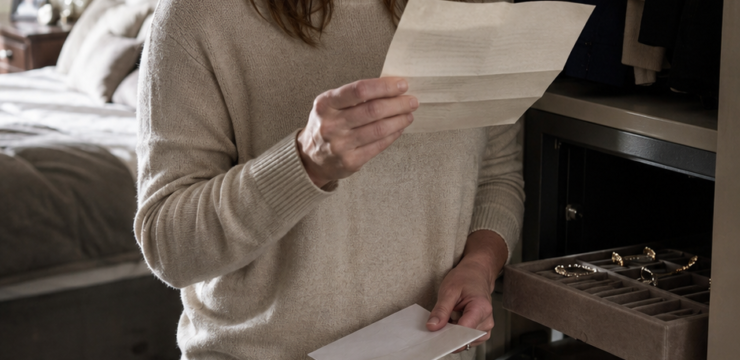
I slid my thumb under the flap of the envelope and carefully pulled out a single sheet of heavy church stationery. The ink was slightly faded, but the message, signed by the seven original deacons who had started the tradition, was perfectly clear.
*Dear Sister,*
*If you are reading this, you have discovered our quiet rebellion. Please forgive our deception. When you lost your husband, this church made a promise to God to watch over you. We noticed your faithful giving, week after week, in times of abundance and in times of grief. We never wanted you to feel that your contribution was small, nor did we want to rob you of the dignity of giving to the Lord.*
*We match your offering not because you need our charity, but because your faithfulness is worth twice its weight in gold to us. You gave your husbands to heaven, but you are not forgotten on earth. You are the pillars of this church. Keep giving your gift with pride, and allow us the honor of walking beside you.*
*With profound respect,*
*The Deacon Board*
I sat in Martha’s office and wept. They were not tears of sorrow, but tears of a deep, washing relief. The loneliness that had subtly wrapped around my heart for seven years cracked and fell away. I was not alone in that sanctuary.
Martha let me cry until I was ready, gently pressing a fresh tissue into my hand. We didn’t change my tax statement. We left the forty dollars right where it was.
The following Sunday, I sat in my usual pew near the middle aisle. When the brass offering plate was passed to me, I pulled the crisp, white envelope from my purse. Inside was my folded twenty-dollar bill. I placed it in the plate with a renewed sense of joy.
As the ushers walked the plates to the back of the sanctuary, I turned my head slightly. Standing by the double doors was Thomas, our head deacon, his arms crossed casually, watching the congregation. Our eyes met across the room. He didn’t smile, but he gave me a single, slow nod. I nodded back, turned to face the altar, and let the music wash over me, completely at peace.