PART 2
The police arrived twenty minutes later. Detective Miller, a tired-looking man in a rumpled suit, stepped into my kitchen and looked at the mountain of cash and the grid of photographs I had laid out on the counter.
He let out a heavy sigh, shifting his weight. “Look, ma’am,” he said, his tone bordering on condescending. “It’s a little strange, sure. But old folks do weird things with their money. Distrust of banks and all that. These are probably just her grandchildren. Maybe she was saving up for their college funds.”
I stared at him, my disbelief turning into a sharp, protective edge. “She had no children, Detective. She told me herself years ago. She was never a mother. She has no family.”
He frowned, finally sensing the genuine panic in my voice. He scooped up the 47 Polaroids, placing them carefully into an evidence bag. “Alright. I’ll take these down to the station and run the faces through the national database. Just to be safe. But don’t go letting your imagination run wild.”
I spent the next six hours pacing the empty house, unable to eat, unable to focus. The silence of Eleanor’s home suddenly felt heavy, suffocating, as if the walls were holding their breath.
When my phone finally rang just after 8:00 PM, I snatched it off the counter.
“Sarah,” Detective Miller said. His condescending tone was completely gone. His voice was tight, thin, and deadly serious. “I need you to step out of the house. Don’t touch anything else.”
“What is it?” I asked, my blood running cold.
“I ran the photos,” he said, pausing as if struggling to find the words. “Nine of them just matched open missing persons cases. We’re sending a team back to your house right now.”
When Miller arrived with two other officers, they immediately went to the basement to search the freezer for anything we might have missed. I stood at the top of the stairs, trembling. Ten minutes later, Miller came back up. In his gloved hand, he held one more envelope. It had been frozen flat to the very bottom of the chest.
Envelope 48.
He opened it on the kitchen island. There was no cash inside. There was no Polaroid.
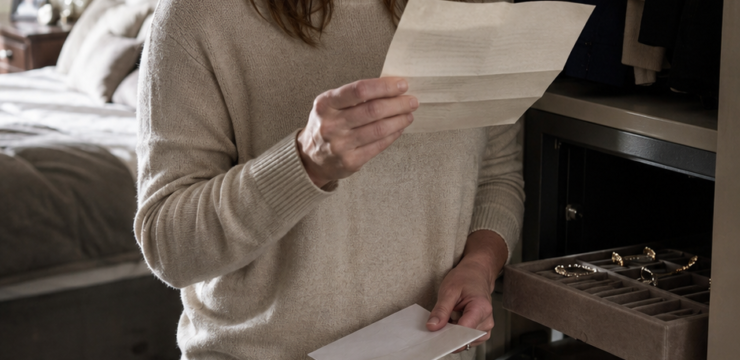
There was only a folded piece of heavy stationery. And on the outside of the note, written in Eleanor’s elegant, sloping cursive, was my name.
My breath stopped. She had known. She had known I would be the one to buy her house.
Miller unfolded the paper. Inside was a hand-drawn map of Eleanor’s backyard. Over the area where her prized rose bushes grew, there were six heavy X’s drawn in black ink.
At the bottom of the map, the letter read: *’Start digging where the roses are. What you’ll find there is…’*
PART 3
*’…What you’ll find there is the absolute truth.’*
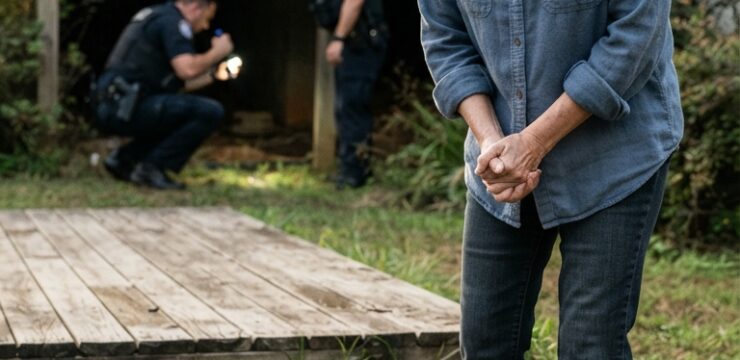
Detective Miller didn’t wait. Within the hour, the backyard was illuminated by harsh, blinding police floodlights. Two officers stood by Eleanor’s beloved, sprawling rose bushes with heavy metal spades. I watched from the back porch, wrapping my arms around myself to ward off the chill of the evening, my stomach twisted into tight, painful knots. What had my quiet, gardening neighbor done?
The shovels bit into the dark earth. For twenty minutes, there was only the sound of dirt hitting the grass. Then, a sharp, metallic *clank* echoed through the yard.
One of the officers dropped to his knees, brushing dirt away with his gloved hands. It wasn’t a coffin. It wasn’t bone. It was a heavy, fireproof steel lockbox. They kept digging at the other five X’s. By midnight, six identical metal lockboxes sat lined up on the damp grass.
Miller used a crowbar to force the first one open. I braced myself, holding my breath.
Inside were neat, meticulously organized manila folders. Miller pulled the first one open under the glare of his flashlight. It was filled with court documents, birth certificates, and pages of typed notes.
“My God,” Miller whispered.
I stepped down off the porch, unable to stay away. “What is it?”
“She didn’t take them,” Miller said, looking up at me, his eyes wide with a mixture of shock and profound reverence. “She bought them.”
The documents laid out a truth so massive it was hard to comprehend. Eleanor had not been a predator; she had been a savior. For twenty-three years, she had quietly operated as part of a highly secretive underground network. The children in the photos were victims of severe abuse or trafficking—often sold by their own addicted or compromised family members. The $5,000 cash in each envelope wasn’t a sick trophy; it was her exact, methodical payment system. She bought the children’s freedom, and the network relocated them to safe, loving homes under entirely new identities.
The nine “missing persons” cases were reports filed by the very abusers who had lost their victims, trying to use the police to track them down. Eleanor had kept the Polaroids as proof of life, a silent vigil for the children she had saved.
The six boxes buried under the roses contained the original identities, the new safe addresses, and trust fund paperwork for every single child, preserved safely until the abusers had either died or been incarcerated. She had buried them under the roses to protect the children’s new lives.
ENDING
The investigation that followed was quiet, highly classified, and strictly handled by federal authorities. Because the abusers who initially reported the children missing were deeply implicated in the files Eleanor left behind, many of those cold cases were finally closed, resulting in arrests of the people who truly deserved to be behind bars. The children—many of whom were now adults in their twenties and thirties—were never disturbed. Their safe, new lives remained entirely protected, just as Eleanor had intended.
As for the $235,000 found in the freezer, the authorities eventually released it back to the estate. As the legal owner of the property and its contents, the money fell to me. But I knew exactly what Eleanor wanted me to do with it.
I worked with a lawyer to establish a quiet, anonymous scholarship trust. Every year, funds are distributed to young adults aging out of the foster care system, giving them a foundation, a safety net, and a chance at a real future.
I didn’t rent out Eleanor’s house. I decided to move in myself. Every morning, I take my coffee out to the backyard and sit on the porch. The ground has long since healed from the digging, and I spend hours meticulously pruning and watering the sprawling, beautiful bushes. They bloom brighter now than they ever have. Whenever I look at them, I don’t think of the lonely old woman everyone else saw. I think of a fierce, quiet guardian who changed forty-seven lives from the shadows, planting seeds of hope and fiercely protecting everything that bloomed.