PART 2
A strange, electric chill ran down my spine despite the mild afternoon sun. My curiosity outweighed my hesitation. I grabbed my cold chisel and mallet, positioning the steel edge against the crumbly, sixty-year-old gray mortar.
With three sharp strikes of the mallet, the ancient binder cracked and gave way in a shower of dry dust. I pried loose four heavy granite blocks, exposing a dark, rectangular cavity built directly into the heart of the stone wall. The interior was dry, lined meticulously with thick sheets of lead flashing to protect it from damp soil and winter frost.
I reached into my tool bag, pulled out my heavy aluminum flashlight, and clicked the beam on. I leaned in close, peering through the opening into the pitch-black space.
The moment the bright white LED beam landed on what Thomas Sterling had sealed inside his own wall before he vanished sixty years ago, I pulled my hand back so violently that I dropped my chisel into the autumn leaves.
My heart hammered against my ribs like a trapped bird. Sitting perfectly preserved inside the lead-lined chamber was not money, old tools, or legal papers. It was a small, hand-carved wooden box, resting directly on top of a weathered, vintage leather doctor’s bag and a heavy steel master key attached to an brass tag stamped with a bank name: *First National Bank of Rutland – Safe Deposit Box #314.*
Beside the doctor’s bag lay a thick, leather-bound diary with a pair of reading glasses resting on its cover, as if someone had placed them there just moments before sealing the stones.
I stood there in the quiet field, the cold wind rustling the oak leaves above me, breathing heavily as I stared at the dark opening. Thomas Sterling hadn’t just wandered off into a snowstorm and died. He had systematically hidden his most crucial possessions inside a permanent monument before he disappeared.
I reached back into the chamber with a gloved hand, carefully lifting out the wooden box, the leather diary, the doctor’s bag, and the brass key. I set them on a flat granite stone in the sunlight, my hands trembling as I unbuckled the cracked leather strap of the diary.
On the front inside cover, written in dark fountain-pen ink in a precise, elegant script, was a name: *Dr. Thomas E. Sterling, M.D.*
I sank down onto a nearby log and opened the journal to the final entries, dated December 1962. As I read the faded ink pages, the dark, long-buried truth of our peaceful Vermont homestead began to unravel before my eyes.
PART 3
Thomas Sterling had not been an ordinary country farmer. He had been a prominent surgeon from Boston who had abruptly abandoned his high-paying medical practice in 1958 to buy this isolated rural property in Vermont.
According to his detailed daily entries, Thomas had uncovered a massive, high-level insurance fraud and medical malpractice ring at his Boston hospital—a scheme orchestrated by senior hospital directors and backed by powerful local figures who were falsifying patient records and embezzling millions from state medical trusts. When Thomas attempted to report the corruption to federal authorities, he received explicit, deadly threats against his life and the life of his young sister, Clara.
Realizing that the local police and courts were compromised by the same network, Thomas faked a complete mental breakdown, resigned his position, and bought the Vermont land under an assumed identity to disappear from Boston society. He spent three long years quietly building the heavy stone boundary wall—not merely to mark his property, but to build an unassailable, weather-proof vault.
Inside the small hand-carved wooden box sat the core evidence: dozens of original, notarized hospital ledgers, canceled checks, and covertly recorded audio spools detailing the names, dates, and financial transfers of every individual involved in the crime network.
The final diary entry was dated December 14, 1962:
*”They found me,”* Thomas had written, his handwriting tense and rushed. *”A black sedan has been idling at the end of my lane since dusk. I know who they are. If I try to run now, they will catch me on the highway. I have placed the original ledgers, the bank key to my secondary records, and my true identity here inside the wall I built with my own hands. If they take me tonight, they will make it look like a tragic disappearance in the snow. But stone does not rot, and truth does not die. Whoever breaks this mortar, take this key to the Rutland bank. Let justice finally be done for Clara and the patients we lost.”*
Tears welled in my eyes as I finished reading his words. For sixty years, the town had believed Thomas Sterling was a foolish old hermit who got lost in a winter blizzard. In reality, he was a brave whistleblower who had faced down a powerful criminal enterprise, using his final hours of freedom to preserve the truth in the stone wall he had built with his own hands.
I didn’t hesitate. I packed the wooden box, the diary, and the legal documents into my truck, drove straight back to the farmhouse, and called David. Together, we contacted an investigator at the Vermont State Police Cold Case Unit and an attorney specializing in historical estate law.
ENDING
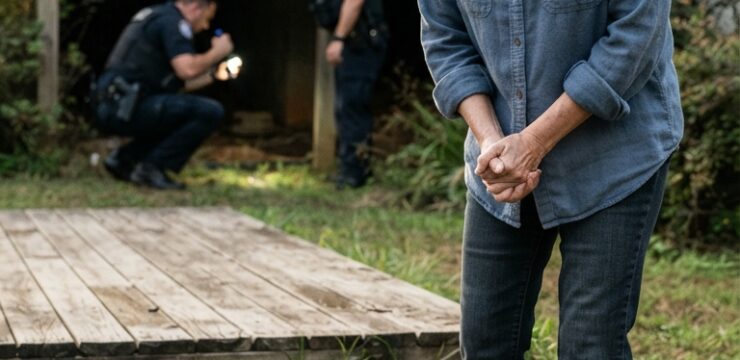
Two days later, state investigators and historical archivists stood in our back pasture, marveling at the incredible preservation of the lead-lined chamber inside the stone wall. Using the brass key found in the wall, authorities opened Safe Deposit Box #314 at the Rutland bank, uncovering additional certified affidavits and financial bonds Thomas had deposited before his death.
The discovery sparked a comprehensive historical investigation that solved the sixty-year-old cold case. State archives and federal records confirmed that the Boston medical syndicate Thomas exposed had eventually collapsed under federal investigation in the late 1960s, but Thomas’s tragic disappearance had remained unsolved—until a suburban couple decided to repair an old fieldstone wall in autumn.
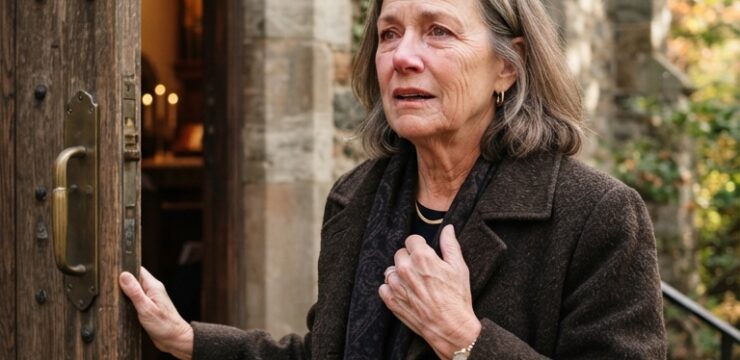
Through estate genealogy records, investigators located Thomas Sterling’s grand-niece, a gentle seventy-year-old woman living in New Hampshire who had grown up hearing painful rumors that her grand-uncle was a coward who had abandoned his family. When David and I met her at our farmhouse to hand over her grand-uncle’s hand-carved wooden box and reading glasses, she wept tears of profound relief and gratitude.
“You gave us back his honor,” she whispered, clutching the diary against her chest. “He wasn’t a coward. He was a hero who protected us.”
A month later, with the help of the local historical society, a small bronze plaque was permanently installed on a restored section of the stone wall near our pasture gate. It reads: *Dedicated to Dr. Thomas E. Sterling (1918–1962) — A Man of Honor Who Stood for Truth.*
Today, the stone wall stands tall and straight along our back field, fully repaired and solid against the northern winds. Every autumn afternoon, as the golden sunlight filters through the sugar maples and reflects off the gray granite, I walk out to the edge of the pasture, set my hand against the cold, sturdy stones, and remember the quiet strength of the man who built them—a reminder that no matter how deep a secret is buried, truth and honor will always find their way to the light.