My aunt told me my mother’s jewelry had been donated because no one knew what it was worth. I remembered my aunt saying the earrings were cheap, but the jeweler had once told Mom they were the one thing worth keeping. I believed her until I saw my mother’s pearl earrings in a photo from my cousin’s engagement party. When I asked about them, my aunt said I was being greedy.
I smiled and asked to see the rest of the jewelry box. Her face changed before she answered.
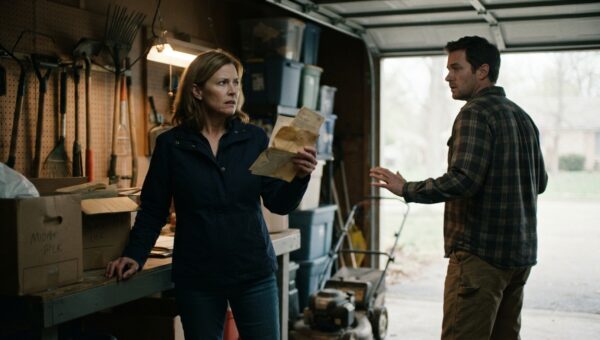
It had been six months since we cleared out the small house on Elm Street where Mom spent her last thirty years. The air in those rooms still felt heavy with cedar and dry lavender long after the furniture was sold off. Aunt Clara had taken charge of the small things, the personal effects that lawyers and probate judges never bothered with. She told me she spent three entire days sorting through the drawers of the mahogany vanity. She said it was all costume junk, old department store costume pieces that turned your skin green. I was grieving too hard to argue. I let her pack the heavy cardboard boxes into the back of her station wagon and drive them away to the charity drop-off downtown.
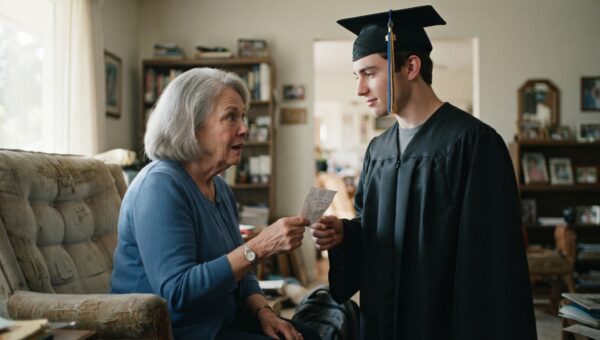
I keep thinking back to an afternoon in the fall of 2014 when Mom took me into town to see old Mr. Vance at his tiny repair shop behind the hardware store.
Mom had laid a small velvet pouch on the glass counter. Mr. Vance adjusted his thick glasses, squinted through his jeweler’s loupe, and picked up a pair of small, creamy saltwater pearls set in simple sterling silver wire. He didn’t even look at the rhinestone brooches or the stamped gold-plated chains. He pointed right at those pearls and looked at my mother. “Don’t ever let these go for scrap, Martha,” he said. “The rest is just noise, but these have a clean provenance.”
I remembered every word of that conversation because Mom had been so proud that one small thing she owned had actual staying power. She kept them in the bottom of her cedar chest inside a little brass tin that smelled like old peppermint. When we cleaned out the house, that tin was nowhere to be found. Clara patted my shoulder right there in the empty hallway and told me not to worry about the trifles.
“Everything went in the bin, honey,” Clara had said, her voice dripping with that heavy, performative sympathy she reserved for family tragedies. “Nobody wants fifty-year-old dime store clips.”
So I let it go. Until Tuesday evening, when the notification popped up on my phone from Chloe’s public engagement album on social media. I wasn’t even scrolling for long. Just sitting at my kitchen island with a cold cup of tea, watching the sun drop behind the maple trees across the street. There was Chloe, smiling beside her fiancé under a string of patio lights, holding up a glass of champagne. Her head was turned just enough for the camera to catch the light off her left earlobe. Those weren’t department store clips. Those were the twin button pearls with the tiny hand-soldered loops that Mr. Vance had pointed at through his magnifying glass.
I didn’t call her right away. I waited until Thursday morning, giving myself time to make sure my eyes weren’t playing tricks on me from a compressed digital image.
I drove over to Clara’s house without calling first. I wanted to catch the rhythm of an ordinary Tuesday before the pretense had time to set in.
Clara opened the front screen door wearing her gardening apron, a pair of heavy leather gloves tucked under one arm. She looked surprised to see me standing on the concrete porch, but she swung the door wide enough to let me into the front hallway. The house smelled faintly of baked ham and floor wax, the same smell my grandmother’s house always had.
“Well, look who decided to drop by,” Clara said, forcing a bright, dry smile. “Are you taking a lunch break from the office?”
“I’m not working today,” I said, stepping past her into the living room without waiting for an invitation. “I saw the pictures from Chloe’s engagement party.”
Clara paused by the umbrella stand, her hand lingering on the rim of a ceramic crock. “Weren’t they lovely? The weather held out just until midnight.”
“They were,” I agreed, keeping my voice very level. I pulled my phone from my coat pocket, brought up the zoomed-in image of Chloe’s ear, and laid the screen flat on the oak coffee table between us. “I noticed Chloe was wearing Mom’s pearl earrings.”
The silence in the room didn’t feel dramatic or cinematic. It just felt heavy, like a clock winding down. Clara didn’t look down at the phone. She looked straight at my forehead, her chin lifting just a fraction of an inch.
“Chloe has plenty of nice jewelry of her own,” Clara said, her tone hardening around the edges.
“I know she does,” I said. “That’s why I’m wondering how she got those specific ones. The ones you told me were donated downtown with all the rest of the costume junk.”
Clara crossed her arms over her floral apron, the leather gardening gloves slipping down against her skirt. “Oh, for goodness’ sake. Are we really doing this? Your mother had boxes and boxes of worthless brass and glass beads taking up half the bedroom. I saved what was salvageable from the trash heap before the truck came. If I gave a little pair of earrings to my own daughter for her engagement, that is hardly a federal offense.”
“You told me everything went to charity, Clara,” I said.
Her face flushed a dark, mottled red right across the cheekbones. “You are being ridiculous. You are making a mountain out of a molehill over some cheap trinkets because you’re still carrying all that grief around. It’s ungracious, to be honest with you. Coming in here and accusing your own family over costume jewelry.”
“If they’re just cheap trinkets,” I said, holding my ground by the edge of the sofa, “then you won’t mind if I take a look at the rest of the box.”
Clara’s jaw tightened so hard I could see the muscle jumping beneath her skin. “The rest of what box? There is no box.”
“The brass tin,” I said quietly, using the exact detail I had kept locked in my head since Tuesday. “The one with the hinged lid that Mom kept in the cedar chest. The one that wasn’t on the inventory list.”
Her eyes flicked toward the narrow hallway leading back toward the master bedroom. It was a micro-expression, small and involuntary, but it told me everything I needed to know. She hadn’t cleared out everything. She had sorted it. She had kept the good pieces for Chloe under the cover of helping me clear the estate.
“You have a lot of nerve,” Clara muttered, her voice dropping an octave as the defensive bluster started to fray around the edges. “After everything I did for that house. Nobody else was willing to go through your mother’s old clothes and haul off the trash bags.”
“I’m not shouting, Clara,” I said, keeping my hands steady in my pockets. “I just want to see the box.”
She stood there for three long seconds, her chest rising beneath the apron strings, weighing whether she could bluff her way through the rest of it. But she knew she had been caught dead to rights on the pearls. The lie about the donation bin didn’t hold water once the specific item showed up publicly on her daughter’s earlobe.
“Wait right here,” she said, biting off the words like she was tasting something sour.
She turned on her heel and marched down the hallway. I didn’t follow her. I stayed right where I was on the edge of the rug, listening to the muffled sound of a drawer being dragged open in the back bedroom, followed by the dry scrape of metal against wood.
When Clara came back into the living room, she wasn’t carrying a cardboard box from the dump. She was holding a polished cherrywood case with a brass clasp, a box I hadn’t seen since I was twelve years old. She dropped it onto the coffee table right beside my phone with enough force to make the lid rattle.
“Take them,” she said, her voice shaking with a mixture of embarrassment and suppressed rage. “Take the whole lot of it and leave.”
I didn’t rush. I reached down, unlatched the brass hook with my thumb, and lifted the lid. The interior was lined with faded blue velvet that smelled faintly of camphor. Resting in the upper tray were three gold-plated brooches I remembered from my childhood, a heavy silver locket that belonged to my grandmother, and tucked neatly into the corner slot, the empty brass peppermint tin. The pearl earrings were already gone, presumably on Chloe’s vanity upstairs, but the rest of the collection was right there, untouched by any charity truck.
“You kept the locket too,” I said, running my finger along the edge of the silver casing.
“Your mother would have wanted Chloe to have them for the wedding,” Clara snapped, her arms locked tight across her chest again. “She always loved Chloe like her own.”
“Then she would have given them to her herself while she was alive,” I said. “Instead of letting you squirrel them away in a closet while you told me everything was in a landfill.”
Clara didn’t have an answer for that. She just turned her face toward the front window, refusing to look at me as I lifted the cherrywood box out from the table and tucked it securely under my arm.
I walked out to the front door without another word. I didn’t slam the screen behind me, but I made sure the latch clicked firmly into place, a clean, final sound that stayed in the air long after I stepped down onto the concrete.
The drive back to my apartment took fifteen minutes through the midday traffic. When I got home, I didn’t put the box away in a closet or hide it under the bed. I set it right in the center of my own kitchen table, beneath the light of the window that looked out over the backyard.
I opened the lid one last time, picked up the small silver locket, and let the cool metal rest in the palm of my hand. The house was quiet, completely and entirely mine, with no false stories left to clear out.