I reckon you always think you know the people who raised you, right up until the afternoon they hand you a piece of paper that makes the floor drop out from under your boots. My aunt Clara had been living in that drafty little white house down by the creek for twenty years, ever since Grandfather passed away and left her rattling around in all those empty rooms.
She was the one who always kept the coffee pot warm and baked those heavy apple pies with the crusts burnt just a bit around the edges, the way my mother used to like them. On that Tuesday morning, the rain had been tapping against the porch tin for hours, a steady, gray sound that usually made me want to sit by the woodstove with a cup of mint tea and a seed catalog. Instead, I was standing in her kitchen while she leaned against the counter, holding out a rectangular scrap of green paper like it weighed fifty pounds.
She told me her fingers were acting up again with that arthritis she always complained about when the weather turned damp. She said her handwriting looked like a spider crawled out of an inkwell, and she needed a favor that wouldn’t take ten minutes of my time down at the branch bank on Main Street.
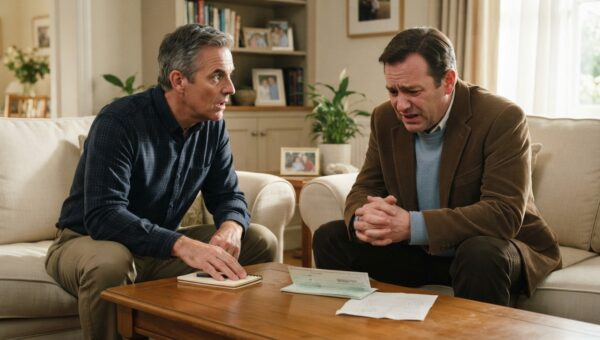
I took the slip from her fingers, noticing right away how cold her skin felt against mine, like she had been holding onto something frozen. My name was written right there on the payee line in block letters that looked remarkably steady for someone whose hands were supposedly shaking so hard she couldn’t sign her own grocery receipts. I looked up from the slip and asked her why she was writing out a check to me instead of paying her own electric bill or buying her groceries. She just gave me that tight little smile she used whenever she wanted an argument to die a quiet death before it could start. She said it was just a gift and begged me not to tell the family, whispering that her brothers would only start fussing over her accounts and making her feel like a child who couldn’t balance a ledger.
I didn’t like the look of it, but I pocketed the paper anyway because she was family and because I was tired and wanted to get home before the gravel road washed out in the gully.
The drive down to the bank was quiet, just the hum of the windshield wipers slapping against the glass and the heater blowing that dry, dusty smell it always got after sitting idle all summer. When I walked through the heavy glass doors of the First National branch, the air smelled like floor wax and old paper, familiar and safe in a way that made me let my guard down entirely. Brenda was behind the counter, her glasses dangling from a beaded chain around her neck, squinting at a stack of deposit slips before she looked up and offered me that polite, small-town smile she gave everyone who walked through the door. I laid Clara’s check down on the varnished wood and told Brenda I was just dropping this in for my aunt since she couldn’t make the trip in the rain. Brenda took the slip, ran her thumb across the signature line, and her expression shifted from neighborly warmth to something flat and careful that I had never seen on her face before.
She didn’t say a word for a second, and honestly that felt worse than if she had hollered. Brenda looked down at her computer terminal, tapped a few keys with one long fingernail, and then looked back up at me over the top of her glasses with her mouth pressed into a thin line. She asked me if I knew what account this was drawn from, her voice dropping down low so the teller at the next window wouldn’t hear across the partition. I told her it was just Grandfather’s old estate account, the one we had all helped settle and close down after he passed away two winters ago with the family farm divided up among the three kids. Brenda shook her head slowly, her eyes looking sorry for me in a way that made my stomach turn over three times. She told me that account hadn’t held a legitimate balance since the probate lawyer signed off on the final distribution eighteen months back, and that the bank’s internal system had flagged the routing number because the ledger was supposed to be dead and buried.
I just stood there because my brain kind of stopped working for a second, trying to line up what Brenda was telling me with the green piece of paper sitting right there on the counter between us. Brenda tapped the screen with her pen and explained that a closed account doesn’t just hand out money unless someone has kept a secondary draft mechanism active behind the scenes, pulling from residual funds that were never properly swept into the estate pool. I asked her who could possibly do that if the lawyers and the executor thought the whole thing had been cleared out and closed down down to the last penny. Brenda didn’t answer me out loud, but she pulled a blank receipt pad toward herself, picked up a black ballpoint pen, and wrote a single name on the paper with three quick strokes. Then she slid the paper across the counter toward me without saying another word, keeping her hands flat on the desk like she didn’t want to touch it anymore than she had to.
I looked down at the name written in Brenda’s neat, sharp cursive, and the breath went right out of my lungs. It was Clara’s name, written down as the sole remaining authorized user who had quietly retained draft authority on a ledger everyone else assumed was locked forever. Brenda leaned in close and told me that whoever was writing these checks had been siphoning the tail-end remnants of Grandfather’s reserve funds a little bit at a time, just small enough to stay under the audit threshold for dormant accounts. I thanked Brenda in a voice that didn’t sound like my own, picked up the check and the slip, and walked back out into the cold rain without depositing a single dime. The drive back to Clara’s house took twice as long because I had to pull over twice to keep from shaking so hard I couldn’t keep the truck in the middle of the road. When I walked back through her front door, the smell of burnt apple pie was still hanging in the air, sweet and heavy and completely sickening now that I knew what was sitting underneath it.
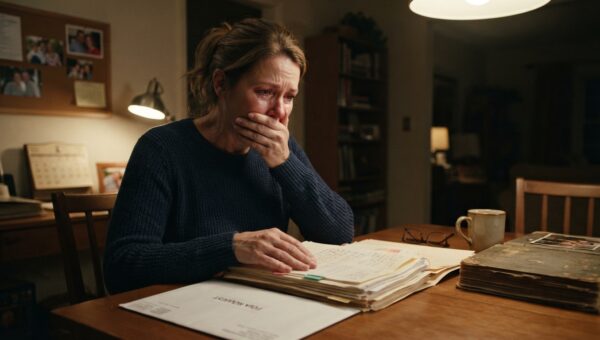
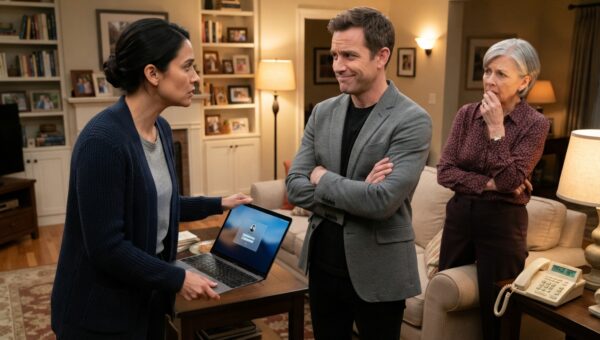
Clara was sitting right where I left her at the kitchen table, her hands resting in her lap, looking like she had been waiting for the clock to stop ticking. I didn’t say anything at first; I just laid the green check and Brenda’s handwritten slip right down on the center of the scarred oak table between our coffee mugs. She looked at the paper, and all the color just seemed to drain right out of her face, leaving her looking old and small in her oversized wool sweater. I asked her how long she had been dipping into Grandfather’s closed account, my voice sounding flat and hard in the quiet room where the rain was the only thing making any noise. She tried to give me that old excuse about her debts piling up and the property taxes going through the roof, her voice cracking right in the middle of a sentence about how nobody understood how hard things were for an old woman living on a fixed income. I asked her if she thought nobody else was struggling, or if she just figured she had the right to steal from an estate that belonged to all three branches of the family equally.
She didn’t have an answer for that because there wasn’t one that didn’t sound like plain greed wrapped up in a homespun excuse. She started crying then, real wet, heavy tears that made her shoulders hitch, but I couldn’t find it in myself to go over there and put my hand on her back the way I would have done an hour ago. I told her right then and there that I wasn’t taking her money, and I wasn’t keeping her secret from the executor or her brothers, because some things go deeper than family loyalty and once you break them you can’t just glue them back together with a pan of warm pie. She begged me not to ruin her name in the county, her voice rising up into a panicked plea that sounded desperate and thin against the drumming of the rain on the roof. But I didn’t yell back, and I didn’t soften up, because I finally understood that all those years of quiet generosity she liked to put on display were just a front for someone who thought she could take whatever she wanted if she smiled sweet enough while she did it.
I left the crisp paper check resting squarely in the center of the wooden table between us, untouched and unwanted, as I turned the heavy brass latch on the front door and stepped out into the gray afternoon air.