PART 1
The autumn wind rattled the loose pane of glass in the kitchen window, a sound I had listened to through three decades of raising children, burying parents, and weathering the slow, quiet erosion of a marriage that had run out of things to say. Across the linoleum table, Arthur sat with his coffee cup cradled in both hands, his eyes fixed on the condensation tracing a slow trail down the ceramic.
We had been trying to sell the house for six months. It was a sprawling, drafty colonial on a half-acre of overgrown lawn that demanded more maintenance than either of our bad backs could handle. When the young couple from Grand Rapids made a full-price offer last Tuesday, I had felt a rush of pure, unadulterated relief. Finally, we could downsize to that single-level condominium downtown, closer to the grandchildren and the paved walking paths.
Then Arthur had dug in his heels. Without warning, he called the realtor and backed out of the contract, claiming the buyers were moving too fast and didn’t appreciate the historical quirks of the property.
“We built this place with our own hands, Martha,” he had muttered, staring down into his coffee. “We can’t just hand it over to strangers who want to paint the dining room gray.”
I thought he was just being stubborn. Arthur had always been a man anchored to his routines, terrified of any shift in the landscape that wasn’t on his terms.
But the excuse felt hollow, especially since I had noticed him packing up his tackle box and clearing out his workshop shelves over the previous weekend, stacking his prized fly-fishing rods by the back door as if preparing for a long departure.
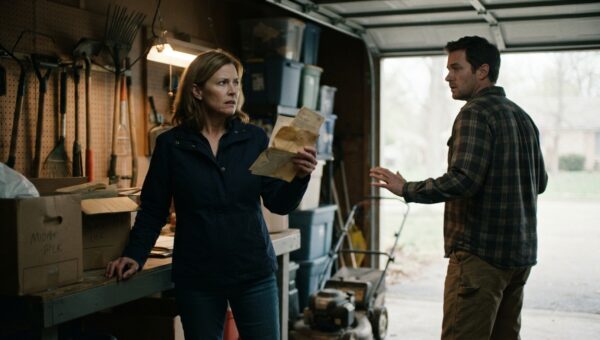
The opportunity came on Thursday afternoon while Arthur was out at the hardware store picking up weather stripping. I went down to the damp, cedar-scented garage to look for a roll of duct tape. His old metal tackle box, a heavy green monster he had owned since before we were married, sat unlatched on his workbench. Resting on top of the old wooden lures and spare hooks was a thick rubber band holding together a stack of faded picture postcards.
I pulled them out. Every single one was addressed in Arthur’s neat, familiar handwriting, postmarked to an address in a coastal town in Maine that I had never heard of.
The dates spanned backward across four years, right through our wedding anniversary trips, our daughter’s college graduation, and the quiet evenings when we sat across from each other in the living room watching television without exchanging a dozen words. None of them had stamps. They were drafts of a life he had been living entirely in his head, or perhaps somewhere else entirely.
PART 2
The garage felt suddenly airless, the smell of WD-40 and old engine oil thick in my throat. I carried the stack of postcards up to the kitchen table, my hands trembling as I spread them out under the harsh overhead light.
The messages were devastatingly ordinary, which somehow made them worse. He wrote about the weather on the coast, the way the morning fog rolled over the rocky inlets, and how peaceful it was to sit on a porch where nobody knew your name. In a postcard dated just last November, right around Thanksgiving, he had written: *The repairs on the cabin are almost finished.
Once the title clears, I will have to decide whether to make the break clean or find a way to explain it.*
The front door clicked open, and Arthur’s heavy boots scraped on the entryway mat. He walked into the kitchen carrying a small plastic bag of screws, stopped dead in his tracks when he saw the postcards fanned across the table.
The color drained instantly from his face, leaving him looking frail and remarkably old. He set the bag down on the counter with a soft thud.
“Where did you find those?” he asked, his voice barely above a whisper.
“In your tackle box,” I said, my voice remarkably steady compared to the storm raging inside my chest. “Four years of planning to leave, Arthur? Was I ever part of this picture, or were you just waiting for the right moment to pack a bag and disappear?”
He gripped the edge of the kitchen counter, his knuckles white. He didn’t deny it. He didn’t yell or try to brush it off as a joke. He just slumped against the cabinets, looking defeated.
“I bought that cabin with my brother’s inheritance after he passed,” Arthur said, staring down at the floorboards. “It’s small. Just two rooms and a wood stove. I didn’t want to leave you destitute, Martha. I was trying to figure out how to divide the accounts so you’d be comfortable here while I… while I went to finish out my days where the air doesn’t feel so heavy with expectations.”
“And the house sale?” I demanded, the anger finally breaking through the shock. “Why did you sabotage the buyers?”
“Because I didn’t want strangers touching your things until I figured out what to say to you,” he whispered, looking up with tears shining in his eyes. “I wasn’t trying to run away from you, Martha. I was trying to decide whether to take you with me.”
PART 3
The next morning, the reality of what we had uncovered settled over the house like a cold fog. The realtor called back at nine o’clock, furious that the buyers had walked away after Arthur’s abrupt cancellation, telling us we would have to relist at a lower price if we wanted any serious offers before winter.
I didn’t argue. I hung up the phone and walked into the den where Arthur sat staring out at the overgrown backyard.
“We need to talk about what happens next,” I said, pulling up a wooden chair to face him. “You can’t keep living one foot in Maine and one foot here, Arthur. And I refuse to spend my golden years rattling around this empty house waiting for you to pack another box.”
“I know,” he said quietly. “The Maine property… it’s real. The deed is in my name, and I’ve been paying the taxes out of a separate savings account I kept from my graphic design freelance work. I didn’t hide the account to be malicious, Martha. I hid it because I felt trapped. We both did.”
He wasn’t wrong. For years, we had stayed together out of habit, duty, and a shared fear of being alone after the nest emptied. But the revelation of his secret plan, as painful as it was, stripped away the polite numbness we had worn like armor.
“If you want to go to Maine,” I said carefully, watching his expression, “then pack your bags and go. But don’t do it in secret, and don’t leave me behind as an afterthought or a ghost in your past.”
Arthur looked stunned, his mouth opening slightly as he processed my words. He had expected ultimatums, screaming matches, or a demand for immediate divorce lawyers. He hadn’t expected permission to be honest about his own exhaustion.
“I don’t want to go without you,” he said, his voice cracking with genuine emotion. “That’s why I never mailed those cards. Every time I sat down to write the final one telling you I was gone, I realized I couldn’t picture the porch down there without you sitting in the rocking chair beside me.”
ENDING
We didn’t sell the house that autumn. Instead, we took a hard, honest look at the life we had built and realized neither of us actually wanted the sterile, quiet condominium downtown.
By November, we had put the colonial on the market at a realistic price, accepted an offer from a young carpenter who loved the historical quirks as much as Arthur did, and packed our belongings into a rental truck. We didn’t move permanently to the rugged coast of Maine, but we didn’t stay anchored to the heavy memories of Elm Street either. We compromised on a small, manageable farmhouse halfway between our children in the city and the northern woods where Arthur could fish without feeling like he was sneaking around behind my back.
On our first evening in the new place, the sun dipped below the tree line, painting the kitchen walls in shades of amber and gold. The unpacked boxes were stacked high in the corner, and the smell of fresh cedar and pine filled the air.
Arthur walked up behind me as I stood by the kitchen window looking out over the open fields, wrapping his arms gently around my waist. He rested his chin on my shoulder, just like he used to do forty years ago before life got so complicated.
“No unmailed postcards this time?” I asked softly, a small smile touching my lips.
“None,” he murmured, kissing the side of my neck. “I don’t need to write about it anymore. We’re already here.”
I covered his hands with mine, feeling the familiar warmth of his skin, and for the first time in a very long time, the house felt entirely like home.