The coffee cup had been sitting on the laminate counter since five in the morning, half-full and cold enough to skim over. Outside, the dust was already starting to bake off the mesquite trees along the fence line, lifting that dry, alkaline smell that gets right down into your teeth if you stay out too long. I heard the floorboards groan in the hall before I heard the footsteps.
Lucas came out wearing those same gray sweatpants he had practically welded to himself for the past six months, his hair sticking up like a bird’s nest on the left side where he slept against the wall.
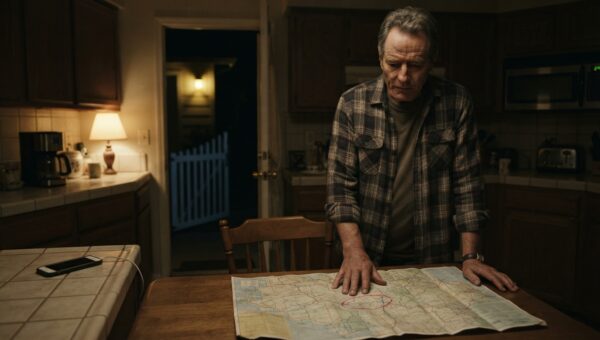
He didn’t look at me when he poured his water. He just leaned against the counter and stared down at the gray linoleum where the pattern had worn through right in front of the sink. That spot had been bare wood since before his father passed, and every time I looked at it, I remembered Harlan standing there scraping fish scales off a crappie into an empty coffee can. Lucas was thirty-one years old, standing in the exact same spot, waiting for the day to pass without touching a single thing that required an ounce of sweat.
I set my rag down on the edge of the sink and wiped my hands on my apron.
The cloth was stiff from bleach and too many trips through the old Maytag out on the back porch. I didn’t want to say it, but the thirty days had been ticking in my head like a bad valve on a tractor engine ever since the first of the month rolled around without so much as a crumpled ten-dollar bill on the kitchen table.
“You’ve got twenty-four days left on that notice, Lucas,” I said. My voice sounded flat even to me, just dry timber rubbing against dry timber.
He took a slow drink of his water and didn’t blink. “I know, Dale. I’m keeping track.”
“You haven’t paid rent since the Fourth of July last year,” I told him, keeping my eyes right on the side of his neck where a little mole sat just above his collar. “And every time I ask about that job down at the co-op or the yard, you tell me you’re working on something.
A man can’t live on ‘working on something’ when the property taxes come due in November.”
He finally turned his head, his eyes heavy around the edges like he hadn’t slept a proper night since he moved back home after that second divorce of his. He set the plastic cup down so soft it didn’t even make a click against the counter.
“I know it looks bad, Dad,” he said. He reached out and touched my forearm with two fingers, a light, almost timid gesture that he hadn’t used since he was ten years old scraping his knee down at the creek. “Just give me a little more room to breathe. What I’m doing… it’s big. It’s going to clear all of this. Every last bit of it.”
“Big doesn’t pay the butane bill, son,” I said, pulling my arm away just enough that his hand dropped to his side. “Thirty days.
I mean it. Pack what matters and find a place that doesn’t expect me to keep the lights on while you figure out the world.”
He didn’t yell. He didn’t drop his chin or start in with that sharp, defensive whine he usually used when he was cornered. He just nodded once, slow and deep, like a man agreeing to help load a dead calf into the bed of a pickup.
“All right,” he said. “If that’s how you want it, Dale.”
That was the part that stayed in my teeth all afternoon. When a man gets mad, you know where you stand with him; you can measure the distance between his voice and the door. But when he just takes it like a dog taking a pat on the head, you start wondering what he’s got hidden behind his eyes while he’s looking at you.
Three days later, the duffel bag was gone from the front closet. The hangers were empty except for an old wire one that had wedged itself into the corner. I found a single nickel on the nightstand in the spare room, tucked under the corner of the Gideon Bible Harlan’s mother had left us when we married back in eighty-two. I left the nickel right where it was.
The heat didn’t break for a week. The wind came out of the west, hot and thin, turning the grass around the water tank the color of old flour sacks. I was out in the barn trying to grease the bearings on the old disk harrow when the mail truck crunched up the gravel drive. Brenda drove that Dodge Dart with the passenger-side fender pushed in from where she backed into the mailboxes down by the county road, and she always blew the horn twice whether there was a letter or just junk circulars for seed corn.
I walked out wiping grease off my thumb with a scrap of oily denim. Brenda leaned across the seat, her glasses sliding down the bridge of her nose.
“Certified for Lucas,” she said, holding out a white slip of paper with a green sticker on the edge. “Looks like it came out of Dallas. You want me to hold it or drop it in your box?”
“Give it here,” I said, signing my initials where she tapped her yellow fingernail. “I’ll make sure he gets it.”
She squinted at me through the windshield, her mouth tight. “He still staying down by the creek with that cousin of his?”
“He’s staying where he’s staying,” I told her, which was my polite way of saying it wasn’t my roof anymore.
The envelope sat on the corner of the kitchen table right beside the salt shaker until evening. It wasn’t thick, but it had that stiff, heavy feel of government paper or bank stationery, the kind that doesn’t bend easy even if you try. I didn’t want to open it, but the return address up in the corner was some outfit called Meridian Capital Services out of an office park off Stemmons Freeway. That wasn’t a bill collector name. That was lawyer talk.
I finally picked it up around six o’clock, right after the sun dropped below the corrugated tin roof of the machine shed and the shadows started stretching long across the back pasture. I texted Lucas. The phone took three tries to send because the tower out on Highway 70 was acting up again.
*Letter here for you from Dallas. Meridian Capital. You need to come get it.*
It took him twenty minutes to reply. Most times he didn’t answer before dark.
*Can’t get away right now. Can you open it? Just read me what it says, Dad.*
I stood there in the quiet kitchen with the screen door hooked open to let in whatever scrap of breeze was floating off the tanks. The house felt too big without him shuffling around in those heavy rubber-soled shoes, but it also felt like it could finally breathe. I slid my thumbnail under the flap and tore it clean across, the paper making a sharp, tearing sound that seemed loud in the empty room.
Inside was a single folded sheet of heavy cream bond with a watermark of an eagle holding a bundle of wheat. I unfolded it and ran my thumb down the columns of numbers until I found the bold print near the middle.
There was a line item for an advance of one hundred twenty-four thousand eight hundred fifty dollars. My yearly take from the lease on the north forty didn’t even scrape the edges of a number like that.
My fingers felt thick and clumsy as I lifted the phone to my ear and hit his number. He answered on the second ring, before the tune even finished.
“Did you open it?” he asked. His voice was lower than usual, tight at the back of his throat.
“Lucas,” I said, and my own voice sounded like it belonged to someone else standing across the room. “What in the hell is one hundred twenty-four thousand dollars? What is this?”
He let out a long breath through his nose, the sound whistling slightly against the receiver. I could hear a television playing in the background, some low murmur of a game show or an old movie with canned laughter.
“That’s why I couldn’t tell you what I was working on, Dad,” he said, and for the first time his voice had a little of that old boyish edge to it, like he was waiting for me to pat him on the shoulder and tell him he’d done good. “I found a buyer for the east eighty. Not the whole tract, just the timber rights and the gravel lease down by the creek bed. They needed capital up front to clear the permits before the county commission changed the zoning next month.”
I stood there by the kitchen table, the yellow light from the overhead bulb catching the grease spot near the salt cellar. My hand started to shake just a little bit, not from anger, but from that cold, flat realization that comes when you see a fence has been cut from the backside where you aren’t looking.
“We don’t sell the east eighty, Lucas,” I said, and I didn’t raise my voice an inch. “Your granddad cleared those post oaks with a team of mules when Eisenhower was in the White House.”
“It’s not sold yet,” he said quickly, the words tumbling over each other now like water down a spillway. “It’s just optioned. I used the option as leverage to back the loan for the startup down in Austin. The distribution outfit. Once the first quarter returns come in, I buy the option back and the land stays in the family. Nobody even has to know it was on the table.”
I didn’t answer him right away. I turned the first page over, my eyes moving down to the small print at the bottom where the signatures were supposed to go. There was his name, scrawled in that messy, hurried hand he never did grow out of, and right below it, in a slightly darker ink that must have been filled in by a notary public down at the courthouse, was the collateral description.
Route 4, Box 142. The homestead tract. Five acres, including the dwelling house and all appurtenances thereunto belonging.
The kitchen didn’t feel quiet anymore. It felt like the walls were closing in about four inches on every side, shrinking down until I could smell the old cedar dust from the attic and the lime I’d spread under the back porch twenty years ago. He had put my house up as collateral for a ninety-day paper on a gravel deal that hadn’t even broken dirt.
“Lucas,” I said, and the word came out so dry it scraped the roof of my mouth. “Look at the second page.”
There was a long silence on the line. The television in the background stopped, or maybe he muted it with his thumb. All I could hear was the faint, high-pitched whine of the cell tower miles away across the dry creek beds.
“I know,” he whispered. “I had to use clear title to show liquidity for the lenders. They wouldn’t touch the timber alone without a homestead rider.”
“You put my roof down on a piece of paper without asking me,” I said. My hand was gripping the plastic phone so hard my knuckles looked like white stones under the skin. “You had thirty days to get out, and instead you spent your last week down at the county clerk’s office signing away the ground I sleep on.”
“It’s not gone, Dale,” he said, and his voice finally broke, just a little bit, the way it used to when he was seven and fell off the hay wagon and tried not to cry until I picked him up. “I wouldn’t let them take the house. You don’t know how hard it was to get them to agree to the terms. If this works, “
“If it works,” I cut in, and the sound was like an axe hitting dry hedge, “we keep what we already own. And if it doesn’t?”
He didn’t answer. He didn’t have an answer for that part, because there wasn’t one written on the cream-colored paper.
“Get your bag,” I told him, looking out the kitchen window where the first stars were starting to punch through the purple haze over the windmill. “And bring the rest of that paperwork with you when you come. We’re going to see Mr. Henderson down at the First National before he opens his mail tomorrow morning.”
“Dad, “
“Don’t ‘Dad’ me, Lucas,” I said, and my hand finally stopped shaking, settling down into that cold, steady weight a man gets when there’s no more room left to back up. “You brought the papers here. You can bring them back. We’re going to tear that signature off the bottom if I have to sit across from three lawyers until the sun comes up twice.”
I clicked the end button before he could say another word, the little screen going dark against my palm. The kitchen was quiet again, just the hum of the old refrigerator in the corner and the sound of the wind rattling the screen door against the pine frame. I folded the letter in half along the original crease, slid it back into the white envelope, and laid it right under the salt shaker where I could see it from every corner of the room.