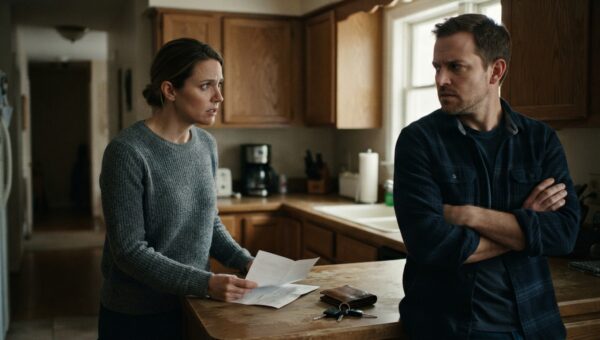
My father and I had never been close, but when his congestive heart failure worsened last winter, I became the one who drove forty miles round-trip to take him to every clinic appointment.
My older brother, Greg, lived eight minutes down the road from Dad’s brick ranch house. Greg worked as an independent commercial estimator, which meant he set his own hours and drove a company truck. When the doctor told us in November that Dad could no longer drive himself safely because of dizzy spells and fluid buildup, Greg put his arm around Dad’s shoulder in the hallway and told him not to worry. He looked at me across the exam room and said he would take over the driving duties as soon as his fall project wrap-up finished in mid-December.
December came and went. Then January passed, and then February.
Every single week, the clinic would call with blood lab dates, cardiology follow-ups, and prescription dosage adjustments. Every single week, I texted Greg the dates. Greg always had an urgent bid to submit, a contractor meeting in the next county, or a client dinner he could not reschedule. He would send back short, hurried texts: “Can’t swing this Thursday. Cover it and I’ll take the next two.”
He never took the next two.
I took off early from my job as an inventory coordinator at the regional parts warehouse, burning through my personal time off and sitting in waiting rooms with Dad while the rain beat against the clinic glass. Dad was seventy-six, stubborn, and quiet. We didn’t talk much during those drives. We never had. He had worked thirty-five years on railroad maintenance crews, and his idea of a conversation was commenting on how low the creek was or asking if I had checked my oil lately.
What wore me down wasn’t the mileage or the lost pay. It was the praise.
Whenever I walked Dad back into his living room and helped him out of his heavy coat, he would pick up his landline phone and dial Greg. He would brag about Greg to his neighbor over the fence. He would tell the home-health nurse who came on Fridays what a hard worker Greg was, and how Greg was “always there” for him, checking on things and keeping the family steady.
When Dad looked at me, he just gave a stiff nod and asked what time we had to leave the next Tuesday.
By mid-March, my supervisor called me into the office to warn me that my attendance points were dangerously close to probation. That evening, after waiting forty-five minutes in a pharmacy line to pick up Dad’s blood pressure medication, I carried the paper bag into Dad’s kitchen. He was sitting at the laminate table with a mug of black coffee, watching the evening news on the small counter television.
“Dad,” I said, setting the medicine down harder than I intended. “I can’t keep doing every single trip. My job is on the line. Greg lives right around the corner, and he hasn’t driven you to a doctor once in five months. You have to call him.”
Dad didn’t get mad. He didn’t defend Greg, and he didn’t look up at the television. He just sat there for a long moment, staring into his coffee cup. Then he reached over to the bread box on the counter, pulled out a large spiral-bound wall calendar from the local farm supply store, and slid it across the table toward me.
I looked down at the grid.
The months from November through March were covered in neat blue ink. There were cardiology checks, kidney screenings, physical therapy consultations, and nutrition classes. There were nearly thirty appointments written across those five months that I had never heard about.
Every single one of them had a heavy black line drawn straight through the box.
Beside every crossed-out visit, written in thick black marker, were two letters: *G.M.* Greg’s initials.
Dad tapped the paper with his thumb. “I canceled every one of them myself,” he said quietly.
I stared at the pages, then reached into my purse, pulled out my car keys, and walked out to my sedan in the driveway. I opened the glove compartment, pulled out the thick stack of appointment reminder cards I had saved from every trip I had driven him to, and walked right back in.
“Why?” I asked, dropping my stack of cards beside his calendar. “Why would you cancel thirty doctor visits?”
Dad looked up at me, his eyes tired and watery.
“Because I didn’t want you two fighting over me,” he said. He pushed a slip of yellow legal paper toward me with a phone number written in pencil. “Now make this call for me, David. Please.”
PART 2
The phone number on the slip of paper belonged to an attorney named Raymond Vance, whose office was on Court Street across from the county courthouse.
I looked at the number, then down at the calendar again. “What does a lawyer have to do with you canceling appointments?”
Dad folded his hands on top of the farm supply calendar. For the first time in my life, I saw my father look small.
“In November, when the doctor said my heart was failing, Greg came over with a notary,” Dad said. His voice was steady, but quiet. “He brought papers for a durable power of attorney and a quitclaim deed on this house. He told me if I couldn’t handle my own affairs, the state would take the property if I ended up in a nursing home. He said he would manage all my medical care, handle the appointments, and make sure the taxes were paid. But he made me promise not to tell you.”
My chest tightened. “Why wouldn’t you tell me?”
“Because Greg said you were already struggling with your divorce and your rent,” Dad told me. “He said you’d resent having an old sick man dumped on your shoulders. He told me that every time I had a specialist visit, he would assign it to an outside medical transport service if he couldn’t take off work, and that the transport bills would come out of my savings.”
I pulled the calendar closer. The appointments written in blue ink were the ones Greg had scheduled through the hospital network using the online patient portal he had set up in his own name. The handwriting in black marker, the crossed-out lines with Greg’s initials, was how Dad had kept track of what happened next.
“Every time a new appointment showed up on the portal, Greg would call me,” Dad said. “He’d tell me he had a client meeting in Dayton or a job site in Lima. He’d tell me to call the clinic desk, tell them I was feeling fine, and cancel the visit. He told me if I kept going to specialists three days a week, the clinic would report me as completely dependent, and the county would force me into assisted living. He said he was protecting my independence.”
“He wasn’t protecting your independence,” I said. “He was avoiding having to drive you, and he didn’t want you spending money out of the accounts.”
“I figured that out in January,” Dad replied. “That was the week I woke up with my ankles so swollen I couldn’t lace my work boots. Greg told me to stay off my feet and drink water. You came over on your lunch hour, took one look at my legs, and drove me straight to the emergency room. You didn’t ask about money. You didn’t ask if Greg was coming. You just sat in that plastic chair by the curtain for seven hours until they drained the fluid.”
I remembered that night. I had sat in the triage bay using a paper towel to wipe cold sweat off his forehead while his heart monitor beeped every four seconds. Greg had texted me at ten o’clock asking if Dad was going to be home before the weekend so the lawn mower guy could get into the shed.
“If you knew Greg was canceling your care, why did you praise him every time I walked through the door?” I asked. “Why tell everyone he was the only one who showed up?”
Dad reached out and touched the stack of appointment cards I had brought from my glove compartment.
“Because Greg told me that if I started relying on you for everything, you would figure out what he had me sign in November,” Dad said. “He told me you would get angry, walk away, and leave me with nobody. I talked him up because I was terrified of him, David. I thought if I kept him happy, he wouldn’t put this house on the market while I was still breathing in it.”
PART 3
The next morning, I used a sick day from work. At eight-thirty, I drove Dad to Raymond Vance’s office on Court Street.
Mr. Vance was an older attorney who had handled property deeds in our county for forty years. He knew Dad from the railroad. When we sat down in his conference room, Mr. Vance pulled a manila folder from his credenza and laid three documents on the polished walnut table.
The first was the durable power of attorney Greg had Dad sign in November. It gave Greg sole authority over Dad’s checking accounts, his medical decisions, and his personal property.
The second document was a transfer-on-death deed for Dad’s house, naming Greg as the sole beneficiary, completely bypassing the original 2008 family trust that split the property equally between my brother and me.
The third document was a printed bank statement from Dad’s savings account at Mercer County National Bank.
Over the past four months, while I was paying out of pocket for Dad’s prescription copays and gas to get him to the cardiac clinic, Greg had made four cash withdrawals totaling $14,200. On the ledger memo lines, Greg had written: *Caregiver administrative reimbursement and emergency maintenance.*
Mr. Vance looked at Dad over his reading glasses. “Thomas, when your son Greg brought these documents to my associate to be recorded, he stated that you had reviewed the transfer with your entire family. Is that correct?”
“No,” Dad said firmly. “He told me it was a protective trust so the county hospital wouldn’t put a lien on the roof. He told me David couldn’t handle the stress of knowing.”
“I have already drafted the formal revocation of power of attorney,” Mr. Vance said. “And I have prepared a statutory deed revoking the transfer-on-death designation. If you sign them now, Greg has zero legal authority over your person, your bank accounts, or this real estate the minute I file them with the recorder’s office downstairs.”
Dad didn’t hesitate. He took Mr. Vance’s pen, held the paper down with his swollen, arthritic knuckles, and signed his name on both documents with a steady hand.
At noon, we walked back to my car. As I pulled out of the parking lot, my cell phone rang through the dashboard speaker.
It was Greg.
“David,” Greg said, his voice loud and irritated. “Dad’s online banking alert just hit my phone. Somebody tried to freeze the master account at the branch. Where is he?”
I looked over at Dad. Dad took a slow breath, reached over, and tapped the button on the steering wheel to speak directly into the microphone.
“I am in the car with David, Greg,” Dad said.
The line went quiet for three seconds. “Dad, what are you doing? I told you not to mess with the bank. The bank is set up for your emergency reserve.”
“The lawyer canceled your paper, Greg,” Dad told him plainly. “Both papers. And you have thirty days to return the fourteen thousand dollars you took out of my savings, or Mr. Vance is filing a complaint with the county prosecutor’s elder affairs unit.”
“Are you out of your mind?” Greg shouted. “I kept that house from going to probate! I set up your whole portal! David is just bitter because he’s broke and he couldn’t even keep his own house after his wife left him! I gave up my own work time to manage your care!”
“You didn’t manage anything, Greg,” Dad said. His voice was not angry. It was heavier than that, flat and completely settled. “You canceled thirty appointments because you couldn’t be bothered to drive me eight miles down the road. David drove me forty miles every week. He kept the cards in his glove box while you were writing your initials on my calendar. Don’t come by the house tonight. I’m having the locks changed at three o’clock.”
Dad reached out his thumb and ended the call.
ENDING
Greg called four more times that afternoon, but we didn’t pick up. By the end of the week, Mr. Vance sent a certified demand letter to Greg’s office. Two weeks later, a cashier’s check for $14,200 arrived at the law firm, drawn from Greg’s business account, along with a note from an attorney in Lima stating the matter was closed.
Greg hasn’t spoken to Dad since that Friday. He hasn’t driven down the road, and he didn’t show up for Easter dinner.
I had to face my supervisor at the parts warehouse on Monday morning. I brought Dad’s formal medical letters and explained the situation honestly. Because I had eighteen years of clean service with the company, the plant manager agreed to transfer me to the four-to-midnight inventory shift. It meant working evenings, but it left my mornings completely free for doctor visits, pharmacy runs, and grocery shopping without burning another hour of personal time.
Dad’s health didn’t magically improve. His congestive heart failure is permanent, and his lungs still rattle when the weather turns damp. But with the right medications taken on a strict schedule, and every single specialist visit kept on the calendar, the swelling in his legs went down enough for him to walk out to his garden patch without his aluminum cane.
Yesterday morning was bright and clear. I drove out to his house at nine to take him to the lab for his bi-weekly blood work.
When I walked through the side door, Dad was already dressed in his flannel shirt and brown work shoes, holding his wool cap in his hand. The old farm supply calendar was gone from the table, replaced by a clean, white dry-erase board hung on the wall beside the refrigerator.
Every date was filled in with black dry-erase marker. Cardiology on the twelfth. Nephrology on the nineteenth. Lab draw every other Tuesday. None of them had a line through them.
He picked up a thermos of black coffee, handed it to me, and walked out to the passenger side of my sedan.
Before he got in, he paused with his hand on the car door, looking at the gravel driveway.
“You checked the tire pressure on this thing lately, David?” he asked.
“Checked it Sunday, Dad,” I said.
He nodded once, satisfied, and climbed into the seat. We backed out onto the two-lane road and headed toward town together.