PART 1
I am thirty-eight years old, and for five years I delayed my own life so my parents would not lose the split-level on Maple Street.
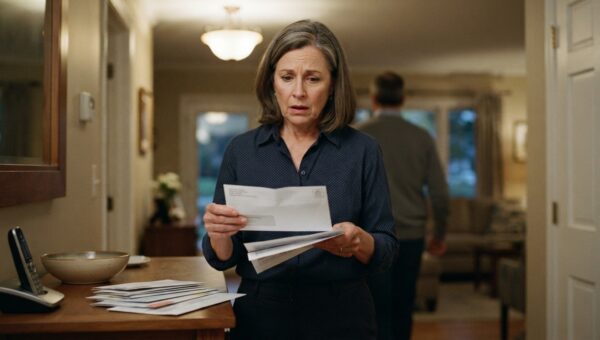
When Dad had his first stroke back in 2021, the medical bills came like a flash flood. Medicare covered the initial hospital stay, but the specialized rehab, the home health equipment, and the prescription copays tore through their savings account in eight months.
Dad was sixty-six, forced to retire from the machine shop, and Mom was working part-time at a dry cleaner.
I took the extra overtime shifts at the wastewater plant where I work as an operations tech. I paid their county property taxes twice so the township wouldn’t put a lien on the front door. When their oil furnace cracked in the dead of January three winters ago, I put forty-two hundred dollars on my personal credit card to replace the unit. I paid six months of their mortgage installments directly through their lender’s online portal when Mom called crying that the grace period was down to forty-eight hours.
Then, two years ago, the mortgage company threatened foreclosure over accumulated arrears. I emptied my private down payment fund, money I had saved for six years in a separate credit union account, and gave them thirty-one thousand dollars in a certified cashier check.
Mom sat at my kitchen table, wrapped both of her cold hands around mine, and looked me in the eyes.
“Austin, you are saving our lives,” she swore, with tears running down her cheeks. “Your name is going to be protected. When we sell this place, you get that money back first. Every single dollar, before anything else is touched.”
I believed her. In my family, you did not ask your mother to sign a promissory note while your father was in the next room learning how to hold a fork again.
Last month, Mom called to tell me the stairs were finally too much for Dad’s knees. They had found a ground-floor two-bedroom apartment near the senior center in town. I felt a tremendous weight lift off my chest. I thought they would list the house, pay off the remaining balance, hand me my $31,000, and use the rest of the equity to live comfortably for the rest of their lives.
Two days later, my thirty-two-year-old brother, Kyle, stopped by my apartment to return a socket set he had borrowed six months earlier.
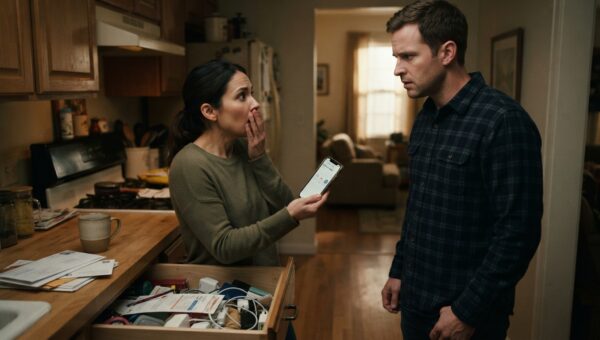
Kyle worked as an assistant manager at an auto parts retail store. He was casually drinking a soda, leaning against my counter, when he mentioned that he was moving next weekend.
“Moving where?” I asked.
“Over to Maple Street,” Kyle said, tossing his keys on the counter. “Mom and Dad decided to sell to me so I can finally get out of that noisy complex on Route 4.”
I paused with a glass of water in my hand. “What are you paying them?”
“I’m taking over the mortgage note,” Kyle said, like he was talking about buying a used lawnmower. “Ninety-six thousand left on it. Dad called the bank, and they approved a simple loan assumption. My monthly payment is going to be under eight hundred bucks.”
I stood by the sink. The houses on Maple Street were three-bedroom ranches on half-acre lots with mature oaks.
Two doors down from my parents, an identical house had closed in June for four hundred and ten thousand dollars.
“Kyle, the place is worth around four hundred and ten thousand,” I said. “What about the equity? What about the money I put into that house?”
Kyle shrugged, took a sip of his soda, and looked toward the hallway. “Mom said that was between you and her. Dad just wanted to keep the home in the family name. I’m doing them a favor by taking the debt off their backs.”
I left my kitchen, got into my truck, and drove straight over to Maple Street.
Mom was in the living room taping up a cardboard box of old photo albums. When I walked through the front door and asked her about the $31,000 from my house fund, she didn’t look up from the packing tape.
“Austin, be reasonable,” she said, her voice completely smooth. “That was family help during a crisis. Parents don’t pay their children back for love.”
PART 2
The tape gun made a loud, screeching sound as Mom pulled another strip across the cardboard flap.
“Family help during a crisis?” I repeated. The living room smelled of dust, old upholstery, and packing paper. “Mom, you sat at my kitchen table. You held my hands and told me that when this house was sold, my thirty-one thousand dollars came back to me first. That was my down payment. I have been living in a drafty one-bedroom rental on Fifth Street for six years so you and Dad wouldn’t lose your roof.”
Mom set the tape gun down on an armchair. She smoothed the front of her denim apron and looked at me with that tired, disappointed expression she always used whenever one of us questioned her authority.
“Kyle is thirty-two, Austin,” she said, lowering her voice as if Dad might hear from the back bedroom. “He doesn’t have your career. He doesn’t make town municipality wages with union benefits. He has a wife and a baby on the way, and rent in this county is out of control. If we put this house on the open market, realtors take six percent, the capital gains taxes eat up the rest, and Kyle gets priced out of the neighborhood forever.”
“And what do I get?” I asked. “I paid two tax bills. I bought the furnace. I kept the sheriff off your porch. If you hand Kyle a house with over three hundred thousand dollars in free equity, you are basically giving him my savings account as a wedding present.”
“Nobody gave anyone a present,” Mom snapped, her voice losing its gentle tone. “Kyle is assuming ninety-six thousand dollars of bank debt. That is a heavy burden for a young man with a family. You are thirty-eight, you have no children, and you have a steady job. Why are you begrudging your own brother a foundation?”
Before I could answer, the hallway door swung open.
Dad walked in using his four-prong aluminum cane. His left leg dragged slightly on the carpet, the aftereffect of his stroke, but his eyes were clear and angry.
“What are you badgering your mother about, Austin?” Dad asked, leaning his weight onto the cane. “We heard you out in the driveway.”
“I am asking about the thirty-one thousand dollars, Dad,” I said. “The cashier check from June of twenty-four. The money that cleared the foreclosure notice from First Federal.”
Dad’s face flushed dark red around his collar.
“That was your contribution to this household,” Dad said, his voice gravelly and hard. “You lived under this roof for eighteen years for free. We fed you, we clothed you, and we put tires on your first car. When a family is in trouble, everybody carries a bucket. You don’t come back two years later holding an invoice like a common debt collector.”
“I hold an invoice because Mom gave me her word,” I told him.
“Well, circumstances change,” Dad said, pointing the rubber tip of his cane toward the front door. “We made a family decision. The deed is being transferred to Kyle on Friday morning at the title office. If you can’t be happy that your brother has a safe place to raise your niece, then maybe you need to take some time away from this family until your heart is right.”
I looked at my mother. She picked the tape gun back up and turned her back to me, pressing another strip of brown tape onto the box.
Neither of them asked how I was going to buy my own home. Neither of them thanked me for the furnace that was currently keeping the room warm.
I turned around, walked out to my truck, and sat in the driveway with my hands gripping the steering wheel until my knuckles ached.
I did not drive back to my apartment.
I drove downtown to the municipal records building where I had worked for eleven years. I took the back stairs down to the county recorder’s annex, walked up to the public counter, and asked the clerk for the deed file on 418 Maple Street.
PART 3
The county clerk was a woman named Nancy who had handled municipal utility easements with me for years. She pulled up the digital parcel file on her computer screen.
“Austin,” Nancy said, turning the monitor slightly so I could see the document history. “Your parents haven’t filed a deed transfer yet, but First Federal Lending submitted an assumption packet for review on Monday.”
I leaned over the counter. “Who signed the assumption paperwork, Nancy?”
Nancy clicked open the scanned PDF.
On page four of the assumption agreement, beneath my father’s shaky signature, was an affidavit of title condition. In order for the lender to permit a simple mortgage assumption without triggering the standard due-on-sale clause or requiring a formal appraisal, the borrowers had to certify under penalty of law that there were no secondary encumbrances, unrecorded liens, or private family debt agreements attached to the real property.
Tucked into the supporting documents was a copy of the emergency reinstatement receipt from June of 2024.
The $31,000 cashier check had indeed cleared the default. But attached to the bank’s internal file was an affidavit my mother had signed on June 14, 2024, at the drive-through window of the credit union.
The title of the form was *Gift Letter for Mortgage Reinstatement.*
Across the middle of the page, written in Mom’s clean, rounded handwriting, was one typed paragraph:
“I, Austin Miller, hereby certify that the sum of $31,000 given to Robert and Helen Miller is a bona fide gift, and that there is no obligation, written or implied, for repayment in cash or through real property equity.”
On the line marked Signature of Donor, there was a signature.
It was my name. Austin Miller.
Except the letter ‘A’ had a sharp, slanted loop that I had never made in my life. It was Mom’s handwriting, trying to slant backward to look like a man’s signature, witnessed by an assistant branch teller who had stamped it without checking my identification because Mom told her I was at work at the treatment plant.
My breath stopped in my throat.
Mom hadn’t just forgotten her promise. She had deliberately committed document forgery two years ago to keep the lender from classifying my $31,000 as a private second lien, knowing full well that if the bank saw a secondary debt, they would have forced a sale right then and there. She had manufactured a fake gift letter, signed my name to it, and filed it with a federally insured institution.
“Nancy,” I said, my voice barely audible above the hum of the office printers. “Print me three certified copies of that entire document packet. Right now.”
Nancy looked at my face, saw something in my eyes, and hit the print button without asking a single question.
I walked out of the county annex with the certified papers in a yellow folder.
I drove straight to the title company on North Main Street, the office Kyle had mentioned during his visit to my kitchen. The settlement agent handling the assumption was an attorney named Greg Vance.
I walked into his reception room, set my county employee badge on the desk, and asked to speak with Mr. Vance regarding the closing on 418 Maple Street scheduled for Friday.
Mr. Vance saw me ten minutes later in his small conference room. He was a man in his late fifties with wire-rimmed glasses.
I laid the certified gift letter on the table, opened my wallet, and pulled out my driver’s license, my county security clearance card, and three cancelled checks from my personal account showing my actual handwriting.
“Mr. Vance,” I said, keeping my voice level. “I am Austin Miller. This is an assumption file for my parents and my brother. My mother forged my name on this federal gift certification in June of twenty-twenty-four to conceal a thirty-one-thousand-dollar personal debt on that parcel.”
Mr. Vance picked up the document, adjusted his glasses, and looked from the forged signature to my driver’s license.
He didn’t speak for nearly a minute. The color slowly drained from his cheeks.
“Mr. Miller,” Vance said carefully. “If this document is fraudulent, the underlying assumption approval from First Federal is compromised. A forged gift letter submitted to a mortgage servicer constitutes federal bank fraud.”
“I am well aware of what it constitutes,” I said. “And if this closing proceeds on Friday to transfer three hundred thousand dollars of unencumbered equity to my brother for ninety-six thousand dollars, I will walk across the street to the county prosecutor’s office and file a formal criminal affidavit before the ink on Kyle’s deed is dry.”
ENDING
Mr. Vance called my parents while I was sitting in his conference room.
He didn’t yell, but his tone was ice cold. He told them that a cloud on the title and an allegation of document irregularities had been formally lodged against parcel 418, that the assumption closing for Friday was cancelled immediately, and that First Federal’s risk management division was being notified of an invalid gift certification.
Ten minutes after I left the title office, my phone started ringing.
It was Kyle. He was screaming so loud the speaker buzzed against my ear, cursing me for destroying his closing, calling me a bitter, jealous brother who couldn’t stand to see him get ahead in life.
I didn’t argue. I told him, “Ask Mom who signed my name to the bank papers two years ago, Kyle.” Then I hung up and blocked his number.
Mom and Dad called four times that evening. When I finally answered, Mom’s voice was broken, sobbing into the receiver, begging me not to let the bank file criminal charges against her.
“Austin, I was desperate!” she wept. “The teller told me that if it was a loan from you, the bank would reject the reinstatement and start the auction! I was trying to save our home! I thought I was protecting all of us!”
“You were protecting Kyle,” I said. “You were using my life savings to buy him a four-hundred-thousand-dollar house while treating me like an unpaid tenant.”
There was no court trial, and I did not send my mother to prison.
Under the threat of an immediate mortgage fraud referral from First Federal, my parents had to cancel the transfer to Kyle entirely. The bank revoked the assumption option and issued a sixty-day demand for refinancing or sale.
Three weeks later, my parents were forced to list 418 Maple Street on the open market with a local real estate agent.
The house sold in eighteen days for $405,000 to a young family relocating from Columbus.
At the formal closing in November, the title escrow officer deducted the remaining $94,800 mortgage balance, paid the real estate commissions, and cut two checks.
The first check was made out to me, Austin Miller, for exactly $31,000, plus an extra forty-two hundred dollars to cover the furnace replacement I had paid for on my credit card.
The second check, containing the remaining net equity of approximately $248,000, went to my parents.
Kyle did not get the split-level on Maple Street.
He had to sign a twelve-month lease on a three-bedroom duplex out on Route 4, paying fourteen hundred dollars a month. He hasn’t spoken to me since the signs went up in the yard, and my aunt told me that Kyle spent Thanksgiving telling the family that I took food out of his unborn daughter’s mouth.
My parents moved into their senior apartment near the center of town.
They have enough money from the sale to live quietly without worrying about heating bills or property taxes for the rest of their lives. Dad’s medical care is stable, and Mom doesn’t have to work at the dry cleaner anymore.
Mom sent me a short card in December. Inside, she had written: “Your father still thinks you were too hard on us, but I know why you did it. I am sorry about the paper.”
I didn’t throw the card away, but I didn’t frame it either. I put it in the bottom of my desk drawer along with the certified copy from the county recorder.
Last Saturday, I sat in the office of my credit union downtown.
I handed the loan officer a cashier check for thirty-five thousand two hundred dollars: my recovered house fund, plus the furnace money.
Together with the money I had saved over the last two years, I had a full twenty percent down payment.
By three o’clock, I had a signed pre-approval letter in my hand for a small two-bedroom brick bungalow on the east side of town, with a detached garage and an old maple tree in the front yard.
I walked out to the parking lot into the crisp autumn sunshine, unlocked my truck, and laid the pre-approval letter on the passenger seat.
It was not a gift, and nobody had to forge a name on a line to give it to me.
I paid for every single brick myself, and the only name that is ever going on that deed is mine.