PART 1
My sister Sarah died on a rainy Tuesday in November, and before the dirt on her grave had settled, our aunt Clara had already packed Maya’s clothes into three plastic storage bins.
Maya was eight years old. She had Sarah’s round hazel eyes and the habit of tucking her chin into her collar whenever she felt small. Clara stood on Sarah’s front porch, holding Maya by the shoulder with fingers that dug into the wool of the girl’s coat, and told the small crowd of neighbors that family looked after its own.
Clara was fifty-eight, owned a clean brick ranch on four acres out past the county line, and had run the local church benevolence committee for twenty years. Everyone nodded. Everyone sighed with relief that the child had someone respectable to take her in.
I wanted to believe her. I was fifty-two, working thirty-five hours a week at the county billing desk, living in a one-bedroom apartment over an old dry cleaner while trying to pay down the debt left over from my divorce. Clara had the spare bedroom, the yard, and the steady income from her late husband’s pension. When Clara told the probate judge that she was best equipped to give Maya stability, our mother nodded from the front bench. Mama had always treated Clara like the family authority.
“She is safe with me, Nora,” Clara told me that afternoon in the courthouse parking lot. “You need to get your own feet on solid ground. Don’t worry about Maya. She will have order and quiet.”
Quiet was the one thing Maya had in excess. Over the next four months, whenever I drove out to the brick ranch to drop off new school shoes or Sarah’s old winter quilt, Maya barely made a sound. When I was alone with her on the back porch, she would press her forehead against my arm and tell me about the yellow spider on the screen door or show me a smooth stone from the driveway. But the second Clara’s kitchen slippers scuffed across the linoleum, Maya shut down. Her mouth clamped tight. Her hands slid between her knees. If Clara asked what she wanted for supper, Maya only stared at the floor until Clara sighed loudly about the child’s stubborn grief.
“She has taken Sarah’s passing very hard,” Clara told the preacher on a Sunday in March. “She resists every gentle rule I lay down.”
By April, the weather warmed up past seventy degrees, but Maya was still wearing the navy blue long-sleeve school cardigans I had bought her for the dead of winter.
The annual school health screening came up on a Thursday. Maya attended the consolidated elementary school five miles down the highway.
I took my lunch break early because the district nurse’s office called to tell me Maya’s immunization records were missing a signed state exemption form from Sarah’s old file. Sarah had listed me as the secondary emergency contact years earlier, and the school clerk reached me after Clara did not answer her landline.
When I stepped into the clinic, Maya was sitting on the examination table covered in white butcher paper. The paper crinkled every time she swung her sneakers.
The nurse, a woman named Janice Miller who had worked in that district long enough to have bandaged my own scraped knees as a girl, was writing in a blue folder.
“Nora,” Mrs. Miller said, looking up over her half-glasses. “I am glad you came. Clara didn’t pick up, and we needed someone to witness the routine physical checklist.”
“I brought the paperwork from Sarah’s lockbox,” I said, setting the envelope on the desk.
Mrs. Miller turned back toward Maya. “All right, sweetheart. I just need to check your heart and your arms, and then we will check your height.”
Mrs. Miller reached out to push up the sleeve of Maya’s navy cardigan. Maya flinched back against the wall, her hands balling into fists inside the cuffs.
Mrs. Miller paused. Her eyes moved from the child’s tense knuckles to my face.
“Maya,” Mrs. Miller asked softly, “have you always worn these thick sleeves when the sun is out like this?”
Maya looked at me. Her hazel eyes were wide and watery, but she did not say a word. She slowly shook her head from side to side.
Mrs. Miller did not argue. She gently took Maya’s wrist and lifted the wool cuff toward the elbow.
On the pale skin of Maya’s left forearm, running nearly three inches down toward the bone, was a dark, purplish-yellow contusion. The outline was unmistakable. It formed a rigid, rectangular box with a notched center bar, identical to the heavy brass tongue of a working man’s work belt.
Mrs. Miller did not raise her voice. She did not gasp. She pulled her stool closer, checked Maya’s shoulder, and then stood up, her jaw set hard.
“Nora,” Mrs. Miller said quietly, “step out into the hall with me for one minute, please.”
In the hallway, Mrs. Miller closed the door firmly. “I am mandated to contact child protective services immediately. The county worker will be here within forty minutes. You need to stay right here until they arrive.”
I leaned my back against the painted cinder-block wall. My throat felt thick and dry. Clara had told everyone Maya was safe. Clara had stood in Sarah’s living room and promised to love the girl like her own flesh.
By five o’clock that evening, an intake worker named Marcus had finished interviewing Maya and documenting the marks on her arms and upper back. Clara had been summoned to the school office, but she never walked inside. A neighbor told Marcus that Clara had seen the county sheriff’s car parked near the front flag pole, turned her sedan around at the gate, and driven straight home.
The state placed Maya in emergency shelter with me for forty-eight hours while they filed an expedited protective petition. I brought Maya back to my small apartment, fed her canned chicken noodle soup at my laminate kitchen table, and tucked her into my bed under Sarah’s quilt.
At eight-thirty, my phone rang. Clara’s landline showed on the caller ID.
When I answered, Clara did not say hello. Her voice was sharp, shaking with an anger she usually kept tucked away behind church manners.
“You have destroyed this family’s name over a scratch,” Clara hissed into the receiver. “You interfered in a home that was doing God’s work. The child is a born liar, Nora. She throws herself against the wall and makes up stories because she misses Sarah, and you went and handed her lies to the state.”
“Clara,” I started, my hands trembling around the receiver, “there is a belt mark on her arm.”
“She fell in the barn,” Clara snapped. “She tells tall tales, and you were always too soft to see it. If you take this to court, you will tear your mother’s heart in two. You have no idea what you have started.”
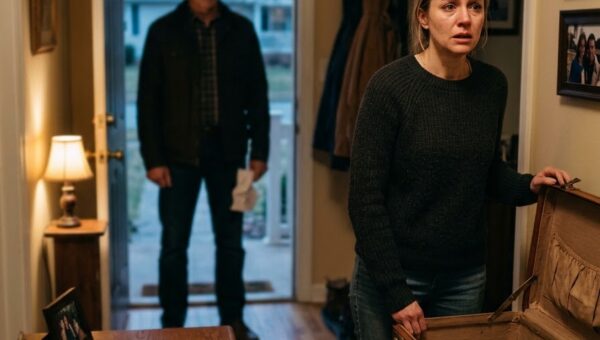
I heard the sound of the receiver banging down against Clara’s wooden phone stand, but there was no dial tone. The line stayed live with a faint hum. Clara had missed the cradle.
I held the phone to my ear, listening to the muffled scrape of footsteps on Clara’s floorboards. Then I heard Maya’s voice, recorded on my answering machine from earlier, or echoing in my own memory, until I realized the sound was coming through the open receiver from Clara’s kitchen hallway. Clara was muttering to someone in the background.
Then a second voice came through the receiver, small and thin.
It was Maya’s voice, captured through the receiver before Clara had left the house: “She said Grandma already knows.”
The line clicked dead.
I stood in my dark living room, staring at the handset. Mama lived three miles from Clara. Mama had visited that house every Sunday afternoon since Sarah died.
I had no idea what Maya meant until the next morning, when Mrs. Miller called me back into the school nurse’s office and pulled a dusty manila folder from the bottom of an archived filing cabinet.]
PART 2
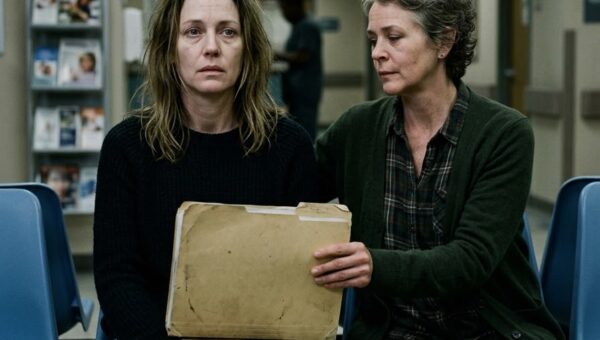
The nurse’s office smelled of rubbing alcohol and old paper. Mrs. Miller had the blinds drawn against the morning glare, and a thick manila folder lay flat on her blotter.
“I was up until midnight thinking about Maya’s file,” Mrs. Miller said, folding her hands over the cardboard folder. “When Sarah transferred Maya into this district three years ago, Sarah sat right where you are sitting. She made me sign a confidentiality receipt for a sealed medical narrative.”
“Sarah did?” I asked. My hands were cold despite the warm spring air outside.
Mrs. Miller slid the folder toward me. “Sarah was sick for sixteen months before she died, Nora. But before the illness showed up, she was working seventy hours a week at the poultry processing plant down in the valley. Clara was watching Maya four nights a week while Sarah worked the graveyard line.”
I opened the folder. Inside was an intake form dated twenty-six months earlier, long before Sarah’s first doctor visit. Attached to the clinic sheet were two color photographs printed on regular copy paper. They showed a six-year-old Maya, her small back patterned with thin, raised red welts that crossed below her shoulder blades.
Beneath the photographs was a handwritten statement in my sister’s unmistakable round script. Sarah had written down dates, times, and a full conversation.
According to Sarah’s notes, she had arrived at Clara’s house at six in the morning after a night shift to find Maya crying in the corner of the pantry. When Sarah confronted Clara, Clara told her that the child had spilled half a carton of milk and needed to learn respect for food. Clara had taken off her late husband’s work belt and struck Maya three times across the legs and back.
Sarah had taken Maya straight to the county urgent care clinic that morning. The doctor on call had started an incident report. But before the report could be finalized and sent to the county sheriff, our mother had arrived at the clinic.
My eyes stopped on the second page of Sarah’s statement.
Sarah had written: “Mama came to the urgent care desk. She told the doctor that Maya fell into the old wire tomato cages behind the garage. Mama told me that if I filed a police report against Clara, Clara would call in the private mortgage note on Mama’s house. Mama said Clara holds the deed note for $42,000, and Clara would foreclose on her within sixty days. Mama begged me on her knees in the parking lot to let it go. She promised Clara would never be alone with Maya again.”
I stared at the words until they blurred.
Mama’s house on Oak Street was the house Sarah and I had grown up in. When Daddy died twelve years ago, we were told the house was free and clear. Nobody had ever mentioned a $42,000 private note held by Clara. Mama had kept that quiet, letting Clara play the generous matriarch while Clara kept the paper over Mama’s head like a club.
“Why didn’t Sarah tell me?” I whispered, looking up at Mrs. Miller.
“Sarah wrote that in the addendum,” Mrs. Miller said gently. “She said you were dealing with your husband leaving and trying to keep your apartment. She didn’t want you dragged into Clara’s financial threats. But Sarah left this file with me in case Clara ever tried to claim Maya through the courts.”
“And when Sarah passed,” I said, the realization settling heavily into my ribs, “Clara went straight to probate court with Mama by her side.”
“Clara told the court that Sarah had never made any complaints,” Mrs. Miller said. “And your mother signed an affidavit supporting Clara’s custody.”
I picked up the copies of the report and the photographs, folded them neatly, and put them inside my purse. I thanked Mrs. Miller, walked out to my ten-year-old sedan, and sat behind the wheel for ten minutes without turning the key.
Maya was sitting at my kitchen table right now, eating dry cereal out of a plastic bowl, waiting to see which adult was going to betray her next. She had known all along that Grandma knew about the belt. Clara had used that knowledge to keep Maya quiet, telling the child that the woman she loved most in the world had already taken Clara’s side.
I turned the ignition and drove straight to Oak Street.
PART 3
Mama’s porch was lined with the ceramic roosters she had collected since I was a girl. The screen door had a small tear near the bottom latch where the neighborhood cats used to hook their claws.
I didn’t knock. I pushed the door open and walked into the front parlor.
Clara was already there. She sat in the heavy wingback chair by the front window with a porcelain teacup balanced on her knee. Mama sat on the floral sofa, her hands knotting a damp paper towel in her lap. The room smelled of wintergreen oil and stale coffee.
When Clara saw me walk in without taking off my coat, her mouth tightened into a thin line.
“You should have called before coming over, Nora,” Clara said, her voice smooth and measured. “Your mother has had a terrible spell with her blood pressure this morning because of your foolishness at the school.”
“Clara was just explaining how the nurse misunderstood the situation,” Mama said, looking at me with watery, pleading eyes. “Nora, you know how nervous Maya gets. Clara has given that child a roof and three hot meals a day.”
I didn’t answer Mama. I reached into my purse, pulled out the folded pages from Sarah’s sealed file, and tossed them onto the glass coffee table between their knees.
The color photographs landed face-up. Maya’s six-year-old back, lined with dark welts, stared up at both of them.
Mama looked down at the pictures and pulled her hands back as if the paper were hot.
Clara did not flinch. She set her teacup on the side table with a slow, deliberate click. “Sarah always was dramatic. She kept old garbage in drawers to make trouble.”
“This isn’t old garbage, Clara,” I said, keeping my voice low and steady. “This is a sworn statement from Sarah, certified by the district nurse two years ago. And yesterday, Mrs. Miller found an identical belt buckle mark on Maya’s forearm.”
“Children bruise,” Clara said, raising her chin. “She is clumsy. A judge will see through this nonsense in five minutes.”
“A judge will see the police report,” I said. “Because Marcus from Child Protective Services already has the clinic photos from yesterday. And I am on my way to the county courthouse to file for full, permanent legal guardianship.”
Clara laughed once, a dry, sharp sound. “With what money, Nora? You make thirteen dollars an hour pushing paper for the county water board. You live over a dry cleaner. You think the county will hand a growing girl to a divorced woman living on canned soup?”
She turned her head slightly toward the sofa. “Tell her, Evelyn. Tell your daughter who holds this family together.”
Mama didn’t speak. Her head hung low over her chest, her thin shoulders shaking under her beige cardigan.
“Tell her about the note, Mama,” I said.
Mama looked up, her face gray. “Nora, please.”
“Forty-two thousand dollars,” I said, looking Clara dead in the eye. “That’s what you used to make Mama lie to urgent care two years ago. You told her you would take this house if she didn’t cover for you.”
“That was a legal transaction,” Clara snapped, her composure cracking for the first time. “I loaned your father the money when his kidneys failed, and I took a lien on the property to protect my investment. Your mother lives here because I allow it. If you push this, Nora, I will call the note due on the first of next month. You will have a niece to feed, and your mother will be living on the curb with her suitcases.”
The room was completely quiet. A clock on the mantel ticked through five heavy seconds.
I looked at Clara, sitting in the best chair, using a dead man’s debt and an eight-year-old child’s skin to keep two grown women terrified of her.
“Call the note,” I said.
Clara froze. Her eyes narrowed. “What did you say?”
“Call the note due,” I said, stepping closer to the table. “Foreclose on the house. Take it to the county clerk. Because the moment you file that paperwork, I am filing Sarah’s narrative, the urgent care records, the school report, and yesterday’s photos as part of the public custody record. Every woman on your benevolence committee, every person in your Sunday school class, and every neighbor on this road will read exactly what kind of discipline you hand out to an eight-year-old orphan.”
Clara’s face hardened, but her fingers twitched against her skirt. For the first time since Sarah died, Clara had nothing to say. She knew the value of the brick house, the clean lawn, and her spotless name in that town. A woman like Clara could survive losing forty thousand dollars, but she could not survive having her neighbors know who she really was.
“Get out of my mother’s house,” I told her.
Clara stood up slowly. She smoothed her skirt, picked up her leather handbag from the floor, and looked at Mama. Mama did not look back. Clara walked out the front door, letting the screen slam shut behind her.
ENDING
The foreclosure notice never arrived.
Two weeks later, Clara’s attorney sent a formal document to the probate court stating that due to failing health, our aunt was voluntarily surrendering temporary and permanent custody of Maya to me. By the end of June, the state social worker closed the abuse file after conducting two home visits to my apartment and confirming that Maya was in regular counseling with the county child advocate.
Clara still lives in the brick ranch on the county line, but she resigned from the church committee before summer was out. People in town don’t talk about it openly, because small towns prefer to let scandals rot in private, but when Clara sits in the back pew on Sundays, the row in front of her stays empty.
Mama stayed in the house on Oak Street. I helped her take out a small reverse equity arrangement through the local credit union to pay off Clara’s note once and for all. It took months of paperwork and every spare dollar I had in savings to cover the closing costs, but the deed is clear now.
Mama still cries sometimes when she looks at Maya, but Maya doesn’t avoid her anymore. Children have a strange, forgiving way of understanding fear once the monster is out of the room.
In late July, the temperature hit ninety-four degrees. I took Maya down to the municipal pool behind the middle school.
I sat on a plastic lounge chair under a striped umbrella, watching Maya stand at the edge of the shallow end. For months, she had refused to leave the apartment without a sweater, even when the humidity made her hair stick to her temples.
That afternoon, she wore a bright yellow swimsuit with little white daisies across the front. The bruise on her left arm had faded to a faint, pale shadow that nobody would notice unless they were looking for it.
She turned around, looked back at where I was sitting, and waved both hands over her head.
“Aunt Nora!” she called out, her voice loud and clear over the splashing water and the shouting kids. “Watch me jump!”
I sat up straight in my chair, raised my hand, and watched her leap into the deep end with both arms wide open.