The smell of boiled crawfish and old floor wax always hung around my mother-in-law’s little shotgun house on Bayou Terrebonne, but on that Tuesday evening, the kitchen air in our own house smelled like cold iron and panic. I had the bank statement flat on the laminate table, right beside the half-empty jar of mayonnaise I had left out while making sandwiches.
The number at the bottom of the column for our daughter’s orthodontist account was twelve dollars and forty cents. It was supposed to sit at $3,450 until Thursday morning when Chloe went in for her final wire adjustment.
Arthur walked into the kitchen carrying his work boots by the heels, his socks gray with sawdust from the boatyard. He stopped right by the refrigerator when he saw me looking at the paper. He didn’t drop his boots. He just stood there with that heavy, square look on his face that I had learned to read over twenty-two years of marriage, the one that meant he had already decided how much of the truth I was allowed to hold.
“You said Dale’s landlord was getting paid from his side-job money,” I said, and my voice sounded thinner than I wanted it to. “You told me that three different times, Arthur.”
Arthur set the boots down by the fridge, slow and deliberate, like he was trying not to wake something up. “Dale was behind. He’s been behind since the shrimp season tanked last fall.”
“With our daughter’s braces money?” I stood up so fast the wooden chair scraped loud against the linoleum. “You took money we saved for Chloe’s teeth and gave it to your brother without saying a word to me? After we sat at this exact table and made a rule about anything over two hundred dollars?”
He rubbed the back of his neck where the sun had baked his skin the color of a wet pine knot. “He was going to lose his place. Mom would have found out, and you know her blood pressure can’t take another eviction scare after what happened down at the clinic.”
“Don’t you dare bring your mother into this,” I said, and my hands started shaking against the edge of the counter. “This was our agreement. We talked about this after we paid off the first set.
We said we don’t keep secrets from each other about the bank.”
“I was going to put it back,” Arthur said, and that was the exact moment the bottom dropped out of the room. It was the oldest, weakest lie in the world, the one men tell themselves in the dark when they think they are being heroes.
The house was quiet for a long second, save for the refrigerator humming against the wall and the distant sound of a outboard motor putting down the canal behind our property. We had built our whole life on the idea that when the tide came up too high, we bailed the boat together. Now I was looking at a man who had pulled the plug himself and hoped I wouldn’t notice until the floorboards were wet.
Before Arthur could say another word, headlights swept across the living room window, painting the yellow wall a pale, sickly white.
A car door slammed out in the gravel drive, hard enough to rattle the loose pane in the storm door. We both froze. Dale didn’t usually come by our place after dark unless something had gone sideways at the marina.
The front door didn’t even knock. It just shoved open against the coat rack with a dull thud.
Dale walked into the kitchen before either of us could move. He looked ten years older than his thirty-one years, his face hollowed out and gray under the fluorescent light, carrying a scuffed leather suitcase that looked like it had been packed in the dark. He didn’t look at Arthur. He looked right at me, his eyes wide and bloodshot, breathing like he had run all the way from the blacktop.
“Put the paper down, Sarah,” Dale said, his voice cracking right in the middle of my kitchen. “She needs to know why I’ve been taking it.”
I looked from Dale to Arthur, and back to Dale’s suitcase sitting right there on our clean kitchen floor. The brass clasps were rusted and one of them was hanging open by a thread.
“What are you talking about?” I asked, and my throat felt like I had swallowed a handful of dry salt. “Arthur said he was helping you with rent. Just rent.”
Dale let out a short, ugly sound that wasn’t a laugh. He dropped the suitcase handle, and it hit the linoleum with a heavy, dead thud. “Rent? I haven’t paid rent since November. My landlord locked me out three days ago.”
Arthur took a half-step forward, his hands raised like he was trying to stop a runaway winch. “Dale, shut up. I told you I’d handle it.”
“Handle what, Artie? You haven’t got enough to handle it! None of us do!” Dale reached into the front pocket of his canvas jacket and pulled out a thick, rubber-banded brick of cream-colored envelopes, all of them stamped with red ink from the Regional Medical Center in Houma. He didn’t throw them, but he set them down right on top of the bank statement with a force that made the mayonnaise jar rattle. “She didn’t tell you about her kidneys because she didn’t want Artie missing his shifts at the boatyard. And Artie didn’t tell you because he figured he could skim enough out of the grocery and savings accounts to keep the dialysis center from cutting off her treatments.”
The kitchen seemed to tilt sideways. I didn’t cry. When things get this bad down on the bayou, crying is just a waste of fresh water. I just reached out and slid the top envelope toward me with the tip of one finger.
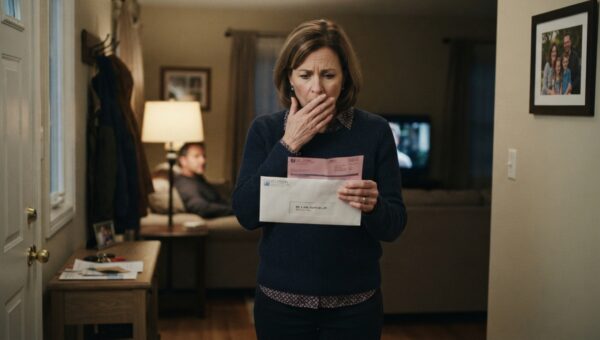
The name on the past-due notice was Clara Landry. The balance wasn’t a few hundred dollars for rent. It was four thousand, eight hundred and twenty-six dollars past due for a series of outpatient infusions that had supposedly been covered by her secondary insurance back before the state changed the formulary rules.
“Eleven months,” I whispered, looking up at Arthur. His eyes were fixed on the floorboards between his boots. “Every time I asked why the grocery envelope was light, every time you said prices went up at the Piggly Wiggly… you were paying her medical bills behind my back.”
“What was I supposed to do?” Arthur’s voice finally broke, rough and raw like sandpaper on oak. “Let her go into the county home? You know how she is about that place. She raised us alone in this parish after the old man went down with his skiff. She kept us fed when there wasn’t a nickel left in the jar.”
“So you lied to me,” I said. “You let me think we were building toward Chloe’s college fund and her braces, while you were turning our marriage into a bank vault for a secret we weren’t allowed to share.”
Dale stood there by the refrigerator, looking smaller than he ever had, his hands shoved deep into his pockets like he was trying to hide how bad they were shaking. “It was my fault, Sarah. I’m the one who told her about the missed payments first. Artie just… he didn’t want to break your heart by telling you how bad Mom actually was getting.”
“Protection isn’t a secret, Dale,” I said, and the plainness of it felt heavier than any yelling we could have done. “Secrets are just things you keep when you’re too scared to trust the person sleeping next to you.”
We didn’t sleep that night. Nobody went to the bedroom. Dale sat on the edge of the floral sofa in the front room with a cup of black coffee that went cold before he touched it. Arthur and I stayed at the kitchen table long after the house grew dead silent, the red-inked medical notices spread out between us like a map of everything we had failed to notice while we were busy pretending everything was fine.
By four in the morning, we had a yellow legal pad between us and a sharp pencil. We didn’t talk about who was to blame anymore. There wasn’t any breath left for it. We listed every single debt, every outstanding pharmacy bill, and every dollar left in our operating account. We wrote down what we owed the orthodontist and what it would take to keep Dale in a spare room until he could find a deckhand spot that didn’t pay in promises.
When the gray light started showing through the screen door around five-thirty, Arthur looked across the table at me, his eyes red-rimmed and his shoulders slumped like he had finally put down a sack he’d been carrying up a hill for a year.
“We have to tell Chloe about her teeth,” he said quietly. “We have to tell her the appointment has to wait two weeks while we shift things around.”
“No,” I said, reaching out across the table to lay my hand flat against the cheap wood beside the legal pad. “We tell her today at breakfast. All of it. Not the details of your mother’s kidneys, but the truth about how we run this house now.”
Arthur nodded once, slow and tight. He didn’t pull away when I didn’t smile back.
We still have a long way to go before the ledger balances out, and Dale is sleeping in our spare room with his clothes still packed in that battered leather bag. But the kitchen doesn’t smell like iron and panic anymore. It smells like stale chicory and the first pot of coffee, brewed right where everyone can see it.