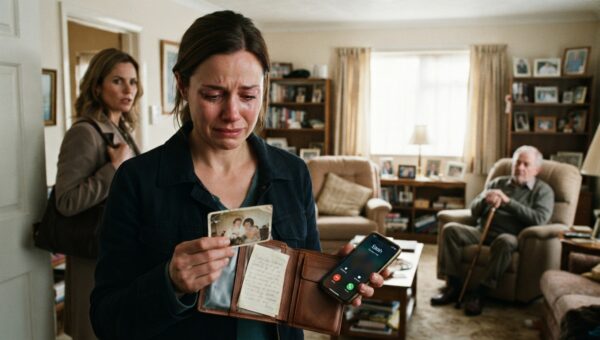
The rain tapped a steady, melancholic rhythm against the glass of the kitchen window while I stood there wiping down the quartz counter with a damp sponge. It was 3:42 on a Sunday afternoon in late autumn, and the house was far too quiet for a home that usually hummed with Julian’s corporate conference calls or Eleanor’s heavy footsteps on the oak stairs.
I liked those few quiet minutes before Sunday dinner preparations began. I liked the smell of the damp earth drifting in from the back patio and the simple, predictable way the sponge moved in circles across the white stone.
Then the front door clicked open, and the brief, fragile peace of the afternoon vanished entirely.
Clara came in through the mudroom carrying her canvas art satchel, smelling faintly of linseed oil and pencil graphite. She was thirty-four years old, with quiet, observant eyes that seemed to catch every small detail of a room before she ever spoke a word. She worked as an archivist and botanical illustrator, spending her days bent over centuries-old paper records with a magnifying glass and a soft brush. On her shoulders hung her late mother’s old wool jacket, a faded, utilitarian thing with worn elbows and heavy bone buttons that looked completely out of place in our pristine, modern Cincinnati kitchen.
I paused with the sponge in my hand, watching her shake the autumn drizzle from the hem of the garment. It was not expensive, nor was it cut from any fashionable cloth. To Clara, it smelled faintly of lavender and pipe tobacco, the unmistakable aura of a municipal library worker who had spent thirty years standing on tile floors so her daughter could earn a degree. It was the absolute last physical tether she had left to the world, and she wore it like an armor against a house that never quite felt like hers.
An hour later, the dining room was set with bone china and polished silver. When Eleanor swept into the room for the gathering, her eyes immediately locked onto the worn sleeves of that jacket where Clara sat near the foot of the table. Eleanor was sixty-four, a retired society gala coordinator who lived for guest lists, charity board seats, and the immaculate curation of her family’s social standing.
She stopped dead in her tracks, her manicured fingers tightening around the strap of her leather handbag.
Without a greeting or a shred of polite hesitation, Eleanor let out a sharp, public laugh that grated against the fine china.
“Did you dig that out of a trash bag?” Eleanor asked, her voice cutting through the quiet dining room like broken glass.
The table went instantly dead silent. Silverware paused mid-air. Clara looked across the table at Julian, her husband of six years, waiting for him to offer a word of defense, to bridge the gap with a gentle correction. Julian was thirty-six, a corporate compliance officer who lived in mortal terror of rocking any boat his mother steered. Instead of speaking up, Julian gave an embarrassed, dismissive smirk and looked down at his water glass to avoid her eyes completely.
Humiliated beyond words, Clara did not scream or throw her water. She simply stood up, her chair legs scraping softly against the hardwood floor.
She grabbed her keys from the sideboard and walked out the front door without a single backwards glance. I stayed by the kitchen sink, my chest tightening with a hot, bitter knot of helplessness, watching the taillights of her sedan sweep across the wet driveway through the rain-streaked window.
Three days passed in stony, agonizing silence between Clara and Julian. Julian spent his evenings pacing the hallway with his phone pressed to his ear, muttering corporate jargon to clients while Clara stayed late at her studio archive across town, coming home only after dark to lock herself in the guest bedroom. The air in the house felt thin, chemically treated, and entirely devoid of any real human warmth.
Then, everything changed with a violent rattle of the front door handle at 8:08 on a Wednesday morning.
Eleanor burst through the threshold without waiting to be invited, her trench coat soaked from the sudden cloudburst outside. Her face was completely drained of color, her hands shaking violently as she slammed the heavy oak door behind her. Without uttering a single syllable of explanation, Eleanor rushed past Julian down the hall straight into Clara’s bedroom, moving with a frantic, desperate energy that terrified me.
She threw open the mahogany wardrobe doors, seized the wool jacket from its wooden hanger, and began frantically ripping her fingers through every pocket, seam, and hem. Lint flew into the air. Buttons rattled against the floorboards.
I stood in the bedroom doorway, completely frozen, watching my employer panic like her life depended on unearthing a hidden explosive.
“Mom, what on earth are you doing?” Julian yelled from the hallway, his briefcase slipping from his fingers to land with a heavy thud on the carpet.
Eleanor didn’t answer him. She was breathing in ragged, shallow gasps, her fingers clawing furiously at the heavy wool of the left sleeve near the cuff. Then, her fingers froze inside the torn inner lining. The frantic motion stopped so abruptly it made my own heart stutter in my chest.
She slowly pulled out a tiny, oxidized brass key and a folded, yellowed micro-certificate of trust.
The second Eleanor saw the serial number stamped into the metal, her legs gave out entirely. She collapsed against the edge of the dresser, her mouth opening in a silent, jagged gasp as the color vanished from her cheeks for good.
Clara stepped forward out of the shadows of the hallway, her grief instantly hardening into cold, crystalline clarity. She did not yell. She simply walked into the room, reached out, and took the key and the document from Eleanor’s trembling, bloodless fingers.
“You thought it was in the attic trunk,” Clara said, her voice terrifyingly quiet. “You searched my mother’s apartment three times after the funeral, didn’t you? But she knew you were auditing the firm books back in ninety-four. She kept the duplicate deeds stitched right inside the lining of her winter coat every single day she went to work.”
Julian rushed into the bedroom, demanding to know what was happening, but he stopped dead when he saw his mother staring up from the floor in sheer terror. He looked at Clara, then at the yellowed paper in her hand, his mouth working silently like a fish out of water.
The confrontation was swift, clinical, and absolute. Clara did not negotiate or raise her voice above a normal conversational tone. She walked to the bedside table, picked up the landline phone, and dialed her attorney to initiate immediate asset freezes and legal recovery proceedings for the foundational estate trust.
When she finished the call, she walked back to the front door, pulled it wide open, and pointed out into the rain.
“Get out,” Clara said. “Both of you.”
The consequence was absolute and immediate. Julian was left standing in a home that was legally titled entirely in Clara’s name through her maternal inheritance, stripped of the social pretenses and stolen funds he had traded his integrity to maintain. Eleanor was bundled out the door by her own son, her designer handbag dragging through the wet mud of the porch.
The rain has finally stopped now. The afternoon light is filtering through the high studio windows, casting long, clean beams across the oak floor. Clara sits quietly at her drafting table, wearing her mother’s restored jacket with the neatly mended cuff. She does not look back at the past six years as some great tragedy. She simply turns a small brass key in the lock of a brand-new archive chest, securing what was hers all along.