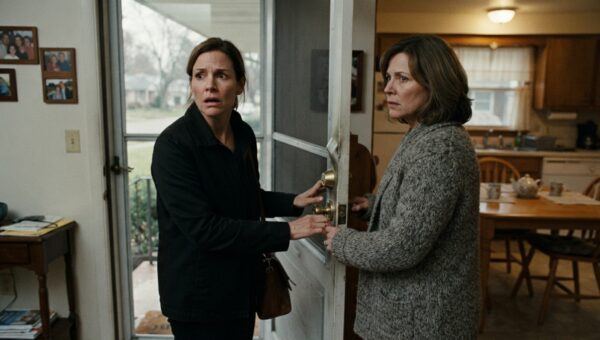
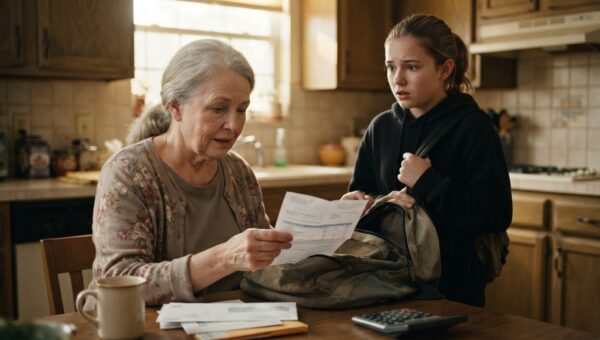
How do you thank a neighbor after he steals twenty-eight years of your trust? I reckon that is a question without any clean answer, much like trying to patch a rusted-out tractor block with chicken wire and hope. I lived in the same patch of Oklahoma red clay outside Tulsa since 1996, back when the subdivision was just twenty houses and a whole lot of blackjack oak trees.
My wife Martha planted the pecan sapling by the east fence the first autumn we moved in, and every year we watched it grow a little taller while our joints got a little stiffer. When Martha got sick in the winter of 2018, the man living right next door, Ron Vance, turned out to be a regular saint. He mowed our front Bermuda grass when I was sitting in hospital waiting rooms, checked our mailbox so the circulars wouldn’t pile up in the rain, and told anyone who would listen at the hardware store that we were closer than brothers. I would have given him the shirt off my back back then, and I reckon he knew it.
After Martha passed away in the spring of 2022, the quiet in the house became a physical thing that pressed down on your chest every time you walked through the front door.
I stayed mostly to myself, working out in the garage on my old woodworking lathe, trying to keep my hands busy so my mind wouldn’t wander back to the hospital bed. Ron still waved when he backed his Ford pickup out of the driveway, and I figured I owed him a debt of gratitude I could never quite repay. Then one warm afternoon last month, Ron walked across the property line while I was oiling my old Stanley hand planes and dropped the mask right onto the gravel. He didn’t ask how I was holding up or mention Martha’s memorial bench. He just stood there with his arms crossed, looking at my peeling porch paint like I had personally insulted his ancestry.
“Nobody wants your place here anymore,” Ron said, his voice flat and cold as a slab of beef out of the deep freeze. “Maybe it’s time you moved on.”
Like my whole life of twenty-eight years could just fit into a cardboard box and get hauled off to some dump.
I just stood there for a second holding a cotton rag soaked in linseed oil, feeling the heat of the afternoon sun baking through my shirt. I looked at the crow’s feet around his eyes, lines I had helped him curse through when his own septic tank backed up ten years ago. I didn’t yell, and I didn’t reach for a shovel. I answered quietly, “I hear you.” Then I hung my work gloves back on the peg in my garage, closed the heavy wooden door, and sat out on the front porch until the sun went down behind the tree line, listening to the cicadas sawing away in the oak branches like they had nothing better to do.
The next morning I walked down the block to talk to Clara Vance, though Clara hadn’t gone by Vance since she divorced Ron’s cousin back during the first Bush administration. Clara sat on her porch shelling butterbeans into an enamel bowl, her gray hair pinned back with a tortoiseshell comb she’d worn since we were all forty pounds lighter.
She looked up over her wire-rimmed glasses before I even reached the bottom step, like she had been waiting for me to walk down the asphalt.
“You took your time getting here, Arthur,” Clara said, setting the bowl down on the porch swing slats. “I was beginning to think you were going to let that snake run you off your own land without a fight.”
She didn’t waste time beating around the bush. She reached into a cardboard grocery box sitting beside her rocking chair and pulled out three manila folders stuffed with paper copies of official HOA correspondence. Clara had served on the board as secretary since the neighborhood association was chartered back in the nineties, and she had a habit of keeping duplicate files in her spare bedroom just in case someone tried to play fast and loose with the bylaws. She flipped open the top folder and slid a typed letter across the wooden table toward me. My name was at the top, but I hadn’t written a word of it.
“He’s been filing anonymous blight complaints against your property every three weeks since last November,” Clara said, shaking her head so hard her earrings clicked against her collar. “Claiming your roof is a hazard, claiming your fence is rotting into the right-of-way, claiming the house is practically abandoned. He had three proxy forms filled out with forged signatures from the widow down on the corner who can barely see her own hand in front of her face.”
I looked down at the signature line on the third page, where Ron had scribbled his name as chairman of the architectural review subcommittee. It made a cold knot form right in the middle of my stomach, not because I was surprised by human meanness, but because of how neat and practiced the handwriting looked. Clara told me the rest of it without needing me to prompt her, her voice dropping down to a dry rattle. Ron’s son-in-law, a slick young fellow named Derek who drove a brand-new white Tahoe and sold commercial real estate up in Owasso, had been sniffing around the subdivision offering cash buyouts to elderly widows whose husbands had passed. They wanted to scoop up three adjacent lots on the east end of the cul-de-sac, tear the older homes down to the foundation, and put up those oversized brick-and-vinyl boxes with three-car garages that take up the whole yard. My place was the middle peg in their bridge, and Ron had taken it upon himself to squeeze me out until I sold for whatever insulting fraction they felt like dropping in my lap.
“The monthly meeting is Tuesday night in the community room down at the church,” Clara said, tapping her finger right on the margin of a paper where Ron had petitioned the board to slap a $1,700 immediate lien on my homestead. “You be there, Arthur. You bring your original 1996 deed and every tax receipt you’ve got in that desk drawer. Don’t you let him win.”
I thanked Clara, picked up the folders, and walked back home under a sky the color of dirty zinc. The rest of the weekend went by in a blur of yellow legal pads and old metal filing cabinets. I dug out the county assessor maps from the year Martha and I poured the concrete foundation ourselves, mixing the cement by hand in a galvanized trough while the radio played Tulsa country tunes. I found the municipal inspection certificates from when we added the screened-in back porch back in two thousand and two. Every nail, every shingle, every receipt for lumber and paint was accounted for in a stack nearly four inches thick, tied together with a length of yellow nylon twine.
When Tuesday evening rolled around, the sun was casting long, slanted shadows across the asphalt as I walked up the sidewalk toward the brick community room behind the Baptist church. The heavy glass door was propped open with a rubber wedge to let the air circulate, and I could hear the murmur of voices echoing off the drywall before I even stepped inside. Ron was already sitting near the front of the room, leaning back in his folding chair with one arm draped over the metal frame, laughing at something the treasurer was saying about the asphalt sealing fund. He looked comfortable, the way a man looks when he figures he has cleared all the brush out of his path and is just waiting for the harvest truck to pull up.
I pushed the heavy door open and walked straight toward the front of the room, my boots clicking hard against the linoleum floor. The side chatter dropped off one voice at a time until the room was so quiet you could hear the hum of the wall-mounted air conditioner rattling against the drywall. Ron turned his head to see who was making the racket, and that easy grin stayed frozen on his face for about half a second before his eyes narrowed down to slits. He shifted in his seat, clearing his throat like he wanted to claim the floor before I reached the podium.
“Mr. Chairman,” I said, my voice sounding a little drier than I meant it to, but steady enough to carry to the back row. “I believe there’s some new business regarding property maintenance that wasn’t printed on the agenda.”
The association president, a retired schoolteacher named Howard who usually fell asleep halfway through the budget reports, looked over his reading glasses and blinked at me in surprise. “Well, Arthur, we usually save open floor for, “
“I’ve got some documents the board needs to examine regarding recent violation notices issued against Lot 14,” I said, not waiting for him to finish. I untied the piece of yellow nylon twine around my stack of papers and laid the original 1996 deed right on top of the oak podium. Then I set down Clara’s photocopies of Ron’s signed blight complaints right beside them, side by side like two pieces of evidence in a courtroom trial.
Ron stood up halfway out of his metal chair, his face turning the color of a fresh-picked plum. “Now hold on just a minute here,” he barked, his voice bouncing off the acoustic tiles in the ceiling. “We don’t need to air personal grievances about an unkempt yard during a formal business meeting. Everyone knows that place is dragging down our property values.”
I didn’t yell back at him. I just turned my head slowly and looked right into his eyes, keeping my voice down to a level where everyone in the first three rows had to lean forward to catch it. “You told me nobody wanted my place here anymore, Ron. But looking through these filings from the architectural committee, it seems like the only person who wants my place is your son-in-law Derek, who happens to have a cash purchase inquiry registered with the county clerk dated three days after your first fraudulent citation.”
The room went dead silent. You could have heard a pin drop on that linoleum from three blocks away. Clara Vance leaned back in her chair near the middle aisle with a small, tight smile playing at the corners of her mouth, folding her hands over her pocketbook. Howard, the president, reached out a trembling hand, pulled the stack of Clara’s photocopies toward himself, and adjusted his glasses to look at the signatures at the bottom of the page. He didn’t look like he wanted to sleep anymore.
“Ron,” Howard said, his voice cold as pond ice in January. “Did you sign your name as subcommittee chair to complaints regarding a property where your direct family member holds an active commercial real estate option?”
Ron opened his mouth to say something, but no sound came out of his throat for a second. He looked around the room, expecting someone to nod in agreement or offer him a lifeline, but the other board members were staring straight down at their clipboards like they had never seen him before in their lives. The neighbor on his left, a man who had lived across the street since the tornado of ninety-nine, visibly shifted his chair three inches away from Ron’s knee.
“It was just neighborhood preservation,” Ron muttered, his face turning a dark, mottled red as he sat back down hard in his chair. “Somebody had to say something about the upkeep.”
“The board has reviewed the original inspection certificates and the county records provided by Mr. Callahan,” Howard announced, his gavel coming down once on the wood grain with a sharp crack that made a few people jump. “All pending citations, fines, and remediation notices against Lot 14 are hereby declared null, void, and improperly filed. Furthermore, the architectural review subcommittee is stepping down from enforcement duties pending a full ethics review of its chairmanship.”
Nobody looked at Ron when the meeting adjourned ten minutes later. People stood around in little clusters near the exit door, murmuring to each other and nodding in my direction as I packed my papers back into the twine. Ron walked out before the lights were even flickered off, his truck door slamming out in the gravel parking lot with a hollow, angry bang that shook the loose glass in the church foyer windows.
I walked the half-mile home under a sky full of stars that looked sharp and clear through the bare branches of the pecan trees. When I got back to the house, I didn’t turn on the television or go straight to my workshop. I walked out onto the front porch, sat down in the wooden rocking chair I had built out of white oak back when Martha was still planting bulbs in the spring, and laid my hands flat against the sturdy railing. Out in the dark beyond the lawn, the cicadas were still sawing away in the oak trees, steady and loud, keeping time in the quiet dark of a night that belonged to nobody else at all.