The steam from my coffee cup had stopped rising about ten minutes before I finally stood up from the kitchen table and walked into the front room. The house was too quiet, the kind of quiet that feels heavy in your ears after you spend months listening to oxygen tanks hiss and hospice nurses check their watches in the hallway.
I didn’t even want the piano when Julian pushed it off on me at the estate reading back in February. I was the difficult one growing up, the daughter who asked questions and didn’t fall in line, which in my family was the worst thing a girl could be. When Dad got sick, my golden-child brother Julian was too busy with his real estate seminars and his corporate development meetings, so I was the one who moved back into the damp guest room to handle the morphine schedules and the soiled sheets. I was just the troublemaker who had time on her hands.
When the lawyer finished reading the paperwork in that stale-smelling office, the house went to Julian, the liquid accounts were split among the cousins who visited twice a year, and Dad left me the old upright piano sitting against the front room wall. A few people chuckled because I hadn’t played since I was twelve.
Julian leaned back in his leather chair, crossed his ankles, and gave me that slow, pitying grin he had perfected since law school. “You always did make a lot of noise. Suits you,” he said. I didn’t argue because I was too tired to fight over wood and wire. That piano sat against my living room wall for almost a year, out of tune, untouched, collecting a thin layer of dust across the music stand while the rest of the estate was carved up and sold off. I couldn’t even lift the lid to touch the keys. Every time I walked past it, I heard Dad’s raspy breathing from the hospital bed.
The neighbors probably thought I was losing my mind, keeping a broken instrument I never played, but I just couldn’t bring myself to haul it to the curb. By January, nearly twelve months after we buried him, the silence in the house started to feel less like grief and more like stubbornness.
I finally called Arthur Vance, a retired piano tuner who still drove an old blue Ford pickup with half its primer showing, just to get the thing hauled away or fixed. Arthur showed up right at 9:15 on a Tuesday morning carrying a heavy canvas tool bag that smelled like beeswax and pipe tobacco. He ran his calloused fingers over the walnut veneer, shook his head, and tapped the lower kick panel with his knuckles. “This old girl hasn’t held a tune since the Carter administration,” he muttered, pulling a stubby flathead screwdriver from his back pocket. “Let’s see what’s rattling around in the bottom before we talk about moving her.”
Arthur loosened the two brass latches near the floor and pulled the lower front board free, expecting to find rusted pedals or mouse nests. Instead, he stopped dead, his screwdriver hovering in the air. “Well, that’s peculiar,” he said, wiping his palms on his jeans. “Somebody took out the whole trapwork.
There ain’t no pedals connected to anything back here.” I leaned over his shoulder, smelling the stale dust and old mothballs rolling out from the dark cavity of the instrument. Where the felt and hammers and pedals should have been, the entire lower compartment had been packed tight with a heavy gray moving blanket, stuffed in so hard the fabric was bowed against the interior frame. I reached down and gripped the rough wool, my fingers catching on the coarse weave. “Help me pull this out,” I told Arthur, my voice dropping lower than I meant it to. We both yanked, and the heavy bundle slid across the floorboards with a dull, muffled thud that made the china cabinet rattle.
I knelt down on the braided rug and peeled back a corner of the blanket, my heart doing a strange, uneven stutter against my ribs. Underneath the wool sat a heavy iron cash box, the kind with a latch that took a small brass key, surrounded by three thick stacks of legal envelopes held together with yellowed rubber bands. It was heavier than any box of papers had any right to be. “You want me to wait outside?” Arthur asked quietly, reading the tension in my shoulders. I shook my head, my hands already fumbling for the rubber bands. The top envelope had my name written across the front in Dad’s shaky, looping handwriting, the ink smeared slightly where his palm had dragged across the paper years ago. I broke the seal with my thumb and pulled out a folded sheaf of stiff parchment bearing the embossed seal of the county recorder’s office.
It was the original deed to the house on Elm Street, clean and unencumbered, but pinned to it was a notarized trust rider dated just three weeks before Dad went into hospice. The text was dense and legal, but the core of it hit me like cold water thrown across my face. The house didn’t belong to Julian. According to the document, the property had been bought entirely with inheritance money from our mother’s side of the family, and Dad had placed a lifetime protective trust over it naming me as the sole primary beneficiary, effectively blocking anyone from selling or transferring title without my explicit signature. Beneath the deed sat a small brass key taped to a folded index card. I didn’t even hesitate. I slid the key into the iron cash box, turned it until the latch clicked open with a sharp, metallic snap, and lifted the lid. Inside, resting on a bed of old cotton batting, were four microcassette tapes labeled with dates in black permanent marker, along with a thick ledger book filled with columns of figures in Dad’s precise handwriting.
I sat on that floor for two hours after Arthur left, the house growing cold around me as the winter sun dipped behind the maple trees outside. I plugged an old microcassette recorder I found in my desk drawer into the wall and dropped the first tape into the well, pressing play with a thumb that wouldn’t stop shaking. Dad’s voice hissed out of the small plastic speaker, sounding thinner and more tired than I remembered, but unmistakably him. “If you’re hearing this tape, it means you finally got curious enough to look inside the old box,” his voice rasped, pausing to clear his throat the way he used to before he started a lecture. “And if Julian is screaming about the house, it means I was right about him all along.” I pulled my knees up to my chest, staring at the grain of the floorboards while his voice filled the empty room.
He talked about Julian’s endless demands for cash advances, about the way my brother had systematically drained the liquid retirement accounts over the previous three years while promising to invest them in commercial real estate that never existed. “I let him think he was winning because it was easier than listening to him argue,” Dad confessed on the tape, his voice cracking slightly on the vowels. “I called you difficult because you were the only one who wouldn’t nod along with his lies. I’m sorry I let them push you out. I built this hiding place because I knew you were the only one of my children who would ever bother to take this old piano apart.”
The ledger told the rest of the story in cold, hard numbers. Julian had taken nearly seventy-three thousand dollars from Dad’s primary savings accounts between the autumn of his diagnosis and the following winter, forging signatures on withdrawal slips while I was spending twelve-hour days at the hospice facility wiping fever sweat from our father’s forehead. The numbers marched down the yellowed pages week after week, small bites taken out of an old man’s life savings by a son who couldn’t even be bothered to show up for Sunday dinner unless there was paperwork to sign. I didn’t cry. The anger inside me burned too hot and steady for tears, cleaning out every last trace of the guilt I had carried around since February. The next morning, I called Marcus Sterling, the estate attorney who had read the will with such an officious, bored tone. I didn’t tell him what I found over the phone. I just asked him if he had a few minutes to review some supplemental documents regarding the Elm Street property trust.
When Marcus looked over the notarized trust rider and the original deed across his polished mahogany desk, his professional composure cracked for the first time. He adjusted his glasses twice, traced the embossed seal with his thumb, and looked up at me with a completely different expression than the one he wore at the reading. “Where did you say you found this?” he asked, his voice dropping into a careful, legal register. “Inside my father’s piano,” I told him, keeping my tone flat and level. Marcus leaned back, folded his hands over his stomach, and let out a long, slowbreath. “Well, Miss Miller, this changes the probate inventory entirely. Your brother cannot legally sell or transfer that property without your explicit consent. In fact, given these ledger entries, he may have some serious explaining to do regarding those liquid withdrawals.”
I called Julian that afternoon and told him I needed him to come by the house to sign some final paperwork regarding the estate dispersal. He arrived forty minutes later, driving his shiny black SUV, wearing that same expensive gray suit he wore to the funeral, looking like an executive granting an audience to a peasant. He didn’t even take off his coat before he started complaining about the parking on my street. “Make it quick, will you? I’ve got a site inspection in Clifton by three,” he said, checking his watch with an exaggerated sigh. I didn’t offer him coffee. I just walked over to the old upright piano, laid the microcassette recorder on top of the walnut lid, and hit play. Dad’s voice filled the room again, loud and unmistakable, detailing the exact dates and amounts Julian had stolen from the accounts while Dad was too weak to fight back.
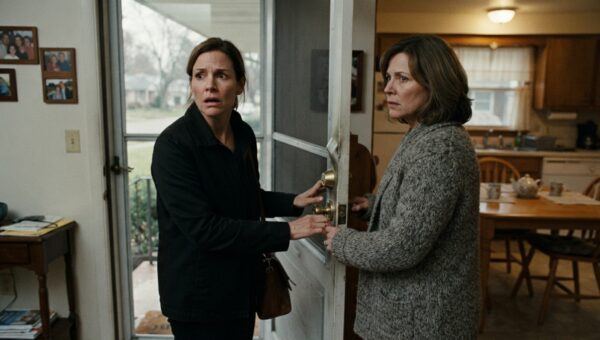
Julian’s face went completely slack, the color draining out from under his tan until his skin looked like old parchment. He took half a step backward toward the front door, his hand hovering over the brass doorknob. “Where did you get that?” he whispered, his voice losing all its corporate polish. I didn’t yell. I just slid the notarized trust rider across the coffee table toward him and laid the ledger right beside it. “You always did make a lot of noise, Julian,” I said softly, throwing his own smug words right back in his face. “Turns out I finally found something worth listening to.” He looked from the papers to my eyes, realizing in that single, crushing second that his entire house of cards had just collapsed. By that evening, Julian had signed over every remaining claim to the family property and agreed to a formal repayment schedule for the drained accounts under threat of criminal charges, finally stripping him of the unearned authority he had held over our family for decades.
The house is quiet again now, but it’s a different kind of quiet. A week later, after Arthur Vance came back and spent a full afternoon replacing the ruined felts and tuning every wire inside the old instrument, the front room didn’t feel like a monument to grief anymore. I walk past the piano every morning, and sometimes I lift the wooden lid just to rest my fingers against the cool, smooth ivory of the keys. I sat there yesterday afternoon with the sunlight streaming through the lace curtains, pressing down on a single, clear chord that echoed off the walls and filled the empty space with something honest. It wasn’t the noise of a troublemaker, and it wasn’t the silence of a victim. It was just the sound of what was kept, finally free to ring out.