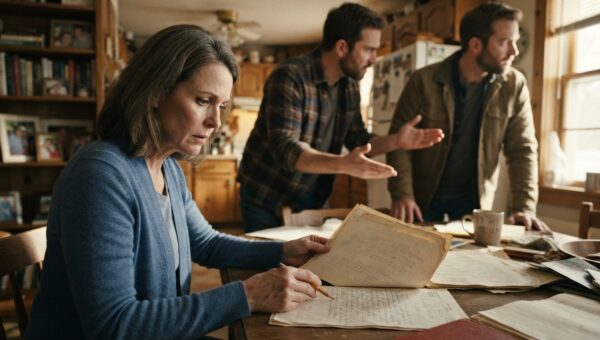
Thirty-eight thousand four hundred dollars. That was the exact total of the medical bills sitting on the kitchen table the week Dad stopped recognizing my voice, and Julian didn’t even pick up his cell phone when I called him about it. He was too busy flying to Denver for some quarterly conference, or so he claimed through a quick text message that didn’t even use punctuation.
Claire sent an email three days later with a digital gift card for a local diner and a note saying she was tied up with the school board fundraisers. They were always tied up when the sheets needed changing or the oxygen tanks needed swapping at three in the morning. I was the one who stayed. I was the grunt, the brother who never left the parish, the one who worked with his hands until the skin across my knuckles stayed permanently gray with grease and sawdust.
Dad passed away on a Tuesday in April when the humidity was already starting to hang thick off the bayous. We held the service at the little Baptist chapel down by the county road, and before the preacher even finished the final prayer, Julian and Claire were already talking about the probate timeline like Dad was just a piece of commercial real estate they needed to clear off the books.
They had the whole thing mapped out before the flowers on the casket had time to droop. Julian took the three-bedroom brick house on Magnolia Street with its manicured St. Augustine lawn, and Claire took the liquid savings from the credit union account that Dad had built up over forty years of contracting. They split the easy paper and the clean assets while I stood on the grass with my hat in my hands, smelling like diesel and old sweat.
When the lawyer handed me my copy of the will, the language was dry enough to choke on. To Julian, the deed. To Claire, the bank routing numbers. And to me, Arthur Miller Junior, the workbench in the garage. It was a joke written in legal shorthand. Julian laughed out loud right there in the attorney’s carpeted office, his gold cufflinks catching the fluorescent glare as he slapped my shoulder like we were sharing a pint at the legion hall.
He looked right at me and said, “The grunt gets Dad’s old bench. Saw your way to nowhere, Artie.” Claire didn’t even look up from her designer handbag, though she managed a dry little chuckle that sounded like stones rattling in a tin can. They thought they had carved up the world while leaving me the scraps.
I couldn’t bring myself to step foot in that garage for nearly ten months. Every time I walked past the side door, I could still smell the sweet birch sawdust and the cheap tobacco Dad used to smoke when he was laying out crown molding. His old ceramic coffee mug was still sitting on the corner of the workbench, the rim stained with a dark ring that had dried into the scarred oak years ago. I left it there. I left the whole mess there because the silence inside that corrugated metal shed felt heavier than any six-cylinder engine I ever hauled out of a frame.
Julian called twice in November to ask when I was going to haul the scrap lumber to the dump so he could sell the property without an eyesore sitting in the back. I didn’t answer his calls. I just let the phone ring against the kitchen counter until the voicemail picked up with its mechanical beep.
It was a Thursday afternoon in February when the weather finally broke long enough to let some dry air in off the marsh. I walked out there with a box of heavy-duty contractor trash bags and a crowbar, figuring I would just smash the old thing into pieces and throw it in the back of my pickup like Julian wanted me to do. The workbench was six feet long, built out of three-inch oak planks Dad had salvaged from an old boxcar back in seventy-eight. He had bolted the legs straight into the concrete slab with half-inch anchor bolts so it wouldn’t budge an inch when he was planing a rough edge or driving a mortise chisel. I stared at the scarred top for a long time, running my thumb over the groove where he used to lay his framing square every morning at six o’clock.
I started with the drawers on the right side. They were full of the usual accumulation of a working man’s life: rusted carriage bolts, half-empty tubes of yellow wood glue that had turned to stone, drywall screws mixed up with brass wood screws, and a few old folding pocket knives with the tips broken off. I dumped them into the trash bag one by one, the metal clinking against the plastic with a hollow, lonely sound. The middle drawer stuck halfway out, jammed on an old tin box of masonry bits, and I had to yank it twice to clear the runner. It smelled like old iron and damp pine. I emptied it out onto the floor, kicking aside a pile of receipt slips from the hardware store that went back to the Reagan administration.
That left the deep bottom drawer on the left. The one Dad always kept locked when the neighborhood kids used to wander into the shed to watch him work. He lost the little brass key somewhere around the time my mother passed away, so he had just drilled out the cylinder and left the latch spinning loose. I grabbed the handle with both hands, bracing my boot against the front leg of the bench, and pulled. It moved about three inches before it hit something solid at the back with a dull thud. I figured an old jar of galvanized nails had rolled off the shelf behind the drawers and wedged itself tight against the runners. I reached my arm all the way into the dark cavity, my fingers brushing past the cold metal of extra saw blades and the dusty cardboard of old sandpaper sleeves, until my fingertips hit something wrapped in oilcloth.
I couldn’t get a proper grip on it with just my fingertips, so I had to slide my whole forearm deep into the dust and spiderwebs at the back of the carcass. The cloth was heavy, smelling faintly of linseed oil and old paper, and when I dragged it forward into the light of the open garage door, my wrist caught on a stray splinter that bit a thin line of red across my skin. I didn’t even feel it. I pulled the package out and set it right down on the center of the workbench, right over the old coffee ring Dad had left behind. My hands were shaking a little bit, which made me feel foolish, so I wiped my palms on the legs of my work trousers and stared at the twine holding the oilcloth together.
It wasn’t a jar of nails. It was a heavy black steel lockbox, the kind with a latch that required a key, but the key was sitting right there tucked under the twine in a small manila envelope with my name written on it in Dad’s shaky, block-letter handwriting. Artie. Just that. No formal title, no “To my son,” just my name the way he used to holler it across the yard when he needed another pair of hands to steady a twelve-foot rafter. I picked up the small brass key. It was cold, colder than the air in the garage, and it turned in the lock with a single, clean mechanical click that sounded too loud in the empty room.
Inside the box wasn’t a collection of sentimental trinkets or old photographs of people I didn’t recognize. There was a thick stack of folded legal documents held together by rusted paper clips, several small savings bond certificates issued back in the nineties, and a heavy ledger bound in black oilcloth with lined yellow pages. I opened the ledger first because the top page was covered in Dad’s neat, sloping handwriting, dated just three years back when he was still driving his truck to the job sites every morning. The heading at the top of the page read: Record of Days. Below it were columns of dates, hours, and notes written in black ballpoint ink that had started to fade around the edges.
I turned the pages slowly, my eyes tracking down the rows of numbers. October fourth. Artie came by with groceries and fixed the front screen latch. November twelfth. Artie spent four hours cleaning the gutters and didn’t ask for a dime. December twenty-first. Julian called from a hotel in Chicago to say he couldn’t make Christmas because of a board meeting. Claire sent a card with twenty bucks in it. Artie stayed until nine PM helping me change the oil in the generator. Every single absence from my brother and sister was logged with the same clinical precision as every hour I spent sitting on the edge of Dad’s mattress feeding him soup when his hands wouldn’t hold the spoon anymore. Dad hadn’t just been losing his memory at the end; he had kept a clear, cold record of who showed up when the lights started going out.
The legal documents underneath the ledger weren’t part of the probate will that Julian had filed down at the county courthouse. They were independent assignments, registered and notarized by old man Vance back before he retired from his practice down on Main Street. There was the deed to the workshop property itself, which sat on a separate half-acre parcel behind the house that Julian and Claire had assumed was just part of the residential lot. And beneath that were three separate patent certificates for woodworking joints and pneumatic clamp designs that Dad had licensed to a tool manufacturer in Cincinnati back in the eighties, along with quarterly royalty checks that had been automatically deposited into a commercial account that never touched the personal savings Claire had cleaned out.
The total in that account wasn’t the kind of money Julian made with his corporate portfolio, but it was enough to buy this entire property ten times over with cash to spare. A slip of paper tucked into the back folder had a note written in pencil, the letters wavering slightly as if his hand had been stiff with arthritis that morning. I left the house to the ones who wanted the address, and the money to the ones who wanted the balance. But I left the shop to the only one who ever picked up a chisel without checking his cuffs first. Make sure you plane that top board down, Artie. It’s got a warp in the middle from ninety-one.
The sound of tires crunching on the gravel drive outside pulled my head up so fast I nearly knocked the black ledger off the edge of the bench. A late-model black sedan pulled up right beside my pickup, and the driver’s side door swung open before the engine even finished ticking down. It was Julian, wearing a camel-hair overcoat that looked entirely out of place against the weathered grey siding of the garage, followed by Claire stepping out from the passenger side with a clipboard tucked under her arm like she was arriving for an audit. They didn’t look like mourners or grieving children; they looked like two people who had come to inspect a piece of salvage before the scrap metal yard closed for the evening.
Julian didn’t even knock on the open garage door frame; he just walked straight in, his shiny leather shoes clicking sharply against the concrete floor where I had swept up the old sawdust. He took one look at the open lockbox on the workbench and let out a short, dismissive breath through his nose, his lips curling into that familiar, easy smirk that used to make me want to put my fist through the wall when we were kids. “Still playing in the dirt, Artie?” he said, his voice bouncing off the tin roof. “We told you last week, the buyer is coming by on Monday to look at the whole parcel. You need to clear out these old hand tools so the surveyor can get his measurements through the back door.”
Claire stopped about three feet behind him, her eyes scanning the dark corners of the shed as if she were already calculating the demolition costs for the lumber. “Honestly, Arthur, it’s been nearly a year,” she said, her tone flat and bureaucratic, the way she used to talk to parents during her committee meetings. “We let you keep the bench just to keep you quiet during the probate filing, but Julian is right. The property is sold. You can take your little box of screws and find somewhere else to store your junk.” They stood there side by side, looking down at me with that same quiet, heavy certainty they had worn at the funeral, the absolute conviction that the world was built for people who wore collars and signed papers with expensive fountain pens.
I didn’t stand up right away. I sat down on the old wooden stool Dad used when he was doing fine joinery work, my hands resting flat on the open pages of the black ledger right over the entry for the day Julian missed Dad’s seventy-fifth birthday because of a golf outing in Palm Beach. I picked up the stack of patent assignments and let them slide one by one across the scarred oak surface of the workbench until they stopped right against Julian’s polished shoes. The paper made a dry, sharp sound against the leather, like a leaf hitting a sidewalk in late autumn. Julian looked down at the corner of the first page, his brow knitting together in a quick, confused frown before he reached down with two fingers to lift the corner.
“What is this nonsense?” he muttered, his eyes scanning the corporate letterhead of the Cincinnati toolworks and the embossed seal of the county notary from twenty-two years ago. “Where did you dig this up? This isn’t part of the estate filing.”
“It’s not part of the estate because Dad filed it twelve years before he let you near a lawyer,” I said, my voice sounding rough and gravelly in my own ears, like a motor turning over after sitting through a hard freeze. I didn’t yell. There wasn’t any point in yelling at someone who didn’t even know how to hold a hammer without pinching his thumb. I just pointed my finger at the bottom line of the assignment document where Dad’s signature sat firm and dark beneath the witness lines. “You got the house, Julian. Claire got the bank account. And Dad left the land, the shop, and every patent he ever drew up to the grunt who stayed behind to empty his bedpan.”
Claire stepped in closer, her face losing its professional composure as she snatched the second page out of Julian’s hand, her eyes darting across the numbers on the commercial ledger. “This account hasn’t been probated,” she said, her voice rising an octave higher than usual, the smooth corporate polish cracking right down the middle. “That money has to go through the primary estate distribution. You can’t just keep, this is illegal. We can contest this by Monday morning.”
“Go ahead,” I said, leaning back against the workbench and crossing my arms over my chest, feeling the hard edge of the black box pressing against my hip through the wood. “Old man Vance registered this codicil the day after Dad’s stroke. It’s got three witnesses from the VFW hall who signed their names in blue ink right where the law says they have to. You own a three-bedroom house with a nice lawn on Magnolia Street, Claire. And Julian owns a very expensive suit. But this dirt and every board in this building belongs to the man who knew how to use them.”
Julian’s face went from a confident pink to a dull, mottled grey that didn’t have anything to do with the lighting in the garage. He opened his mouth to say something sharp, something about lawyers or courts or the way things were supposed to work for people like him, but the words kind of died in his throat before he could push them out. He looked down at the workbench again, really looked at it for the first time since Dad died, seeing the deep gouges in the oak, the grease stains near the vise, and the little dark ring where Dad’s coffee mug had sat every morning while his white-collar children were three hundred miles away pushing paper across a mahogany desk. He didn’t pick the papers up off the floor. He just turned around on his heel, his leather shoes crunching hard against the gravel outside, and walked back to the passenger side of his sedan without saying another word.
Claire stayed for a second longer, her fingers trembling slightly as she folded the edge of the ledger page down before letting it drop back onto the wood. She looked at me like she was seeing me for the very first time, not as the brother who stayed behind to do the heavy lifting, but as someone who had just changed the rules of a game she thought she had already won. She didn’t argue. She just turned around and followed Julian down the drive, her heels sinking a little bit into the soft dirt by the garden edge. The car doors slammed one after the other, heavy and final, and then the sedan backed out onto the county road with the tires kicking up a light spray of gravel against the fence line.
The garage went completely quiet again, the kind of quiet that only settles in when the noise of other people’s expectations finally clears out of the room. I stood up from the stool and walked over to the corner where Dad’s old push broom was leaning against the wall, its yellow plastic handle worn smooth by forty years of palms. I picked it up and swept a small pile of grey dust away from the base of the workbench, watching the particles dance for a second in the late afternoon light before settling down onto the concrete floor where they belonged. Then I reached into my pocket, pulled out a small piece of fine-grit sandpaper I had left over from the trim job on the front porch, and walked back to the center of the bench.
I didn’t wipe off the coffee ring. I just set my own tools down right over the top of it, the cold steel of my marking gauge clicking softly against the scarred oak. The afternoon sun dropped lower through the open corrugated door, throwing a long, clean stripe of gold across the middle of the floor, right where the dust was finally beginning to settle.