PART 1
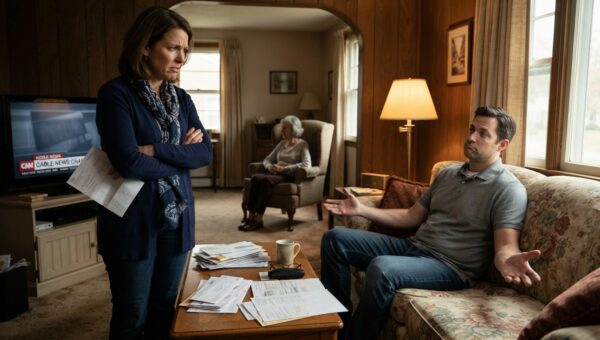
My daughter-in-law, Clara, stood right inside my front door with her hand on her hip, looking like she was reading off an inspection report. She told me I could no longer pick up my seven-year-old grandson, Leo, from school because I was too old to be driving around with a child. She said her exact words with that polite, clinical smile she used whenever she wanted to make you feel small.
I am sixty-two years old, not ninety-two. My eyesight is fine, my license is current, and my Honda Civic has been maintained at the same local garage for eight years.
I swallowed the insult right there in the entryway because I did not want trouble with my son, Marcus. Marcus works long hours at the county water authority, and whenever Clara creates a domestic storm, he retreats into silence. If I fought back about the school run, Clara would have found a way to freeze me out completely, and keeping my relationship with Leo intact mattered more than my pride. I told myself I could bend a little. I let Clara take over the afternoon pickups, figuring it was just another one of her control phases that would eventually burn out.
Two weeks later, my phone rang while I was sitting at the kitchen table shelling pecans. It was the school secretary, Mrs. Gable, and her voice sounded tight.
She asked if I could come get Leo immediately because he was listed as his emergency contact, nobody else was answering their phones, and the school office was closing its administrative doors for a late staff meeting.
I dropped the bowl, grabbed my car keys, and drove across town in twelve minutes, my chest tightening with every red light. When I walked into the reception area, Mrs. Gable pointed toward a small wooden chair in the corner. Leo was sitting there with his bulky blue backpack between his sneakers and a purple, swollen bruise stretching from the corner of his left jaw down toward his collarbone. He looked terrified, staring straight at the linoleum floor.
He would not say a single word about what happened while we were inside the building or while Mrs. Gable signed him out. But the moment we got into my car and I locked the doors, Leo turned his face toward the side window and whispered, “Grandma, please don’t take me home yet.”
I put the car in park instead of driving out of the lot. I turned to look at him, taking in the small tremor in his shoulders. “Why not, honey?”
He stared hard at his dirty sneakers and whispered, “Because Dad finally found out what Mom has been hiding.”
PART 2
I kept my hands resting lightly on the steering wheel, letting the engine hum quietly so Leo would know we had time. I did not push him or raise my voice. I asked him softly what his dad had found out, and why that meant he could not go back to his own house today.
Leo looked up, his eyes watery and red at the edges. He told me that earlier that morning, before school even started, he had walked into the kitchen to grab his water bottle and heard his parents shouting in the laundry room. It was not their usual sharp bickering over grocery money or who forgot to take out the trash.
Clara was crying, and Marcus was speaking in that low, heavy voice he only used when something had broken permanently. Leo said his father was holding a stack of thick paper envelopes with blue return addresses from a bank downtown, the kind that never brought good news.
According to Leo, Marcus had discovered that Clara had not been depositing his paycheck contributions into their joint savings account for the past fourteen months. Instead, she had been diverting thousands of dollars into a separate account under her maiden name, funneling the money toward high-end retail debt and online investment schemes that had completely wiped out the college fund Marcus had started the day Leo was born. When Marcus confronted her about the missing balance, Clara had tried to brush past him, and in the scuffle, she had shoved Marcus back against the laundry room door frame. Leo had tried to pull his mother’s sleeve to make her stop yelling, and Clara had swung her arm back blindly, catching him square across the cheek with the heavy gold bracelet she always wore.
That was why Clara had banned me from the school two weeks ago. It was not because of my driving or my age. She had needed to control who entered the school building so teachers would not notice Leo coming to class with a bruised face or a frightened demeanor while she tried to cover up the financial wreckage at home.
I sat there in the school parking lot, listening to a seven-year-old child explain adult betrayal with horrifying clarity. My first instinct was to drive straight to their house and demand answers from Clara myself. But as I looked at Leo pressing his small hands against his knees, I realized rushing in with anger would only terrify him more. I reached over, unbuckled his backpack, and set it on the floorboard. Then I told him we were going to my house for hot soup and quiet time, and that his father already knew how to reach us.
PART 3
We had been at my kitchen table for barely twenty minutes when my phone buzzed against the wood. It was Marcus. His voice sounded hollow, like someone who had been hollowed out from the inside. He asked if Leo was with me, and when I told him he was safe and eating a grilled cheese sandwich, Marcus went quiet for a long moment. He asked if he could come over.
He arrived fifteen minutes later, looking twenty pounds heavier than he had last month. He didn’t look like my strong, capable son anymore. He looked like a man standing in the ruins of a foundation he thought was solid. He walked into my kitchen, looked at Leo sitting safely at the counter, and then sat down at the table across from me, laying a thick manila folder right between us.
“She’s gone, Mom,” Marcus said, staring down at the grain of the wood. “She packed two suitcases while I was talking to the police about the bank fraud and left before noon. She took whatever cash was left in the nightstand drawer.”
I reached out and touched his wrist. “Leo told me about the bank letters, Marcus. And he told me about the morning.”
Marcus closed his eyes, a muscle ticking violently in his jaw. He opened the manila folder to reveal printed bank statements, loan default notices, and credit card max-out summaries totaling nearly forty-two thousand dollars in secret debt accumulated entirely in the past year. Clara had been using my name, too, on a store credit card application three months ago without my knowledge, listing my home address to intercept the statements.
“She told me she was paying for Leo’s private tutoring,” Marcus whispered, his voice cracking. “She looked me in the eye every single week and told me the savings account was growing. And the whole time… she was spending it on things I’ve never even seen.”
We sat in my kitchen as the autumn afternoon light turned gray against the windowpanes. There were no grand speeches or dramatic cinematic confrontations. There was just the quiet, heavy realization of a life dismantled by deception. Marcus spent the next three hours calling a family attorney and filing the initial paperwork to secure full temporary custody while the financial investigation moved forward. I stayed beside Leo, helping him build a puzzle on the living room rug, keeping his world steady while the grown-up storm raged around us.
ENDING
Two weeks later, the house was quiet again. Clara had retained a lawyer who advised her not to contact Marcus directly, and the legal gears were grinding forward at their own slow, deliberate pace. Marcus and Leo had moved into the spare bedrooms upstairs while they figured out their next steps, turning my quiet retirement routine into a house full of cereal bowls, school shoes by the front door, and homework papers spread across the kitchen island.
This morning, Marcus stood by the front door putting on his work jacket while Leo zipped up his blue backpack. Marcus looked at me, his eyes tired but clear in a way I hadn’t seen in years, and tossed his keys onto the counter.
“Mom,” he said softly, “do you think you could drive him to school this morning? My car’s making a weird noise, and… well, I know you’re the best driver in the family anyway.”
I picked up my car keys from the ceramic bowl by the door, walked over to the hallway mirror, and smoothed down my sweater. I didn’t say anything about Clara or the insults she had hurled at my age two weeks ago. I just looked at my grandson waiting eagerly by the front step with his lunchbox in hand, feeling the solid weight of the steering wheel waiting for me in the driveway.
“Come on, buddy,” I said, opening the door. “Let’s go.”