PART 1
When Mom had her stroke in November, the doctor told us the recovery would be slow and heavy. My sister, Brenda, stood right there in the hospital hallway, nodding with tears in her eyes and promising we would share the load fifty-fifty.
“We are a team,” Brenda had said, holding my hand with manicured fingers that never seemed to touch anything heavier than a coffee cup. “You take the weekdays, I will take the weekends. That way neither of us loses our minds.”
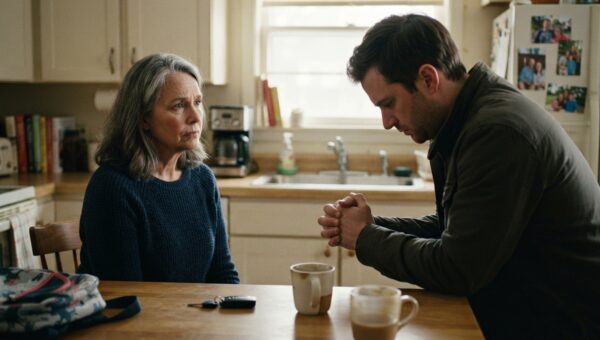
It sounded fair on paper. I took Monday through Thursday, managing Mom’s physical therapy appointments, grocery shopping, medication schedules, and the quiet, lonely evenings when Mom stared at the wall and wept because her left arm would not lift her teacup. Brenda took Friday through Sunday. Three days a week to rest, recharge, and handle whatever groceries or household chores Mom needed.
At least, that was the plan.
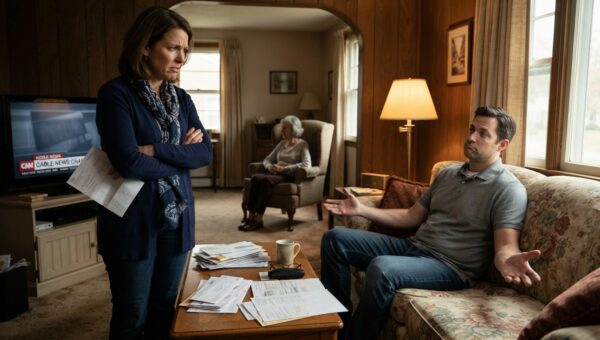
By the second month, the cracks appeared. On a Friday morning at seven, my phone would buzz with a text from Brenda. Migraine again. Can you cover today? I have to prep for a presentation. I would sigh, cancel my own plans, and drive over to Mom’s house. By month four, Friday through Sunday had become a ghost shift. Brenda had a work trip in Chicago, then a dental procedure, then car trouble, then her youngest son’s soccer tournament in another state.
Every excuse was delivered with a sweet, apologetic emoji and a promise to make it up next week. Next week never came.
I stopped arguing around month five. There was no point in fighting with someone who had mastered the art of being conveniently unavailable. When you are wiping your seventy-four-year-old mother’s tears and helping her walk to the bathroom, you do not have the emotional energy left to scream at a sibling who is posting photos from a brunch patio in Scottsdale. I just absorbed it all. I took the extra days, the extra nights, the extra laundry, and the quiet resentment that grew heavier than Mom’s wheelchair.
Mom knew what was happening. She didn’t say much because speech was difficult after the stroke, but her eyes followed me around the kitchen with a sorrow that cut deeper than my exhaustion. Whenever I tucked her in on Sunday nights after Brenda had spent the entire weekend ignoring her phone, Mom would squeeze my hand with her good right hand and whisper my name like a prayer.
Mom passed away on a Tuesday morning in August.
The funeral was exhausting, filled with distant cousins we hadn’t seen in a decade and neighbors who patted my shoulder and told me what a good daughter I was. Brenda cried the loudest, wearing a black linen dress that cost more than my monthly grocery budget. She stood at the front of the chapel, dabbing her eyes with a lace handkerchief, looking every bit the grieving, devoted child.
Two weeks later, we sat in the quiet conference room of Mr. Harrison, our family attorney for thirty years. The office smelled of old paper and polished wood. Dust motes drifted through the slatted blinds, catching the late summer sunlight.
Brenda sat across the desk from me, looking relaxed and composed. She was wearing a black silk blouse and, on her left ring finger, Mom’s vintage diamond ring.
It was a delicate piece with a two-carat center stone surrounded by tiny sapphires, an heirloom from our grandmother that Mom had kept in her jewelry box for decades.
I had never seen Mom give it to Brenda. In fact, just six months earlier, when Mom was still sharp enough to manage her small treasures, she had told me she wanted the ring reset into two smaller bands for her granddaughters, my daughters.
Brenda caught me staring at her hand. She smiled softly, turning her wrist so the diamond caught the light.
“She wanted me to have something special,” Brenda said, her voice smooth and practiced. “She told me during one of our quiet weekends together. Just before the end.”
I sat frozen, the blood rushing in my ears. I knew for a fact there had been no quiet weekends. Brenda had not spent a single full weekend alone with Mom in over eight months. Every visit Brenda made lasted twenty minutes, usually ending with an excuse about needing to run back home before traffic got heavy.
Mr. Harrison did not look up from the leather-bound folder in front of him. He adjusted his glasses, looked at Brenda’s hand, and then looked straight at me.
“Did either of you open the envelope your mother taped inside the blue medicine cabinet?” he asked.
Brenda stopped smiling. Her hand dropped instantly to her lap.
PART 2
The silence in the room became so heavy I could hear the faint hum of the air conditioner in the corner. Brenda shifted in her leather chair, her calm exterior cracking around the edges.
“What envelope?” Brenda asked, her voice losing its soft, practiced melody. “Mom didn’t keep anything in the medicine cabinet except her eye drops and ibuprofen.”
Mr. Harrison didn’t answer her immediately. He turned a page in the manila folder, his expression completely neutral. He had practiced law in our town long enough to see every flavor of family greed, and nothing about Brenda’s sudden panic seemed to surprise him.
“Your mother came to my office last March,” Mr. Harrison said, looking at both of us over the rim of his glasses. “She was shaking. Not just from the stroke, but from worry. She told me she was afraid her daughters were drifting apart over her care, and she wanted to make sure things were recorded accurately. Not just in memories, but in facts.”
Brenda sat up straighter, crossing her arms. “Mom was confused half the time after her stroke. The doctors said her cognitive judgment fluctuated. Whatever she wrote down in March doesn’t reflect how close we were at the end.”
“She was clear enough to dictate a precise daily log and a codicil to her final instructions,” Mr. Harrison said quietly. He slid a thin, cream-colored envelope across the polished mahogany table. Across the front, written in Mom’s shaky, left-handed scrawl, were the words: *For the Lawyer. To be opened with my daughters present.*
“I went to Mom’s house every single day,” I said, my voice barely above a whisper, feeling the old exhaustion flare up in my chest. “I cooked her meals, managed her medications, and sat with her through every bad night. Brenda didn’t even call half the time.”
Brenda turned on me, her eyes flashing with sudden anger. “Oh, stop playing the martyr! You always had to make everything about your schedule, didn’t you? Mom loved us both equally. She wouldn’t punish me just because I have a busy family and a demanding career.”
“Let’s look at what she wrote,” Mr. Harrison said, interrupting before Brenda could work herself into a full righteous defense. He used a letter opener to slice open the top of the envelope.
Inside was not a legal will, but a folded sheet of lined notebook paper covered in Mom’s handwriting, accompanied by a small stack of printed text message screenshots.
PART 3
Mr. Harrison unfolded the paper and laid it flat on the desk between us.
“Your mother kept a detailed log from December through July,” Mr. Harrison said, reading aloud in his steady, professional tone. “She recorded every date, every visit, and every cancellation. According to her notes, and corroborated by the security camera timestamps at her front door which she asked me to pull last month, [Narrator Name] was present for one hundred and seventy-four days out of one hundred and eighty. Brenda was present for twelve partial visits, totaling approximately twenty-two hours over eight months.”
Brenda’s face drained of color. “That is absurd. Mom didn’t know how to use security cameras.”
“Your brother-in-law installed them for her safety after the first fall,” Mr. Harrison reminded her smoothly. “And she learned how to check the log on her tablet. Furthermore, she left explicit instructions regarding her personal property.”
Mr. Harrison pointed to the bottom paragraph of the handwritten page.
“The vintage diamond ring,” Mr. Harrison continued, “was designated specifically for [Narrator Name]’s oldest daughter, Chloe, for her college graduation. If anyone removed items from the house without my written consent before the estate was settled, they are to receive zero portion of the liquid savings account.”
Brenda let out a sharp, breathless laugh that sounded entirely hollow. “You can’t be serious. Mom didn’t mean that. She was manipulated. You pressured her into writing this while she was vulnerable!”
“I was not present when she wrote it, Mrs. Vance,” Mr. Harrison replied coldly. “Your mother sat in this exact chair, alone, and paid me out of her own checking account to ensure her wishes were legally protected. She told me she loved both of her daughters, but she refused to let dishonesty write the final chapter of her life.”
I stared at the paper. Seeing the numbers written out in Mom’s careful, struggling left-handed script felt like a physical weight lifting off my shoulders. For eight months, I had felt invisible, carrying the burden in silence while feeling like a fool for doing so. Mom had seen it all. She hadn’t been confused; she had been watching, recording, and protecting what mattered.
Brenda stood up so fast her chair scraped loudly against the hardwood floor.
“This is ridiculous. It’s a biased, manipulative trick,” Brenda snapped, pulling her designer handbag off the back of the chair. She grabbed for the diamond ring on her finger, tugging at it, but her hands were shaking so badly the band wouldn’t budge over her knuckle. “Keep the damn savings account. Keep the whole house. You two deserve each other.”
She turned and marched out of the office, the heavy glass door swinging shut behind her with a sharp click that echoed in the quiet hallway.
ENDING
Mr. Harrison packed the papers back into the manila folder and slid the cream-colored envelope toward me.
“You can take the ring with you now, or I can hold it in the office safe until Chloe’s graduation next spring,” he said gently.
“I’ll take it,” I said.
I reached out, slid the ring off Brenda’s abandoned place at the table, and dropped it into my coat pocket. It felt small and cold against my palm.
Twenty minutes later, I walked out of the office and into the bright afternoon sunlight. The air smelled of hot asphalt and autumn leaves just beginning to turn at the edges of the parking lot. For the first time in ten months, my shoulders felt light.
I got into my car, tossed my keys onto the passenger seat, and noticed Mom’s old blue travel mug sitting in the cup holder where I had left it the week before. I picked it up, turned it over, and saw the small silver scratch near the handle where Mom had dropped it on the kitchen tile the day she came home from the hospital.
I started the engine, pulled out of the parking lot, and drove home in the quiet afternoon.