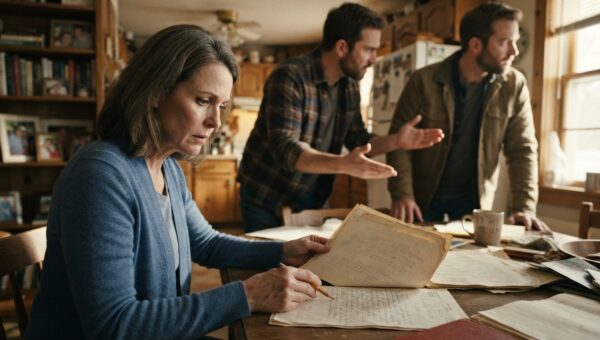
Fourteen months. That was how long the silence had been living in our Dayton house before the lawn got so high the city sent a yellow warning slip in the mail. Arthur always kept the borders trimmed to a razor edge. He used an old gas edger that smelled like burnt two-stroke oil every Saturday morning at eight sharp, humming hymns under his breath while I drank my first cup of black coffee on the screened-in porch.
After he went into the hospital and never came back out, the edger sat in the back of the garage with half a tank of stale gas, and the grass just took over. It grew thick and damp, choking out the flower beds he built for my fiftieth birthday, until the front yard looked like an abandoned lot. I kept the curtains drawn tight because looking at it felt like looking at proof that I was failing at the simple mechanics of staying alive without him.
I found Leo on a crumpled flyer stuck to the bulletin board outside the neighborhood hardware store. The ink was smeared from a light drizzle, and the phone number at the bottom had been torn off a few times by people needing someone to haul mulch or clean out gutters. His name was written in neat, blocky pencil letters under a heading that just said yard work.
I dialed from the landline in the kitchen because my cell phone battery was dead and I could not find the charger under the stack of medical bills that still arrived with Arthur’s name on them. A boy answered on the third ring, his voice cracking slightly before he cleared his throat and told me his name was Leo. He didn’t sound like a businessman or a contractor. He sounded like a kid who was trying very hard to sound older than sixteen.
When he showed up the next Tuesday afternoon, he drove an old blue Ford pickup with a dented tailgate and a rusted mower strapped down in the bed with a frayed orange strap. He wore heavy steel-toed boots that looked three sizes too big for his ankles and an oversized gray t-shirt with a grease stain near the pocket. He didn’t shake my hand or give me a big pitch.
He just nodded once, looked down at his boots, and asked where the hose spigot was located. I pointed toward the side of the house near the meter, and he went straight to work without another word. The sound of that old Briggs and Stratton engine kicking over was the first loud noise in our yard since the ambulance doors shut that November morning. I stood by the kitchen window with a dish towel in my hands, watching him push the heavy machine back and forth through the tall weeds, leaving clean, dark stripes of cut grass in his wake.
By the third week, the rhythm of his visits had settled into something I almost looked forward to. He would arrive like clockwork on Tuesdays at four, mow the front and back, trim the edges with a hand-held weed whacker that hissed against the concrete, and load his gear back into the truck before the sun dipped below the roofline of the split-level across the street.
I always left an envelope with twenty-five dollars cash tucked under the ceramic turtle by the front door, exactly as we had agreed. He never took a penny more, and he never knocked to collect it. He just picked up the envelope, slipped it into his back pocket, and drove away. But then the little things started happening around the edges of the property. Small shifts in the routine that I did not ask for and certainly did not pay for.
It started with the trash bins. Tuesday was collection day, and usually I dragged the heavy plastic containers back up the steep gravel driveway on Wednesday mornings when my joints felt stiff and uncooperative. But after Leo started coming, I walked out at seven in the morning to find both bins already standing neatly beside the garage door, their lids closed tight against the raccoons. I figured the wind had blown them up or maybe a neighbor had been kind, though the neighbors mostly kept to themselves these days behind drawn blinds and manicured hedges. Then came the grocery bags. I came home from the pharmacy with two heavy canvas sacks of provisions and a gallon of milk, dreading the three flights of wooden steps leading up to the kitchen door. I set them down on the concrete landing to catch my breath, turned around to lock the car door, and when I looked back, the bags were sitting right on the kitchen mat just inside the open screen door. Leo was halfway across the yard, walking back toward his truck with his head down and his hands jammed deep into his pockets.
The porch light was the one that finally broke my quiet concentration. The bulb had burned out back when Arthur was still able to walk to the hardware store, and I had never bothered to replace it because I had no reason to stay out on the porch after dark anyway. One evening around nine o’clock, I noticed a warm, steady glow spilling across the welcome mat. I stepped outside in my slippers, reached up to test the glass, and found a brand-new LED bulb screwed tightly into the socket. The old cracked plastic casing had even been wiped clean of dead gnats and spiderwebs. I stood there in the dark yard for a long time, looking up at the light, feeling a strange, tight knot form in my throat that had nothing to do with grief and everything to do with being seen. I knew Arthur wasn’t coming back to fix the house, but someone else was taking inventory of what was broken and quietly setting it right.
The following Tuesday, I decided I was not going to let him slip away before I got an answer. I waited by the kitchen window with a pitcher of iced tea and two glasses, watching for the blue truck to pull into the gravel. When the mower cut out and the engine went dead, I didn’t wait for him to finish loading his gear. I pushed the screen door open and walked right out onto the grass, holding the glasses in my hands. Leo was leaning against the tailgate of his truck, wiping his forehead with the hem of his gray shirt, looking exhausted in the late-afternoon heat. He jumped slightly when he heard my boots crunch on the dry gravel, like a stray dog caught sleeping on a porch where it didn’t belong.
“You’re working too hard, Leo,” I said, keeping my voice level so I wouldn’t scare him off. “And you’re doing things I never put on the list.”
He looked down at his boots immediately, shifting his weight from one heel to the other. His knuckles were raw and gray with dried dirt around the cuticles, and I noticed for the first time how young he really looked under the smudge of lawn dust across his cheekbone. “Just tidying up,” he mumbled, staring at a dandelion growing between the stones. “It wasn’t a problem.”
“The bins, the groceries, the porch light,” I said, stepping closer and holding out one of the glasses of tea. He didn’t take it right away, just kept his hands glued to the tailgate. “You aren’t charging me for any of that. Why are you doing it, Leo? I only hired you to cut the grass.”
He stayed quiet for a long time. The only sound was the distant whine of traffic on the bypass three blocks over and the wind rustling through the maple tree Arthur planted twenty years ago. I thought maybe I had crossed a line, maybe I had made him feel cornered or defensive the way adults often do to kids who are just trying to do an honest day’s labor. I almost took the glass back and told him to forget I asked. But then he swallowed hard, looked up at the roofline of the house, and let out a long, ragged breath that seemed to carry years of something heavy out of him.
“My mom used to struggle like this,” he whispered. His voice didn’t crack this time; it was flat and steady with a strange kind of old sorrow. “After my dad left, she tried to work two shifts at the diner and keep the place together by herself. I remember coming home from school and seeing her crying at the kitchen table because she couldn’t lift the salt-water softener bags or fix the back gate. Nobody ever helped her. The neighbors just looked away like they didn’t see it.” He looked straight into my eyes then, and his gaze was entirely too old for sixteen. “I know how heavy small things can feel when there’s nobody around to share the weight.”
His words stopped me right where I stood. The glass of tea felt suddenly heavy in my hand, the condensation cold against my palm. I had hired him to cut grass, but standing there in the fading sunlight, I realized he was treating my front yard the way he wished someone had treated his mother’s yard during the worst years of their lives. He wasn’t just doing a chore for twenty-five dollars cash; he was trying to fix a broken world using the only tools he had, a rusted mower, an old Ford truck, and a pair of strong, tired hands. I didn’t say anything for a second because my brain kind of stopped working for a while, and honestly that felt worse than crying.
“Here,” I finally managed, holding the glass out closer until his fingers brushed mine. “Take the tea. And come inside for a minute. I baked some corn muffin bread this morning and it’s getting cold on the counter.”
He hesitated, looking from the glass to my face, then slowly took it. “I got homework to finish before dark,” he said, though there was no real fight left in his voice.
“Homework can wait ten minutes,” I told him, turning toward the house. “And you can tell me about your math class while you eat.”
That Tuesday was the turning point, though nothing dramatic changed overnight. Leo didn’t become my adopted grandson, and I didn’t become his savior. We just stopped being strangers who passed each other across a property line. After that afternoon, he started coming up the steps whenever he finished the mowing, knocking twice on the wooden frame before sitting down in the green wicker chair by the door. We would sit there in the cool evening air while he ate whatever I had baked, blueberry muffins, lemon bars, sometimes just a slice of buttered toast, and talked about high school algebra, the worn transmission in his truck, and how his mother was finally taking night classes to get her certificate in bookkeeping. He told me about how they finally saved enough to put a new roof over their kitchen, and I told him about how Arthur used to mess up the grocery shopping by coming home with six jars of pickles and no milk.
The house didn’t get any less quiet when he left. The silence after the truck rumbled down the street was still there, waiting for me in the hallway, but it didn’t feel quite as heavy anymore. The garbage bins stayed where they belonged, the porch light kept burning bright every single night against the dark, and the grass stayed trimmed to a clean, sharp edge. On Saturdays, when I sit on the porch with my morning coffee, I look out over the yard and I don’t just see the work Arthur left behind. I see the way kindness manages to find its way through the cracks when you least expect it, carried in the back of an old blue truck by a boy who knew what it meant to watch someone struggle alone.