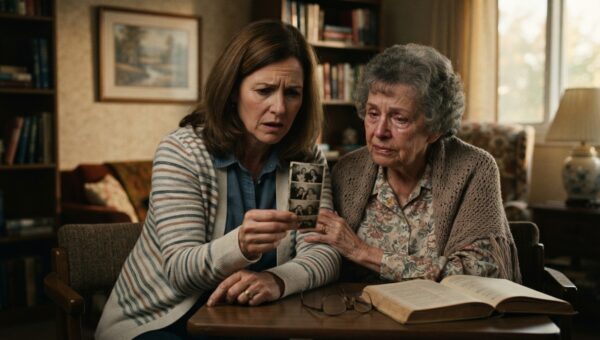
The funeral flowers were still dripping water onto Grandma Eleanor’s front porch when my brother, Mark, started looking for the key to her oak roll-top desk. He did not even wait for the last car to pull out of the drive. The gravel in the lane had barely settled under the tires of the preacher’s Buick before Mark was already standing in the hallway with his sleeves rolled up, checking his watch like he had a flight to catch.
Our aunt Clara was right behind him, carrying three empty cardboard liquor boxes she had looted from the back of the pantry. They moved through those three small rooms with the practiced efficiency of people clearing out a storage unit after a missed payment. There was no quiet lingering by the radio where Grandma used to listen to the evening news. There was no stopping to touch the blue enamel teapot that always sat on the warm burner. To them, the house was just an overdue settlement waiting to be divided.
I stayed out in the kitchen at first, wiping down the oilcloth table with a damp paper towel that kept tearing against the corners. Every time I heard wood scrape against the floorboards in the parlor, I felt that dull, heavy ache right behind my ribs. Grandma Eleanor had lived in that house for forty-two years. She had planted the hydrangeas by the back step herself, kneeling in the dirt with a frayed blue cushion tied around her knees.
Mark walked into the kitchen carrying a velvet jewelry roll that used to belong to our great-aunt May. He didn’t even try to hide what he was doing. He just tossed it onto the oilcloth next to my coffee mug and started unzipping the small leather pouches with his thumb and forefinger.
“Doreen wants the pearl drop earrings,” Mark said, his voice entirely too loud for a house that still smelled faintly of old peppermint and floor wax. “And Chloe says the amber brooch matches her Thanksgiving dress. We might as well divvy this up now before people start making weird claims at the estate sale.”
“The funeral isn’t even until Thursday, Mark,” I said. I didn’t look up from the damp spot on the table. My rag was gray with thirty years of kitchen grime that had finally loosened from the grain.
“That’s why we’re doing it now, Faye,” Clara called out from the hallway, her arms loaded down with silver serving spoons wrapped in tarnished flannel. “Once the cousins from Columbia get down here, you won’t even get a soup ladle.
You always were the sentimental one. Let us handle the hard logistics.”
That phrase had followed me around since I was nine years old. Whenever I wanted to keep a broken robin’s egg or save the ribbon from a birthday package, I was the sentimental one. It was the family code for someone who didn’t understand the real value of things. To them, value meant what you could pawn on a Tuesday afternoon or list on a local classifieds page for cash.
By six o’clock, the living room looked like a rummage sale after a sudden downpour. The sofa cushions were pushed aside. The mahogany sideboard where Grandma kept her best napkins had its doors swung wide open, empty as a hollow log. Mark and his wife, Chloe, were sitting at the dining table with a yellow legal pad between them, arguing about who had already borrowed what from Grandma’s checking account over the last five years.
“She lent you four thousand for the transmission back in twenty-one,” Chloe said, pointing the plastic cap of a ballpoint pen straight at Mark’s chest. “That counts against your share of the liquid accounts. We wrote it down.”
“She didn’t lend it, she gave it,” Mark muttered, scrawling something angry on the margin of the pad. “She didn’t write it in the ledger.”
“Well, I’m writing it now,” Chloe snapped.
I stood in the doorway with my arms crossed over my chest, watching them carve up a life with yellow ink and sharp elbows. My shoes felt heavy against the braided rug. I kept waiting for someone to mention Grandma herself, to say something about the way she laughed when her tomato plants finally took off, or how she always kept a spare tin of ginger snaps in the bottom cupboard just in case I dropped by without calling. But nobody said her name. She was just an estate now, a set of figures to balance before the weekend.
At the final family meeting around that scarred dining table, Aunt Clara slid a folded bundle across the laminate surface. It made a dull, heavy thud against the wood.
“This should go to you,” Clara said, her tone dripping with the kind of false charity that always made my teeth itch. “You liked sitting under it while she watched television.”
I looked down at the quilt. It was old, patched together from faded gingham scraps and feed sacks that had lost their color decades ago. The edges were fraying where Grandma’s hands had held it through cold winters and long, lonely nights after Grandpa passed.
One of my cousins, standing by the sideboard with a pocketful of silver teaspoons, let out a short, dry laugh and coughed into his hand. “Perfect,” he muttered. “No resale value.”
Mark leaned back in his wicker chair, the legs groaning under his weight, and gave a tired nod. “Honestly, giving her the quilt saves us from hearing speeches later about memories and family history.”
I didn’t argue with them. I didn’t raise my voice or tell them they were vultures circling a warm body. I didn’t ask for a different share of the silver or try to claim a corner of the bank accounts they were already dividing like spoils of war. Arguing with Clara and Mark was like trying to bail out a sinking boat with a kitchen sieve. You just got tired and wet for no reason.
I just reached out and scooped the heavy bundle into my arms. It smelled of cedar and old dust, that comforting, familiar scent that always followed Grandma into a room.
I carried it out to my sedan and laid it across the back seat. When I got home to my small apartment, I didn’t unfold it. I didn’t even turn on the overhead light in the living room. I just tossed it over the back of the sofa, where it sat like a slumped, silent guest for three whole days. Every time I walked past the couch to get a glass of water, I could see the corner of the faded blue gingham trailing down toward the baseboard. I told myself I would put it in the cedar chest in the spare closet later. I just didn’t have the heart to touch it yet.
On the third night, the rain started tapping against the glass with a steady, nervous rhythm. I was sitting at the little laminate table in my kitchen, trying to mend a tear in the sleeve of my work jacket with a spool of black thread and a blunt needle.
When I finished, I noticed a small loose thread dangling from the hem of the quilt where it draped over the couch across the room. It was annoying me, that little tuft of white cotton catching the light from the floor lamp. I got up, grabbed my sewing scissors from the basket, and walked over to trim it.
I sat down on the edge of the sofa, pulling the heavy fabric onto my lap. The cotton batting inside felt lumpy and uneven in a strange way. Grandma Eleanor had been a master quilter; every stitch she made was usually even and measured, tight as guitar strings. But as my fingers slid along the bottom edge near the corner binding, I felt something thick and rigid hidden deep inside the lining.
It wasn’t a knot of cotton. It felt stiff, like folded cardstock or heavy paper wrapped in something slick.
I paused, my heart giving a strange, heavy thump against my ribs. I looked toward the window, as if Mark or Clara might somehow be watching through the glass, then looked back down at the blue gingham.
With the tip of my small sewing scissors, I carefully snipped the first anchor thread. The old cotton gave way with a faint, dry pop. I snipped another, and then another, working the small blade slowly through the stubborn decades-old stitching until the hem parted just an inch or two.
I slid two fingers into the dark warm space between the fabric layers. My fingertips brushed against something smooth and cold.
When I pulled it out, my breath caught in my throat.
It was a heavy, sealed plastic zip pouch, the kind used for bank deposits, stuffed full of crisp, folded paper. Attached to the front of the pouch with a yellowed piece of masking tape was a small white envelope addressed in Grandma Eleanor’s sharp, unmistakable cursive handwriting: *For Faye. Read this when the house is quiet.*
I sat there on the edge of the couch for a long time, the rain drumming against the roof, watching the flicker of the streetlamp through the sheer curtains. The room felt suddenly enormous and cold.
I pulled the letter from the envelope first. The paper was heavy linen, yellowed slightly at the folds.
*Faye,* it began, *if you are reading this, the vultures have already cleaned the bones. I knew they would. I’ve watched Clara and Mark treat my life like an advance paycheck for ten years now. They think they know everything about what I own, but they only see what is loose on top of the tables.*
I swallowed hard, my hands trembling slightly as I held the paper under the glow of the lamp.
*Two weeks ago, I met with Attorney Vance down at the county seat,* the letter continued. *We updated the trust. Everything liquid that they are currently fighting over in the kitchen can stay with them; it’s a drop in the bucket compared to what they assume I had hidden. But the real property, the house, the acreage behind the timberline, and the primary investment accounts are no longer part of the probate estate they think they’re dividing. They are held in a private trust administered solely by you. Enclosed find the official addendum and the itemized ledger of every ‘advance’ Mark and Clara have taken from my accounts over the last decade. They signed promissory notes for every cent, thinking I forgot. I didn’t forget a thing.*
My fingers dropped down to the thick stack of papers inside the plastic pouch. I pulled them out one by one. There was the amended living trust, stamped with a gold embossed notary seal dated just fourteen days before she passed away. There were copies of canceled checks made out to Mark for his truck, to Clara for her roof repairs, all signed and dated with clear repayment stipulations that completely wiped out any claim they had to the remainder of the estate.
And right at the bottom was a brief, final note from Grandma: *They always called you the sentimental one, Faye, because you knew how to hold onto things that mattered. Now you have the only thing here that has any real weight. Don’t let them take it.*
I didn’t sleep that night. I sat on the couch with the quilt bunched around my knees, reading through the legal descriptions and the columns of figures until the sky outside the window turned the color of wet cement. Every number told a story of demands made, checks written, and quiet resentment swallowed down. They had spent years treating Grandma like an ATM that lived in a brick house, and now the ledger had finally caught up with them.
Two days later, my phone started ringing before eight in the morning.
It was Mark. I let it ring out to voicemail, listening to the heavy, frantic buzzing against the wooden coffee table. Then Clara called. Then Chloe. By noon, there was a sharp, aggressive knock at my apartment door.
I didn’t rush. I walked over, unlocked the deadbolt, and pulled the door open.
Mark and Clara were standing in the narrow hallway under the flickering fluorescent light of the apartment complex. Mark’s face was red, his tie pulled loose around his collar, and Clara was holding a clipboard like a shield.
“Why aren’t you answering your phone?” Mark demanded, stepping half an inch across my threshold without waiting for an invitation. “We’ve been trying to reach you for four hours. The bank downtown just rejected our paperwork on Grandma’s primary account. They said there’s a freeze on the secondary trust.”
I didn’t move from the doorway. I kept one hand flat against the wooden frame, blocking his path.
“What are you talking about, Mark?” I asked, my voice remarkably steady.
Clara pushed past him, her eyes darting past my shoulder into the small living room where the heavy quilt was still draped neatly over the back of the sofa.
“Don’t play games with us, Faye,” Clara snapped, her voice rising in pitch. “The attorney called us thirty minutes ago. He said there’s an amended trust naming you as the sole administrator of the property and the main holdings. That’s impossible. We’re the primary heirs. We’re the ones who took care of her logistics.”
“You cleared out her living room before the body was cold,” I said softly.
Mark stared at me, his jaw working as if he were trying to chew on words that wouldn’t fit. “That was just… that was just family business. That doesn’t mean you get to hijack the estate. We need your signature on the release forms today so the title company can clear the house sale to the developer.”
“There is no house sale,” I said.
“The developer already put down earnest money,” Clara shrieked, her composure finally cracking entirely. “We’re splitting that forty thousand by Friday.”
I reached behind me, picked up the thick manila legal folder I had left on the hall table, and slid it forward until it hit Mark squarely in the chest. He caught it instinctively with both hands, his fingers fumbling against the heavy cardstock.
“Grandma left me a few things,” I said, watching the color drain completely out of his face as his eyes dropped to the embossed seal visible through the corner of the folder. “Including a full accounting of every loan she ever gave you two. Attorney Vance has copies of everything. According to these papers, your share of the estate was fully exhausted about three thousand dollars ago.”
Mark opened the folder with trembling fingers, pulling out the first page of the trust addendum. I could see his eyes scanning the notarized signatures, the precise legal language, the unmistakable weight of a trap that had been set years in advance and only just now sprung shut.
“You can’t do this,” Mark whispered, his voice dropping into a hollow, defeated register. “She wasn’t… she didn’t know what she was signing at the end. She was old.”
“She knew exactly what she was doing,” I said. “She told me you called me the sentimental one. Turns out she was right. I kept what mattered.”
Clara let out a sharp, ragged sound of disbelief and grabbed Mark’s arm, turning him around toward the stairwell. “We’re calling a lawyer,” she hissed, her voice echoing down the concrete hall. “This is fraud. We’ll tie this up in probate for ten years.”
“You can try,” I said quietly. “But the ledger is notarized, and the keys to the house are already in my pocket.”
I watched them turn and hurry down the corridor toward the exit, their footsteps loud and chaotic against the concrete floor. I didn’t shout after them. I didn’t gloat or wave goodbye. I just stood there in the doorway until the heavy metal fire door at the end of the hall swung shut with a dull, final thud.
When I closed my door and locked the deadbolt, the apartment felt smaller, quieter, and entirely safe.
I walked back into the living room, picked up the heavy quilt from the back of the sofa, and carried it down the narrow hall to my bedroom. I spread it carefully across the foot of my own bed, smoothing out the worn blue gingham with the palm of my hand until every patch lay flat and true. The repaired seam along the bottom edge held fast against the evening draft, tight and secure, carrying the weight of a secret that had finally found its way home.