PART 1
My sister Brenda had an answer for everything the day Mom was discharged from the hospital.
Mom was seventy-two, frail from a partial hip replacement, and barely steady on a walker. I lived twenty minutes away in a two-story split-level home with four steps up to the porch and a full flight to the bedrooms. Brenda lived in a sprawling, modern ranch-style house out on the edge of town, complete with zero-threshold doorways and a walk-in shower.
“It just makes practical sense, Sarah,” Brenda told me in the discharge lounge, smoothing down her designer jacket while Mom sat quietly in a wheelchair between us. “Your house has stairs. If she falls at your place, she will shatter the joint all over again. Let her stay with Greg and me for six weeks. We have the space, I work from home three days a week, and Greg can help lift her if she needs it.”
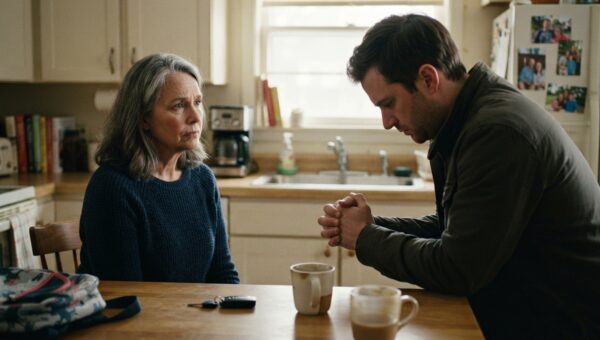
I looked at Mom. She seemed exhausted, her face pale under the fluorescent hospital lights. When I squeezed her hand and asked what she thought, she just gave a weak nod. “Just until I can get up the steps on my own, honey,” she whispered.
I agreed. I felt guilty about my stairs, and I wanted Mom to have the easiest recovery possible. But looking back, I handed Brenda the keys to our family without realizing she had already set the trap.
For the first ten days, things seemed fine on the surface, though Brenda started controlling the schedule almost immediately. Whenever I drove over after my shift at the clinic, Brenda would meet me at the front door with a strained, whispery voice. Mom was napping. Mom just took a pain pill. Mom was doing her physical therapy exercises and couldn’t be disturbed.
When I did get inside to see her, Brenda hovered by the foot of the bed or stood directly in the doorway, folding laundry or checking her phone. Mom looked dull, her eyes glazed, answering my questions in slow, one-word sentences. Brenda blamed the heavy narcotics prescribed by the orthopedic surgeon.
“She is having a terrible time with the pain,” Brenda insisted, gently steering me toward the front door after barely fifteen minutes. “The doctor said rest is the only thing that heals bone. Stop hovering, Sarah. You make her anxious.”
Then week three started, and Brenda stopped answering my calls altogether.
On a rainy Tuesday afternoon, exactly twenty-two days after Mom’s surgery, my phone buzzed on my desk at work. It was an incoming call from Mom’s cell phone, a number that had not rung in over two weeks because Brenda claimed Mom kept dropping it behind the nightstand.
I answered instantly. “Mom?”
All I heard was shallow, panicked breathing and the sound of running water.
“Sarah,” Mom whispered, her voice trembling so violently she could barely form the syllables. “Sarah, please. You have to come get me. Please come right now.”
“Mom, what is going on? Where are you?”
“I am in Brenda’s guest bathroom,” she said, her voice cracking. “I locked the door. She took my purse, Sarah. She took my checkbook and my driver’s license. She won’t let me leave the bedroom. She tells everyone I’m losing my mind, but I’m not. Sarah, she is doing things with my money.”
Before I could answer, I heard a loud, heavy thud on the other end of the line, like a fist slamming against a solid wood door.
“Mom? Who are you talking to in there?” Brenda’s voice bled through the speaker, sharp and furious. “Open this door right now. Give me that phone!”
“Sarah, please hurry!” Mom cried out, and then the line went dead.
My heart felt like it stopped. I grabbed my keys, threw my badge on the desk, and ran out to my car without even telling my supervisor I was leaving. The drive to Brenda’s house usually took twenty-five minutes; I made it in seventeen, running yellow lights with my hands clenched tight against the steering wheel.
When I pulled into Brenda’s curved concrete driveway, her husband Greg’s truck was gone, but Brenda’s white SUV was parked near the garage. I walked straight up the front steps and pounded on the door.
Brenda opened it after a long pause. She was wearing yoga pants and an oversized cardigan, her hair pulled back into a neat bun. She looked entirely composed, except for a tiny twitch at the corner of her left eye.
“Sarah,” she said, leaning against the doorframe to physically block the entrance. “What on earth are you doing here banging on the door like a lunatic?”
“Where is Mom?” I demanded, pushing forward. “I just got off the phone with her. She was crying, Brenda. She told me to come get her.”
Brenda did not budge. She sighed, a deep, performative sigh full of exaggerated pity, and shook her head. “I was afraid of this. Sarah, she had another episode about twenty minutes ago. The hydrocodone is making her paranoid and completely confused. She started hallucinating that someone was stealing from her, ran into the bathroom, and locked herself in. Greg is running to the pharmacy right now to talk to the pharmacist about adjusting her dosage.”
“Let me inside, Brenda. I am taking her home with me right now.”
“You are not taking an unstable, post-surgical woman out in the rain,” Brenda snapped, her voice dropping the sweet act and turning ice-cold. “I am her designated medical proxy. You don’t have the right to drag her out of here against medical advice. Go home, calm down, and I will call you when she is asleep.”
She stepped back and went to slam the heavy front door in my face, but I shoved my boot directly between the door and the jamb.
“I am not leaving this porch until I see Mom with my own eyes,” I told her, staring directly into her face. “Either you let me in, or I stand right here and call the sheriff for a wellness check. Let’s see what the deputies think about you locking an elderly woman in a back room.”
Brenda’s jaw tightened. She knew the local deputies; our town was small, and Greg owned a commercial contracting company that relied heavily on local municipal contracts. A squad car in their upscale driveway was the last thing she wanted.
“Fine,” Brenda hissed, stepping aside. “See for yourself how delusional she is. But if you agitate her, this is on your head.”
I pushed past her and marched down the wide hallway toward the back guest bedroom. The room was dark, the blinds drawn shut against the gray afternoon rain. The bed was unmade, sheets twisted, and the bathroom door at the far end of the room was closed tight.
“Mom?” I called out, hurrying across the carpet. “Mom, it’s Sarah. I’m right outside.”
There was no sound from inside the bathroom. Then, very slowly, a white paper slipped out from beneath the crack at the bottom of the door.
It was a crumpled grocery store receipt from a local supermarket.
I picked it up with shaking hands. The front showed a few random items bought two weeks earlier, but when I turned it over, the smooth back of the register tape was covered in Mom’s shaky, deliberate pencil handwriting.
There was a list of six specific dates spanning the last fourteen days.
Beside the first date, Mom had written: *Subaru sold. Cash?*
Beside the third date: *Credit union savings closed.*
Beside the fifth date: *Retirement check diverted.*
My eyes dropped to the final line at the bottom of the paper. It was tomorrow’s date.
Beside it was a single word, underlined three times in dark, frantic pencil marks:
*House.*
PART 2
I stood frozen in the middle of the guest bedroom, staring down at Mom’s shaky handwriting on the back of that register tape.
My mother had owned her small two-bedroom brick bungalow on Oak Street for forty-one years. My late father had paid off the thirty-year mortgage three months before he passed away from lung cancer. That little house was Mom’s pride, her only real security in this world, and her entire net worth outside of a modest state pension and a small credit union savings account.
She loved her light blue Subaru Outback. She kept it spotless in the garage, only driving it to church on Sundays and to the local market twice a week. There was no earthly reason for her to sell that car. None at all.
“See?” Brenda’s voice spoke from the bedroom doorway, making me jump. She was leaning against the frame with her arms crossed, watching me read the paper. “She’s scribbling random numbers and words on garbage. Yesterday she insisted the nurses at the clinic were sneaking through the air vents. She is sundowning, Sarah. The doctor said orthopedic trauma often accelerates cognitive decline in women her age.”
“Mom is not sundowning,” I said, my voice shaking with pure adrenaline as I shoved the receipt deep into my jeans pocket. “Unlock this bathroom door.”
“She locked it from the inside,” Brenda said coolly. “I told you, she won’t come out. She needs to sleep off the pills.”
I ignored Brenda and walked straight to the bathroom door, pressing my palm flat against the wood. “Mom, it’s me. Brenda let me in. Unlock the door, Mom. I’m right here.”
A moment later, I heard the faint click of a thumb-turn lock. The door cracked open two inches. Mom’s face appeared in the gap, sunken and gray, her silver hair unbrushed and matted against her neck. She had lost noticeable weight in just three weeks. When she saw my face, tears welled in her eyes, spilling over her wrinkled cheeks.
“Sarah,” she whispered, her fingers reaching out to grab my wrist with surprising strength. “Don’t let them do it. They made me sign papers. They said they were medical insurance claims for the hospital, but Greg had a notary come here to the house on Friday. They are taking everything.”
“Mom, stop making up stories!” Brenda snapped, stepping forward aggressively. “You are embarrassing yourself!”
“Back off, Brenda!” I yelled, turning on her with a fury that made her freeze in her tracks. “Don’t you take another step toward her.”
I helped Mom out of the bathroom. She was unsteady, leaning hard on me, her left leg dragging slightly. She wasn’t wearing her shoes, just thick hospital socks with rubber grips on the soles. On the nightstand sat three prescription bottles. I glanced at the labels: high-dose oxycodone, a powerful muscle relaxant, and an anti-anxiety sedative that had never been part of her original discharge instructions. Brenda hadn’t just been caring for Mom; she had been keeping her chemically subdued.
“I need to make a call,” I said, pulling my phone from my pocket.
“Go ahead,” Brenda sneered, crossing her arms defensively. “Call the doctor. Call an ambulance. They’ll tell you the exact same thing I did. She is incompetent to make decisions right now.”
I didn’t call the doctor. I walked out of the bedroom, stepped through the open front door, and walked halfway down the concrete driveway to get clear reception.
I dialed Arthur Vance.
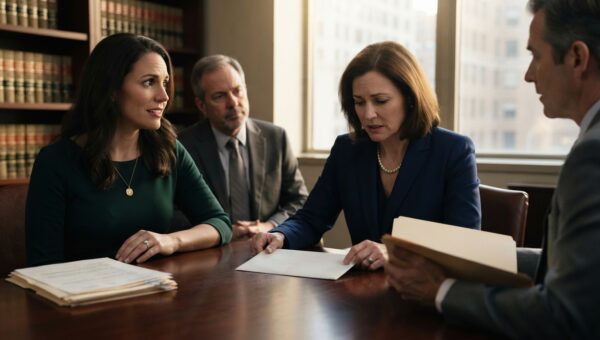
Arthur had been our family’s attorney for nearly thirty-five years. He had drawn up my parents’ simple wills, handled Dad’s estate probate, and set up Mom’s basic health care power of attorney five years ago after Dad died. He knew Mom, he knew our family, and he knew every property line in the county.
Arthur picked up on the third ring. “Sarah? What’s going on, dear? You sound out of breath.”
“Arthur, I am standing in Brenda’s driveway,” I said, trying to keep my voice from cracking. “Mom has been staying here since her surgery. She just slipped me a note. She says Brenda and Greg had a notary come to the house on Friday. The note says Mom’s car is gone, her savings account is closed, and tomorrow’s date is written down with the word ‘house.’ Arthur, please tell me you haven’t processed any paperwork on Mom’s property.”
There was dead silence on the other end of the line. The kind of heavy, suffocating silence that immediately makes your stomach drop through the floor.
“Arthur?” I pressed. “Are you there?”
“Sarah,” Arthur said slowly, his voice dropping into a grave, formal tone. “Mom didn’t use my office. But because I maintain a title alert on all active client properties in this county, my clerk received an electronic notification from the county recorder’s office less than two hours ago.”
A cold wind swept across the driveway, chilling the rain on my face. “What kind of notification?”
“A statutory quitclaim deed was prepared and submitted for pre-recording this morning,” Arthur said, paper rustling over the phone. “It transfers full ownership of your mother’s home on Oak Street for the nominal consideration of ten dollars.”
“Brenda,” I choked out. “She’s trying to put the house in her name.”
“No, Sarah,” Arthur corrected gently, his words cutting like glass. “Brenda isn’t listed as the grantee. The transfer deed names the buyer as Riverbend Holdings LLC.”
I blinked against the cold rain. “Who is Riverbend Holdings?”
“I pulled the state business filing when the alert popped up,” Arthur answered. “Riverbend Holdings was registered forty-five days ago. The sole managing member isn’t your sister, Sarah. It’s Greg’s brother, Mark. And attached to the deed is an immediate cash sale agreement to a third-party commercial developer for three hundred and eighty thousand dollars, closing at nine o’clock tomorrow morning.”
PART 3
The world seemed to spin on its axis.
Mark wasn’t even family to Mom. He was Greg’s younger brother, a slick commercial real estate flipper who had filed for personal bankruptcy twice in the last decade. Brenda and Greg hadn’t just bullied Mom into giving them her house; they had built a corporate shell to flip the property immediately to an outside developer, pocket the cash, and hide the paper trail behind Greg’s brother.
Mom’s neighborhood on Oak Street sat right on the edge of the newly approved medical district expansion. The city had voted to widen the boulevard two months ago. Mom’s house was old, but the double commercial-zoned lot it sat on was worth a fortune to builders looking to put up medical offices. Mom had never paid attention to city council meetings, but Greg was a general contractor. He had known about the rezoning for months.
“Arthur,” I whispered, my knuckles white against the phone. “Can you stop it?”
“The deed has been submitted, but the recorder has not stamped the final recordation yet because the excise tax payment had a clerical error,” Arthur explained quickly. “It is scheduled for final validation and recording at nine o’clock tomorrow morning when the deed office opens. If that deed records and the developer’s wire clears into Mark’s LLC account, Mom loses title. Reversing a recorded deed to a bona fide commercial purchaser after the money disappears is a multi-year nightmare. Is your mother lucid right now?”
“She is terrified, but she knows exactly what’s happening,” I said. “She knows she was tricked.”
“Listen to me very carefully,” Arthur instructed. “You have the co-durable power of attorney your mother signed in my office five years ago. Brenda is the primary medical proxy, but your financial powers are concurrent. I want you to walk back into that house, get your mother, and bring her straight to my office. Do not argue. Do not threaten them. Just get her out of there.”
I hung up, shoved my phone in my pocket, and walked back up the porch steps.
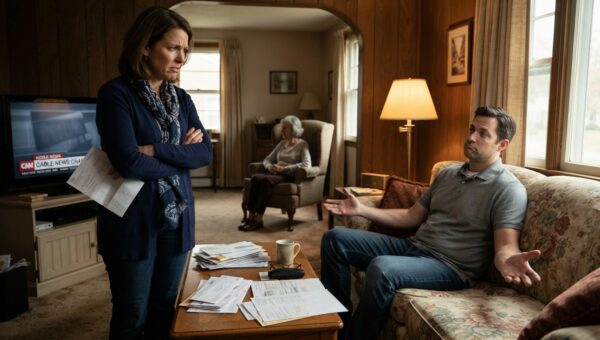
When I stepped into the house, Brenda was standing in the kitchen, casually pouring hot water into a ceramic mug. “Did you call the clinic?” she asked smoothly. “Because I’d appreciate it if you let the professionals handle her medication.”
“Where is Greg, Brenda?” I asked quietly.
She paused, the kettle hovering above her mug. “I told you. He ran an errand.”
“Did he run down to the county recorder’s office to fix the tax paperwork for Riverbend Holdings?”
Brenda’s entire face drained of color. The kettle began to wobble in her hand. She set it down hard on the granite counter, water splashing across the stove.
“I don’t know what you’re talking about,” she said, but her voice had lost every trace of its condescending composure.
“Riverbend Holdings LLC,” I repeated, walking directly up to the island counter. “Registered to Mark. Mom’s house sold for ten dollars to a dummy company, then flipped tomorrow morning for three hundred and eighty thousand dollars to the medical plaza developers. Did you really think Arthur Vance wouldn’t see the title alert?”
Brenda stared at me, her chest heaving. The disguise of the dutiful, loving daughter completely shattered. Her face twisted into an ugly, bitter sneer I had never seen before.
“Mom doesn’t need that house!” Brenda hissed, keeping her voice low so it wouldn’t carry down the hall. “She’s seventy-two, Sarah! She can barely walk! What is she going to do, sit alone on Oak Street until she falls down the stairs and rots? Greg and I have carried this family for years! We took her in! Greg’s business is hurting because of the interest rates, and that property is just sitting there doing nothing! Mom was going to end up in assisted living anyway!”
“So you stole her car? You drained her savings?”
“We didn’t steal anything!” Brenda spit back. “The car was sold to pay for her future care! We set up a private account to manage her expenses so she wouldn’t blow it all on nursing homes! Mark helped us structure it legally. She signed the papers, Sarah! She signed them in front of a licensed mobile notary on Friday afternoon! She knew what she was doing!”
“She was heavily drugged on narcotics you forced down her throat, and she thought she was signing medical insurance forms,” I said, stepping into her space. “That isn’t a legal transfer, Brenda. That is grand larceny, elder exploitation, and fraud. And you have exactly ten minutes to pack Mom’s walker and her coat before I call the state police.”
Brenda let out a harsh, mocking laugh, but her eyes darted toward the front door. “You won’t call the police. You won’t send Greg and me to prison. Think about what that would do to our family.”
“You stopped being my family the second you treated our mother like an asset to liquidate,” I told her.
I walked past her, down the hall to the guest room. Mom was sitting on the edge of the bed, gripping her metal walker, wearing her heavy wool coat over her nightgown. She had heard enough of the shouting to know the truth.
“Let’s go home, Mom,” I said gently.
Brenda stood in the hallway as I guided Mom out, but she didn’t try to touch us. She just stood there, arms rigid at her sides, glaring at us with pure venom.
“If you walk out that door, Sarah, you will never see a dime of help from us again!” Brenda shouted as I helped Mom into the passenger seat of my car. “You want to take care of an invalid? You’re on your own!”
I didn’t answer. I shut the car door, backed out of the driveway, and drove straight to Arthur Vance’s office in town.
By five o’clock that evening, Arthur had drafted an emergency Affidavit of Fraud and Undue Influence, along with an immediate revocation of any powers of attorney Brenda claimed to hold. At 8:30 the following morning, thirty minutes before the county recorder’s office opened to the public, Arthur filed an emergency Lis Pendens against the Oak Street property and delivered a copy directly to the county registrar’s desk.
When Greg’s brother Mark arrived at the title office at nine sharp with the commercial developer’s closing agent, the transaction was red-flagged. The deed was frozen instantly.
ENDING
The weeks that followed were an ugly, agonizing unspooling of Brenda and Greg’s desperate financial life.
Arthur Vance didn’t just stop the house sale; he subpoenaed Mom’s banking records and uncovered the full extent of what my sister had done. Within forty-eight hours of Mom being discharged to Brenda’s house, Brenda had used an online banking authorization Mom unknowingly signed to transfer thirty-two thousand dollars from Mom’s lifetime savings into a personal checking account. Mom’s Subaru had been sold for eleven thousand dollars in cash to an independent used car lot two towns over, with Brenda signing as Mom’s attorney-in-fact.
Greg’s commercial contracting business was deeply in debt, facing two active supplier liens and a looming loan default. They had viewed Mom’s sudden injury not as a family tragedy, but as their private financial bailout. They assumed Mom was too frail to resist, too ashamed to speak up, and that by the time I figured out what happened, the house would already be demolished for the medical plaza and the cash would be locked away in Mark’s corporate accounts.
They were wrong.
Faced with Arthur’s detailed paper trail and the immediate threat of criminal charges for felony elder financial abuse, Brenda and Greg broke. Through their own attorney, they agreed to a full settlement rather than face a public trial.
They were forced to return the entire thirty-two thousand dollars from Mom’s savings, borrowing against their own house to replace what they had already spent. Because Mom’s Subaru had already been resold by the used lot to an innocent third party, Greg was legally required to pay Mom the full market value of the vehicle in cash.
Arthur also secured a permanent, court-ordered civil protection order. Brenda, Greg, and Mark are legally barred from coming within five hundred feet of Mom or contacting her in any way.
Mom moved into my house that same week.
My husband and I spent the weekend rearranging our ground floor. We converted our downstairs formal dining room into a beautiful, sunlit master bedroom so Mom never has to climb a single step. We installed safety bars in the downstairs bathroom, widened the threshold to the patio, and built a gentle wooden ramp over the four front porch steps.
It wasn’t Brenda’s ranch house with luxury zero-threshold marble, but it had something Brenda’s house never possessed: safety, honesty, and love.
Mom’s physical recovery took months, but her spirit returned almost immediately once the fog of Brenda’s prescriptions cleared. Her doctor adjusted her medication to a standard anti-inflammatory and mild physical therapy. Within six weeks, she put away the walker and started using a simple wooden cane.
The Oak Street house is still standing. Mom decided not to move back there alone, but she refused to let a developer bulldoze forty years of family memories for an office parking lot. Instead, Arthur helped her place the property into a protected irrevocable family trust. We rented the bungalow to a wonderful young couple with two small children, and the monthly rental income pays for Mom’s ongoing living expenses and medical care.
I still have that grocery receipt.
It sits in the top drawer of my nightstand, tucked inside Mom’s original leather-bound address book. Whenever I look at those shaky pencil lines and the six desperate dates written on the back, I am reminded of how close we came to losing everything.
Brenda chose money over blood, believing she could quietly erase our mother’s life while keeping her locked in a back bedroom. But Mom had the courage to write the truth on a piece of trash and slide it under a door, and as long as I have breath in my body, nobody will ever silence her again.