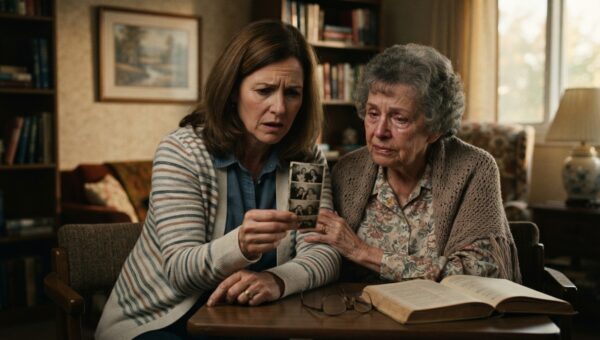
“Mom doesn’t need that money. She barely goes anywhere.”
Those were the exact words Brenda threw at me through the phone while I sat in my sedan in the local credit union parking lot, staring down at a printed ledger that made my ears ring. My hands were shaking so hard I dropped my car keys into the footwell twice before I managed to put the car in drive.
For six years, I had believed the polite little updates Brenda gave me over Thanksgiving turkey and Easter ham about how Mom’s pension was safely tied up in automated bill-pay systems and conservative savings bonds. I believed her because Brenda was the organized one, the daughter with the business minor and the tidy split-level house down in Lake Worth with the manicured St. Augustine grass.
Dad had been gone eight years by then, and the silence in that double-wide mobile home out on Route 41 had only grown heavier with every passing season. He was a man who kept ledger books for everything down to the penny, a retired millwright who believed a pension was sacred ground. When he passed, Mom was left with his monthly check plus her own survivor benefits, totaling $2,100 a month. In a paid-off mobile home with a roof that leaked only when the wind came out of the east, $2,100 was supposed to be a comfortable cushion for an 84-year-old woman who liked watching game shows and feeding stray cardinals off her front steps.
I lived three hours north in a crowded subdivision where my own life was a constant scramble of orthodontist appointments and payroll deadlines. I sent Mom $200 every month like clockwork, just to make sure she had extra cash for her hair appointments or a new pair of house slippers. Brenda was the one handling the big checks, the medical paperwork, and the quarterly tax forms. Whenever I asked how Mom was doing, Brenda would sigh and talk about fixed-income budgeting and inflation with the practiced exhaustion of a corporate CFO.
“Everything is locked down tight,” Brenda told me over the phone back in October when I called to check on the annual property tax assessment. “You don’t need to worry about a thing.”
So I didn’t worry. That was my sin. I outsourced my vigilance to a sister who I thought shared my bloodline and my conscience.
The trip down last Christmas started out like any other holiday drive, listening to old cassette tapes on the interstate and dodging the holiday hauling trucks heading south toward Orlando.
I pulled into the crushed-shell driveway around four in the afternoon. The wind chimes hanging from the aluminum carport were missing half their metal tubes, leaving behind a jagged, rusty wire that clinked against the post in the winter breeze. Mom’s faded beige sedan sat dead in the carport, flat tires sinking an inch into the packed dirt. Nobody came out to the porch when I cut the engine.
I found Mom sitting in her floral recliner with a patchwork quilt pulled up to her chin, watching a rerun of a game show with the volume turned down so low the contestants looked like ghosts moving behind glass. When she looked up and saw me, her eyes didn’t light up the way they used to. They just blinked slowly, as if she were trying to remember which daughter I was.
“Well,” she said, her voice dry as corn husks. “You made good time.”
I walked over and kissed her cheek, and the papery thinness of her skin gave me a quiet jolt right through my chest.
Her collarbones stuck out sharply beneath her flannel blouse, pressing against the fabric like two dry twigs. I had bought her that exact flannel shirt three years ago for her birthday, and she was wearing it now, along with the same faded gray sweatpants I remembered from my visit the previous summer. Three outfits. That was her entire rotation.
“Mom, are you cold?” I asked, rubbing her hands. They felt like ice.
“The gas bill is high this month,” she whispered, looking down at her lap. “Brenda said we have to watch the thermostat until the spring checks clear.”
I frowned, standing up and walking down the narrow hallway toward the kitchen. The linoleum was lifting at the seams near the refrigerator, yellowed with age. I pulled the handle of the fridge open, expecting to find the usual mess of leftover turkey soup, butter tubs reused for storage, and half-empty jars of mayonnaise.
Instead, the cold air hit my face carrying a sharp, sour tang. The top shelf held a carton of milk that had expired eighteen days ago, its paper sides bulging slightly. Next to it sat a single opened can of creamed corn with a spoon resting in the graying sludge, and a half-loaf of store-brand bread with three green spots of mold blooming on the heel. The crisper drawers were completely empty, lined only with old paper towels that had turned brown around the edges.
I stood there for a long time, listening to the hum of the refrigerator motor clicking on and off, trying to make my brain connect the items in front of me with the $2,100 monthly pension that was supposed to be keeping an 84-year-old woman in comfort.
“Honey?” Mom called out from the living room. “Is there any coffee left?”
“No, Mom,” I said, and my voice sounded thin even to my own ears. “There’s no coffee.”
I didn’t yell. I didn’t cry right then. I just grabbed my coat, told Mom I was running out to grab some fresh groceries, and drove straight to the small credit union branch off the highway where my parents had banked for thirty years.
The lobby smelled like old carpet and floor wax. Only one teller was working behind the smudged bulletproof glass, a woman with silver hair pinned into a tight bun who looked like she had been sitting at that exact counter since the Carter administration. Her name tag read Martha. I slid my driver’s license and Mom’s authorization slip across the counter, asking for a printout of the account ledger for the last six years to verify some tax paperwork for the estate.
Martha took the papers, scanned them into her terminal, and started typing with two fingers. I watched the fluorescent light reflect off her wire-rimmed glasses as she scrolled down the screen. After about a minute, her fingers stopped moving. She didn’t look up immediately. She peered over the top of her glasses, staring right at me with a look that made my stomach drop into my shoes.
“Are you aware,” Martha said slowly, her voice dropping an octave, “that Mrs. Keller’s primary deposit hasn’t stayed in this local account since the winter after your father passed?”
“What do you mean?” I asked. “It’s her direct deposit.”
“It hits the routing number, yes,” Martha said, tapping the glass with a long fingernail. “But thirty seconds later, eighteen hundred dollars of that twenty-one hundred is swept automatically into a linked external checking account at a commercial branch down in Lake Worth. Every single month. For seventy-two months.”
The numbers didn’t register at first. My mind kept trying to turn them into something else, something manageable like a medical debt or an insurance premium.
“Seventy-two months?” I repeated.
“One hundred fifty-one thousand, two hundred dollars total,” Martha said, her voice dropping even lower, professional courtesy fighting with outright disgust. “Your mother has been left with three hundred dollars a month to live on. The rest goes straight to a mortgage servicing pool in Palm Beach County under the name of Brenda Keller-Vance.”
I didn’t thank her. I just turned away from the counter, walked out through the heavy glass doors into the blinding Florida sun, and got into my car. That was when I picked up my phone and dialed Brenda’s cell number.
She answered on the second ring, sounding rushed and slightly annoyed, as if I were interrupting her while she was wrapping presents or basting a ham.
“I’m kind of in the middle of something,” Brenda said before I could get a word out. “Can this wait until after New Year’s?”
“I’m at the bank in town, Brenda,” I said, and my voice was shaking so badly I could barely form the consonants. “I just looked at Mom’s ledger. For six years. One hundred and fifty-one thousand dollars. You took her blind pension money for your house in Lake Worth.”
There was a three-second silence on the line, the kind of heavy, artificial pause where someone is calculating whether they can lie their way out or if they have been caught dead to rights. When Brenda spoke back, her voice didn’t have a shred of panic in it. Just that cold, entitled snap that used to drive us crazy when we were kids sharing a bedroom.
“Mom doesn’t need that money,” Brenda said flatly. “She barely goes anywhere. She lives in a box that’s paid off, she watches her little shows, and she eats whatever we send her. What was I supposed to do, let twenty-one hundred dollars sit in a local passbook account doing nothing while interest rates on my variable mortgage were climbing toward seven percent? I earned that house. Dad would have wanted me to have stability.”
“She barely EATS, Brenda!” I screamed, the sound tearing out of my throat so loud a man walking past my car jumped and looked inside. “Her fridge has expired milk and three spots of mold on a loaf of bread. She’s lost eighteen pounds. She thinks the heat is too expensive to turn on!”
“Oh, stop being so dramatic,” Brenda scoffed, her tone turning sharp as glass. “Old people lose weight, it’s just metabolism. If you cared so damn much about her diet, you should have driven down here more than once a year instead of dropping twenty bucks in a birthday card and calling it filial piety. I’m the one who answers her calls when she falls out of bed. I’m the one who deals with her doctors. That money is just compensation for my labor.”
“It’s theft,” I whispered, the rage finally burning out and leaving behind a hollow, icy certainty. “It’s elder abuse, and it’s mail fraud, and I am sitting in this parking lot right now with the bank manager ready to sign an affidavit.”
“Go ahead,” Brenda laughed, a short, ugly sound. “See how long it takes the courts to care about an old lady in a mobile home versus a homeowner with two kids in private school. Don’t call me back.”
The line went dead with a sharp click.
I sat there in the driver’s seat for twenty minutes, watching the credit union employees lock their front doors as the five o’clock bell rang across the parking lot. My hands were still shaking, but the fog in my head had cleared away completely. There was no family meeting to be had. There was no quiet compromise over coffee where we could agree to let bygones be bygones.
The next morning, I didn’t go back to the mobile home with groceries. I drove straight to the county courthouse in downtown Sebring, walked into the Department of Children and Families office, and filed an emergency report with Adult Protective Services. I sat across a gray metal desk from a caseworker named Marcus who smelled like stale spearmint gum and wore a tie with grease spots near the knot. I laid out the bank ledgers, the six-year automated transfer logs matching Brenda’s mortgage escrow payments, and my own photographs of the barren refrigerator and Mom’s skeletal wrists.
Marcus didn’t blink. He took his glasses off, rubbed the bridge of his nose, and picked up his desk phone.
“We’ll have an emergency investigator at that mobile home within two hours,” Marcus said, his voice flat and professional. “And we are going to freeze that linked routing number before the end of business today. Don’t worry about your sister. Our legal team loves cases like this.”
It took three months of paperwork, bank subpoenas, and certified letters before the wheels of the state finally caught up with Brenda down in Lake Worth. She tried to fight it at first, hiring a local attorney who sent us a belligerent letter claiming voluntary contribution and caregiving rights, but when the bank fraud investigators attached the seventy-two monthly wire receipts directly to her personal mortgage application files, her lawyer dropped her case like a hot potato. She was given a choice by the state prosecutor: sign over her equity claim on any remaining estate assets and agree to a court-ordered repayment plan, or face criminal exploitation charges that would play out publicly in the local papers where her neighbors could see her $340,000 suburban life unravel.
She signed. She had to sell the Lake Worth house by the summer, downsizing into a cramped townhouse twenty miles inland, while the remaining equity was placed into a protected guardianship trust for Mom.
I moved down to the mobile home for four months while we sorted out the repairs, the plumbing, and the food. We threw out the rotting linoleum, put in a new refrigerator that hummed quietly in the corner, and replaced the broken water heater that had been making those banging noises for years.
It was late afternoon on a Tuesday in October when the work was finally done. The heat of the day had broken, leaving behind that soft, golden Florida twilight that smells of damp earth and pine needles. Mom and I were sitting together on the aluminum steps of the porch, watching the neighborhood stray cat pick its way across the gravel drive.
She had a cup of real coffee in her hands, dark and steaming with a splash of whole milk, and a plate of buttered toast resting on her knees. She was wearing a new navy cardigan I’d bought her last week, soft wool that actually fit her shoulders without hanging off her bones like a shroud.
The mail carrier had swung by fifteen minutes earlier, dropping two envelopes into the freshly painted black mailbox by the road. One was a seed catalog for the winter planting season. The other was a quarterly statement from the credit union, showing a healthy, untouched balance with her name alone at the top of the page.
Mom took a small sip of her coffee, looking out toward the highway where the evening traffic was beginning to hum.
“It’s quiet tonight,” she said softly, her voice steady and clear.
“Yeah, Mom,” I said, leaning my shoulder against hers and watching the sun drop low behind the pine trees. “It really is.”