PART 1
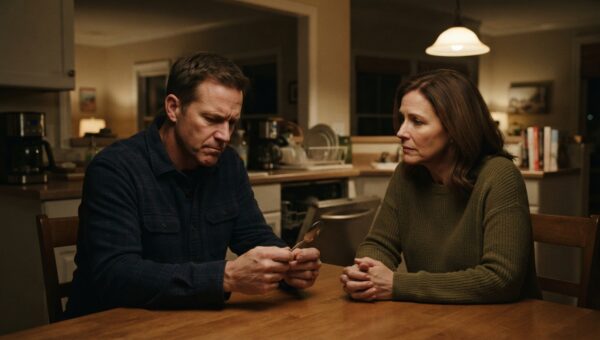
For three days, my phone has sat in the center of my kitchen table like a loaded pistol. The screen lights up every hour or so, flashing Cass’s name, then goes dark again. I have not answered. I cannot bring myself to press the green button, because I know what she is going to ask before she even draws breath.
My daughter Cass called last week from the pediatric ward at Saint Jude’s in Baltimore. My granddaughter Maya is sixteen, and she is very, very sick. The kind of sick where the doctors crowd outside the glass wall, whispering over clipboards, running panels that come back empty week after week. They have tried everything in their book. Now, they have hit a wall, and they need our family medical history to figure out why a healthy teenager’s organs are beginning to fail one by one.
“Mom, I need to know everything about Dad’s side,” Cass said through her tears last Tuesday, her voice shaking so hard the phone rattled against her ear. “The doctors are asking about genetic markers, blood disorders, anything from his family tree that might match what Maya’s showing. Please, Mom. Tell me what you know.”
Here is what Cass doesn’t know.
The man who raised her, my sweet, steady Sheldon, wasn’t her father by blood.
I was four months pregnant when I met Sheldon at a diner in Scranton back in 1979. I was twenty-two, terrified, and working behind the counter with a growing stomach hiding beneath a loose apron. Sheldon was twenty-five, working at the rail yards, with calloused hands and eyes that didn’t judge. He knew the whole truth before we even went on our second date. I told him straight out that I was carrying another man’s child, a ghost who had vanished the second I told him I was in trouble.
Sheldon didn’t blink. He looked at me, then down at my stomach, and said, “A baby doesn’t need a history if she’s got a home.”
We married three months later. When Cass was born, Sheldon was the one holding my hand in the delivery room, and he was the first face she saw when she opened her eyes. He signed the birth certificate without a second thought, raised her as his own, and loved her fiercely every single day until his heart gave out three years ago.
When he died, he left her everything: the small brick house on Maple Street where Cass took her first steps, and sixty thousand dollars in his savings account. In his will, handwritten in his messy, honest scrawl, he called her “my girl.”
And he was right. He was her father in every way that mattered. But right now, Sheldon’s immaculate, salt-of-the-earth family medical history is completely useless to the doctors trying to save Maya. Sheldon came from three generations of sturdy Pennsylvania farmers who lived into their nineties with nothing worse than bad knees. They have no history of the strange, cascading hematological failure that is draining the color from my granddaughter’s face.
To save Maya, the doctors need the medical history of the man I ran away from in 1978. A man named Julian Vance. A man whose blood carried a dark, recessive secret that I spent forty-seven years trying to bury.
PART 2
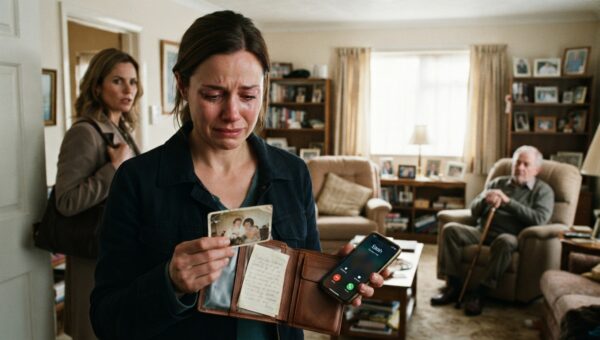
The house is too quiet when you are hiding a secret this heavy. I walked into the hallway and stared at the old cedar lockbox sitting on the top shelf of the hall closet. I hadn’t opened it since Sheldon passed away. Inside, beneath a stack of faded black-and-white photographs and our old marriage license, lay a yellowed manila folder.
I sat down on the braided rug, unlatched the rusty metal clasp, and pulled out the contents. There it was: a intake card from a clinic in Philadelphia dated late 1978, and a few scribbled notes I had taken when a doctor warned me about Julian’s family history. Julian had an older brother who died at seventeen of an inexplicable, treatment-resistant anemia—a rare, recessive blood disorder that skipped generations, attacking the bone marrow and mimicking the exact symptoms my granddaughter Maya was fighting right now at Saint Jude’s.
Julian had laughed it off back then, calling his family’s medical quirks superstitious nonsense. But looking at the notes, the matching lab abnormalities hit me like a physical blow. The doctors at Saint Jude’s weren’t just looking for general history; they were looking for this exact genetic fingerprint. Without it, Maya’s body would continue to destroy itself.
I picked up the phone. My thumb hovered over Cass’s number. For a second, a wave of pure panic washed over me. If I called her and told her the truth, the world she had built on Sheldon’s memory would tilt on its axis. She would find out that the foundation of her entire life was built on a substitution, a secret pact between a young mother and a man who chose to love a lie into a truth.
Yet Maya was fading. I could hear the beeping monitors in the background of Cass’s voicemails, a steady, mechanical countdown. Sheldon had given his life, his house, and his savings to protect Cass. He didn’t do it so our family could keep a secret while his granddaughter slipped away. Protecting Cass now didn’t mean guarding a forty-seven-year-old illusion; it meant keeping her child alive.
I packed a single overnight bag, locked the front door, and drove the two hours down to Baltimore through a cold autumn drizzle.
PART 3
When I walked into the pediatric intensive care unit waiting room, Cass looked like a ghost. Her hair was unwashed, her eyes red-rimmed and hollow. She stood up from the plastic chair as I approached, her face collapsing in exhaustion.
“Mom! Why didn’t you answer your phone? The doctors say if we don’t find a familial genetic match for this bone marrow anomaly by tomorrow morning, they can’t adjust the chemo balance safely. They asked again about Dad’s medical records. Do you have his old clinic files?”
I didn’t answer right away. I took her cold, trembling hands in mine, pulled her toward the quiet corner near the window, and sat her down.
“Cass,” I said, my voice cracking but steady. “Listen to me very carefully. You need to be strong for Maya, and you need to hear me out.”
“Mom, what are you talking about? Just tell me what Dad’s doctors said.”
“Sheldon wasn’t your biological father,” I said, the words finally tumbling out into the sterile air between us. “I was four months pregnant with you when I met him. Your real biological father was a man named Julian Vance.”
The color drained entirely from Cass’s face. She stared at me, her mouth parting slightly, as if I had spoken in a foreign language. “What? No. That’s not true. Dad—Dad raised me. He left me his house. He called me his girl.”
“He was your father,” I said, tears finally spilling down my cheeks. “He knew before we married. He chose you, Cass, every single day of his life. He loved you more than any biological father ever could. But his family medical history is clean. It won’t help Maya. The man who can help her is Julian Vance, and I have his medical profile right here.”
I pulled the yellowed manila folder from my tote bag and laid it on the small table. Cass looked at the papers, her hands shaking violently as she flipped through the 1978 clinic notes. The shock in her eyes quickly gave way to a deeper, sharper realization—the fierce, protective instinct of a mother fighting for her child. She didn’t scream, and she didn’t push me away. Instead, her fingers tightened around the edge of the old folder.
“Is this… is this what the doctors need?” she whispered, her voice breaking.
“Yes,” I said. “It maps out the exact recessive marker Maya’s fighting.”
Without another word, Cass wiped her face with the back of her sleeve, stood up straight, and walked over to the nurses’ station with the folder in her hand. Together, using Julian’s historical identifier from the records and the hospital’s emergency genealogical protocol, we connected with the regional medical registry to pull the verified treatment pathway. By midnight, the specialized targeted therapy was en route to Saint Jude’s pharmacy.
ENDING
Three weeks later, the monitors in Maya’s room were quiet and steady. The color had returned to her cheeks, and she was sitting up in bed, reading a book while the afternoon sun cut across the linoleum floor.
Cass and I sat back at my kitchen table on Maple Street. The house was warm, smelling faintly of cinnamon and old paper. Neither of us had spoken about Julian Vance since that night in the hospital, and we didn’t need to. The past was just data on a medical chart, a ghost laid to rest by the cold demands of science.
In the center of the mantelpiece, right beneath the framed photograph of Sheldon smiling in his plaid work shirt, sat the brass key to the front door and the discharge papers bearing Maya’s name. Cass reached across the small wooden table and laid her hand over mine, her fingers lacing tightly with mine in a quiet, unbreakable understanding. We didn’t need blood to make a family. We had Sheldon’s love, and that was enough to keep the world standing.