PART 1
I spent forty years getting sawdust in my hair and salt in my joints down on the harbor. When I bought the old workshop property back in nineteen eighty-four, the timber framing was sagging and the bulkhead was rotting out into the mud. I put every dollar I had into jacking up the sills, pouring new concrete footings, and building a reputation for honest marine carpentry.
People knew that if Caleb Vance promised a cedar planking job would hold against a nor’easter, it would hold.
About twelve years ago, Brandon Scott walked into the shop looking for work. He was twenty-six then, with sharp eyes and calloused palms from working commercial draggers out of Rockland. I liked him. He had a natural feel for grain and didn’t mind staying late when a hull needed fairing before a morning tide. Over the years, I taught him everything I knew about traditional carvel planking, bronze fastening, and dealing with fickle marine insurance adjusters. Eventually, we shook hands on an informal partnership. He ran the office side and handled the younger helpers while I kept my hands on the tools. We never drew up a thick book of corporate bylaws because down on the working waterfront, a man’s word was his bond. At least, that is what I used to believe.
The trouble started last November when my left hip finally gave out completely. The surgeon told me I needed a full replacement and at least six weeks of strict postoperative recovery at home, with no lifting heavier than a coffee mug and certainly no climbing up into boat cradles. Brandon told me not to worry about a thing. He said he would take care of the municipal filings, keep the payroll running out of our joint operating account, and make sure the commercial lease renewals were handled with the town harbor committee. I signed a temporary power of attorney for banking and operational oversight so he could pay the yard’s utility bills and vendor invoices while I was laid up in my recliner with an ice pack on my hip.
By January, I was walking with a cane and itching to get back down the hill to the salt air.
I drove my truck down to the boatyard expecting to find Brandon supervising a refit on a thirty-foot wooden sloop we had hauled before my surgery. Instead, I found a bright orange municipal notice of violation tacked to the front sliding door of my workshop.
The paper cited commercial safety compliance code violations, structural hazard liabilities, and an immediate mandatory cessation of all unauthorized occupancy. According to the notice, the workshop lease had been reassigned due to ownership forfeiture, and the current legal tenant of record was listed as Coastal Timber Marine LLC, a corporate entity I had never heard of in my life.
I sat in my truck with the engine idling, watching the gray winter surf slap against the pilings. My name was nowhere on the building anymore. Brandon walked out of the office trailer, wearing a clean canvas jacket I had never seen before, holding a clipboard like he owned the tide itself.
PART 2
Brandon didn’t even look flustered when he walked over to my truck window. He leaned his forearms against the door frame, smelling of expensive coffee instead of bilge water and pine dust. He told me the town had been cracking down on informal handshake leases and that he had incorporated Coastal Timber Marine LLC to protect our shared business interests from municipal liability. He spoke calmly, like a lawyer explaining probate to a grieving widow, telling me that the old lease was void anyway and that he had secured the waterfront property rights in his own name to keep the yard from being shut down by the zoning board.
I asked him about our partnership share, about the commercial waterfront lease that my sweat had paid for over four decades, and about the business assets we had built together. Brandon just shook his head and told me that times change, that my generation’s way of doing business was dead, and that legally speaking, he was now the sole master of the property. He advised me to take my personal hand tools out of the shop by the end of the week before the town code enforcement officer padlocked the sliding doors for good.
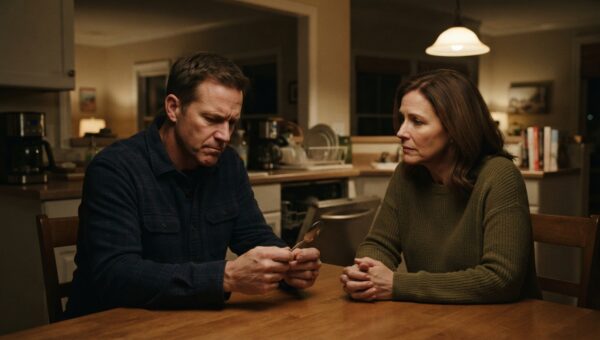
I drove home with my hands shaking on the steering wheel, not from the hip pain, but from a cold, heavy realization that the young man I had mentored like a son had spent the winter engineering my ruin. I didn’t yell at him. Shouting at a thief across a gravel yard doesn’t fix a title deed. Instead, I went straight to my home office and started pulling out every file box, tax receipt, and bank statement from the last twelve years.
I spent two days combing through our records. I found an unexpected town tax parcel reclassification notice dated back in December, showing that the commercial waterfront parcel had been quietly split and assigned to a new corporate tax ID. Tucked inside the back cover of an old shop ledger book where we used to record daily haul-out fees, I found a duplicate copy of a mobile notary service invoice from a local registry signing agency. The date on the invoice matched the exact week I was heavily medicated following my hip surgery, lying in a haze of prescribed painkillers in my living room.
That invoice led me down to the county registry of deeds in the county seat. I pulled the historical filing records for the property parcel. There it was, filed under seal just three days after my operation: a notarized quitclaim deed surrender document purporting to transfer all commercial lease rights and structural ownership of the workshop property to Brandon’s shell company. At the bottom was my signature, shaky and sprawling, but forged by someone who had plenty of practice signing my name on vendor checks over the years. Attached to the deed was the mandatory digital ledger entry from the mobile notary public who had visited my home while I was asleep under medical sedation, verifying the signature without ever waking me to confirm my identity.
PART 3
With the registry file number and the notary’s digital log entry in hand, I did not waste time arguing with Brandon on the telephone. I called a respected maritime property attorney in Portland who specialized in commercial waterfront disputes and real estate fraud. We sat across from each other in his office while I laid out the registry copies, the notary invoice, and the medical discharge records proving I was incapacitated on the exact date of the notarization.
My attorney looked over the forged quitclaim deed, checked the mobile notary’s log against my hospital medication charts, and let out a low whistle. He told me that forging a notarized deed surrender during a medical leave crossed the line from a civil dispute straight into criminal fraud and professional malfeasance.
We filed an immediate emergency fraud complaint with the state real estate commission, since Brandon held a commercial broker license alongside his contractor credentials. Simultaneously, my attorney filed a motion for an emergency title injunction in superior court to freeze the commercial transfer and halt any pending harbor redevelopment transactions. We attached the registry records, the forged signature analysis, and the sworn medical timeline showing I had been physically incapable of executing a legal surrender.
The state real estate commission moved with surprising speed once they saw the mobile notary log contradicting the physical location of the signing. Within two weeks, an administrative order was issued nullifying the fraudulent deed transfer entirely. The county registry of deeds struck the Coastal Timber Marine LLC filing from the active parcel ledger and reinstated my original commercial lease rights in full. When the state investigators interviewed the mobile notary, the notary admitted under questioning that Brandon had presented the pre-signed document and vouched for my identity while I was recovering upstairs in my bedroom.
Brandon’s commercial broker license was suspended indefinitely pending a full criminal fraud investigation by the state attorney general’s office. When the town code enforcement officer returned to the boatyard, he didn’t padlock my shop; instead, he served Brandon with an order to vacate the office trailer he had illegally set up under the shell corporation’s name. Brandon tried to call me twice that evening, leaving frantic voicemails about working things out like partners, but I deleted them without listening to the second one.
ENDING
The morning the title injunction was officially recorded at the courthouse, I drove back down the hill to the boatyard. The air smelled of low tide, creosote, and wet cedar shavings. The orange code violation notice had been peeled off the sliding door by the town inspector, leaving a small patch of dried paper glue in the salt wind.
I unlocked the heavy wooden door, stepped inside the dim, familiar space, and ran my hand along the edge of my old radial arm saw. The tools were still where I had left them before my surgery, covered in a thin layer of winter dust but untouched by the auctioneer or the wrecking ball. The court order had also awarded full punitive legal cost reimbursements totaling $114,500, paid directly out of the escrow account Brandon had set up for his aborted harbor redevelopment scheme.
I picked up a push broom, swept the sawdust away from the workbench, and left the shop door wide open to the harbor light.