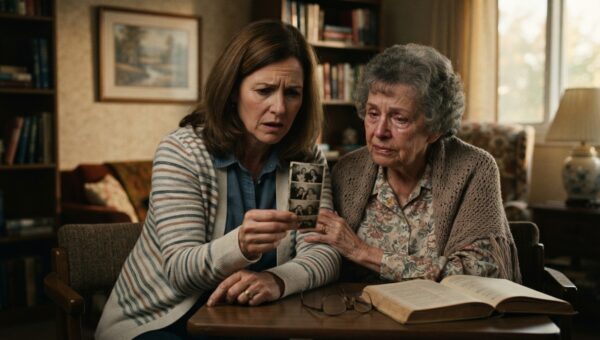
A person doesn’t just forget the sound of a heavy oak front door slamming shut behind them when they are sixteen years old. I still have the exact sound of my father’s heavy leather boots squeaking against the linoleum hallway floor right before he ripped my future in half. When I was sixteen, my dad crumpled my art school acceptance letter, pointed at the front door, and said, “Get out and don’t come crawling back when you fail.” My mom sat there on the floral armchair in total silence, staring at her own hands like her voice had been locked away in a drawer somewhere.
I left with my sketchbooks, exactly $1,186 in cash from mowing neighborhood lawns, and that wrinkled acceptance letter tucked safely inside the lining of my denim jacket. I never asked them for another single dime.
The first few years were rougher than I care to admit to anyone. I slept on a narrow pull-out cot in the back of a damp framing shop in Portland, working thirty hours a week while taking night classes in architectural restoration. My fingers were constantly stained with dark walnut wood filler and heavy metal polish. But every single time I felt like giving up, I would pull that wrecked piece of heavy cardstock out of my pocket, smooth it out against my knee with the palm of my hand, and read the school seal. It kept me stubborn. By the time I hit twenty-two, I had saved enough to buy my first abandoned Victorian mantelpiece at an estate auction, restore it over three sleepless weekends, and flip it to a historic preservationist for four times what I paid. That was the first domino.
Twelve years later, they still believed I was barely scraping by in some filthy basement apartment downtown. What they didn’t know was that I had spent the last decade building a successful chain of high-end antique galleries across the Pacific Northwest, moving heavily into commercial real estate holdings in downtown Seattle, and quietly acquiring controlling interest in the regional holding bank that currently managed their suburban mortgage. I was no longer the skinny kid standing on their porch with a canvas duffel bag. I was the person whose signature was required to keep their roof over their heads.
The morning rain was slicking the glass of my thirtieth-floor office window when my phone buzzed softly against the walnut desk. It was Elena, my senior scheduler, letting me know the morning schedule was locked and loaded. She has a voice like polished glass, entirely unflappable no matter who is standing in the outer lobby.
“Your eleven o’clock appointment just cleared security, Arthur,” Elena said through the intercom, her tone crisp and professional. “They are scheduled for a distressed asset review regarding their primary residence down in Medford. The paperwork is already on your central monitor.”
I looked down at the digital file flashing on my screen, though I already knew every single line of data by heart. The borrowers were listed as Martin and Evelyn Vance. Delinquency notice issued sixty days ago. Principal balance standing at eighty-four thousand dollars, with foreclosure auction proceedings slated for the first of the coming month.
“Send them right on back, Elena,” I said, my voice steady as I reached into my desk drawer and pulled out a small, flat black folio. “And hold all other calls until further notice.”
The heavy oak double doors of my office swung open a few moments later. My father walked in first, dressed in his old Sunday suit that looked a little too tight across the shoulders now, his chin lifted out of sheer habit.
My mother followed right behind him, her shoulders rounded, clutching her worn leather purse like it was a shield against a firing squad. They both looked older, smaller than I remembered, stripped of the heavy authority they used to wield over our kitchen table like minor royalty.
Martin cleared his throat, adjusting his wire-rimmed glasses with a trembling hand before he even bothered to look up at the person sitting behind the massive slab of imported oak. He had his rehearsed speech ready, the one he probably practiced all the way up on the elevator ride.
“We are here to speak with the senior director regarding the restructuring of our property loan,” my father said, speaking to the empty air above my head with that cold, brittle authority I knew so well. “We have been loyal account holders for nearly thirty years, and we expect a reasonable extension given the unforeseen downturn in my contracting business. We aren’t looking for charity, just standard corporate common sense.”
He finally lowered his chin and looked across the desk, expecting to see some gray-haired corporate suit who would nod politely before handing them a stack of rejection forms.
The moment my father looked up and saw me sitting behind the desk, every bit of confidence and bluster completely disappeared from his face. His mouth opened slightly, but no sound came out. The color drained out of his cheeks so fast it looked like someone had pulled a plug in his neck. He took a half-step backward, his heel catching slightly on the edge of the imported wool area rug.
“Arthur?” my father whispered, the word barely scraping past his dry lips. “What… what are you doing here? Where is the executive?”
I didn’t smile. I didn’t lean back in my leather chair to gloat. I just kept my hands flat on the polished wood, watching the exact second reality crashed into him like a freight train.
My mother stopped dead in her tracks near the door. Her eyes drifted slowly from my face down to the heavy glass nameplate on the desk, then back up to my eyes. She didn’t look shocked the way Martin did. She looked like someone who had been waiting for a very long time for a shoe to drop, and it had finally landed right on her foot.
“You…” Martin stammered, his hands fluttering nervously toward the back of the visitor’s chair as if he suddenly needed something solid to hold onto. “This is… this is your building? This is your bank?”
“It is,” I said, my voice quiet enough that they had to strain to hear it over the low hum of the ventilation system. “You wanted me to make something of myself without your help, remember? I just took you at your word.”
“Arthur, please,” Martin muttered, all that old arrogance dissolving into something pathetic and small before my eyes. “We didn’t know. The broker said the holding company was entirely anonymous. If we had known it was, “
“If you had known it was me, you wouldn’t have come,” I finished for him. “You would have let the house go to auction out of sheer stubborn pride before you ever walked through my doors to ask for help.”
The silence in the room suddenly felt heavy, thick with twelve years of unopened mail and unreturned phone calls. My father slumped down into the chair uninvited, his hands trembling as he rested them on his knees. The man who had once stood over me in the hallway and told me I was nothing was suddenly looking around my office like a stray dog caught in traffic.
Then my mother stepped forward. It was the first time she had moved or spoken since they walked through the door.
“Let him talk, Martin,” she said softly, her voice shaking with an emotion I couldn’t quite place. She turned her gaze toward me, her eyes wet with sudden tears. “Your father was wrong, Arthur. He was wrong about everything. Every single day since you walked out of that house, I have lived with the ghost of that door closing. I didn’t stop him back then, and I’ve paid for it every day since.”
I looked at her, seeing the deep lines carved around her mouth, the weariness of a woman who had spent decades keeping the peace in a house ruled by a tyrant. The anger I had carried around like heavy iron weights for years felt strangely hollow now, replaced by a cold, clear realization of how small my father’s world had always been.
I reached into the black folio on my desk, pulled out a single sheet of heavy cream-colored paper, and laid it flat on the wood between us. It wasn’t a foreclosure notice. It was a full reconveyance deed, stamped, signed, and marked paid in full.
“Your mortgage was transferred to my personal asset portfolio three months ago,” I said plainly, sliding the paper across the mahogany toward them. “The balance is zero. The house is yours. You aren’t losing a thing.”
Martin stared at the paper like it was written in a foreign language. He looked up at me, his eyes wide and confused, searching my face for the catch, the trap, the punchline. “You’re… you’re forgiving the debt? Just like that?”
“Not because you deserve it,” I said, leaning forward slightly so he could see the absolute lack of malice in my eyes. “And not because you ever apologized for what you did on that porch twelve years ago. You’re keeping the house because I refuse to let your failures drag down the only home my mother has left. My debt to your past is paid in full.”
I reached into my inner jacket pocket, pulled out a small, old, folded piece of cardstock that had traveled with me through every apartment, every gallery, and every boardroom, and placed it right on top of the deed. It was frayed at the edges, yellowed with age, and wrinkled right down the middle where my father’s thumb had crushed it all those years ago. The acceptance letter from the art institute.
Martin looked down at the wrinkled paper, his breath catching in his throat as he recognized the faded emblem of the school he had tried to erase.
“You kept that?” my mother whispered, her hand coming up to cover her mouth.
“Every day,” I said. “It was the best thing you ever gave me.”
Nobody said anything else for a long moment. My father didn’t reach for his pride; he didn’t have any left to reach for. He simply bowed his head, staring down at the wooden grain of the desk while my mother reached out, her trembling fingers gently touching the corner of the wrinkled letter as if it were fragile glass.
When they finally stood up to leave, the door felt lighter behind them than it had twelve years ago. I watched from the window as they walked out onto the downtown sidewalk together, two small figures disappearing into the steady Seattle rain.
Later that afternoon, after the offices had grown quiet and the city lights began to blink on through the gray mist, I stood by the glass with a small wooden frame in my hands. I placed the smoothed-out, formerly wrinkled acceptance letter beneath the glass, secured the backing clips, and hung it firmly on the office wall right beside the window, where the light could finally catch every single line.