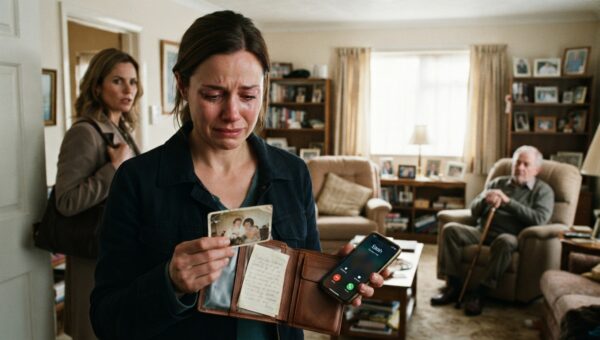
Eighteen Christmases. That is how many times I set a place at the dining room table for a ghost who was still breathing.
The plate was always white china with a gold rim, the exact same one my mother handed down when Arthur and I cleared out her attic in nineteen-eighty-four. I would place the folded linen napkin beside the fork, slide the silver knife into position, and then stare down at the empty chair until the gravy went cold and the turkey skin hardened into a dull gray sheen.
Arthur would clear his throat, reach across the laminate table for the butter boat, and tell me for the hundredth time that I was punishing myself for a crime I never committed.
“She made her bed, Clara,” he would say, his voice dropping into that heavy, low register he used whenever a tractor engine threw a rod and there was nothing left to do but walk back to the barn. “You did what any mother with half a brain would do. You stopped a disaster before it happened.”
I wanted to believe him. God knows I spent nineteen years trying to crawl inside those words and pull them over myself like a heavy wool blanket whenever the winter wind came rattling through the double-paned glass of our back kitchen window. But a blanket only keeps you warm if it has no holes in it, and mine was eaten right through by the memory of the exact tone in Maya’s voice the day she turned eighteen.
She did not scream. That was the part that stayed with me like a splinter under the thumbnail. She just stood by the front door with a faded green duffel bag slung over one shoulder, her jaw set so tight the muscle leaped beneath her skin.
“You didn’t protect me,” she had said, looking right through me as if I were nothing more than the coat rack by the radiator. “You humiliated me.”
Then she walked out the screen door, letting it slam shut behind her with a dry, metallic rattle, and vanished into the gray October drizzle of 2007 with exactly three hundred dollars folded inside the pocket of her faded denim jacket.
Last night, the local news ran a piece on a new safe house for runaway girls over on the west side of town, near the old brick rail yards. I was sitting right there in my usual armchair with a cup of chamomile tea cooling on the side table when the anchorwoman tossed to a field reporter standing out on a freshly paved sidewalk.
The camera panned across a newly painted sign hanging above a heavy oak double door that read The Harbor House. Then it cut to the founder standing at the ribbon-cutting ceremony with a pair of oversized golden scissors in her hand.
I sat down hard. The tea sloshed over the rim of the mug and soaked right through my knitted cardigan, but I did not even feel the heat against my ribs.
It was Maya. Her hair was longer now, pulled back into a practical knot that showed the sharp line of her jawline, and she wore a simple navy blazer that looked like she had picked it up off a clearance rack at the department store downtown. But there was no mistaking the way she tilted her chin when the local mayor handed her the ceremonial plaque. It was the exact same stubborn, unyielding tilt her father used to get whenever the county commissioners tried to raise the road tax on our north forty.
I did not wait for the sports report. I didn’t even wait for the weather.
I picked up the black cordless phone off the kitchen wall mount, my fingers shaking so badly I punched the disconnect button twice before I finally managed to dial the station’s main desk. The receptionist answered on the third ring, her voice sounding tired and thin through the old analog speaker.
“Local news desk,” she said, paper rustling in the background. “Can I help you?”
“The segment,” I said, my throat feeling like it was lined with dry sand. “The piece on the safe house that just aired. I need to reach the woman who started it. The founder.”
“Ma’am, the station doesn’t give out personal contact information for community subjects without an appointment through our public relations office,” she started, her tone slipping into that practiced bureaucratic glide that tells you a person is reading from a laminated script.
“Listen to me,” I interrupted, and for the first time in nineteen years, my voice didn’t waver. “I am her mother. My name is Clara Miller. Tell her I saw the broadcast.”
There was a long, heavy pause on the other end of the line. I could hear the faint hum of fluorescent lights through her receiver, the clicking of a computer mouse, and then the sharp intake of breath that told me she had either looked up the file or understood the weight of what I had just dropped into the room.
“Hold on one second, Mrs. Miller,” she whispered.
The hold music was an old piano recording that sounded like it had been played through a wool sock, tinny and distant, looping the same four melancholy notes over and over until my pulse felt like it was keeping time with a metronome. I stared out the kitchen window at the dark outline of the garage where Arthur’s old John Deere sat gathering dust under a blue tarp.
When the line clicked back open, it wasn’t the receptionist.
“Clara?”
The word was small. It didn’t sound like the woman who had just cut the ribbon on a county-funded safe house with reporters shouting questions around her. It sounded like the sixteen-year-old girl who used to sit at the kitchen island doing algebra homework while I stirred the spaghetti sauce.
“I saw it on the news, Maya,” I said, and my hand tightened around the plastic receiver until my knuckles turned yellow. “You built a sanctuary.”
“It’s not a sanctuary,” Maya said, and the old defensive edge was back, sharp and cold like winter wire. “It’s a place where kids can go when the adults in their lives decide that control is the same thing as care.”
The silence that followed wasn’t the quiet of a peaceful house. It was the thick, suffocating stillness of two people standing on opposite sides of a frozen river, listening to the ice groan beneath their boots.
I thought about the journal I had found back in the spring of 2007. I had been looking for a roll of carpet tape in her closet when the pink spiral notebook slid off the top shelf and landed open at my feet. The pages were covered in that hurried, looping handwriting she had used since middle school. She wasn’t just talking about a boy; she was detailing a plan to pack up her school backpack and catch a Greyhound bus down to Baltimore with Arthur’s twenty-eight-year-old former contractor, a man who owed back child support in three counties and kept a spare room above his brother’s auto body shop.
Panic had made me cold. I didn’t sit her down at the kitchen table to ask what she saw in him. I didn’t ask what was missing in our house that made her want to climb out a second-story window at midnight. I just picked up the office phone while she was at track practice, called his boss to tell him about the statutory liability of employing a predator who was courting a minor, and then drove straight to the county courthouse to have a sheriff’s deputy serve him with a restraining order before the sun went down. I had stopped a disaster. I had also signed the eviction notice for our relationship.
“Are you coming?” Maya asked, her voice dropping into that hesitant space where anger meets an old, deep ache.
“Where?” I asked.
“The address is on the station’s website,” she said quietly. “If you want to see what I built instead of just watching it on a screen.”
The drive across town took twenty-four minutes. The streets were slick with a late-November mist that caught the amber glow of the traffic lights, turning the asphalt into a mirror of smeared gold. When I pulled my old station wagon into the gravel lot behind The Harbor House, my hands were shaking so hard I had to sit with my palms pressed flat against the steering wheel until the engine ticks slowed down.
The building was a converted brick parish hall with tall, arched windows that glowed with warm light from the inside. A brass plaque beside the double doors bore Maya’s full name beneath the title of executive director.
I pushed the heavy oak door open, and the bell above it chimed with a clear, bright sound that felt entirely out of place in my chest. A young girl with short dark hair and a heavy silver ring in her nose looked up from a reception desk cluttered with intake forms and highlighters.
“Can I help you?” she asked, her eyes cautious.
“I’m Clara,” I said. “Maya’s mother.”
The girl didn’t ask me to wait in the lobby. She just pointed down the long hallway toward a door marked *Director*, where a narrow strip of yellow light showed beneath the frame.
I knocked twice, the wood feeling solid and heavy against my knuckles, and pushed it open before she could answer. Maya was sitting behind a plain metal desk stacked high with binder clips and funding proposals. She looked up, her expression guarded, her shoulders pulled back just an inch too tight.
I didn’t try to explain myself. I didn’t bring up the journal, or the sheriff, or the eighteen empty chairs that had sat like tombstones at my holiday table. I just walked across the linoleum floor, looked down at the dark circles under her eyes, and said the only thing my chest would let out.
“You were right,” I whispered, the words scraping against my throat. “I used a hammer when you needed a hand.”
Maya stared at me for a long, still second, her lower lip trembling just a fraction before she reached out, pushed her paperwork aside, and stood up from the desk.
Ten minutes later, we were sitting side by side on wooden folding chairs out on the back porch of the safe house, the November air sharp against our faces as the dusk settled over the brick rail yards. Maya didn’t offer an apology for leaving, and I didn’t ask her to forgive me for saving her the only way a terrified, clumsy mother knew how. She just reached down, picked up her cold mug of tea, and slid it across the weathered tabletop until her shoulder brushed softly against mine.