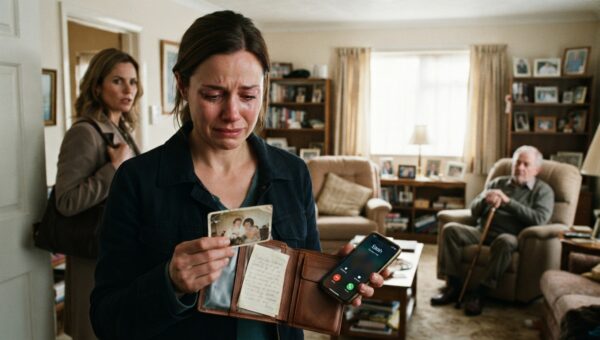
The notification light on my phone flashed three times at 6:14 in the morning, right while I was standing at the kitchen counter waiting for the kettle to whistle. It was a group text from Julian, our youngest brother, whom I had not spoken to since Thanksgiving two years ago. The screen lit up with his usual casual cheer that always made my shoulders tighten up before I even read the words.
Mama wants everybody at the house this Saturday at two, he wrote, we are finally going to get all the estate planning sorted out so it is fair for everybody.
Fair. That was a word Julian used quite a bit whenever other people were footing the bill. I looked at the small silver pot on the burner, the water just starting to send up tiny bubbles against the bottom, and I thought about the twelve years of quiet Sundays I had spent driving out to this zip code with bags of groceries or envelopes full of pharmacy receipts. My father had been dead for twelve years as of last month. I still remember the smell of wintergreen and old wool in that hospice room on the county side of town when he caught my wrist with fingers that felt like dry twigs.
You look after your mother, he told me, his voice rattling in his chest like dry corn in a bucket.
You make sure she does not end up out on the gravel, do you hear me?
I heard him. I promised him right then while my brothers were out in the hospital corridor smoking cigarettes and arguing about who was going to inherit his old Ford pickup truck. My father left behind an unpaid funeral bill and a mortgage that was three months past due, but he left me with that sentence. For the next twelve years, I was the one who answered the phone when the hot water heater gave out. I was the one who sat in the hard plastic chairs at the county hospital when her blood pressure dropped into the boots.
By the time Saturday rolled around at two in the afternoon, the old Dodge was parked under the pecan tree in the gravel drive. I walked up the three wooden steps of the front porch, the same ones I had painted with gray deck enamel back in October, and let myself in with my own key.
The house smelled like furniture polish and the lemon verbena soap Mama always liked to keep by the kitchen sink. It was the same smell it had when I was ten years old, except now the silence in the hallways had a heavy, settled weight to it that made my chest feel tight.
Mama was sitting at the head of the oak dining table in her good cardigan, the navy blue one with the pearl buttons. Mr. Henderson, the lawyer from town with the graying temples and the wire-rimmed glasses, sat to her right with a leather briefcase open on his lap and a neat stack of legal pads spread out before him. My three brothers were already gathered around the other side of the table. Mark and Greg sat near the window, their arms crossed over their flannel shirts, looking very pleased with themselves like they had just won a small-town raffle.
Julian was leaning against the sideboard with his hands in his pockets, wearing a smirk that had not changed much since he was sixteen.
Glad you could finally make it out, Julian said, nodding toward the empty chair between him and Greg. Mama was just telling us how important it is to keep things equal among all her children.
I pulled out the wooden chair and sat down without taking off my coat. The wool felt heavy against my shoulders, but I did not want to get comfortable. Mama did not look directly at me at first. She adjusted the cuffs of her sweater and cleared her throat, looking down at the legal pad where Mr. Henderson had been writing with a black fountain pen.
Well, everyone is here now, Mama said, her voice sounding thin and a little papery the way it did whenever she was about to do something difficult and wanted everybody else to carry the blame for it. Mr. Henderson and I have been going over the final paperwork for the homestead and the remaining accounts. Since your father has been gone these many years, it is only right that we settle things properly while I am still of sound mind. We have decided that the house and everything left in the estate will be divided four ways, exactly equal, twenty-five percent to each of you boys and your sister.
The room stayed very quiet for a few seconds. A blue jay landed on the pecan branch outside the dining room window and let out a sharp, scolding rattle.
I looked down at the dark grain of the table, tracing a small scratch near the corner where my father had dropped a soldering iron back in ninety-four. Twenty-five percent. After twelve years of paying her property taxes, her homeowner’s insurance, her blood pressure medicine, and the grocery deliveries every Tuesday morning without fail. Twelve years of skipping my own dental appointments so I could wire another twelve hundred dollars to the oil company before the winter fill-up.
Mama, I said, and my voice sounded quieter than I meant it to be. Do you remember what happened six years ago this coming winter?
Mama finally looked up then, her eyes watering slightly behind her glasses in that familiar, defensive way she had whenever she was cornered. Now, let us not drag up old hard times, she murmured, waving a hand in the air as if she were shooing away a fly. We are talking about the future now, and fair is fair for everyone.
My older brother Mark shifted in his chair, the wood groaning under his weight. Look, we all have our own lives and our own families to look after now, he said, staring right at the wall above my head. Mama wants us all to start fresh, and an even split is the only decent way to handle it. You are family too, so you get your quarter just like the rest of us.
You are family too. Those were the exact words Mama had used when she called me into this very room six years ago, crying so hard she could barely get the words out through the receiver. That was back when her private accounts had gone completely under water and the collection agencies were calling her landline twelve times a day. That was when her drinking had finally caught up with her kidneys and her liver, and she had looked at me across this exact table and begged me to find forty-five thousand dollars for that specialized inpatient facility down in Austin because none of my three brothers would even pick up their phones when she rang.
I remember my brother Greg telling me right on this porch that Mama had made her own bed and she could lie in it. He told me he had his own mortgage to pay and three kids in travel soccer, and he did not have time to bail out an old woman who refused to balance her checkbook. Julian had changed his phone number three weeks after that conversation so nobody could reach him about her care.
I did not say anything out loud. I reached into the canvas tote bag sitting on the floor by my boots and pulled out a thick blue vinyl folder with a metal clasp. It was heavy, swollen with twelve years of carbon copies, stapled pharmacy invoices, wire transfer receipts from the local credit union, and certified mail receipts from the county tax assessor’s office. I set it down in the middle of the polished oak surface right next to Mr. Henderson’s leather briefcase. The sound of the plastic folder hitting the wood was dry and loud in the quiet room.
What is that supposed to be? Julian asked, his smirk faltering just a fraction as he leaned forward from the sideboard. Are you bringing tax returns to a family meeting? That is just typical.
I did not look at Julian. I opened the metal clasp of the folder and turned back the first thick divider. Inside was the ledger I had kept since the day my father was buried, every single line item recorded in blue ink with the date, the amount, and the exact purpose of the expenditure.
You all seem to forget a few things about how this house stayed standing over the last twelve years, I said, looking across the table at Greg, who suddenly found a very interesting spot on his fingernail to examine. For the first six years after Dad died, I spent roughly twenty-two thousand a year out of my own household budget just to keep the lights on, the roof patched, and Mama fed. Not one of you sent a five-dollar bill for Christmas, let alone for her insulin.
Well, nobody asked you to keep a ledger like an accountant, Mark muttered, his face turning a dull shade of red under his collar. You volunteered to be the dutiful one. That was your choice.
It was not a volunteer job, Mark, I told him, and my voice finally lost its polite edge, dropping down into that flat, cold tone that usually made my husband back away when I was angry. It was a promise I made to a dying man in a county hospital while you guys were out in the hallway fighting over whose truck was going to get the good toolbox. But I quickly learned that promises do not pay the plumber when the sewer line backs up into the basement.
Mama reached out with a trembling hand and touched the edge of the blue folder. Now hold on just a minute, she whispered, her lower lip starting to quiver. I did not mean for things to get ugly like this. We are all your kin.
Kin does not let their mother rot in a detox ward while they wait for her to die so they can sell the property, I said. And kin certainly does not sign a legal contract and then pretend it never happened six years later when the asset has recovered its value.
Julian let out a sharp, nervous laugh that sounded like a dry cough. What contract? You keep talking about contracts like you are some kind of bank. Mama didn’t sign anything with you except birthday cards.
I turned past the stack of grocery receipts, past the canceled checks for the plumber and the roofers, until I reached the back pocket of the folder. I pulled out a single, stiff piece of cream-colored paper with a purple notary stamp in the bottom right corner and a county recording sticker across the top margin. I laid it flat on the table right in front of Mr. Henderson.
Mr. Henderson adjusted his glasses, sliding the document toward himself with two fingers. He did not say anything for a long moment. He read the heading at the top, then looked down at the signatures in the middle, and finally turned his head to examine the embossed state seal in the corner.
Mama went very still. Her hands, which had been worrying the pearl buttons of her cardigan, dropped flat onto her lap. Her face lost whatever color it had left, turning that pale, gray shade of skim milk that old people get when they realize the game is finally over.
What is that, Mr. Henderson? Julian asked, pushing off the sideboard now and taking two steps closer to the table, his voice losing its breezy confidence. What is she putting down there?
Mr. Henderson did not look up right away. He took off his glasses, folded them carefully, and laid them on top of his legal pad before he spoke. This is a recorded promissory note and deed of trust, dated November fourteenth, 2018, he said, his voice level and entirely professional, the kind of voice that had settled fifty years of local estate disputes without raising an eyebrow. It is duly notarized and indexed with the county clerk’s office in the courthouse downtown.
He looked around the table, his eyes resting for a second on each of my three brothers before settling on Mama.
The document specifies that in consideration for the sum of two hundred thousand dollars advanced by the daughter for medical interventions, residential rehabilitation, and structural debt relief, Evelyn grants a full senior lien against the entirety of this residential property, he continued, reading smoothly from the paper. It further stipulates that upon the death or estate settlement of the grantor, the entire principal plus accrued interest shall be satisfied in full prior to any secondary distribution of assets.
The kitchen refrigerator gave a sudden, loud click as the compressor kicked on, the hum vibrating through the floorboards.
Two hundred thousand dollars? Greg shouted, slamming his hand down on the table so hard the water pitcher jumped. Are you out of your mind? The whole place isn’t even worth two hundred thousand on a good day! You tricked her! She didn’t know what she was signing!
She knew exactly what she was signing, I said, looking right at Greg. Because I had the lawyer draw it up right after she called me from the floor of her bedroom because she couldn’t stand up on her own and you wouldn’t answer her calls. I told her then that I wasn’t throwing my retirement savings into a black hole without a paper trail. I gave her a choice: sign the note or let the bank foreclose and take the roof over her head. She signed it right there at the kitchen table with her own hand, and Mr. Henderson filed it down at the courthouse the very next morning.
Mr. Henderson cleared his throat softly. The signature is genuine, he confirmed, looking down at the document again. And because this is a recorded senior lien attached directly to the deed, it takes legal precedence over any testamentary division through probate. In plain terms, if this signature is authentic, the house doesn’t belong to the estate anymore. The equity is fully encumbered by the creditor.
The room fell into an absolute, suffocating silence. Nobody moved. Mark looked like he had just been hit in the stomach with a sack of grain, his mouth half open and his eyes darting back and forth between the lawyer and me. Julian stood frozen by the sideboard, his hands half-withdrawn from his pockets, the smug look completely wiped off his face as the arithmetic finally settled in his head. If the house was entirely consumed by the debt owed to me, their twenty-five percent share of the residual estate was literally zero dollars and zero cents.
You can’t do this to your own family, Mama whispered, her voice cracking as a single tear finally broke free and tracked down the side of her nose, cutting a clean path through the face powder. We are your blood. I raised you in this house.
You raised me to believe that responsibilities matter, Mama, I said quietly, gathering the receipts and the ledger back into the blue folder and snapping the metal clasp shut with a sharp click. And I honored every single part of Dad’s deathbed promise until there was nothing left of my own savings to give. But I am not financing my brothers’ inheritances. The house stays yours to live in for as long as you need it, just like we agreed in the life-estate addendum attached to that very same note. You won’t be put out on the gravel. But when the dust settles, my name is on the deed, and these boys are going to have to find some other way to get their pocket money.
Greg stood up so fast his metal chair tipped backward and hit the hardwood floor with a loud crash, but he didn’t even bother to pick it up. He grabbed his jacket from the back of the chair, glared at me with pure venom in his eyes, and stormed out through the front door, letting it slam so hard the windows rattled in their frames. Mark and Julian followed right behind him without another word, their pride shat out on the rug like cheap trash, leaving nothing behind in the dining room except the smell of lemon furniture polish and the hum of the refrigerator.
I picked up my canvas tote bag, slipped my arms through the straps, and stood up from the oak table. Mr. Henderson was already packing his briefcase, snapping the brass latches shut with a couple of quiet clicks before offering me a brief, respectful nod of the head.
Mama didn’t look up from her lap. She sat there in her navy blue cardigan with the pearl buttons, staring down at the empty wooden space where the blue folder had been just a moment before, looking very small and very old in the fading afternoon light.
I walked out the front door and pulled it shut behind me, the little brass latch clicking firmly into place. The air outside was cool and smelled of damp earth and coming rain from the river bottoms down south. I walked down the three wooden steps I had painted myself and out to the gravel drive, where the old Dodge was waiting under the pecan tree. For the first time in twelve years, as I slid behind the steering wheel and turned the key in the ignition, the phantom weight of my father’s dying whisper finally lifted right off my shoulders, leaving nothing behind in the quiet air except the sound of the engine catching on the first turn.