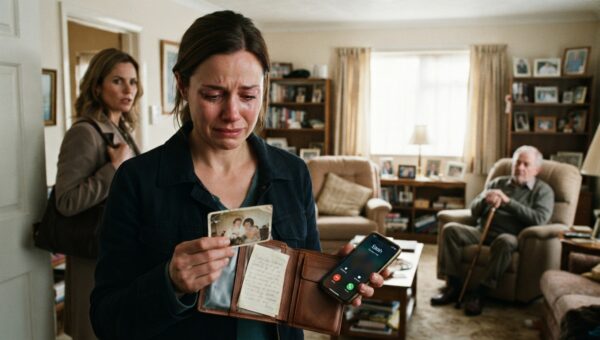
Why did my father spend the last twelve years of his life paying for vacations he thought his son was giving him out of the goodness of his heart? That is the question I kept asking myself while the rain tapped against the kitchen window in our little town outside Des Moines. It was a Tuesday afternoon in late October, three weeks after we buried him, and the house still felt heavy with the smell of old pipe tobacco and peppermint oil he always kept in his coat pocket.
I had gone through the desk drawers first, sorting through fifty years of utility bills and canceled checks, looking for the deed to the cemetery plot. But it was in the back of the walk-in closet, tucked behind a stack of old winter quilts nobody had unfolded since the eighties, where I found the shoe box.
A worn cardboard box with a faded sketch of running shoes on the lid, tied round with a length of yellow twine that snapped the second I pulled at it. Inside were twelve distinct envelopes from the same credit union, each one yellowed at the edges. I didn’t think much of it at first because my brother, Donald, had made a ritual out of those July trips. For twelve straight summers, Donald would pull his shiny silver pickup right up to the front walk, load up Dad and Mom, and drive them four hours south to that sprawling resort by the lake in the Ozarks.
Donald always stood right there on the porch with his thumbs hooked in his belt loops, telling anyone who would listen how blessed he was to finally treat his folks. “Our treat,” he would say, clapping Dad on the shoulder with a heavy hand. “You worked forty years on the county road crew, Pop. Least I can do is put you up where they got air conditioning that actually works.”
Dad would always look a little sheepish, smoothing down his plaid shirt and saying Donald didn’t need to do it, but Donald would just wave him off like a big shot. So when I opened those envelopes from the shoe box, I expected to see Donald’s name, Donald’s signature, Donald’s money keeping the whole thing afloat. Instead, every single statement from every single July showed the exact same line item. Four thousand eight hundred dollars. Billed directly to my father’s Visa account.
Twelve times. Year after year, while Donald was playing the dutiful, generous son in front of the whole family, he was quietly routing the charges through Dad’s secondary card line, the one Dad only kept for emergencies and never quite figured out how to check online. Fifty-seven thousand six hundred dollars stolen out from under an old man who thought his boy had finally turned into a provider.
My hands were shaking so hard I dropped the twelfth envelope on the floorboards, and it slid right under the oak sideboard. I didn’t reach for it right away. I just sat down on the edge of Dad’s old armchair, the springs groaning under my weight, and stared at the kitchen wall where the calendar still showed September with a dentist appointment circled in blue ink. The anger didn’t come in a flash or a hot wave. It came slow and cold, like water rising in a cellar after a spring thaw.
I picked up the landline phone on the counter and dialed Mom’s number before I could talk myself out of it. She answered on the third ring, her voice thin and distracted, probably watching some afternoon court show on the small television in her bedroom.
“Mom,” I said, and my own voice sounded strange to me, tight as a fiddle string. “Mom, I’m over at the house. I found the shoe box in the back of the closet.”
There was a long silence on the line, just the sound of static and some game show buzzer going off in the background. “What shoe box, honey? Your father had a hundred boxes of old receipts.”
“The one with the twelve credit card statements,” I said, my voice dropping an octave. “The resort bills. Four thousand eight hundred dollars every July for twelve years. Donald charged every single one of them to Dad’s card. Every last dime.”
Mom didn’t gasp. She didn’t sound surprised. She just sighed, a long, tired sound that told me everything I didn’t want to know. “I know,” she said softly. “He told me five years ago.”
I felt the air go right out of my lungs. “You know? You knew for five years that Donald was stealing four grand a year from your husband, and you didn’t say a word?”
“What was I supposed to do, Clara?” Mom’s voice rose just a fraction, sharp with the defensiveness of someone who had spent decades keeping the peace by looking the other way. “Donald said it was just a temporary arrangement. He said he was short on cash flow with the new siding business and he promised he would pay your father back out of the profits when the big lake contract went through. You know how Donald is when he gets talking. He can make you believe the sky is green if he stands there long enough.”
“He stole from a man who lived on a county pension and a social security check!” I shouted into the receiver, the red rage finally breaking through the cold. “Why didn’t you tell me? Why didn’t you tell Dad?”
Mom went quiet again. Not the quiet of someone thinking about an answer, but the heavy, miserable quiet of a person who had cornered herself and knew there was no way out. “Because,” she whispered, and the phone clicked slightly against her ear as her hand shook. “Because the hotel key card in his wallet last summer wasn’t from the resort. It was from a motel six miles away. And the second key card was for…”
She trailed off, leaving the sentence hanging in the empty air between our two houses like a bad smell. I didn’t wait for her to finish. I hung up the phone without saying goodbye, walked over to the entryway table where Dad’s old brown leather wallet still sat right where he left it when we came back from the hospital, and unzipped the coin pocket. Inside, tucked behind an expired insurance card and a receipt for a box of 12-gauge shells, were two plastic key cards. One was white with a faded blue logo for a place called the Pine Crest Motor Lodge, six miles down the highway from the grand resort Donald always claimed he was paying for. The other card was a duplicate, stamped with room number 214.
The pieces didn’t click into place all at once; they slammed together with a force that made my head ring. Donald hadn’t just been using Dad’s credit card to fund his own family vacations while taking the bow for being a good son. He had been running something else entirely out of those off-site motel rooms, using Dad’s credit line to cover the expenses for a third party while parking Mom and Dad at the resort down the road for three days so they would be out of his hair. And Mom had found out about it five years ago during one of their summer trips, discovered the extra keys or the separate bills, and instead of blowing the whole rotten structure apart, she had swallowed it down to keep Donald looking like the golden boy of the family.
I sat there at the kitchen table until the sun went down behind the ridge and the room turned the color of wet slate. I didn’t turn on the overhead light. I just listened to the refrigerator hum and thought about every Sunday dinner we had sat through over the last decade, listening to Donald talk about his business ventures and his generosity, while Dad smiled proudly and reached for the gravy boat with hands that had worn themselves out on the asphalt crew. Donald had taken fifty-seven thousand six hundred dollars in direct charges, plus whatever else was buried in those credit union files that I hadn’t looked at yet, and he had done it with the quiet, smiling complicity of the woman who shared my father’s bed.
The next morning, I didn’t call. I drove straight to Donald’s house out on the county highway, the gravel flying up against the undercarriage of my sedan with a sharp, rhythmic rattle. Donald lived in a brick ranch-style place with a boat in the driveway and a manicured lawn that always looked a little greener than everyone else’s. I didn’t wait for him to knock or invite me in. I walked right up the steps, pushed open the front screen door, and stepped into the entryway with the shoe box tucked firmly under my arm like a ledger of judgment.
Donald was sitting at the kitchen island drinking coffee out of a heavy ceramic mug, wearing a gray sweatshirt with the logo of his siding company embroidered on the pocket. He looked up, a quick flash of annoyance crossing his face before he put on that easy, practiced grin he used whenever he wanted to smooth over something he knew he shouldn’t have been doing. “Well, hey there, little sister,” he said, setting his mug down with a small clink. “Mom said you were going through the old man’s things. Find anything interesting? Dad wasn’t exactly known for keeping his coin collection organized.”
I didn’t smile back. I walked right up to the island, set the open shoe box down on the granite countertop between his coffee mug and a stack of trade magazines, and tilted it so the twelve statements spilled out in a fan across the shiny surface. “Fifty-seven thousand six hundred dollars, Donald,” I said, and my voice was so quiet it barely reached across the kitchen. “That’s how much you charged to Dad’s card over twelve years while you stood on his porch and told everyone it was your treat.”
Donald’s smile didn’t vanish all at once; it kind of withered away around the edges, his jaw tightening as his eyes scanned the dates and the figures printed on the top of the yellowed paper. For a second, he looked like a kid caught with his hand in the feed store till, his shoulders hunching up toward his ears. Then the anger took over, the familiar, blustering fury he always used when he was backed into a corner. He stood up so fast his metal stool scraped against the tile floor with a screech that set my teeth on edge.
“You had no business going through his personal papers, Clara,” Donald snapped, pointing a thick finger right at my chest. “Dad wanted us to have those trips. He insisted on it. You always were jealous that he took care of me and the family while you were off living by yourself in town. You think you know everything about how we ran things, but you weren’t even around half the time!”
“I found the motel keys too, Donald,” I said softly, cutting right through his noise. “Room 214 at the Pine Crest. The ones from last July. The ones Mom knew about.”
That was the moment the color really left his face, not like a movie star in a drama, but the gray, pasty drain of a man who realized the floorboards had just given way beneath his boots. He didn’t have an answer for that. He didn’t have a clever excuse about cash flow or county contracts or Dad’s generosity. He just stood there behind the kitchen island, his mouth opening slightly before he clamped it shut again, his hands gripping the edge of the granite so hard his knuckles turned the color of skim milk.
“You’re going to sign over your share of the homestead plot to cover what you took,” I told him, and I didn’t blink once as I looked him dead in the eye. “Every last cent of the fifty-seven thousand six hundred, plus whatever interest the estate lawyer calculates from the date of each charge. And if you try to fight it in probate court, I’m handing these statements and the motel registry logs straight to the county prosecutor before the week is out.”
Donald opened his mouth to say something, some threat or some plea for family loyalty, but nothing came out except a dry, ragged cough. He looked past me toward the front hallway, as if he expected Mom to walk through the door and rescue him the way she had rescued him every time he messed up since we were kids. But Mom wasn’t coming. She was sitting in her kitchen six miles away, staring at her own small television with the sound turned down low, living in the quiet wreckage of the secret she had kept for five years.
I didn’t wait for him to agree. I didn’t wait for him to yell. I turned around on my heel, leaving the shoe box sitting right there in the middle of his expensive granite island with the twelve yellowed statements spread out like a hand of bad cards. The screen door gave a familiar, tired rattle as I pushed it open and stepped out into the bright mid-morning air. My car was parked by the edge of the gravel drive, the engine ticking softly as it cooled down in the autumn wind. I got in, pulled the door shut with a clean, heavy thud that sounded entirely final, and shifted into reverse without once looking back at the house.