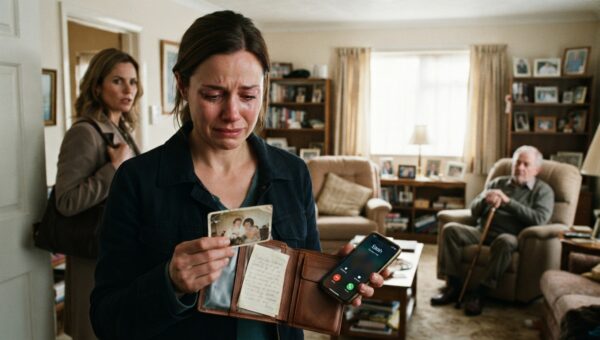
Why do we always keep sending money when the requests start sounding just a little too convenient? That is the question I have been asking myself for months now, sitting at our kitchen table while the rain taps against the window glass, trying to piece together how we missed every single sign.
My daughter Chloe was twenty-six, living in the city two hours away, and trying to find her footing after a messy breakup and a layoff from an administrative job.
When she called us asking for five thousand dollars to cover back rent, Martha and I did not hesitate. We wired the funds that very afternoon from our modest savings account, tightening our belts on groceries and putting off the new water heater we desperately needed.
Martha is more observant than I am, but even she trusted Chloe implicitly back then. We were just ordinary parents trying to keep our only child from sinking in a world that felt increasingly harsh and expensive.
The trouble started quietly, the way most domestic disasters do. The very next month, Chloe needed three thousand dollars for emergency car repairs after a supposed transmission failure. Then came two thousand for unexpected medical bills following a minor outpatient procedure. By month six, she needed four thousand for accelerated tuition credits to finish a certification program that would allegedly secure her a permanent position.
Every single time she called, her voice was tight with panic and exhaustion, and every single time, we found a way to scrape the money together.
We pulled from our retirement buffer, we skipped our annual dental checkups, and we told ourselves we were being good parents.
Over the course of fourteen months, those intermittent emergencies added up to thirty-eight thousand dollars. That is a devastating sum for people living on fixed incomes, but we would have given her our last dime if we thought it was keeping a roof over her head.
The illusion finally shattered on a Tuesday evening in October. Martha had been helping an old high school friend set up a local community Facebook page and was browsing through local mutual connections when a strange profile caught her eye. It was an alternate account under a misspelling of Chloe’s middle name, locked down with strict privacy settings except for a single public album.
Martha called me over to the kitchen island without saying a word, her finger frozen on the trackpad of her laptop.
The blue light of the screen illuminated her face in the darkening room, casting harsh shadows across her cheekbones.
There was Chloe, smiling broadly against the backdrop of a luxury resort in Bali, holding a glass of champagne that cost more than our weekly grocery budget. There were photos of designer shopping bags from high-end boutiques, VIP nightclub tables surrounded by strangers, and captions boasting about endless nights out.
The timestamps on those luxury posts matched almost down to the hour with the frantic text messages she had sent us begging for rent money and medical funds.
Martha did not cry at first, and neither did I, because our brains simply refused to process the scale of the deception. We sat there in absolute silence while the refrigerator hummed a low, steady note in the corner.
“Call her,” Martha finally whispered, her voice shaking so badly she could barely form the syllables. “Call her right now and tell her to get in the car.”
We did not wait for the weekend or schedule a polite visit.
We sent a text demanding she drive home immediately, attaching a single screenshot of the Bali resort photo to the message without any commentary.
Two hours later, the heavy brass latch of our front door rattled, and Chloe walked into the kitchen. She looked thinner than she had during her last visit, her skin pale and drawn, wearing an oversized hoodie that swallowed her frame.
She took one look at Martha’s face and the laptop sitting open on the table, and all the color drained right out of her cheeks. She dropped her canvas tote bag onto the linoleum floor with a dull thud.
Martha stood up from her chair, her hands trembling as she pointed down at the glowing screen. “Explain this to us, Chloe. Right now. Every single cent we sent you for rent and doctor bills, where did it go?”
Chloe backed up a step until her shoulders hit the pantry door, her breathing turning shallow and ragged. “You don’t understand the pressure,” she said, her voice cracking as tears spilled over her eyelashes.
I stepped forward, the thirty-eight thousand dollars burning a hole in my memory, all those sacrifices we made flashing behind my eyes. “Pressure? We lived on canned soup for three months so you wouldn’t get evicted, and you were flying to Bali?”
She shook her head violently, pressing both hands against her temples as if her skull might split open. “Someone is making me this way.”
I stopped dead in my tracks, my anger suddenly warring with a cold, creeping dread that had nothing to do with money. “Who?” I demanded, my voice rising sharply against the quiet of the house.
Chloe froze. Her eyes darted wildly toward her phone, which was buzzing furiously against the inside pocket of her oversized hoodie, lighting up the dark fabric with rapid notifications. Then she looked up at me, pure terror written across her face in a way no spoiled, lying thief could ever fake.
And she said a name that made my legs buckle, forcing me to catch myself hard against the edge of the oak table before I hit the floor.
“Julian,” she whispered.
The name hung in the air of our kitchen like a physical blow, heavy and foul. We had never heard of him. Chloe had never mentioned a man named Julian during any of our Sunday phone calls or hurried check-ins.
Martha moved instantly, stepping around the table and grabbing Chloe by the shoulders, her maternal fury instantly pivoting into something fierce and protective. “Who is Julian, Chloe? Tell us right now or I am calling the police from this exact spot.”
Chloe collapsed into the nearest wooden chair, burying her face in her hands as the dam finally broke completely. She sobbed so hard her whole body shook, the defensive wall she had built around herself crumbling into dust in a matter of seconds.
It turns out she had met him six months before the money requests began, a smooth-talking man who ran in upscale social circles in the city and promised her access to a world she had always admired. But the glamour had vanished within weeks, replaced by a nightmare of psychological entrapment and digital blackmail.
Julian had secretly recorded compromising situations during a weekend trip they took together early on, using the footage to manufacture thousands of dollars in fake debts and liabilities that he claimed she owed him. Every time we wired money for rent or tuition, Chloe had forwarded it straight to his accounts within minutes under the constant threat that he would destroy her career, notify her employers, and ruin her life.
She wasn’t living a life of luxury out of greed; she was performing in a gilded cage built by a professional predator who monitored her every move and isolated her from everyone who loved her.
“He said if I didn’t get the money, he would send everything to my coworkers and post it online,” she sobbed, holding up her phone so we could see the relentless stream of incoming text commands lighting up the screen. “He said you guys had plenty if you just cut back enough.”
Reading those messages over her shoulder turned my stomach in a way financial ruin never could. There were threats, schedules of payments, demands for specific luxury items to impress his friends, and terrifying psychological abuse disguised as romance.
We didn’t yell at her anymore. All the anger I had carried into that kitchen dissolved into a cold, hard resolve that felt like iron settling into my bones.
“Give me the phone, Chloe,” I said quietly, holding out my hand.
She unlocked it with trembling fingers and handed it over without a fight. Martha sat down beside her, pulling our daughter into her arms the way she used to when she scraped her knee as a little girl, whispering that she was safe now, that we were going to fix it together.
We spent the rest of that night sitting at the kitchen table, but not looking at side accounts anymore. We backed up every single text message, every bank transfer receipt, every extortion demand, and every threat Julian had sent over the past fourteen months.
By morning, we had contacted a cybercrime attorney recommended by a trusted family friend in law enforcement. We changed all of Chloe’s passwords, blocked Julian across every single platform, and handed over a complete, unbroken paper trail of digital extortion to the authorities.
The legal battle that followed was grueling and uncomfortable, and Julian tried to run when he realized the police were involved, but digital tracks are hard to erase once federal investigators get involved.
We haven’t recovered all thirty-eight thousand dollars yet, and honestly, the money stopped mattering the moment we realized what kind of danger our daughter had been surviving inside.
Last night, I stood on our front porch while the evening sun dipped low behind the valley trees, painting the sky in deep shades of amber and gray. Chloe was sitting inside at the kitchen table, the warm light of our old brass lamp reflecting softly in the screen of her phone as she blocked the very last incoming unknown number.
Her hand was resting safely inside her mother’s palm, steady and warm, anchored in a house where no shadow could reach her anymore.