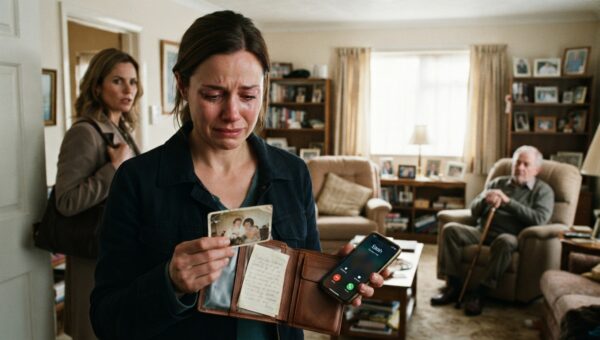
I thought I knew the exact price of keeping my kid alive in a city that eats young people whole. It turns out I was off by about thirty-eight thousand dollars and a complete inventory of a life that never actually existed.
For fourteen months, my wife Brenda and I lived on tight margins. We cut our grocery budget, put off getting the brakes checked on our sedan, and kept the thermostat at sixty-eight all winter just to answer our daughter Chloe’s text messages.
Twenty-six, trying to find her footing after a brutal layoff from a marketing firm, living three hours north in a damp little apartment where the radiator clanked like a loose wrench. Every time she called, it was a crisis. Rent was short. The transmission dropped its fluid on the bypass. A dental bill the insurance wouldn’t touch. We wired the money instantly. No lectures. No sermons. Just the hum of our banking app transferring funds while Brenda made toast and I checked the routing numbers twice.
The trouble started on a Tuesday night when Brenda couldn’t sleep. Her phone had been acting up, so she picked up my old tablet off the kitchen island to check her email. The blue light cut sharp lines across the grain of the oak table while the neighborhood outside stayed dead quiet. She was scrolling through a local restaurant page when a tagged photo caught her eye.
A girl with her back to the camera, wearing an emerald silk dress that must have cost more than my first car, leaning against the velvet banquette of a rooftop club in downtown Seattle. The profile name was entirely unfamiliar. Something florid and delicate. But the curve of the jawline and the small silver scar just behind the left earlobe belonged to our daughter.
Brenda didn’t scream. She didn’t drop the tablet. She just slid the glass surface across the oak toward my coffee mug without a word.
The account was public, though it looked like whoever managed it had tried to scrub the geotags a few weeks back. It was a rolling timeline of luxury that made my stomach turn over. There were high-resolution shots of first-class airline seats, a suite overlooking a turquoise harbor in Bali that looked like a movie poster, and three different designer shopping bags spread across a king-sized hotel bed like trophies.
Over fourteen months of ramen noodles and delayed car repairs at our house, Chloe had been living like an oil heir on the Pacific coast.
I stared at a picture of her holding a glass of champagne in a place called the Obsidian Club while Brenda sat beside me, her hands clasped tightly in her lap.
“The rent,” Brenda said, her voice so flat it sounded like a recording. “The dental bill. The transmission.”
“I sent it,” I said. “Every single dime.”
We didn’t talk for twenty minutes. We just sat there under the harsh light of that kitchen island while the tablet screen went dark and woke up again every time Brenda tapped the glass to load another photograph. The anger didn’t hit me all at once. It came in cold, heavy waves that settled behind my ribs. I felt like a fool, but worse than that, I felt like a stranger in my own family’s history.
We had given her our savings while she was posing for strangers on a screen.
By morning, Brenda had pulled every bank statement from the last year and a half. Thirty-eight thousand, four hundred dollars. Printed out on crisp white paper and stacked in a neat, cruel pile beside the toaster.
When Chloe walked through our front door at five that afternoon, she didn’t take off her coat. She had her keys in one hand and her phone buzzing against her palm with a dull, persistent vibration that hadn’t stopped since she parked the car out front. She was wearing her old canvas jacket and scuffed boots, looking every bit the struggling, exhausted girl we thought we were supporting.
“Hey,” she said, tossing her keys onto the counter with a familiar clatter. “You guys okay? Your text sounded weird.”
I didn’t move from my chair. I just pointed at the stack of bank papers and the tablet screen, which was frozen on a shot of her sitting by an infinity pool with a gold watch glinting on her wrist.
“Explain this,” I said.
Chloe froze. Her hand stayed suspended halfway to her hair. The color didn’t drain from her face so much as it seemed to shatter, tiny micro-expressions of panic replacing the tired daughter routine in less than a second. She looked at the tablet, then down at the bank statements, and her shoulders dropped three inches all at once.
“Where did you get that?” she whispered.
“Your mother found it,” I said, my voice shaking despite myself. “Thirty-eight thousand dollars for rent and car parts, Chloe. And you’re sitting in Bali drinking champagne. What kind of game are you playing?”
She backed up a step until her spine hit the pantry door. The phone in her hand buzzed again, a short, sharp double-vibration that made her flinch. She stared down at the glass screen like it was burning her palm.
“You don’t understand the pressure,” she said, her voice cracking right down the middle.
“Pressure?” I stood up so fast my chair scraped hard against the linoleum. “You think working seventy hours a week at the supply warehouse to fund your designer wardrobe is pressure? What is wrong with you?”
“Someone is making me this way,” she cried, her hands flying up to cover her face as the first real tear spilled over her lashes.
I stopped dead. The anger didn’t vanish, but it twisted into something colder, sharper, a sudden dread that had nothing to do with money and everything to do with the tone of absolute terror in her voice.
“Who?” I asked, taking a step toward her.
Chloe didn’t answer right away. She looked down at her phone, which was lighting up again with a string of incoming text bubbles. Her fingers hovered over the screen, trembling so hard she could barely hold the device steady. Then she looked up at me, her eyes wide and wet, completely devoid of the defiance I had braced myself for.
And she said a name that made my legs buckle.
“Julian,” she whispered.
The kitchen seemed to tilt sideways for a second. Brenda stood up from the table, her hand catching the edge of the counter to steady herself. Julian was not an old college friend or an acquaintance from her marketing days. He was a man thirty-two years old who ran private security consulting downtown, a smooth-talking operator Chloe had met at a gallery opening eighteen months ago, right before the requests for money started rolling in.
“He’s not my boyfriend,” Chloe sobbed, sliding down the pantry door until she was sitting on the floor with her knees pulled up to her chest. “He said he loved me at first. Then he took pictures. On our trip to Vancouver last year. Compromising things. Private things.”
The silence in the room was heavier than any shout. The refrigerator hummed in the corner, a steady, indifferent rhythm while our daughter pulled herself into a tight, shaking ball against our white baseboards.
“What kind of pictures, Chloe?” Brenda asked, kneeling down beside her with a gentleness that broke my heart all over again.
“He said if I didn’t pay for his life, if I didn’t fund his lifestyle and his debts, he would send them to my employers, to my old boss, to everyone we know,” she choked out, wiping her nose with the sleeve of her coat. “Every time I tried to stop, every time I said I couldn’t get more money from you guys, he’d send me a screenshot of my address. Or he’d show up outside my building. The trips to Bali weren’t mine, Mom. He made me go with him. He made me pose for those accounts so his friends would think he was a high-roller. I didn’t spend a single dollar on myself. Every cent you sent went straight to his wire accounts within ten minutes of hitting my balance.”
The pile of bank statements on the table suddenly looked entirely different. They weren’t receipts for greed. They were ransom notes.
We spent the next four hours sitting on that kitchen floor while Chloe unlocked her phone and let us read the message threads. It wasn’t just threats. It was a systematic dismantling of a human being. Hundreds of pages of demands, countdown timers, explicit photo previews, and cold, calculated instructions on how to frame the next emergency call to her parents so we wouldn’t ask too many questions. He had isolated her from her friends, monitored her location twenty-four hours a day, and turned our own financial love into a weapon against her.
My anger toward Chloe evaporated completely, replaced by a dark, protective fury that tasted like copper in the back of my throat.
“Get your laptop,” I told her, my voice dropping an octave.
“Dad, you don’t know what he can do,” she whispered, looking up with raw panic. “He has contacts. He told me the police won’t do anything.”
“Your father’s brother was a detective for twenty years in Tacoma,” Brenda said, her voice hard as iron. “And we are done playing by his rules.”
We didn’t wait until morning. We spent the night backing up every single text message, every bank transfer confirmation, and every digital threat onto an encrypted thumb drive while Chloe sat between us on the sofa, wrapped in a heavy wool blanket that belonged to her grandmother. Every time her phone buzzed, Brenda reached over and turned the device face down on the coffee table. We didn’t answer a single call. We didn’t give him the satisfaction of knowing we had found the shadow he was hiding behind.
By noon the next day, we were sitting in a sterile consultation room at the federal building downtown across from a cybercrimes investigator named Miller who didn’t blink once while he scrolled through Julian’s digital extortion logs. He didn’t see a silly girl who blew her parents’ money on luxury. He saw a textbook case of digital coercion and financial trafficking.
“This is felony extortion,” Investigator Miller said, tapping a pen against his desk while the fluorescent lights buzzed overhead. “And based on the interstate wire transfers, it crosses state lines. We can pick him up by tomorrow morning, but I need your daughter to be willing to sign the formal complaint and cut all digital ties immediately.”
Chloe looked over at Brenda and me. Her hands were still shaking slightly, but the hunted look in her eyes had shifted into something else. Something resembling oxygen returning to a room that had been sealed shut for a year.
“I’ll sign it,” she said.
The arrest happened outside a coffee shop on Fourth Street just before noon on Thursday. Investigator Miller kept us updated in real-time through a secure group chat, sending a brief, clinical confirmation when Julian’s phone and laptop were seized under warrant before he even had time to realize the money taps had gone dead.
The fallout took months. There were depositions, forensic audits of Julian’s shell companies, and endless paperwork to scrub the fake social media profiles off the internet. Chloe moved back into her old bedroom for a while, sleeping with her door half-open the way she used to when she was twelve and scared of thunderstorms. We didn’t talk about the thirty-eight thousand dollars. We didn’t talk about Bali or the designer bags that turned out to be rental props used for digital leverage.
The healing didn’t happen in a single cinematic moment. It happened in small, quiet intervals. The sound of Chloe’s car pulling into the gravel driveway without her phone buzzing every thirty seconds. The way she started eating breakfast again without looking over her shoulder at the windows.
Six months after the arrest, Julian took a plea deal that put him away for federal wire fraud and extortion without ever seeing the inside of a trial courtroom. The judge didn’t offer any poetic speeches, and neither did we.
The last remnants of that nightmare ended on a rainy Tuesday evening just as dusk was settling over the valley. Chloe was sitting at the same kitchen table where Brenda had first slid the tablet across toward my coffee mug. The room was quiet except for the hum of the refrigerator and the gentle patter of rain against the windowpane.
She picked up her phone, her fingers moving steadily across the glass as she blocked the very last automated notification from an old secondary email address Julian had used. The warm light of the kitchen lamp caught the screen, reflecting a clean, unbroken surface where no shadows were left to hide.
She didn’t say a word. She just set the phone down flat on the oak wood, reached out, and let her hand rest safely inside her mother’s palm.