I was wrong about almost everything, and it took a piece of heavy cardstock arriving in my mailbox to make me admit it. Sixteen years is a long time to live inside your own stubbornness. You start to think the walls you built to keep out what you hated are actually protecting you, until you realize they are just a cage.
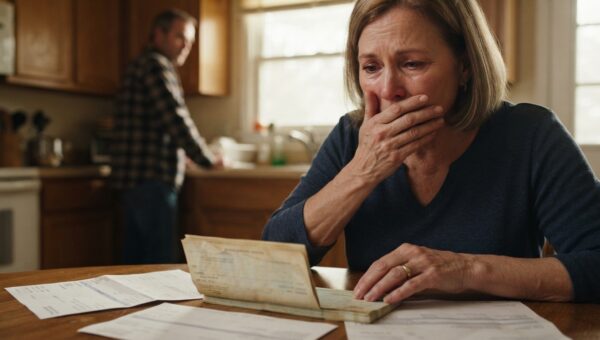
I sat at my kitchen table last month, staring at an envelope that had traveled a long distance only to find its way back to my return address, and my brain simply stopped working for a few seconds.
The envelope was cream-colored and thick, the kind people buy for weddings. My maiden name was crossed out in neat, dark ink, and beneath it, my old address had a red postal sticker slashed across the numbers. Undeliverable at former address. Return to sender. But it was not the postage that made my coffee grow cold in the ceramic mug. It was the name printed in the top left corner. Dr. Hannah Porter.
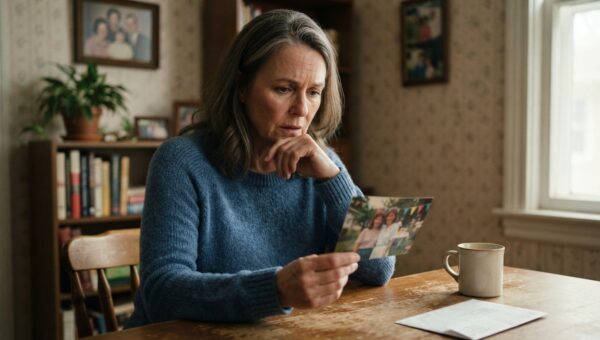
I did not know a Dr. Hannah Porter. I do not know any doctors. I turned the card over, my thumb catching on the heavy paper, and pulled out the stiff enclosure. Inside was a photograph. Three women stood together on what looked like a hospital lawn, all of them wearing clean, pressed white doctor coats.
On the left was Elise, older now, the sharp lines of her face softened by time, her graying hair cut short. In the middle was my daughter, Clara, looking straight into the camera with an expression that had no room in it for me. And on the right was a young woman with my mother’s nose and a small, distinct birthmark just beneath her left jawline, smiling a bright, untroubled smile.
That birthmark was the anchor that pulled me under. It was the exact shape of a dried apricot, sitting right on the bone, identical to the one my own mother carried to her grave.
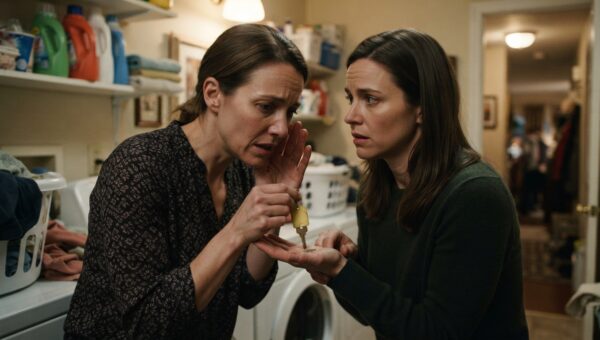
I didn’t think about the cost of gas, or the four-hour drive, or what I would say when I got there. I just grabbed my car keys off the hook by the pantry, the metal ring cold against my palm, and walked out to the sedan.
My legs felt hollow, the way they do when you step down off a ladder and misjudge the last rung.
In 2010, Clara was twenty-four years old and standing in our small-town living room holding a cardboard box of winter sweaters. I had written checks totaling $18,000 across her four years at the state university, writing them out of my own checking account with the steady pride of a mother who was making sure her child would never have to ask a man for a dime. I thought writing those checks bought me a vote in how she lived her life. I thought it meant she owed me the traditional path, the white dress in the Methodist church, the son-in-law with a lawnmower and a pension plan.
When she told me she and Elise were getting married at the county courthouse instead, I didn’t yell. That would have been honest, at least.
Instead, I folded my hands on the dining room table and told her she was no longer welcome under my roof. I told her she was throwing away everything I had sacrificed to give her.
Clara hadn’t cried. She had just looked at me with those steady, terrible eyes and set her keys on the oak side table. “If this is what my life costs, I’ll pay it,” she had said.
She walked out the front door with two suitcases and a cardboard box, sliding them into the passenger seat of Elise’s dented hatchback. I watched from the living room window, the lace curtain pinched between my fingers, waiting for her to turn around. She never did. And in all the years since, I never picked up the phone. I let pride sit at my table like an uninvited guest who simply refused to leave.
The drive down to their town took four hours of flat highway and grey sky. By the time I turned onto their street, my hands were cramping around the steering wheel until my knuckles showed white. The houses were modest brick split-levels with neat flower beds and bicycles leaning against porch rails. It looked like the kind of neighborhood where people knew each other’s names, where neighbors waved across driveways and shared lawnmowers. It looked like a place where families lived.
I pulled my sedan two houses down from theirs, killing the engine but leaving the radio off. The silence inside the car was heavy, broken only by the ticking of the cooling metal under the hood. I sat there for forty-seven minutes, watching the front door of their house. A mail carrier walked past. A dog barked two yards away. A little girl with a red backpack hopped off a school bus and ran up a neighboring driveway, shouting about a painting she had made in art class.
Every second I sat in that car, the distance between the woman I had been in 2010 and the old woman sitting behind the steering wheel felt wider than the state of Kansas. I had spent sixteen years telling myself she was the stubborn one, that she was the one who broke the chain. But looking at the photograph in my purse, I realized Clara hadn’t broken anything. She had simply built something new out of the pieces I threw away.
Finally, I opened the car door. The gravel crunched under my shoes, the sound loud in the quiet afternoon air. My knees protested as I walked up the paved path, every step feeling heavier than the last. My coat felt too tight across my shoulders. I reached the front porch, the wood painted a soft, weathered gray, and stared at the brass doorbell.
I didn’t ring it. I raised my hand and knocked three times on the solid wood.
The wait lasted only a few seconds, but it stretched out like an open plain. I heard the muffled sound of footsteps on hardwood floors, the quick scuff of a shoe, and then the brass handle turned.
The door swung open. Clara stood in the threshold. She was thirty–four now, her hair pulled back in a simple clip, wearing a soft blue cardigan. She didn’t look angry. She didn’t look triumphant. She just looked tired, the way people look when they have carried a heavy load for a very long time and finally have to set it down to answer a knock.
She looked at my face, her eyes lingering on the lines around my mouth that weren’t there the last time she saw me. Then she crossed her arms, her fingers hooking into the wool of her sleeves.
“Before you come in, tell me why you’re here,” she said.
Her voice wasn’t raised. It didn’t shake. It was the calm, flat voice of a woman who had already mourned the mother she used to have and didn’t have room for a ghost.
I stood on the welcome mat, the autumn wind rustling the maple leaves behind me, and for the first time in sixteen years, I didn’t have a defense ready. I couldn’t talk about the money. I couldn’t talk about tradition or what the neighbors thought or how hard I had worked. All I had was the truth, small and sharp and entirely overdue.
“I saw the invitation,” I said, my voice cracking on the second word. “I saw Hannah’s face. And I realized I spent sixteen years punishing myself because I thought I owned you.”
Clara didn’t move. She stared at me for a long, hard beat, her eyes searching mine for any sign of the old pride, the old demand for obedience. The silence stretched between us, filled with all the years we had thrown away over a courthouse wedding and an eighteen-thousand-dollar receipt.
She looked down at the porch floor for a second, then back up at me. A breath seemed to leave her shoulders, and the tension in her jaw eased just a fraction.
“She’s inside,” Clara said quietly, stepping back from the door and holding it open another six inches. “She’s finishing up some paperwork for the hospital.”
I didn’t say anything else. I stepped across the threshold, my boots crossing the line from the outside world into the warm, quiet hallway, as the front door clicked softly shut behind me.