PART 1
The brown paper bags came in a bulk pack of five hundred from the hardware store down the street, plain and thin enough to see through if the grease soaked into the paper. I bought them because they were cheap, and because when you are twenty-nine and raising a daughter on a grocery clerk’s wages, you watch every nickel that leaves your hand.
In the spring of nineteen eighty-three, my daughter Clara was in the fourth grade at Lincoln Elementary. Her classroom had tall wooden windows that let in the draft from the alley, and desks bolted to the floor in neat rows. Clara sat in the second row, and a boy named Toby sat directly behind her.
Toby was a thin kid with oversized sneakers held together with gray duct tape at the toes. For six months, I noticed something strange when Clara unpacked her lunchbox at our kitchen table after school. Her thermos of tomato soup was always empty, and her sandwich crusts were gone, but she never complained about being hungry. When I asked her about it one afternoon while she was doing her spelling homework, she looked down at her pencil sharpener.
“Toby doesn’t bring anything, Mom,” Clara whispered. “He sits there and watches everyone else eat. His teacher said his folks are having a rough patch.”
The next morning, I packed two ham sandwiches instead of one, wrapping his in a separate napkin inside an extra brown bag. I slipped it into Clara’s schoolbag with a strict instruction not to make a fuss.
The lunches cost about eighteen dollars a week at the market prices back then, money I could barely spare from the jar in the pantry. But every morning for six months, I packed that second lunch. Toby never said thank you to me directly, because I never saw him at the school gates. Clara just told me he took the bag quietly, ate every crumb, and folded the paper napkin into a small square before putting it in his pocket.
Then came a Tuesday afternoon in November. Clara came home holding a thick library book about American birds, its hardcover corners worn soft.
“Toby gave this to me,” she said, setting it on the oilcloth kitchen table. “He said, ‘Please keep it safe for me, Clara.
Tell your mom thank you.’ Then his family moved away that weekend. We heard they went down to Tennessee.”
I put the bird book on the top shelf of the hallway bookcase, where it gathered dust through the years as Clara grew up, graduated, moved to Chicago, and gave me two grandchildren of my own. I lost track of Toby entirely. Forty-three years passed, filled with the ordinary noise of living, working, and growing old in the same Midwestern town.
PART 2
Last Tuesday, the church office was quiet because the Tuesday morning Bible study had just let out, leaving behind a faint smell of instant coffee and floor wax. I was sitting at my small metal desk in the corner behind the parish hall, sorting through the weekly donation envelopes, when the secretary brought in the mail.
Among the church circulars and utility bills sat a padded manila envelope addressed in neat, deliberate handwriting to Mrs. Martha Alvarez.
I slit the paper open with a plastic letter opener. Inside lay the bird book.
It was unmistakable, the same faded green cover with the picture of a bluejay on the front, though the spine had been professionally rebound in black buckram.
Tucked between pages forty-two and forty-three was a crisp new five-dollar bill and a folded piece of lined stationery.
I unfolded the paper. The handwriting was no longer a child’s scrawl, but it had the same careful spacing.
“Mrs. Alvarez,” the note began. “You saved me when my father walked out and my mother couldn’t get out of bed for months. I didn’t know how to tell you back then, and I was too ashamed to look you in the eye. I became a librarian because you kept that book safe for me, and because someone once kept me safe when I had nothing. Thank you for the ham sandwiches. I’ve never forgotten.”
The letter was signed by a man named Thomas Vance, director of library services down in Nashville.
I sat there at the metal desk with the five-dollar bill resting on top of the church envelopes. The amount was a fraction of what those extra lunches had cost me over six months back in nineteen eighty-three, but looking at it made the tightness in my chest loosen in a way I hadn’t expected.
I picked up my desk phone and dialed the number written at the bottom of the letterhead.
A receptionist answered, and within a few seconds, a deep, measured voice came on the line.
“This is Thomas Vance.”
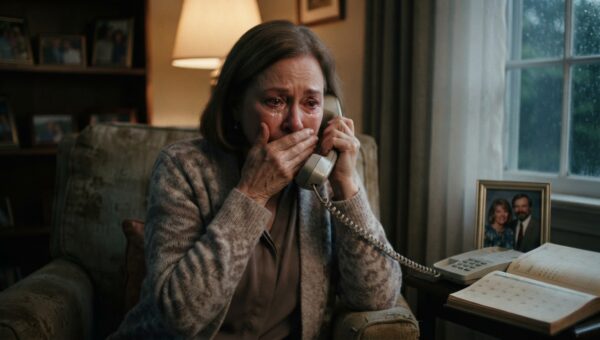
“Tom,” I said, and my own voice sounded smaller than it did a moment ago. “This is Martha Alvarez.”
There was a sharp intake of breath on the other end, followed by absolute silence for three long seconds.
“Mrs. Alvarez,” he finally said, and his voice cracked slightly on the second syllable. “You got the package.”
“I got it,” I said. “Clara’s bird book finally came home.”
“I searched for your name through the old Lincoln Elementary alumni records last month,” Tom explained, speaking quickly now like he had rehearsed this moment a hundred times. “It took some digging with the county historical society, but I found out where you were. I had to send it back.”
“You didn’t have to send money, Tom,” I said, touching the edge of the five-dollar bill.
“That’s just interest,” he replied softly. “On a very old loan.”
PART 3
We talked for twenty minutes about ordinary things. He told me about his wife, a high school history teacher, and his two grown daughters. I told him about Clara, who was living in Chicago and working as a physical therapist. We didn’t talk about the cold winters back in eighty-three, or the way the pantry jar used to rattle when I counted out coins for groceries. Some things don’t need to be dragged into the light because they were already heavy enough when we carried them in the dark.
When we finally said goodbye, I placed the five-dollar bill inside my church logbook and carried the bird book back out to my car.
Driving home, the afternoon sun caught the windshield of my old sedan, turning the maple leaves along Main Street into bright splashes of gold and orange. Forty-three years is a long time to wonder if a small kindness vanished into the wind or if it actually landed somewhere solid.
I parked in my driveway, walked up the wooden front steps, and unlocked the front door. The house smelled of the beef stew I had left simmering in the slow cooker before I went to the parish hall.
I took off my coat, hung it on the brass hook by the door, and walked into the kitchen.
ENDING
On the kitchen counter, right beside the mail holder, I placed the bird book where I could see it whenever I poured my morning coffee.
I didn’t call Clara to tell her right away. Some stories belong to the quiet hours of the afternoon, when the house is still and the soup is warm on the stove.
I opened the slow cooker, stirred the carrots with a wooden spoon, and let the steam rise against my face.
The paper bag was gone, but the debt was paid.