The notification light on my bedside table did not blink, but the small digital chime cut through the quiet air of my kitchen just as the coffee pot finished sputtering its last brown drops. It was a text from Arthur Vance, my late husband’s attorney, attaching a high-resolution PDF of the foundation’s latest default notice. I looked at the red-inked balance of $38,400 reduced to $87, and I knew the six-month wait was finally over.
The Ledger of Grace was about to balance itself, down to the very last cent.
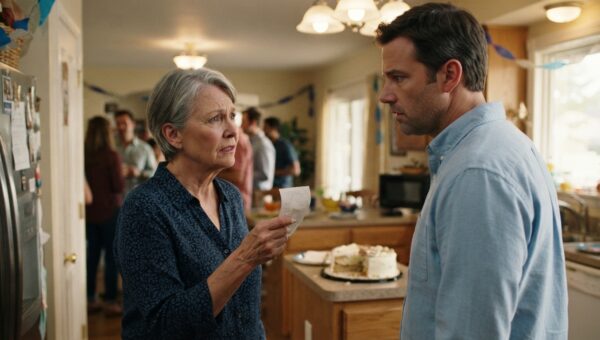
Six months earlier, the gravel drive of the estate had still smelled of rain and trampled boxwood when Eleanor hauled my three canvas duffels out the double oak doors. Terence had not even been in the ground a full day. His heart had simply given out during a Tuesday morning swim, taking fifty-two years of a brilliant, quiet life with it. I remember the sound of the brass zippers scraping against the bluestone porch. Eleanor did not look me in the eye. She wore black linen that probably cost more than my first used sedan, and her fingers were stiff with inherited diamonds that Terence had never asked for.
“Now that Terence is gone, you get nothing,” Eleanor sneered, her voice carrying across the damp lawn like a dry twig snapping.
Chloe, my sister-in-law, stood by the brick pillar with her phone raised high, the small red recording light blinking steadily against the gray morning sky.
She had a tight, pleased smile on her face, the kind she usually reserved for unboxing expensive packages online. I did not scream, and I did not beg. I simply knelt down on the wet grass where my canvas bags sat beside a broken box of kitchen spices and picked up my muddy wedding album. The cloth cover was soaked through with morning dew. I dusted a bit of leaf mold off the corner, looked right into Chloe’s glowing camera lens, and said, “You’re right. I have nothing.”
They laughed all the way back inside, their heels clicking against the marble foyer before the heavy oak door swung shut with a dull, final thud. They thought they had won. They thought Terence was just the family cash machine that had finally broken down, leaving behind a broke, unpolished widow they could sweep out with the autumn leaves. They had no idea that Terence had built his entire shipping and logistics empire completely outside their predatory family trust, or that he had left every single share, every building lease, and every liquid asset directly to me.
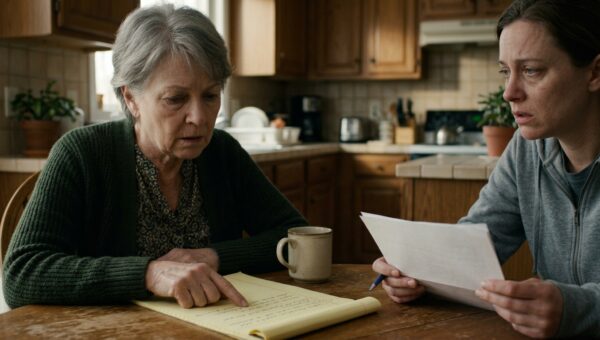
I spent the first three months in a small coastal cottage fifty miles north of the city, listening to the tide hit the pilings and letting the silence settle into my bones. The cottage belonged to an old friend of my mother’s who had passed away years ago, leaving it to me in a simple will. It had peeling yellow paint on the window frames and a kitchen table that rocked slightly whenever I leaned my elbows on it. Arthur Vance came out to see me on a Tuesday in November, driving his battered blue sedan right down the narrow shell road. He brought a thick black binder tied with a cotton ribbon.
“They’re burning through the foundation’s reserves at an alarming rate, Evelyn,” Arthur said, setting the binder down on the rocking table. “Howard has already mortgaged three of the subsidiary warehouses just to keep up appearances at the country club.”
“Let them,” I said, pouring him a cup of instant coffee in a chipped mug.
“Eleanor is telling everyone in the social register that you cleaned out Terence’s personal accounts and fled the state,” Arthur added, watching me closely over the rim of his mug. “They’re planning to use their annual winter charity gala as a big media push to present themselves as the grieving, noble family carrying on Terence’s legacy.”
“When is the gala?” I asked.
“Six months from the funeral. Metropolitan Hall. Black tie.”
“Good,” I said. “Reserve me a seat at the back. Or better yet, just make sure my name is on the master creditor list when the doors open.”
The months between that kitchen table and the night of the gala were filled with quiet ledgers and midnight phone calls to corporate restructuring firms. I did not want revenge in the petty sense. I wanted architecture. Terence had spent twenty years letting his father, Howard, take public credit for the family fortune while Howard secretly bled the accounts dry to fund speculative real estate ventures that always failed. Terence had kept his own wealth ring-fenced in a private holding trust, waiting for the day he could break away entirely. His sudden death had accelerated that timeline by about ten years.
By the time February rolled around, I had quietly acquired every single outstanding debt note, commercial mortgage, and foundation loan that Howard and Eleanor had used to prop up their aristocratic lifestyle. They did not know the anonymous institutional buyer snapping up their paper was the very woman they had thrown out into the mud. They were too busy writing checks they could not cash, convinced that their family name was a bottomless line of credit.
The night of the gala, the snow was falling in heavy, wet flakes that stuck to the windshield of the town car I had hired. Metropolitan Hall was glowing with thousands of dollars of rented fairy lights, and the valet line was packed with imported sedans idling in the slush. I wore a simple midnight-blue silk dress that belonged to my grandmother, paired with a single strand of freshwater pearls. No diamonds. No designer labels. Just the quiet dignity of someone who had nothing left to prove to anyone.
I walked through the brass-framed glass doors right behind a group of city councilmen who nodded politely, mistaking me for a catering supervisor or a distant relative. The air inside smelled of expensive champagne, white lilies, and damp wool coats. Across the ballroom floor, beneath a massive crystal chandelier that probably cost more than my first house, Howard was holding court near the stage. He looked older than his years, his shoulders slightly hunched beneath his custom tuxedo, laughing loudly at a joke told by the city’s chief zoning commissioner.
Eleanor stood beside him in silver sequins, her chin lifted just high enough to catch the light from the photographer’s flashbulbs. Chloe was moving through the crowd with her phone out, broadcasting the event live to her followers, narrating the glittering evening with breathless adoration for her family’s resilience.
I waited until the room quieted down for Howard’s keynote address. He stepped up to the mahogany podium, adjusted his gold-rimmed glasses, and tapped the microphone twice. The sharp squeal of feedback cut through the room, followed by polite, scattered applause.
“Thank you all for being here tonight to support the Terence Vance Foundation,” Howard began, his voice booming through the sound system with practiced authority. “As many of you know, my late son Terence was a visionary, but the foundation has always been the bedrock of this family’s enduring commitment to our community. Even in times of great personal loss, we stand firm. We carry the torch.”
A few people murmured in approval, and Eleanor dabbed delicately at the corner of her dry eye with a lace handkerchief.
I walked slowly down the center aisle, my heels making a steady, rhythmic clicking sound against the polished parquet floor. The crowd parted naturally, assuming I was someone important moving toward the stage on official business. By the time I reached the front row, just beneath the glaring lights of the podium, Chloe lowered her phone, her eyes going wide as she finally recognized the muddy wedding album girl standing right in front of her.
Howard stopped mid-sentence, his mouth slightly open as he peered down into the glare of the spotlights. “Excuse me,” Howard said, his voice dropping an octave as annoyance flickered across his flushed face. “This is a private, ticketed event for foundation donors. Security?”
Arthur Vance stepped out from the shadows beside the heavy velvet curtains, holding a thick leather folder bearing the embossed seal of the state supreme court. He didn’t look at Howard; he looked straight at me and nodded.
I took one step up the carpeted stage stairs, stopping just three feet from Howard, Eleanor, and Chloe. The entire room went dead silent, the kind of heavy, suffocating quiet where you could hear the ice melting in a champagne glass across the hall.
Howard puffed out his chest, his face turning a mottled shade of dark red. “Who let this woman in here? Security, remove her immediately. She has no business here.”
I looked Howard straight in the eye, letting the silence stretch out until his hand started trembling slightly on the edge of the mahogany podium.
“You were right that Terence left me nothing of yours, Howard,” I said, my voice carrying clearly across the entire silent ballroom without a single microphone. “Because he bought everything you own, and he gave it all to me.”
Howard blinked, his brow furrowing as he tried to process the words. “What nonsense are you, “
“The foundation accounts were frozen at midnight,” I continued, my tone completely flat and steady. “The master lease on this hall belongs to my holding company now. The mortgage on your ancestral estate was transferred to my portfolio this morning. And your personal bank accounts are currently clearing through an audit for corporate fraud.”
Eleanor let out a sharp, breathless gasp, her hand flying to her mouth as she staggered backward into the folding chairs behind her. Chloe dropped her phone, the glass cracking against the hardwood floor with a sharp pop that made three people flinch.
“You’re lying,” Howard whispered, his voice cracking on the final syllable as Arthur stepped forward and laid the certified bankruptcy and foreclosure notices right on top of the podium, beside Howard’s speech notes. “That’s… that’s impossible. Terence was our son. The estate defaults to us.”
“Terence was an independent man who spent twenty years watching you use his hard work to fund your vanity,” I said quietly, leaning just an inch closer so only he could hear the rest. “And the moment he died, you showed me exactly who you were for the price of three canvas bags.”
Howard reached out to grab the papers, his fingers shaking so badly he knocked a glass of water over. It spilled across the polished mahogany, soaking the corner of his speech as it dripped slowly onto the floor. Nobody moved to help him. The city councilmen in the second row had already turned away, whispering behind their cupped hands as the reality of the family’s sudden, total insolvency settled over the room like cold ash.
I turned my back on them without another word, walking down the steps and back up the center aisle as the whispering swelled behind me. Arthur followed three paces behind, carrying the leather binder tucked securely under his arm.
The snow was still falling outside the grand double doors, turning the slush in the parking lot into a clean, white blanket under the streetlights. I got into the town car, pulled my wool coat a little tighter around my neck, and told the driver to take me back north.
Three weeks later, the moving trucks finally left the ancestral estate, and the legal notices were posted on the massive wrought-iron gates. I did not take the house for myself; I had the deed transferred to a regional charitable trust to be converted into a hospice care center in Terence’s honor, exactly as he once joked he would do if his family ever pushed him too far. Eleanor and Chloe moved into a small, rented two-bedroom apartment across town, living on a modest, monitored monthly stipend that I personally approved through Arthur’s office, just enough to keep them off the street and out of trouble.
Now, sitting by the sunlit window of my quiet coastal cottage, the smell of damp pine and salt air drifting in through the cracked screen, I opened the cleaned, dry wedding album for the first time in months. The pages were a little warped around the edges where the mud had stained the linen binding, but the photograph on page four was completely untouched. Terence was leaning against the rail of a wooden boat in Maine, squinting against the bright summer sun with a half-smile on his face, looking completely at peace. I traced the corner of the photograph with my thumb, closed the cover softly, and finally let out the breath I had been holding for half a year.