I got the math wrong for six whole weeks. I kept counting backwards from the day the sheriff handed me the piece of blue cardstock, trying to find the exact hour when the lock on my own front door stopped recognizing my key.
It was a Tuesday afternoon when I turned my truck into the gravel drive and saw a car in the bay that did not belong to my wife.
The hood was still ticking from a long haul. When I pushed through the screen door, the smell of cheap hairspray and stale menthols hit me before I even reached the hall. A woman I had never laid eyes on was sitting in the middle of our sectional sofa, barefoot, watching a daytime talk show at a volume that made the plaster shake.
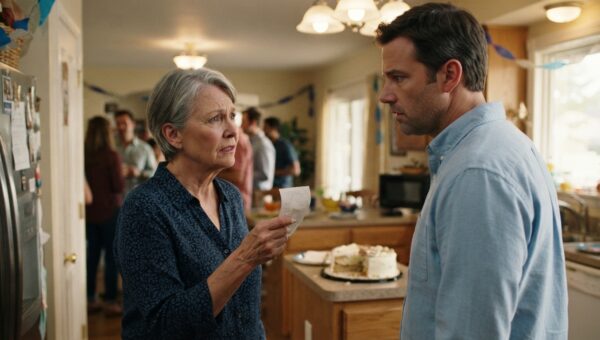
Karen was standing by the kitchen island, wiping down a counter that was already clean. She did not look up until I dropped my lunch pail onto the linoleum with a heavy, leaden thud.
“Oh, you’re back early,” Karen said. She didn’t sound glad. She sounded like she was reading from a shopping list she had already lost interest in.
“Who is that?” I asked, nodding toward the living room where the stranger was now lifting a bag of store-bought cookies out of my pantry.
Karen set the sponge down and squared her shoulders in that tight, defensive way she had whenever she knew she had crossed a line but decided she didn’t care if I noticed. “That’s Brenda.
Her lease fell through over on Mill Street. She’s staying with us for a while.”
“For a while,” I repeated. The phrase felt greasy in my mouth. “Karen, we have a seven-year-old daughter in the next room, and we have two bedrooms. We don’t have a guest wing. Who even is she?”
Karen crossed her arms and leaned her hip against the laminate. “She’s Linda’s friend. From the bowling league. You don’t need to worry about it.”
“She’s staying with us.”
Those were the exact five words she threw at me, flat and final, like she was tossing a dead fish onto a dock. She didn’t ask. She didn’t consult me. She just stated it as a law of nature she had already voted on without me.
Three weeks crawled by like an unpaved road in mud season. Brenda didn’t look for a place. She didn’t pack a bag. She just took over the spare room, then the front closet, then the rhythm of our evenings.
Maya started hiding in her bedroom with her coloring books because the shouting matches between Karen and her sister Linda, who suddenly practically lived at our kitchen table, started getting sharp around six o’clock every night. Linda had always treated my house like a clubhouse she had executive privileges in, but ever since our grandmother’s old property down by the river had been re-zoned for commercial timber, Linda’s visits turned into daily audits.
The land was twenty-four acres of bottomland my grandmother had left me outright in her probate papers three years before she passed. It was separate property. My name alone was on the deed locked in the gray filing cabinet in the back of the pantry.
Three weeks after Brenda moved in, I stayed home late with a head cold instead of driving out to the site. I was sitting in the dark of the hallway with a damp rag over my eyes when I heard the low murmur of voices coming through the thin wall of the dining room.
“He’s too stubborn to sign it over voluntarily,” Linda was whispering. Her voice had that dry, rasping edge it always got when she was plotting someone else’s misfortune. “He thinks because the old lady gave it to him in the will, he’s some kind of landed gentry.”
“Well, we can’t wait for him to die,” Karen said, her voice lighter, almost breezy, which somehow made the words colder. “The developers are moving on the north ridge by November. If the quitclaim isn’t filed by then, the town board freezes all conveyances.”
“We’ll forge his signature,” Linda hissed, the floorboards creaking as she leaned in closer to the table. “I still have that old notary stamp from when I did accounts for the lumber yard before they shut down. Nobody checks the seal on a family transfer if the county clerk is half-asleep on a Friday afternoon.”
I sat there in the dark, the wet rag sliding off my forehead and hitting the carpet with a dull thud. My chest didn’t pound. It just went hollow, like someone had scooped out my ribs with a melon baller.
I didn’t storm in. That was my first mistake, or maybe my only mistake. I stayed quiet because I thought I had time to move the papers, to call a lawyer, to protect the one thing my grandmother had worked fifty years on her knees to keep in our bloodline.
I didn’t have time.
The next evening, the county sheriff’s deputy knocked on our door just as I was heating up leftover chili. He didn’t look me in the eye. He handed me a sheaf of stiff paper with red stamps at the top and told me I had fifteen minutes to gather my medications and step off the property. Karen was standing behind him on the porch, her cheek smudged with a neat, purplish-gray bruise that hadn’t been there twenty minutes before. Brenda was standing behind her, holding Maya’s hand while the little girl cried so hard she was dry-heaving against the screen door.
“You can’t come within five hundred yards,” the deputy said, his hand resting on the butt of his sidearm like I was already a convict. “Temporary protective order. Domestic disturbance involving physical trauma. Sign here.”
“She did that to herself,” I said, my voice shaking so hard the clipboard rattled in the deputy’s grip. “Look at her hand. She’s got grease on her knuckle from the makeup tray.”
“Save it for the judge,” the deputy said, and he shoved me off my own porch.
The next forty-two days were measured in the smell of diesel exhaust and stale saltine crackers. I lived in the bed of my old Ford pickup under a sagging canvas tarp that leaked every time the New England drizzle turned into a steady, gray sheet. I lost eight pounds in the first two weeks. My beard grew out thick and gray, and my socks stayed damp from the puddles that pooled on the floorboards where the weather stripping had rotted away back in the Clinton administration.
I didn’t care about the cold. I didn’t care about the hunger that gnawed at my stomach until it felt like a fist made of dry twigs. I cared about Maya. I cared about the way she had looked at me through that screen door, her little fingers curled around Brenda’s wrist like she was being led into a cage. Every night I sat in the cab with the dome light off, staring at the blurred reflection of my own face in the rearview mirror, trying to figure out how a life built over twelve years could dissolve because two greedy women decided my grandmother’s dirt was worth more than my existence.
On a rainy Thursday near the end of November, I was sitting on a plastic crate behind the soup kitchen on 4th Street, trying to scrape the last bit of sodium-heavy broth out of a dented can of camp-style stew with the plastic handle of an old toothbrush. My hands were shaking from the damp.
An old man in a gray wool overcoat that had seen three decades of bad winters shuffled past my crate, his head down against the sleet. He didn’t look like a bum. He looked like an accountant who had missed his train and decided to walk home through the snow. He stopped about ten feet away, leaning against the red brick wall of the alley, and watched me try to fish a single grey lump of potato out of the tin.
“That’s mostly salt and lard,” the old man said. His voice was gravelly, like stones sliding down a dry culvert.
“It’s hot,” I said without looking up. “That’s enough.”
He walked over slowly, his boots crunching on the frozen slush, and lowered himself onto an overturned milk crate opposite me. He didn’t ask for a handout. He just reached into his deep wool pocket, pulled out a small foil-wrapped package of crackers he must have taken from the parish hall, and set them on the wood between us.
“You look like a man who used to have a kitchen,” he said.
“I had a kitchen,” I muttered. “And a roof. And a daughter who didn’t have strangers teaching her how to lie.”
“Names Harold,” he said, holding out a hand that was clean and dry despite the weather.
I looked at his hand, then at mine, black with grease under the nails and chapped until the knuckles were split open. I took the half-empty can of soup, wiped the rim with my sleeve, and pushed it across the crate toward him. “Pete. And this is all I’ve got, Harold, but you’re welcome to half of it.”
Harold Whitfield looked down at the dented tin, then up at my face. He didn’t smile. He just nodded once, slow and heavy, the way a man nods when he’s checking a foundation wall before he buys a house.
“Put your coat on, Pete,” Harold said, standing up and brushing a speck of soot off his knee. “We’re going to see a man about some paperwork.”
Three days later, I was sitting in the high-backed leather chair of a corner office on State Street that smelled of lemon polish and expensive wool. Marcus Vance, a civil litigator whose retainer fee probably cost more than my truck, was leaning over a massive mahogany desk covered in certified copies from the county recorder’s office.
“They were sloppy,” Vance said, tapping a silver fountain pen against a yellow legal pad. He didn’t look like he had ever slept in a vehicle in his life, but he looked at me with the kind of cold, professional respect I hadn’t felt since the sheriff threw me off my porch. “Linda used an 1994 notary stamp that was formally revoked by the Secretary of State when the old lumber office burned down. More importantly, she used a ballpoint pen to sign your name on a document that was supposedly notarized three years before that specific ink formulation was even manufactured for commercial retail.”
“What about the protective order?” I asked. My throat felt tight. “Karen had a bruise.”
“We pulled the security feed from the gas station two blocks over,” Vance said, sliding an 8x 10 glossy photograph across the desk. It showed Linda sitting in the passenger seat of Karen’s sedan, holding a frozen package of pork chops against Karen’s cheek while practicing a grimace in the visor mirror. “The timestamp is twenty-two minutes before they called the county emergency line. The deputy who served you is currently answering questions about chain-of-custody violations to the state police investigator Mr. Whitfield sent down this morning.”
The courtroom on the second floor of the county courthouse smelled of wet wool and floor wax when we walked in on a Tuesday morning two weeks before Christmas. Judge Halloway didn’t look up when Karen and Linda came through the back doors in matching camel-hair coats that looked like they had been bought with the down payment on my timber rights. Karen looked confident, her chin up, her eyes fixed on the empty chair where she expected me to sit looking like a broken man.
Then she saw Harold Whitfield sitting in the front row behind my table, and the color drained right out of her mouth.
Vance didn’t waste time with speeches. He laid out the forensic handwriting report, the enlarged ink-comparison charts, and the gas station parking lot stills on the clerk’s bench like a man dealing cards he knew were stacked. He didn’t even raise his voice. He just walked the judge through the sequence of the forged quitclaim deed, the expired notary seal, and the deliberate perjury regarding the domestic violence claims.
Judge Halloway took off his glasses, rubbed the bridge of his nose until the skin was red, and looked across the room at Karen’s lawyer, a young man who was already sweating through his collar.
“Mr. Vance,” the judge said quietly. “Are these exhibits certified by the state crime lab?”
“Every single one, Your Honor. Furthermore, we are moving for an immediate dismissal of the temporary protection order, restoration of sole title of the homestead and separate timber acreage to my client, and an emergency order granting Mr. Miller sole physical and legal custody of the minor child, Maya, effective immediately.”
Karen stood up half an inch out of her seat, her mouth working like a fish out of water. “Wait, she’s my daughter! He’s homeless! He’s been living in a truck!”
“Sit down, Mrs. Miller,” the judge said, his voice dropping an octave until it rattled the water pitcher on the clerk’s desk. “You are currently facing three counts of felony forgery, two counts of perjury, and one count of filing a fraudulent instrument to subvert an inheritance. Bail will be set at fifty thousand dollars if you’re still in this building when the bailiff finishes his paperwork.”
By three o’clock that afternoon, the house on Mill Road was mine again.
The county deputies had already escorted Karen and Brenda off the premises. The trash bags of their clothes were sitting on the gravel by the mailbox, leaking damp sweaters and plastic bottles into the gray snow. Maya was sitting in the living room floor with her old set of wooden blocks, building a tower that was crooked and leaning to one side, exactly the way she liked it.
I was standing in the kitchen, wiping the laminate counter with a damp sponge, when I heard the crunch of tires on the drive.
I didn’t need to look out the window to know whose car it was. The muffler had that familiar rattle in the tailpipe that I had spent three weekends trying to fix back before any of this started.
I walked out onto the front porch and pulled the screen door shut behind me. The rain was coming down harder now, turning the melting snow into a greasy yellow slush that soaked right through the soles of my work boots.
Karen was kneeling right there in the middle of the wet driveway, her camel-hair coat soaked through at the knees, her hair plastered against her forehead in dark, stringy ropes. She didn’t have an umbrella. She had her hands clasped together in front of her chest like she was begging at the foot of an altar, her face twisted up in that ugly, desperate mask people wear when they finally realize the bill has come due and there’s nobody else left to pay it.
“Pete,” she cried out, her voice cracking over the sound of the gutters spilling water onto the stone foundation. “Please. Pete, look at me. Linda made me do it. She told me we were just securing the asset for the family, she swore you wouldn’t lose anything, please, Pete, let me come inside. It’s freezing out here.”
I stood there on the top step, my hands shoved deep into the pockets of my canvas jacket, watching the water drip off the brim of my cap into the mud. I didn’t feel angry. I didn’t feel the hot rush of satisfaction I thought I’d want when this moment finally arrived. I just felt tired, the way you feel after you’ve cleared a field of jagged rocks by hand and your palms are too raw to close all the way.
I looked down at her, really looked at her, and saw all the years we’d spent sitting across from each other at that kitchen table, pretending we were heading toward the same place when all the while she was just waiting for the right moment to push me out of the cart.
I looked at her and said, “You chose them.”
She stopped crying for a second, her mouth staying open in a small, wet circle.
“Now live with it,” I said.
I turned my back on her before she could draw another breath, pushed through the screen door, and walked down the hall. I reached down, took Maya’s small, warm hand in mine, and led her into the kitchen to help me slice some bread for supper.