I keep turning the whole thing over in my head, trying to figure out if there was a single sign I missed during those four long weeks. Mama never complained once. Every morning at precisely six-thirty, she’d tie the sash of her apron, pick up her little canvas tote bag filled with homemade oatmeal cookies or sliced apples, and walk down the concrete path toward Claire’s front door.
She did it because she believed in being a good neighbor. She did it because five-year-old Chloe was a sweet, neglected little thing who used to run to the screen door shouting for her.
Mama is seventy-three now. Her knees ache when the humidity climbs, and her hands swell up around the knuckles from arthritis, but she never sat down once during those shifts. Claire had come crying to our porch four weeks prior, claiming her regular daycare had shut down overnight and begging Mama to watch Chloe just until her new nanny arrived from the city. The agreement was simple and spoken plain over our kitchen table: eighty dollars a day, paid at the end of every week, cash or direct transfer. Mama agreed without hesitation because she loved having a little girl around the house again, and frankly, our property taxes had gone up three hundred dollars that spring.
Week one passed without a word about money. When Mama mentioned it gently on Friday afternoon, Claire laughed, flipped her blonde hair over her shoulder, and said she was between payroll cycles because of a glitch at her event planning firm. Mama just nodded, figuring people in business sometimes hit rough patches. Week two brought the exact same excuse, wrapped in a bright, glossy smile and a cheap box of grocery store donuts left on our porch. Week three went by while Mama spent six hours scrubbing Claire’s kitchen floor on her hands and knees because the dishwasher leaked raw suds all over the linoleum.
The breaking point happened on a Tuesday. Mama walked home early because Claire had dropped Chloe off with a neighbor without telling her, wasting the entire morning. When Mama politely asked for the accumulated sixteen hundred dollars so she could pay our local pharmacy bill, Claire didn’t even look up from her phone.
She just offered that cold, rehearsed smile that used to fool the whole neighborhood and delivered the words that still ring in my ears.
At your age, you really shouldn’t take jobs without contracts. Besides, it’s not like you had anything better to do anyway.
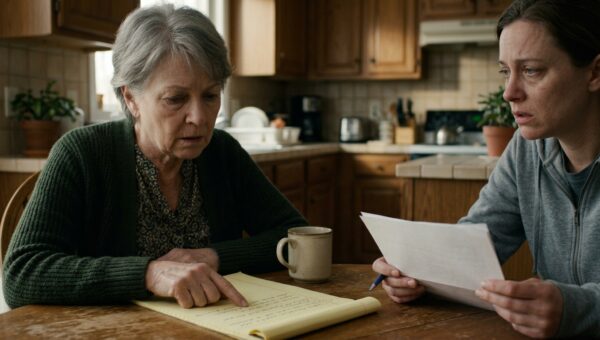
Mama didn’t yell. She didn’t argue. She just walked home, sat down at our small laminate kitchen table, opened her worn blue spiral notebook where she kept her grocery lists and church schedules, and drew a long, heavy pencil line right through four weeks of meticulous daily logs. Then she closed the book with a soft click and started peeling potatoes for supper. When I walked in from my shift at the warehouse and saw her hands shaking over the sink, something inside me snapped. Claire thought kindness meant weakness, and she thought wrong.
The first thing I did that night was walk straight into our dark garage.
Our neighborhood is quiet, but we live right on the corner, and three days before Claire ever knocked on our door, I had bought a high-end four-camera security system on sale to watch the side alley where teenagers kept tossing beer bottles. I hadn’t wired the hard drive to the house monitor yet, but the wide-angle driveway lens had been running on an internal loop the entire month, powered by a backup battery pack plugged right into the wall outlet.
I pulled up a chair beside the workbench, unscrewed the side panel of the recording box, and slid the micro SD card out into my palm. My hands were cold, but my mind was clearer than it had been in months. I plugged the card into my laptop, and the screen lit up with sharp, flawless forty-four-megapixel video logs spanning the exact twenty weekdays Claire had dropped off her daughter.
There was Mama, sharp as a tack, arriving precisely at six-forty-five every morning in her sensible walking shoes. There was the heavy canvas grocery tote swinging from her forearm. There was the front door opening, Claire waving casually in her silk bathrobe while handing over the spare house key, and little Chloe sprinting into Mama’s arms like she belonged to her. Every single timestamp was stamped into the bottom corner in crisp white digital font, down to the exact second.
That wasn’t all I found in the garage. Tucked behind the old lawnmower and a stack of empty cedar planter boxes were three custom hand-painted display boards and a pair of white wicker patio chairs that Claire had begged us to lend her for a prestigious neighborhood association gala she was hosting that coming Saturday. She had promised to return them weeks ago, but kept stalling because she wanted them to look pristine for the town council members and local business owners attending her catered shindig.
I sat there in the dim light of the garage until past midnight, building a digital file that would make a corporate lawyer sweat. I took Mama’s blue spiral notebook with the crossed-out rows and laid it flat beside my keyboard. Then I opened Claire’s morning text messages on my phone, scrolling back through a month of digital paper trails where she explicitly confirmed the arrangements.
Good morning, Martha! Door’s unlocked, thanks so much for saving my skin again, see you around five, Claire had texted just nine days ago. Another message from three weeks prior proved she knew the exact daily rate before she tried to gaslight Mama about the missing contract. I cross-referenced the timestamps from the security footage with the exact text alerts, creating a minute-by-minute timeline of unpaid professional labor that satisfied every single requirement of a binding verbal agreement under state small-claims standards.
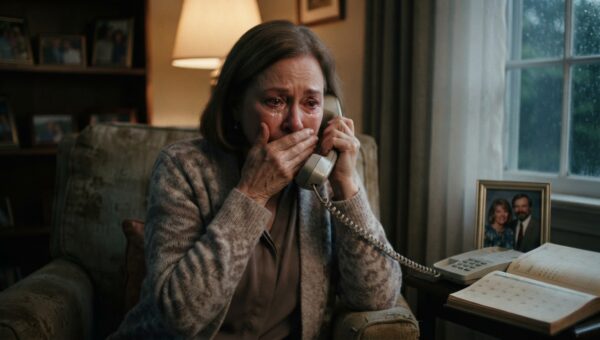
When I showed Mama what I was doing around two in the morning, she tried to talk me out of it. She sat at the kitchen table in her faded floral robe, holding a mug of lukewarm chamomile tea, her eyes heavy with exhaustion.
Honey, please, just let it go, she whispered, her voice barely louder than the hum of the refrigerator. People like Claire always win in the end. They have money, they have the committee behind them, and we’re just ordinary folks. If we make a fuss, the whole neighborhood will talk, and I can’t bear the gossip.
I knelt down beside her chair and took her tired, calloused hand in mine, rubbing my thumb over her swollen knuckle. Mama, she didn’t just cheat you out of sixteen hundred dollars. She looked at seventy-three years of your hard work, your love, your dignity, and decided you were invisible. I am not letting her get away with that. Not today, not ever.
She looked down at her teacup, a single tear slipping past her glasses and landing quietly on the porcelain rim, but she didn’t argue with me anymore. She just squeezed my fingers back, her grip surprisingly strong.
The next morning was the day of Claire’s grand neighborhood committee meeting. Her front lawn was already lined with catered delivery vans, and two florists were frantically unloading massive hydrangeas out of a white van parked right across our shared driveway. Claire was standing near her front steps in an expensive cream-colored pantsuit, clipboard in hand, directing the workers with sharp, theatrical hand gestures while laughing loudly with the head of the local HOA board, Mr. Henderson.
I didn’t wait. I walked straight out our front door, crossed the gravel driveway, and headed right toward her decorative display boards and wicker chairs resting against her porch rail.
With slow, deliberate movements, I picked up the first hand-painted display board, hoisted it onto my shoulder, and turned back toward our house.
Claire stopped mid-sentence, her smile freezing into something brittle and unpleasant. She dropped her clipboard onto a folding table and marched across the lawn, her heels clicking angrily against the pavement.
Hey! What do you think you’re doing with those? Those are for my gala tonight! Put those back right now, she snapped, her voice carrying across the entire street, drawing the eyes of the florists and the catering crew.
I didn’t stop walking. I carried the board right across the property line, set it gently against our porch steps, and then turned back to face her as she stormed up our gravel path with her face flushed bright red.
You didn’t ask to borrow these permanently, Claire, I said, keeping my voice low, steady, and entirely calm. And since you’re so fond of reminding people about proper contracts and legal terms, I figured you wouldn’t mind us reclaiming our personal property before your little party starts.
Her eyes narrowed into thin slits, and she crossed her arms over her chest, letting out a sharp, dismissive laugh. Oh, I get it. The old lady sent her attack dog out because she didn’t get her little weekly allowance. Look, I told her yesterday, and I’ll tell you once more: there was no signed paperwork. Legally, she volunteered. Now bring back my chairs before I call the sheriff for trespassing and harassment.
Go ahead, I said, pulling a thick manila folder out from under my arm and sliding the brass clasp open. Call him. In fact, let’s call Mr. Henderson over here too since he’s standing right over there looking at your new flower arrangements. I’m sure he’d love to hear how the head of the community welfare committee treats seventy-three-year-old retirees who wipe her floors and watch her kid for free.
Claire’s color shifted from flushed red to an ashen gray in less than three seconds. Her hand twitched toward the folder, but she didn’t touch it.
What is that? she muttered, her voice losing its public theater tone entirely.
It’s an itemized invoice for twenty days of professional childcare and domestic labor at eighty dollars a day, totaling sixteen hundred dollars, I said, stepping closer so only she could hear every word. It’s backed by four weeks of high-definition 4K exterior video logs showing my seventy-three-year-old mother arriving at your door at six-forty-five every morning carrying your kid. It’s supported by twenty separate text messages from your own phone acknowledging her arrival, confirming her daily start times, and admitting the arrangement. And right behind this page is a fully drafted small-claims court summons ready to be filed at the county clerk’s office before noon, along with a formal complaint detailing your fraudulent wage theft to every single member of the HOA board currently eating your miniature pastries.
She stood frozen on our porch, her mouth opening slightly, but no words came out. The smug, untouchable suburban facade she wore like armor had completely cracked down the middle. She looked past my shoulder toward her pristine lawn, where Mr. Henderson was now staring directly at us with a clipboard of his own, watching the drama unfold with a very public frown.
You… you wouldn’t do that, she whispered, her voice cracking just a fraction. It would ruin my event pitch with the town council. The local contractors are all watching.
You thought my mother had nothing better to do, Claire, I said quietly, holding her terrified gaze without blinking. Transfer the sixteen hundred dollars right now, right here on your phone, or I walk across that lawn and hand this exact folder to Mr. Henderson while the florists watch. You have sixty seconds.
Her hands were shaking visibly as she fumbled in the pocket of her expensive pantsuit, pulling out her smartphone with clumsy, frantic fingers. She didn’t say another word. She opened her banking application, her thumb trembling over the screen as she punched in our account routing numbers and the exact sum. Within thirty seconds, my phone buzzed in my back pocket with a direct deposit notification from her business account for sixteen hundred dollars flat, plus an extra fifty for the grocery reimbursement she owed Mama.
I pulled out my phone, verified the cleared balance on the banking app, and locked the screen with a satisfying click.
Payment received, I said, slipping the manila folder back under my arm. Enjoy your gala, Claire. But don’t ever step foot on our property again.
She didn’t answer. She turned around on her heel, her tailored suit jacket rustling in the morning wind, and practically ran back across the lawn toward her catering setup without looking back once.
When I walked back inside the house, the kitchen was warm and smelled faintly of fresh yeast bread. Mama was sitting at the table, her small blue spiral notebook open in front of her under a shaft of golden morning sunlight. She looked up as I closed the front door, her eyes bright and clear, entirely free of the quiet defeat she had carried home the day before.
Did she pay? Mama asked softly.
Every single cent, I said, tossing the phone onto the laminate counter so she could see the green confirmation checkmark on the screen. And she won’t be bothering you ever again.
Mama didn’t smile like she had won a prize. She didn’t gloat or say I told you so. Instead, she reached into her apron pocket, pulled out a small pink rubber eraser, and turned it over in her weathered hands. She pressed the eraser down against the dark, heavy pencil line she had drawn through her unpaid labor logs four weeks ago.
Slowly, carefully, holding her breath just a little bit, she began to rub at the paper. Gray pencil dust lifted away in tiny curls, floating off the page and settling onto the wood. She brushed the dust away with the palm of her hand, revealing the clean, white paper underneath, smooth and unmarked in the warm morning sun.
Across the street, little Chloe was standing at Claire’s front window, pressing her small hands against the glass and waving wildly. Mama looked up, raised her hand, and gave the little girl a long, gentle wave back, holding her head high and proud the entire time.