The receipt for the decaf oat milk latte and two cinnamon scones from the bakery down on Pine Street was still crumpled in the palm of my right hand, smudged with a little greasy butter stain that wouldn’t come off. I remember looking at that tiny scrap of paper because it cost six dollars and forty cents, an absolute luxury I had debated with myself for ten whole minutes before pulling into the gravel drive.
Down in Portland, where I worked sixty hours a week managing accounts for a commercial laundry service, six dollars and forty cents bought half a gallon of milk and a loaf of store-brand bread. But it was a Saturday, and the sun was hitting the windshield just right, and I thought, for once, I would bring something nice up the hill to my parents instead of just dropping off an envelope of bank statements or checking in on the landline.
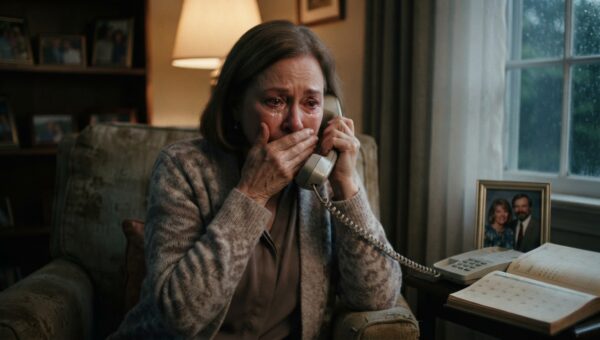
Eight months. That was how long the phone calls had been coming in at 7:00 AM sharp, right when I was pulling my boots on to catch the bus. Mom would be crying so hard she had to swallow her words, her breath catching in that wet, rhythmic way that had always made my stomach clamp shut since I was seven years old. “Your father’s ticker is acting up again, Clara,” she would say, her voice shaking through the little speaker. “Dr. Henderson says if we don’t clear that specialist balance in Bangor by Friday, we’re looking at surgery we just can’t cover.
We’re tapped out, honey. We’ve sold the riding mower. We’re down to soup.” And every single time, I would sit right back down on the edge of my bed, open my banking app with trembling fingers, and wire over twelve hundred dollars of my rent money, my grocery money, my dental emergency fund, straight into their joint checking account. I stopped buying meat. I walked to work through three weeks of slush because I canceled my bus pass to save forty-five bucks. I did it because Arthur was my father, and fathers don’t fake chest pains. Or so I used to think.
The gravel under my tires made that familiar crunch, loud enough to wake the dead, but nobody came out to the porch. The screen door was hooked from the inside, which was weird because the weather was eighty degrees and usually Mom kept it propped open with an old red brick.
I balanced the bakery box on my left forearm, juggled the two hot cups, and reached out to rap my knuckles against the scarred pine wood of the front door. It wasn’t locked. It never was locked out here in the valley, not back when we had neighbors who watched the road, but lately Mom had been acting paranoid about solicitors. The latch gave a dry click, and the door swung inward on its oiled hinges, making almost no sound at all.
“Mom?” I called out, stepping across the threshold into the dim hallway that always smelled faintly of lemon oil and damp wool. “I brought pastries from town. The ones with the pecans you like.”
There was no answer from the kitchen. Instead, a low rumble of laughter drifted out from the living room, deep and hearty and entirely lacking in the ragged, breathless wheeze Arthur had been dragging around on the phone every Tuesday for eight months.
I froze with my foot half-lifted over the edge of the braided rug. My stomach didn’t just drop; it felt like it detached from my ribs and sank straight down into my ankles, leaving a cold hollow space behind my lungs. I took two silent steps past the coat rack, tilting my head around the corner of the brick chimney that split the center of the house.
Arthur was standing by the big mahogany bookshelf, his broad shoulders squared under a clean flannel shirt, effortlessly deadlifting one end of a massive oak armoire like it weighed nothing at all. His face wasn’t ashen or gray. He had color in his cheeks, a healthy, sun-baked pink that came from working outside in July, and his voice was loud and steady as he directed the man sitting on the floral sofa. “Just tilt it toward the corner, Mark,” Arthur said, his knees flexing smoothly as he shifted his grip with the casual strength of a forty-year-old dockworker. “We don’t want to gouge the baseboard. Eleanor just had the floors waxed last month.”
Sitting on the couch wasn’t a doctor, and there was no oxygen tank, no nitroglycerin patches, no blood pressure cuff sitting on the side table. Instead, a man in a sharp gray suit with rolled-up sleeves was leaning over a fat black leather binder, a silver fountain pen poised between his fingers. Spread out across the scarred maple coffee table were three thick stacks of bank statements, cashier’s checks, and stapled legal filings bearing the letterhead of a Portland debt recovery firm. At the very top of the stack, glowing white under the brass floor lamp, was a wire confirmation slip with my exact name on it, dated three days ago, for fourteen hundred dollars.
“Dad?” the word came out of my throat thin and cracked, sounding like a stranger’s voice.
Arthur stopped mid-lift, his hands remaining steady on the heavy wood. He didn’t drop the cabinet, and he certainly didn’t gasp for air or clutch his left arm. He just lowered the corner of the armoire slowly to the floor, let out a long, easy sigh through his nose, and turned around to look at me. His eyes didn’t widen with shame. They narrowed with that familiar, irritated squint he always used whenever I interrupted him while he was watching the evening news. “Clara,” he said, wiping his palms on the thighs of his jeans. “You weren’t supposed to be up from the city today. Didn’t your mother say something about us spraying for termites?”
The two cardboard coffee cups in my hand suddenly felt impossibly heavy, the scalding heat burning right through the cardboard sleeves into my skin. I couldn’t move my feet. The whole room seemed to tilt slightly, the wallpaper with its faded blue cornflowers spinning in slow, sickening circles. “You said you couldn’t walk to the mailbox without getting dizzy,” I whispered, the words tasting like dry ash in my mouth. “You told me Dr. Henderson cleared out your savings for the cardiologist in Bangor.”
Mark Vance, the man in the suit, looked up slowly from the leather binder. He didn’t look surprised to see me. He looked tired, the way people look when they’ve been sitting through a long, messy family meeting that started hours before anyone arrived. He closed the binder with a soft *thud* that echoed off the bare plaster walls, sliding his fountain pen into his breast pocket with a deliberate click. “Mr. Vance,” Arthur muttered, clearing his throat and stepping away from the heavy furniture. “This is just our daughter. Clara, this is Mr. Vance from the regional credit bureau. We were just… wrapping up some paperwork.”
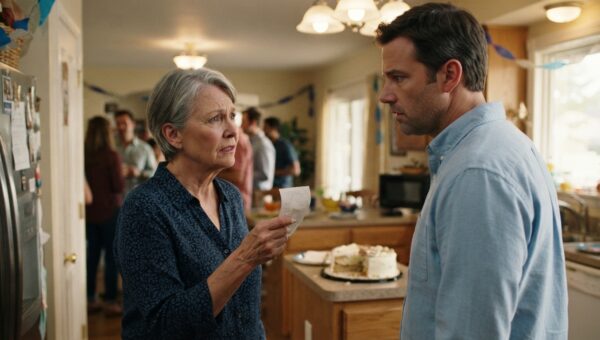
Before I could draw another breath, the swinging door from the kitchen gave a sharp squeak, and Mom walked out holding a tray with a pitcher of iced tea and three sweating glasses. She stopped dead on the braided rug, her knuckles turning white against the plastic rim of the tray. The pitcher wobbled, a dark amber drop spilling over the side and soaking right into the collar of her house dress, but she didn’t look down at it. Her eyes locked onto my face, and for one terrible second, the mask of the fragile, weeping widow slipped entirely, revealing the cold, calculating panic underneath. “Oh,” Mom breathed, her voice dropping into that thin, defensive whine she always used when she got caught red-handed taking cookies out of the cooling drawer before supper. “Clara, honey. You’re early.”
“I was on my way back from a client meeting in Lewiston,” I said, my voice rising sharply, cutting through the heavy, stagnant air of the room like a boxcutter. My fingers were shaking so hard the cardboard coffee cups began to rustle together. “I brought you coffee. And pastries. Because I thought my father was dying in this house.”
Mom set the tray down on the edge of the coffee table with a sharp clatter, her hands trembling now, though whether from anger or fear I couldn’t tell. “Your father isn’t dying, Clara. Nobody said he was on his deathbed. We said he had a *condition*. People live with conditions for years. You’re always so dramatic, making things out to be worse than they actually are.”
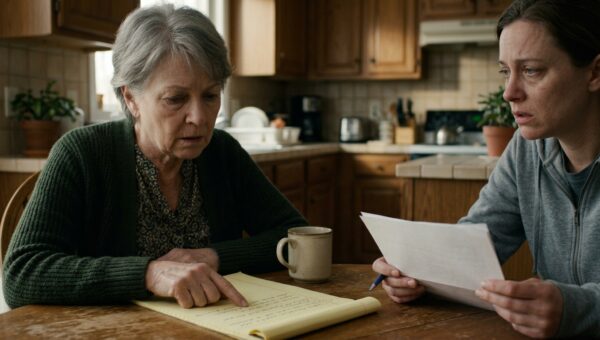
“Dramatic?” I took two steps forward, my boots clicking hard against the uncarpeted floorboards. The smell of lemon oil suddenly made me feel physically sick. I looked down at the coffee table, right at the open pages of the leather binder. Stitched together with heavy metal staples were eight monthly ledger sheets, listing every single wire transfer, every Western Union receipt, every emergency PayPal deposit I had sent since January. Next to my name, written in my brother Julian’s messy, looping handwriting, were the corresponding debt-settlement milestones: *January: Legal fees cleared. February: Nissan truck payment covered. March: District court restitution satisfied.* “You told me his heart was failing,” I said, my voice dropping into a dangerous, flat whisper. “You cried every morning at seven o’clock while I sat on the edge of my bed trying to figure out how I was going to pay my own electric bill. You told me he needed surgery to stay alive.”
Arthur shifted his weight from one foot to the other, his face finally flushing a dull, angry red not from illness, but from the humiliation of being cornered in his own living room. He looked away from me, staring down at the braided rug as if he were trying to count the stitches. “Julian was in a tight spot, Clara,” Arthur muttered, his voice thick with that stubborn, defensive pride he always used to justify whatever stupid thing my younger brother had done since we were kids. “You know how the courts are down in Portland. One bad partnership with those landscaping contracts and they were talking about seizing his tools, putting a lien on his truck. He’s your brother. He had nowhere else to turn.”
“So you lied?” I stared at him, my chest burning as if I’d swallowed hot coals. “You let me drain every cent of my savings? You let me walk to work in the snow because I couldn’t afford a bus pass? You played sick for eight months just to bail out Julian’s business debts?”
Mom stepped in front of the coffee table, her chin coming up in that stubborn, righteous angle that used to terrify me when I was ten years old. “We didn’t have a choice!” she snapped, her voice finally losing its wheezing fragility and ringing out sharp and strong across the room. “Julian has a family to think about. He has his pride. If we hadn’t stepped in, those men would have stripped him down to his socks. You’re single, Clara. You live alone in that little box of an apartment. You don’t have mouths to feed or a mortgage hanging over your head. You had the extra income, and family helps family when things get hard. That’s what people do.”
Mr. Vance cleared his throat softly, shifting his weight on the floral sofa and sliding the leather binder another inch away from me, as if he wanted no part of the fire about to catch. “Look,” Mr. Vance said, his voice entirely professional and devoid of any human warmth. “My office’s only concern is that the settlement funds for Julian Vance’s civil judgment have cleared escrow. The source of the liquidity is an internal family matter. As long as the wire transfers match the court-ordered restitution schedule, the file is closed as of this morning.”
I didn’t look at Mr. Vance. I couldn’t take my eyes off my mother’s face, off the tight, thin line of her mouth and the way her eyes darted toward the kitchen as if she were already calculating how to spin this story to the rest of the relatives down at the VFW hall. Eight months. Two hundred and forty days of eating canned beans, of turning down dental appointments for a cracked molar that still woke me up at night with a dull, throbbing ache, of lying awake in the dark wondering if I’d have to sell my laptop just to send fifty dollars for my father’s supposed prescriptions. And all of it, every single dollar, every drop of sweat, every tear I had spilled into my coffee cup at dawn, was just a slush fund to rescue Julian from the consequences of his own endless carelessness.
“You didn’t have a choice,” I repeated, the words tasting like copper and salt. I let out a short, dry laugh that didn’t sound like me at all. “No. You had choices. You just decided my life didn’t matter as long as Julian’s truck was paid off.”
“Don’t you take that tone with your mother in this house,” Arthur bellowed, stepping forward with his chest puffed out, finally summoning up the old patriarchal thunder that used to make me cower behind the sofa when I was little. “We raised you. We put a roof over your head for eighteen years. The least you can do is show a little respect when your family is trying to pull itself out of a hole.”
I didn’t flinch. For the first time in my entire life, standing in that dusty living room with the smell of lemon oil and deception hanging thick in the air, I didn’t feel small at all. The terror that had kept me obedient for thirty-four years simply evaporated, replaced by a cold, clear stillness that felt like winter morning frost.
“You didn’t raise me, Arthur,” I said, my voice dropping so low he had to stop shouting to hear it. “You just kept me around until I was old enough to write checks.”
I pulled my phone out of my coat pocket with my left hand, keeping my eyes locked on his while my right hand finally let go of the two paper coffee cups and the bakery box. They didn’t hit the floor gracefully; the box burst open against the edge of the maple coffee table, sending two dry, crumbly cinnamon scones rolling across Julian’s debt-settlement papers like little brown stones. I didn’t reach down to pick them up. I opened my banking app, my thumb flying across the screen with the practiced speed of someone who checked her balance five times a day.
“What are you doing?” Mom asked, her voice finally losing its edge and catching on a real note of panic as she saw the blue glow of the screen reflecting in my glasses. “Clara, put that phone away. Don’t you dare.”
“Opening the portal,” I said evenly. I tapped the menu icon, scrolled down to the recurring transfer profile labeled *Arthur Medical Relief*, and hit *Manage Scheduled Payments*. The screen flashed green, asking me to confirm the cancellation of the automatic monthly wire of twelve hundred dollars scheduled for the first of next month.
“Clara, don’t you touch that!” Arthur lunged forward a step, his hand coming up as if he were going to swat the phone right out of my palm the way he used to do when I talked back at the dinner table. But he didn’t reach me. He stopped halfway, his boots catching on the edge of the braided rug, because he saw the look in my eyes and realized, with a sudden, ugly shock, that the lever he had pulled for eight months was completely broken.
I didn’t blink. I hit *Revoke Access*, then *Remove Joint Account Link*, and finally *Block Beneficiary*. A small green checkmark appeared on the screen, followed by the silent notification: *Transfer cancelled successfully.*
“It’s done,” I said, holding the phone up for two seconds so they could both read the confirmation banner across the top. “The well is dry. You can tell Julian to sell his truck. You can tell him to sell his tools. You can tell him to get a real job, the way I’ve been doing since I was nineteen years old.”
Mom let out a sharp, ragged gasp and slumped back against the arm of the floral sofa, her hands flying up to cover her mouth. “You can’t do that,” she whispered, tears actually springing to her eyes now, real ones born of pure, unadulterated terror at the prospect of facing Julian empty-handed. “Clara, how are we supposed to, what about the rest of the settlement? The court date is next month, “
“Not my problem,” I said.
I turned around on my heel, my boots striking the floorboards with a clean, sharp rhythm that felt wonderful against the silence of the room. I walked down the narrow hallway, past the coat rack, and out through the front door into the bright July sunshine. I didn’t look back to see if Arthur was following me, and I didn’t care if Mr. Vance was packing up his leather binder. The gravel crunched under my boots as I walked down the long drive toward my little Honda Civic parked by the mailbox, the wind blowing warm off the hayfields across the road.
One week later, I was sitting at the small laminate table in my own apartment in Portland, watching the steam rise from a fresh, hot cup of coffee I had brewed myself without asking anyone’s permission. The morning sun was streaming through the kitchen window, hitting the blue screen of my laptop where my bank statement sat open for the first time in eight months without a single unauthorized debit draining the bottom line. My savings account balance was actually higher than it had been since the day I moved into the city. My tooth didn’t hurt anymore because I had finally called the dentist on Tuesday and paid for the filling out of my own pocket, no apologies asked, no explanations given. The phone on the counter buzzed once with a blocked number from the valley, the screen lighting up with a silent text preview that I didn’t even bother opening before I swiped it away into the trash. I took a slow sip of my coffee, looked out at the quiet street below where people were walking to work in the clean morning air, and for the first time in my life, I felt completely, perfectly, beautifully alone.