PART 1
I came home from my shift at four on a humid Tuesday afternoon, unlocked my front door, and walked into my own living room to find a total stranger sprawled across my sofa. She had her boots kicked off onto my coffee table and a half-empty glass of iced tea resting on my grandmother’s cherrywood sideboard.
My wife Karen was standing by the kitchen island, folding dish towels. Standing next to her was her older sister, Linda.
I set my lunch cooler on the counter and looked at the woman on the couch, then back at Karen. “Who is this?” I asked.
Karen did not look me in the eye. She smoothed the corner of a yellow dish towel, her hands moving with a stiff, unnatural rhythm. “That’s Brenda,” she said, keeping her voice low. “She’s staying with us.”
“Staying with us?” I repeated. “For how long? Karen, we didn’t talk about this.”
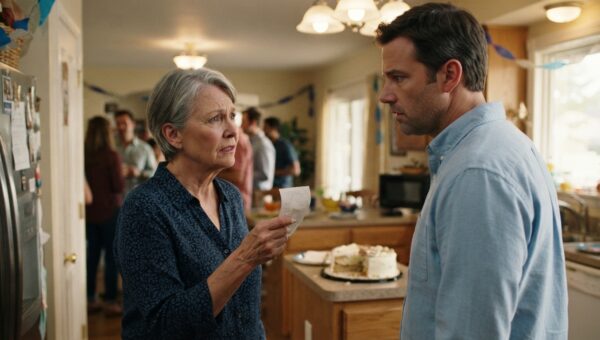
Linda stepped forward before Karen could answer. Linda had always carried herself with a heavy, sharp authority in our family, the kind of person who treated every quiet room like a courtroom she needed to control. “Brenda is with me, Arthur,” Linda said, folding her arms over her chest. “She needed a place to reset, and Karen agreed. There is plenty of space in the spare bedroom.”
“No one asked me,” I said. “This is my home.”
“It’s Karen’s home too,” Linda countered immediately, her tone turning cold. “Don’t start making a scene over hospitality.”
Karen said nothing. She just kept her eyes glued to the counter, letting her sister speak for her. That was the moment a knot formed in my stomach. It was not just that a stranger was sleeping in my guest room without my consent. It was the way Karen leaned into Linda’s shoulder, the quiet, unified wall they formed against me in my own hallway.
For the next three weeks, my home stopped feeling like mine. Brenda moved into the back room with two massive duffel bags and a trunk. She worked irregular hours, played music late into the night, and treated the kitchen like a greasy diner. Whenever I brought it up to Karen in private, Karen brushed me off or flared up in sudden defense of Linda.
My seven-year-old daughter, Lily, began spending more time in her bedroom, drawing quietly at her small desk, sensitive to the strange, heavy tension vibrating through the walls.
I tried to keep my head down and focus on work, but the atmosphere in the house grew colder by the day. Then came the Thursday evening that changed everything.
I had been working in the garage, fixing a broken mower blade, when I came back toward the house around eight o’clock. The back door was cracked open to catch the evening breeze. As I stepped into the laundry room, I heard quiet, urgent voices coming from the living room.
I stopped in the shadows near the pantry.
“The notary Linda found will handle it,” Brenda’s voice said. “She does mobile signings all the time. She does not ask questions if the cash is right.”
“Are you sure the county won’t flag it?” Karen asked. Her voice sounded thin, nervous, but unmistakable.
“They don’t check signatures against old records at the front desk, Karen,” Linda said, her voice full of harsh patience. “They just index the quitclaim deed and stamp it. Once the transfer to the LLC is logged, Arthur doesn’t own a single blade of grass. We’ll forge his signature and take the land. He won’t even realize what happened until the tax bill comes in Linda’s company name.”
My breath caught in my chest. The land they were talking about was forty-two acres of prime timber and creek property on the south side of town. My grandmother had willed it directly to me ten years ago as my sole, separate property. A commercial developer had approached me two months earlier with an appraisal of $4.5 million, but I had refused to sell. That land was my grandmother’s legacy, intended entirely for Lily’s future.
I stepped out into the doorway, my chest tight. “What did you just say?”
All three of them spun around. Linda recovered instantly, her face hardening into a glare. “You’re eavesdropping now, Arthur?”
“You’re talking about forging my name on my grandmother’s land,” I said, looking straight at Karen. “Karen, tell me I didn’t just hear that.”
Karen went pale, stepping back toward her sister. “Arthur, you’re misinterpreting things. We were just talking about options—”
“Get out,” I said, looking at Linda and Brenda. “Both of you. Get out of my house right now.”
Linda stepped in front of Karen, her chin tilted up. “You don’t talk to us like that. We aren’t going anywhere.”
“This is my house, and that is my land,” I said, reaching for my phone. “If you won’t leave, I’ll call the deputy to escort you off the property.”
Linda did not flinch. Instead, she turned to Brenda and gave a small, deliberate nod. “Do it now,” Linda said quietly.
Before I could process what she meant, Karen suddenly grabbed the front of her own blouse and tore the collar down. Then she turned to the drywall near the archway, leaned her shoulder against the frame, and scraped her arm forcefully against the rough corner. She cried out, a loud, sharp sob that echoed off the high ceilings.
“What are you doing?” I shouted, taking a step back in pure shock.
Brenda pulled out her phone and dialed three numbers. “Yes, emergency?” Brenda spoke into the receiver, her voice suddenly high, frantic, and convincing. “We need a deputy at 1412 Elm Ridge right away. A man is attacking his wife. He’s breaking things and putting his hands on her. Please hurry.”
I stood frozen in the middle of the kitchen, watching my wife rub her shoulder to bring up a bright red mark, while her sister handed her a wet paper towel with cold, methodical efficiency.
Ten minutes later, two county deputies arrived. I tried to speak, but the narrative was already written. Karen sat on the front porch steps weeping softly, pointing at the red scraping on her arm and the torn shirt. Linda gave a solemn statement about my volatile temper. Brenda stood behind them, confirming every word.
The deputy placed me in the back of his cruiser. “We aren’t arresting you tonight, Mr. Vance,” he said, staring at me through the rearview mirror. “But your wife is requesting an emergency temporary protective order. You need to step off this property immediately until a magistrate reviews this. Leave your keys on the hood.”
They escorted me to my truck. I wasn’t even allowed back inside to grab a jacket or my work boots. Within twenty minutes, I was turned out into the street, locked out of my own home, separated from my daughter, with nothing but the clothes on my back and forty dollars in my wallet.
PART 2
I spent the first night parked behind an abandoned grain silo on the edge of town, shivering in the cab of my truck. The reality of what had happened hit me in sickening waves. They hadn’t just ousted me from the house; they had laid a trap to ruin my character so I wouldn’t have the legal standing or public credibility to contest whatever they did next.
By the second week, my small savings were entirely drained. I couldn’t access our shared bank accounts because Karen had changed the online passwords and filed for an emergency temporary asset freeze linked to the domestic order. Every lawyer I called demanded a retainer of at least $5,000 up front just to look at the paperwork. I was eating cheap cans of soup, bathing in gas station sinks, and working my shift at the lumber yard every day while hiding my living situation from my supervisor.
One rainy Tuesday evening, three weeks after being thrown out, I was sitting on a wooden bench under a park shelter, holding a warm can of vegetable soup I had heated on my truck’s dashboard defroster. The air was cold and wet.
An older man walked under the pavilion to get out of the downpour. He was wearing a faded canvas coat, threadbare at the cuffs, and a battered baseball cap. He leaned heavily on a wooden walking stick and looked exhausted.
He glanced at me, then at the can of soup in my hands. He didn’t ask for anything. He just stood there, watching the rain pour off the rusted tin roof.
I looked at the soup, then down at my hands. I had eighty-two cents left in my pocket until Friday. But seeing the old man shivering in the damp air made my own misery feel small. I pulled a plastic spoon from my pocket, wiped it clean, and offered the open can to him.
“It’s hot,” I said softly. “Take half. I can get by.”
The man looked at me, his grey eyes sharp and surprisingly clear under the shadow of his cap. He took the can without a word, took a slow bite, and handed it back. “You look like a man carrying the weight of a building on his shoulders,” he said. His voice was deep, cultured, and steady.
“Just a rough stretch,” I said, trying to force a polite smile.
“Rough stretches usually involve bad luck,” the old man said, leaning on his stick. “You look like a man who was betrayed.”
I don’t know if it was the rain, the exhaustion, or the simple human dignity of his voice, but the story spilled out of me. I told him about my grandmother’s forty-two acres, about Karen, about Linda and her partner, about the forged signatures, the fake bruises, and the police turning me out onto the highway.
The man listened in total silence, never interrupting. When I finished, he handed the soup can back to me.
“What is your name?” he asked.
“Arthur Vance.”
“Arthur, my name is Harold Whitfield,” he said. He reached inside his worn canvas jacket, pulled out a dry leather card case, and handed me a small, thick cream-colored card. “Take this. Go to this address at nine o’clock tomorrow morning. Ask for Marcus Vance. No relation to you, I assume, but he is the finest real estate and trial attorney in the state.”
I looked down at the card. It bore the gold-embossed emblem of Whitfield Commercial Development. “I can’t afford a lawyer like this, Mr. Whitfield. I have eighty-two cents.”
Harold Whitfield gave a quiet, firm smile. “I don’t usually wear canvas coats, Arthur. Once a year, I spend a week walking through this county on foot, quietly looking at how people treat strangers when they think no one of importance is watching. You shared your last meal with a man you thought had nothing to offer you. Marcus Vance is already paid for. Show up tomorrow.”
The next morning at nine o’clock, I walked into a polished glass tower downtown. Marcus Vance, a sharp man in a dark grey suit, was waiting for me in a corner conference room.
“Mr. Whitfield called me last night,” Marcus said, placing a thick folder on the table. “We have already begun.”
Over the next ten days, Marcus’s team worked with surgical precision. They didn’t just fight the domestic order; they went after the core fraud. Marcus dispatched a private investigator to review the county land registry records. Sure enough, four days after I was forced out, a quitclaim deed had been filed with the county clerk, transferring my grandmother’s forty-two acres to an entity called Ridge Line Holdings LLC, managed solely by Linda.
“Look at the notary stamp,” Marcus said, laying a high-resolution scan on the table. “The notary recorded this as being signed in person at a diner in the next county over. But we subpoenaed your cell phone tower records for that date and time. You were in your truck twelve miles away, and your work punch-card proves you were on the lumber yard floor.”
“What about the domestic violence claim?” I asked. “That’s what keeps me from going home.”
“We pulled the neighborhood traffic camera from the corner of Elm Ridge,” Marcus said, pulling up a video file on his laptop. “Look at the timestamp. The police cruiser arrived at 8:22 PM. At 8:04 PM, six minutes before Brenda called 911, the video shows you walking out to your truck, getting in, and idling in the driveway. The camera captures the living room window through the front glass. You were sitting in your truck while Karen and Linda were inside using makeup and a dry kitchen sponge to create those abrasions on her shoulder. We have expert medical testimony stating those marks were consistent with friction self-inflicted after you had already left the house.”
PART 3
Two weeks later, the truth landed like a sledgehammer in a emergency county courtroom hearing.
Karen, Linda, and Brenda sat on the defense side of the courtroom, flanked by a court-appointed lawyer who looked increasingly uncomfortable as the hearing progressed. They expected a quick continuation of the protective order. They had no idea Marcus Vance was standing beside me.
Marcus presented the evidence in a calm, flat voice that cut through the room.
First, he laid out the certified probate records showing the forty-two acres were handed down directly to me from my grandmother as separate, non-marital property.
Second, he introduced the handwriting analysis from a court-certified forensic expert proving the signature on the quitclaim deed was an obvious tracing, accompanied by the cell tower data showing I was nowhere near the corrupt mobile notary who stamped it.
Third, he played the enhanced high-definition security footage showing the timeline of my departure versus the self-inflicted injuries on the porch.
The judge’s expression shifted from neutral to thunderous as the documents built up on her bench. She looked down at Karen and Linda.
“This is one of the most egregious abuses of the emergency protective system and land registry this court has seen in twenty years,” the judge said, her voice echoed off the wood paneling.
She issued a series of immediate orders from the bench:
The fraudulent quitclaim deed to Ridge Line Holdings LLC was declared void ab initio, fully restoring the forty-two acres to my name without encumbrance.
The temporary protective order against me was dismissed with prejudice, and the court records were ordered sealed and expunged regarding any wrongdoing on my part.
An immediate emergency order of exclusive occupancy of my home was granted to me, ordering all unauthorized occupants to vacate the premises within two hours under sheriff supervision.
Furthermore, the judge referred the case file directly to the District Attorney’s office for criminal investigation into fraudulent land conversion, perjury, and filing false police reports against Linda, Brenda, and Karen.
When the judge struck her gavel, Karen collapsed into her chair, her face buried in her hands. Linda sat rigid, staring straight ahead as if trying to calculate how her entire plan had shattered in less than forty-five minutes.
I walked out of the courthouse alongside Marcus. I turned to thank him, but he simply shook my hand. “Thank Harold,” he said. “And go get your daughter.”
That afternoon at two o’clock, two county sheriff deputies stood on my front porch as Linda and Brenda packed their duffel bags into the trunk of Brenda’s car. They were silent, refusing to look at me as they tossed their belongings into the backseat and drove away down Elm Ridge Road.
Karen stood near the entryway, holding a small cardboard box of her personal items. Because the fraud was directly tied to an attempt to illegally liquidate separate property during the marriage, her legal leverage for spousal support or marital asset distribution was entirely dismantled.
I walked past her into the house, went straight to Lily’s room, and knelt down beside my daughter. Lily threw her small arms around my neck and sobbed against my shoulder. “I missed you, Daddy,” she whispered.
“I’m home, sweetie,” I said, kissing her forehead. “I’m not going anywhere.”
ENDING
That evening, a heavy late-summer storm broke over the town. The rain fell in sheets, drumming against the roof and pouring off the gutters in thick streams.
Lily was sitting at the kitchen table, eating dinner and drawing pictures with her colored pencils. The house was quiet, clean, and finally peaceful.
Around seven o’clock, the doorbell rang.
I opened the front door. Karen was standing on the porch, drenched from head to toe in the pouring rain. Her hair was plastered to her face, her mascara was running in dark streaks down her cheeks, and her shoes were soaked through. She had left her cardboard box in her car and was trembling from the damp cold.
She looked at me through the screen door, her lip quivering.
“Arthur,” she sobbed, sinking down onto her knees right there on the wet porch boards, her hands clasped together in front of her chest. “Please. Please listen to me. Linda forced me into this. She told me we were doing it for our family’s future. She manipulated me. I was terrified of losing everything.”
I stood in the doorway, looking down at her.
Six weeks ago, I would have reached down, taken her hand, and brought her inside out of the cold. Six weeks ago, I believed in second chances and keeping the peace at all costs. But I remembered the cold efficiency with which she tore her own shirt to send me to a jail cell. I remembered sleeping in the cab of my truck in the freezing rain while she sat in my warm living room plotting to steal my daughter’s inheritance.
“Linda didn’t tear your shirt, Karen,” I said, my voice steady, quiet, and clear over the sound of the falling rain. “Linda didn’t lie to the deputies. You did.”
“Arthur, please,” she begged, tears mixing with the rain on her face. “I have nowhere to go. I made a terrible mistake. Take me back. We can fix this.”
I looked at her for a long moment, feeling no anger left, no urge to yell, only a deep, permanent clarity.
“You chose them,” I said. “Now live with it.”
I stepped back, gripped the heavy brass handle, and pushed the front door shut. I locked it with a sharp, decisive click.
I turned back toward the warm light of the kitchen. Lily looked up from her drawing, holding up a paper filled with bright yellow suns and green trees. I walked over, sat down in the chair beside her, and took her small hand in mine.