PART 1
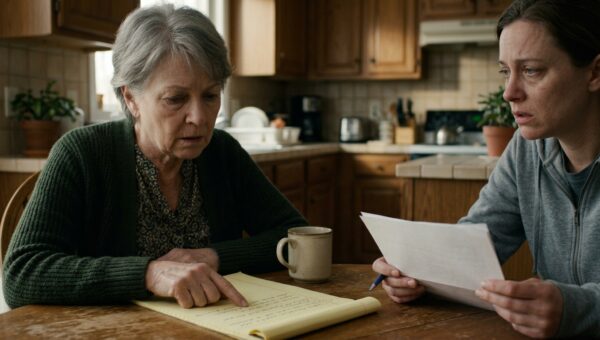
I was sitting at my mother’s kitchen table on a quiet Saturday morning, helping her sort through a thick stack of Medicare paperwork. Mom is seventy-nine, and while her mind is still sharp, her eyesight has been failing over the last couple of years. She keeps all her important records in a dented green metal filing cabinet tucked inside her hallway closet.
As I pulled out the folder labeled “Supplemental Healthcare,” a thick manila envelope slipped out from behind the back divider. It was heavy, sealed with a yellowing piece of tape. I opened it expecting to find old tax returns or property receipts from when Dad was still alive.
Instead, I found an active life insurance policy.
It was not for Mom. It was for me. I am fifty-four years old, healthy, with no chronic medical conditions, raising two teenage kids of my own. The face value of the policy was $500,000. It had been taken out seven years ago, back in 2019.
I turned the page, my hand trembling slightly. I was listed as the insured person, but I had never signed a single form for this policy. I had never taken a medical exam for it. The designated policyholder and sole beneficiary was my forty-eight-year-old brother, Kevin.
I flipped to the premium schedule at the back of the binder.
The policy cost $340 a month. According to the attached bank authorization forms, those monthly payments were not coming out of Kevin’s account. They were being automatically debited every single month from Mom’s checking account.
Over the last seven years, Kevin had paid $28,560 in premiums using our mother’s fixed retirement income.
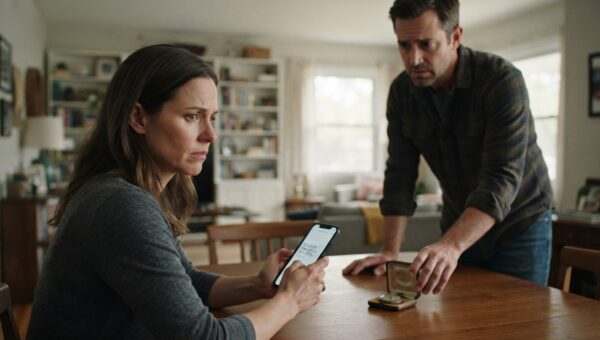
I pulled out my phone right there at the table while Mom was in the living room watching the morning news. I dialed the toll-free customer service line printed on the policy header. After verifying Mom’s address and the policy number, the representative gave me the exact same answers.
“Yes, ma’am, policy number 8804 is active and paid up to date,” the woman said. “The policyholder of record is Kevin Marsh. It was opened in April of 2019.”
My brother took out a half-million-dollar policy on my life. He used our mother’s money to pay for it.
I looked back down at the bank statements I had pulled from Mom’s drawer.
Over those same seven years, Mom’s total liquid savings had dropped from $67,000 down to just $31,000. Whenever I had asked her about the slow decline in her balance over the years, she had waved her hand and told me that her prescription copays and dental care were just getting more expensive. She had no idea she was funding a insurance policy on her own daughter.
Kevin visits Mom every single Sunday like clockwork. He brings fresh flowers, buys burgers for lunch, and sits on the carpet playing video games with my teenagers. He plays the role of the devoted son and the beloved uncle perfectly.
I sat alone at the kitchen table, staring at the physical policy in my hands, trying to understand why a brother would spend seven years maintaining a policy on a sister who wasn’t sick. Then I flipped to the very last page of the document folder and checked the fine print on an addendum stamped three months ago.
It was a policy rider. An accidental death benefit rider.
It specified that in the event of my death by accidental trauma, the coverage tripled. The total payout to Kevin Marsh would be $1.5 million.
Three months ago was the exact same week my brother invited me on a weekend hiking trip. He suggested we head out to Pinnacle Ridge, a remote state park three hours away known for its sheer cliffside trails and loose shale footings. He told me it would be a nice way for the two of us to reconnect. He set the date for next Saturday.
The date stamped on the rider activation form and the date of his text invitation were identical.
PART 2
I stared at the timestamp on the insurance rider, then opened the text thread on my phone.
On May 12, at 11:14 AM, the insurance company had processed Kevin’s electronic request to add the triple-indemnity accidental death benefit. At 11:42 AM that same morning, Kevin had sent me a text: “Hey, we haven’t done anything just the two of us in forever. Let’s do a day trip to Pinnacle Ridge next month. I found a trail along the upper bluff that has incredible views.”
The sheer coldness of it made the air leave my lungs.
I didn’t scream, and I didn’t break down. I looked out the kitchen window into Mom’s backyard, watching the wind move through the maple tree Dad had planted twenty years ago. My mind moved with a clear, deliberate focus. I put the policy back into the manila envelope, slid it into my leather purse, and walked into the living room.
“Mom,” I said, keeping my voice soft and steady. “I’m going to take a few of these Medicare forms home with me to scan them. I’ll be back tomorrow afternoon to make us dinner.”
“Okay, sweetheart,” she said, smiling up from her chair. “Tell the kids Uncle Kevin is coming over on Sunday. He said he’s bringing those specialty bacon burgers they like.”
“I’ll tell them,” I said.
I drove straight from Mom’s house to the regional branch of First National Bank where Mom had kept her accounts for forty years. I knew the branch manager, a woman named Sandra who had handled my father’s estate when he passed.
I sat in Sandra’s private office, laid out Mom’s banking statements alongside my durable power of attorney documents, and pointed to the monthly $340 withdrawal labeled “LifeGuard Direct ACH.”
“My mother is seventy-nine,” I told Sandra. “She never authorized this draft. It was established using her routing number by my brother, Kevin Marsh, for an insurance policy under his name.”
Sandra pulled up the initial setup records on her computer screen. Within five minutes, she confirmed what I already suspected. The original electronic authorization in 2019 had been executed using an IP address registered to Kevin’s home address, with a digital signature that didn’t match Mom’s handwriting in any system file.
“We can stop the ACH drafts immediately,” Sandra said, her face pale as she looked over the paper trail. “I will flag this as unauthorized third-party access, freeze the current checking account, and transfer her remaining $31,000 into a new, secured trust account that requires your physical signature for any outgoing funds.”
“Do it today,” I said.
Next, I drove to a law office downtown. I met with an attorney named Marcus Vance who specialized in elder financial abuse and insurance fraud. He looked over the policy, the rider, and the bank records.
“This is not just financial exploitation of your mother,” Marcus said, leaning across his desk. “Forging an electronic signature to establish insurable interest on a sibling without their written consent is outright insurance fraud. Adding a triple-indemnity accidental death rider right before planning an isolated outing on a cliff trail… if he tries to pursue this, he’s walking straight into a felony investigation.”
“I don’t want to wait for him to take me to a cliff,” I said. “I want this policy terminated, I want Mom’s money secured, and I want him away from my family.”
Marcus typed up a formal notification to the insurance carrier’s legal compliance division, attaching the proof of unauthorized banking, the forgery evidence, and a formal revocation of insurable interest signed by me. By Friday afternoon, the insurance company had placed a fraud hold on policy 8804, rendering it completely void and opening an internal criminal referral against Kevin.
I didn’t call Kevin all week. When he texted me on Thursday to confirm our Saturday hike at Pinnacle Ridge, I sent back a short reply: “Let me check the weather. Let’s just talk about it at Mom’s on Sunday.”
He replied immediately: “Sounds good. See you at Sunday dinner!”
PART 3
Sunday afternoon arrived bright and warm.
I arrived at Mom’s house an hour early with my two children. I had already sat down with Mom the evening before and gently explained the missing money in her savings. I didn’t tell her about the cliff trail or the accidental death rider—she was seventy-nine, and that kind of horror would have broken her heart entirely. I simply told her that Kevin had been taking money from her account to pay his own bills, and that I had secured her savings so it could never happen again.
She had cried quietly into a tissue, holding my hand, repeating, “I gave him everything he ever asked for. Why would he take it behind my back?”
At one o’clock, the front door opened. Kevin walked in carrying a paper bag from the local butcher shop and a vase of yellow roses. He was wearing his usual wide, easy smile.
“Hey everybody!” he called out, setting the flowers on the entryway table. “I got the thick-cut patties for the grill!”
My kids greeted him from the couch, but I stepped out of the kitchen and stood directly in his path in the dining room.
“Kids, take your tablets and go play in the backyard for a little bit,” I said quietly.
My daughter looked at my face, sensed the atmosphere instantly, and ushered her brother out the sliding glass door. Mom remained sitting in her armchair in the living room, quiet and still.
Kevin looked at me, his smile wavering just a fraction. “What’s going on, Audrey? You look like somebody died.”
“Sit down, Kevin,” I said.
“I need to put these burgers in the fridge first—”
“Sit down.”
He set the butcher bag on the dining table and took a seat, trying to maintain an expression of casual confusion. “Is Mom okay?”
I reached into my bag and pulled out three items. I laid them face-up on the polished mahogany table right between us.
The first was the printout of his text message inviting me to Pinnacle Ridge.
The second was the insurance policy rider showing the $1.5 million accidental death payout activated on the exact same date.
The third was the formal fraud investigation notice from the insurance company, along with the bank record showing the $28,560 he had stolen from Mom’s checking account over the last seven years.
Kevin looked down at the papers. For three seconds, his face remained completely blank. Then the color drained from his skin, leaving him gray and hollow under the dining room lights.
“What is this?” he whispered, though his eyes darted frantically across the legal letterhead.
“It’s over, Kevin,” I said. My voice was level, completely devoid of heat or tremor. “I called the carrier. I locked Mom’s accounts. I know about the $340 a month. I know about the forged signature from 2019. And I know why you wanted to take me hiking along the bluff at Pinnacle Ridge next Saturday.”
“Audrey, you’re crazy,” he stammered, his voice rising as he tried to construct a defense. “I took out that policy to protect the family! If anything happened to you, somebody had to take care of your kids! I used Mom’s account by mistake—I thought it was linked to my online banking—”
“You added a $1.5 million accidental death rider three months ago,” I said, leaning closer so only he could hear the hard truth in my words. “On the exact same morning you texted me about the cliff trail. You didn’t want to help my kids, Kevin. You were broke, you drained Mom’s savings, and you were going to push your own sister off a cliff for an insurance payout.”
From the living room, Mom spoke up. Her voice was small, but it carried across the quiet house. “You stole from me, Kevin. Your own mother.”
Kevin turned toward her, his hands trembling. “Mom, no, it wasn’t like that—”
“Don’t speak to her,” I interrupted, standing up from the table. “The insurance policy is voided. The carrier’s fraud unit is opening a file on the forgery. The bank has already flagged the unauthorized ACH transfers. If you ever set foot on this property again, or if you ever try to contact me or my children, I will take every single piece of this evidence directly to the county prosecutor.”
ENDING
Kevin sat in that dining room chair for another full minute, staring at the papers on the table. The charming, attentive son he had played for seven years was completely gone. In his place was a desperate, ruined man who had run out of lies.
He didn’t grab the burgers. He didn’t pick up the roses. He stood up, pulled his keys from his pocket, and walked out the front door without saying another word. The heavy oak door shut behind him with a firm, final thud.
I walked to the door, turned the brass deadbolt into place, and stood there for a long moment listening to his car engine start up in the driveway and pull away down the street.
I went back to the dining table, gathered the insurance papers, and tore them cleanly down the middle. I walked into the kitchen and tossed the shredded pieces into the wastebasket under the sink.
Then I went into the living room and sat down on the sofa next to my mother. She reached over, her hand fragile and spotted with age, and took mine. I squeezed it tight.
“Is he gone?” she asked softly.
“He’s gone, Mom,” I said. “He’s never coming back here.”
My kids came back inside a few minutes later through the patio door, talking quietly among themselves. I didn’t tell them what their uncle had attempted. They were too young to bear that kind of darkness. I simply told them that Uncle Kevin had to leave for work, and that we were going to order pizza for dinner instead.
Today, Mom’s remaining $31,000 is safe in a trust that only I manage. Her Medicare paperwork is completely organized, and her monthly expenses are balanced and secure.
Next Saturday came and went. I didn’t go to Pinnacle Ridge. Instead, I stayed home, planted fresh geraniums in Mom’s front porch boxes, and watched my kids play soccer in the backyard.
Sometimes, late at night, I still think about that cliffside trail and how close I came to walking up those rocks with a brother I thought I knew. But when the sun comes up, I sit at Mom’s kitchen table in the quiet morning light, drink my coffee, and know that my mother is safe, my children are protected, and the door to our home is locked tight against the dark.