The heavy brass key still turned twice in the deadbolt of my rental car door when my phone lit up the dark glove box with three missed calls from Chloe.
I didn’t answer right away. I sat there in the damp chill of the gravel lot behind the restaurant, listening to the cooling tick of the engine block and tasting the leftover salt of the vintage Bordeaux Julian had bragged about all evening.
Three hours earlier, I had walked into Le Petit Chêne wearing my civilian blazer and my quietest face.
Chloe was glowing beside him, her left hand raised just enough so the three-carat cushion-cut diamond caught every overhead chandelier bulb in the room.
Julian Vance had scheduled the dinner to celebrate the merger of our families, or so he told Chloe over the phone last Tuesday while I was helping her pack her books out of the old farmhouse.
Madame Laurent, his mother, had looked me up and down before we even sat down, her silk scarf smelling faintly of dry cleaning and expensive fern.
She turned to Julian’s father, Claude, and muttered in rapid Parisian French that my posture looked like a sack of wet feed and that Chloe clearly inherited the dull side of the county gene pool.
I kept my eyes fixed on my bread plate, running my thumb along the smooth silver rim of the butter knife.
They thought the uniform I wore for twelve years was just a domestic desk job in Fort Benning, something involving supply depots and grease-stained manifests.
They didn’t read the service record buried in the Department of Defense archives that showed four years of liaison work attached to the 13th Dragoon Parachute Regiment in the hills outside Djibouti and the messy border zones of Eastern Europe.
Claude poured another round of the seventy-dollar Pinot and laughed behind his napkin, telling the table in clipped, arrogant syllables that American veterans were like old hunting dogs, good for keeping pests away until you finally had to put them out in the yard.
Julian smiled that smooth, Harvard-trained smile of his, reaching across the white tablecloth to pat Chloe’s hand like she was a golden retriever that had just fetched a stick.
“Don’t worry about my sister-in-law-to-be,” Julian murmured softly to his mother, switching back to French while Chloe was distracted by the dessert menu. “That soldier sister is too pathetic and predictable. She’ll sign anything to make her sister happy.”
Madame Laurent chuckled, a dry, papery sound that scraped against my ribs like dry corn husks.
“Just make sure she signs the second page before the surveyor files the deed on Monday,” Claude added, swirling his glass until the dark wine climbed the crystal walls. “Once that acreage is bundled into the holding company, the girls won’t even have a barn to stable their horses in.”
I looked up then, meeting Julian’s eyes across the candlelight.
I let my face go slack, the picture of bovine compliance, the dutiful older sister who had spent five years fixing plumbing leaks and paying property taxes on the old family homestead while Chloe was away at college.
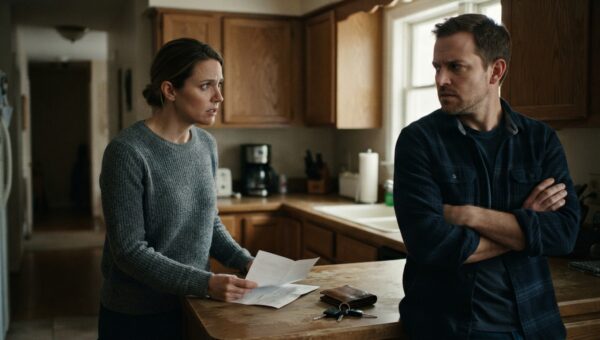
“Here,” Julian had said, sliding a thick blue leather folder across the damask cloth right between the coffee cups. “Just sign where I marked the sticky tabs, Darlene.
It’s just routine probate housekeeping so Chloe’s name is clean on the title before the wedding invitations go out.”
I didn’t touch the pen. I just picked up the folder, slid it into my canvas tote bag, and thanked him with a small, grateful nod that made his mother wrinkle her nose in quiet disgust.
Now, sitting in the dark car with the engine off, I pulled the document out under the amber glow of the dome light.
The first three pages looked like standard quitclaim boilerplate, the kind of legal paper you buy at a stationery store and fill out with a ballpoint pen.
The fourth page, buried beneath a dense wall of municipal easement definitions, was where Julian had hidden the real work.
It wasn’t a family trust. It was an outright assignment of interest to a Delaware shell corporation called VaneCorp Holdings, signed over for the grand sum of ten dollars and other valuable consideration.
The acreage our grandfather cleared with a crosscut saw in nineteen-fifty-six was being signed away to bail out Julian’s failing commercial real estate firm in downtown Atlanta.
I reached for my phone and dialed an old number with a DC area code.
“McTeer,” the voice answered on the second ring, gravelly and alert despite the hour being well past midnight.
“Marcus,” I said, leaning my forehead against the cool vinyl of the steering wheel. “I need a corporate audit and an emergency injunction filed in the Third Judicial District before the courthouse opens at eight.”
“Darlene?” Marcus let out a slow exhale through his teeth. “You sound like you’re standing on an objective. What’s the target?”
“A boy named Julian Vance and a paper mill called VaneCorp,” I told him, flipping to the signature page where my sister’s name had already been forged in a careful imitation of her looping handwriting. “They tried to clear-cut my family’s heritage with a ten-dollar bill and some high-school French.”
By 4:00 AM, the kitchen table in my rental house looked like an intelligence briefing room.
Marcus had stayed on a secure line for two hours, routing through state corporate registries, bank wire logs, and three separate bankruptcy filings involving Claude Vance’s previous development ventures in Savannah.
The picture wasn’t just dirty; it was illegal down to the foundation.
Julian’s firm was seventy-four thousand dollars behind on its quarterly debt service, and our twenty-acre timber tract was the collateral he promised his primary lender to keep the receivership wolves off his front porch.
Chloe was still asleep three miles away in her apartment, dreaming about wedding registries and flower arrangements, entirely unaware that the man she had promised her life to had already sold her childhood bedroom to pay off his commercial credit lines.
I printed out the certified state filings, the bank default notices, and the forensic handwriting comparison showing where Julian’s paralegal had traced Chloe’s signature from a birthday card we left at their office last Thanksgiving.
I slid every page into a heavy manila envelope with a red wax pencil mark across the flap.
Then I checked the magazine on my sidearm, locked it in the trunk, and got back behind the wheel as the first gray streak of dawn began to bleed over the steeple of the Baptist church down on Main Street.
The sun was just clearing the diner’s neon sign when I walked back into Le Petit Chêne.
The restaurant was closed, but the cleanup crew was propping open the side doors for the morning delivery truck, and Julian’s family had reserved the private terrace for a post-engagement breakfast meeting with their accountant.
They looked fresh in their linen suits and cashmere sweaters, sitting around the same white-clothed table where they had laughed at me twelve hours before.
Julian was buttering a croissant, talking quietly to an older man with graying temples who looked like a municipal tax assessor.
I didn’t wait to be invited. I pulled out the chair directly across from Julian, dropped the heavy manila envelope onto the table with a dull, heavy thud that made the coffee cups rattle, and leaned my forearms on the wood.
Julian looked up, his smile freezing halfway across his face like grease hardening in a cold pan.
“Darlene,” he said, his voice dropping an octave as he tried to reclaim his professional composure. “This is a private family breakfast. We can discuss the paperwork at the office later this morning.”
“You skipped a spot on page four, Julian,” I said, my voice flat and even, pitched at the exact volume I used when giving movement orders in a wet ravine outside Banja Luka.
Madame Laurent stiffened, her silver fork hovering two inches above her plate.
“Pardon?” she muttered in English, her eyes darting toward the tax assessor.
I leaned forward, switching cleanly into the same crisp, rapid-fire Parisian French she had used to insult my posture and my medals the night before.
“I said your son is a clumsy thief, Madame,” I told her, keeping my eyes locked on hers until she blinked. “He forgot to change the registration number on the Delaware shell company before he forged my sister’s signature. That’s a class-four felony in this state, carrying up to ten years in a federal penitentiary.”
Julian’s face went from ruddy to the color of skim milk in less than two seconds.
“You don’t know what you’re talking about,” he stammered, standing up so fast his chair legs screeched against the terracotta floor. “That’s a standard family asset consolidation. Chloe agreed to every word of it.”
“Sit down, Julian,” I said, and the tone of it made the tax assessor drop his pen onto the saucer.
I popped the brass clasp on the envelope and let the certified state audit slide out across the linen, right on top of his half-eaten croissant.
“You called me a pathetic grunt who would sign anything to make her sister happy,” I continued in English, letting every syllable drop like lead shot into the silence of the terrace. “You forgot that before I spent five years paying off my parents’ mortgage, I spent four years leading NATO intelligence detachments where the local dialect was a lot harder to decode than a spoiled real estate developer from Buckhead.”
The tax assessor pulled the top financial disclosure toward himself, adjusted his reading glasses, and took a long, slow whistle through his teeth.
“Mr. Vance,” the assessor murmured, not looking up from the default notice. “If this auditor’s seal is genuine, your operating accounts have been under a federal lien since last November. You didn’t just try to acquire this property; you tried to commit bank fraud using encumbered land as collateral.”
Julian reached out a shaking hand toward the papers, but I laid my palm flat over the corner of the state seal.
“The engagement is canceled, Julian,” I said, my voice dropping back down to a normal conversational hum. “If you ever speak to my sister again, or come within fifty miles of her timberland, I won’t bother calling Marcus or the state police. I’ll just release the audio recording of your mother’s dinner table commentary to every major newspaper between here and Atlanta.”
Madame Laurent stood up, her face tight with rage and humiliation, her hands trembling as she gathered her leather handbag.
“This is barbaric,” she hissed in French, her voice cracking at the edges. “You are nothing more than a common soldier.”
“That’s right, Madame,” I said, standing up and pulling my jacket closed over my belt. “And we are very, very good at holding ground.”
I didn’t look back as I walked out through the double glass doors into the bright morning air.
Chloe was waiting for me by the curb in her sedan, her phone in her hand, her eyes red and swollen with the kind of hard, sudden clarity that only comes when the fog finally burns off the valley for good.
She didn’t ask what happened inside. She just reached across the console and opened the passenger door, her knuckles white against the gray vinyl handle.
As I climbed in and pulled the door shut, I looked back once through the rear window at the restaurant terrace.
Julian was still standing by the table, staring down at the torn fragments of his fraudulent trust agreement fluttering slowly into the morning breeze while the tax assessor packed his leather briefcase and walked away toward his car.