The wool blanket on our living room couch had worn through at the corner, exposing three inches of gray foam that poked out like a tired tongue. We had been meaning to replace it for two years, ever since the transmission in the station wagon went out and swallowed our savings whole.
When Clara found the estate sale listing tacked to the bulletin board outside the hardware store on Saturday morning, she pointed a fingernail right at the address on Elm Street.
The house belonged to an old woman named Clara too, though nobody called her that anymore; the neighbors just referred to her as the recluse on the hill who kept her curtains drawn against the Hudson River glare.
We drove over in our neighbor’s borrowed truck with seventy-five dollars wrapped in a rubber band inside my front pocket. The house smelled of damp cedar and peppermint tea that had been left to steep for a week. The couch was sitting on the front porch under a yellowed canvas drop cloth, smelling faintly of mothballs and old dust. It was heavy, upholstered in a faded green damask that looked like it had survived three decades of church socials without taking a single stain.
Getting it up our front steps took forty minutes of grunting and hauling while Clara held the screen door open with her shoulder. We shoved our old sofa out to the back alley for the garbage truck, leaving a bare square of carpet where it used to sit.
The discovery happened right before dinner while I was trying to wedge a lost TV remote down the side of the left cushion. My fingers hit something stiff and rectangular instead of the usual pennies and lint balls.
Clara came over with a spatula still in her hand, her flour-dusted apron tied in a double knot behind her back. I pulled out a heavy manila envelope sealed with red wax that had cracked down the middle from age.
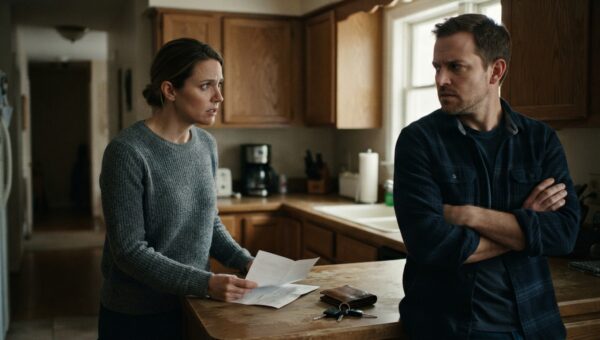
“What is that?” she asked, her voice dropping into that quiet register she used whenever the kids were asleep and the bills were due.
I peeled back the brittle paper right there on the kitchen floor under the flickering fluorescent light, and five hundred crisp twenty-dollar bills spilled out in neat, banded stacks across our scuffed linoleum. Ten thousand dollars. Exactly ten thousand dollars, counted and paper-clipped by some bank teller back in nineteen ninety-eight.
We sat there in the silence for a long time while the refrigerator hummed its steady, low note in the corner. My chest felt tight, the way it did when I looked at our stack of past-due notices from the water company. We needed that money so badly our teeth ached. The car needed new brake pads, Clara needed a root canal, and our youngest daughter Maya needed twenty dollars for her science lab fee by Monday morning.
Then Clara reached out and touched the edge of the top stack with her thumb.
“We have to find the owner,” she said.
“Clare, look around this kitchen,” I said, my voice rising a little before I caught myself. “Nobody knows this is here. The estate sale company already cleared the house. They sold us the couch as-is.”
“We didn’t buy the money, Gerald,” she said, looking right at me with those steady, tired eyes that had seen me through two layoffs and a basement flood. “We bought the couch. There’s a difference.”
She wouldn’t budge, and deep down I knew she was right, which made me madder than if she had been wrong. I spent twenty minutes digging through the back of my desk drawer until I found the crumpled receipt from the estate sale with the liquidator’s phone number scribbled in blue ballpoint pen.
The man who answered sounded like he was standing in the middle of a busy hardware store with saws buzzing in the background. He looked up the address in his ledger and gave me a direct number for the deceased woman’s daughter, a woman named Beverly who had handled the entire liquidation from three towns over.
I dialed the number on our landline because the cell service in our kitchen always dropped out near the stove. Beverly answered on the second ring, her breath coming short and fast like she had been running up a flight of stairs.
“Hello?” she said.
“Is this Beverly?” I asked. “My name is Gerald Vance. My wife and I bought your mother’s green damask sofa this morning.”
There was a long pause on the other end, just the sound of distant traffic and someone coughing. “If you’re calling about the delivery, the movers aren’t my problem anymore. The house is cleared.”
“No, it’s not about the delivery,” I said, wiping my palm against my jeans. “When we got the couch home, we found something inside it. An envelope.”
“What kind of envelope?” she asked, her voice sharpening instantly, the tiredness vanishing from her tone.
“A manila one. With cash in it.”
The line went completely dead for five seconds. When she spoke again, she was crying, but it wasn’t a gentle sort of grief. It sounded ragged and desperate. “That was my mother’s. She hid cash everywhere in that house. We looked in the walls, we looked under the floorboards, we turned every mattress upside down, but we couldn’t find her stash before the bank foreclosed.”
“I’ll bring it back to you tonight,” I said, looking over at Clara, who gave me a small, firm nod of approval. “Just tell me where to meet you.”
“Wait,” Beverly said, her voice dropping to a harsh, suspicious whisper. “How much did you find?”
“Ten thousand dollars,” I said honestly.
The silence on the line changed then. It grew heavy, cold, and suspicious. Beverly didn’t say thank you. She didn’t let out a sigh of relief.
“That’s not right,” she muttered, and I could hear the papers rustling on her end as she shuffled through something on her desk. “It should be one hundred thousand. My mother sold her timber rights before she died. Keep looking.”
“Look, lady, there was ten thousand in the envelope,” I started to say, but she cut me off.
“Keep looking inside that couch,” she snapped, and the line went dead with a sharp click in my ear.
I stood there holding the receiver for a second until the dial tone started its steady, annoying drone. Clara was watching me from the kitchen table, her hands folded over her apron.
“What did she say?” Clara asked.
“She said ten thousand isn’t enough,” I said, running a hand through my hair. “She claims there’s ninety thousand more floating around somewhere. And she told me to tear the couch apart.”
Clara stood up, walked over to the utility drawer by the pantry, and pulled out our heavy-duty utility knife with the yellow plastic handle. She didn’t say a word. She just walked back into the living room, knelt down beside the seventy-five-dollar estate sale sofa, and sliced the blade right through the burlap dust cover on the bottom.
The air in the room filled with the smell of fifty-year-old horsehair stuffing and dry cotton batting. I dropped to my knees beside her, taking the knife from her hand because my fingers were bigger and steadier for the heavy work.
We didn’t find stacks of twenty-dollar bills this time. We didn’t find gold coins or jewelry either.
As I slit the heavy ticking along the underside of the wooden frame, the blade caught on something thick and leathery wedged deep inside the interior spring coils. I reached my arm in past the sharp ends of the wire, my knuckles scraping against the old pine slats until my fingers hooked onto a heavy, oilskin pouch tied shut with greasy twine.
Clara held the flashlight from our emergency kit while I cut the twine with the tip of the utility blade. I pulled out a thick stack of folded ledger paper covered in neat, cramped cursive, along with a bundle of bank transfer receipts dated over the final two years of the old woman’s life.
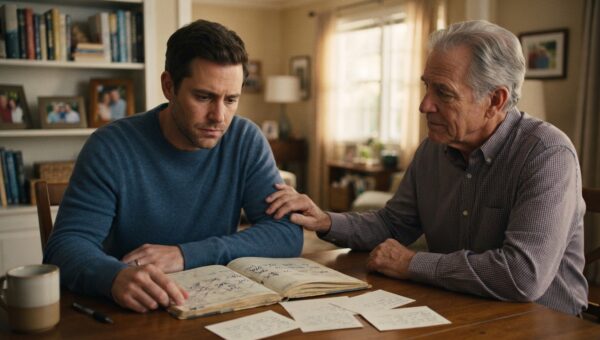
I unfolded the top sheet under the kitchen light while Clara stood close beside me, her shoulder pressing into mine. The ink was faded purple, written in the meticulous hand of someone who didn’t trust banks but trusted a fountain pen even less.
“Read it,” Clara whispered.
I cleared my throat and started reading the names and numbers written down row by row. There were no hidden bundles of cash mentioned here. Instead, there was a detailed, agonizing account of where every last dollar had gone.
The old woman hadn’t lost her mind the way Beverly claimed, or at least not in the way people thought. She had systematically liquidated her accounts, sending fifty thousand to a migratory bird sanctuary upstate, twenty thousand to the Catholic diocese retirement fund, and another twenty thousand directly to the home health aide who had stayed with her through the winter when her own daughters wouldn’t return her phone calls.
The final entry, dated three weeks before she passed away in her sleep, explained the ten thousand we found in the manila envelope. *For the ones who buy the green sofa,* she had written in the bottom margin of the final page. *If they look, they get it back. If they don’t, let the church have it.*
We sat at the kitchen table until midnight, the ledger spread out between our two coffee mugs. The house was quiet except for the furnace kicking on with a low metallic rattle that shook the floor vents.
“Well,” Clara said softly, wrapping both hands around her mug. “We have our answer.”
“We do,” I said.
The next afternoon, we drove down to the address Beverly had given me on the phone, a small brick ranch house with a neatly mowed lawn and a silver minivan parked in the driveway. Clara carried the manila envelope with the ten thousand dollars in her canvas tote bag, and I carried the oilskin pouch containing the ledger and the transfer slips.
Beverly opened the front door before I even had a chance to press the brass doorbell button. She looked tired, her hair pulled back into a messy clip, wearing a gray sweatshirt that had bleach stains near the hem.
“You found it?” she asked, her eyes darting past my shoulder toward the empty driveway. “Where is the rest of it?”
I didn’t say a word. I just reached into my jacket, pulled out the oilskin pouch, and handed it to her along with the manila envelope.
“There isn’t any more, Beverly,” I said, my voice steady in the afternoon light. “Your mother spent it. Or rather, she gave it away. It’s all in here. Every last cent.”
She took the pouch from my hand like it was something dirty, her fingers trembling as she pulled out the folded ledger pages. She dropped the manila envelope right on the porch mat without even looking inside it.
“This is garbage,” she whispered, her voice cracking as she scanned her mother’s precise handwriting across the top line. “She didn’t have the right to do this. We have debts. We have lawyer fees from the probate court.”
“She had every right,” Clara said, stepping up beside me on the porch. “She wrote down the names of everyone she gave it to. Even the girl who helped her take her medicine when you were too busy to drive out.”
Beverly looked up from the paper, her face twisting with a sudden, sharp fury, but the anger didn’t last. As her eyes tracked down the page to the final note about the green sofa, her shoulders slumped all at once. The fight went out of her in a single long exhale that smelled of stale coffee.
“She hated us,” Beverly murmured, staring down at the porch boards between her sneakers. “She really hated us.”
“No,” I said quietly, thinking of the way the old woman had tucked that ten thousand dollars away for someone who bothered to look beneath the cushions. “I don’t think she hated you at all. I think she just wanted things to be fair.”
We left her standing there on the front step with the ledger in her hand and the envelope of cash lying forgotten on the welcome mat. We didn’t take a single dollar for our trouble, and on the drive back home our car groaned every time I hit a pothole on Elm Street.
When we pulled into our driveway, our old station wagon looked smaller than ever against the curb. But when we walked inside, the hallway smelled of fresh coffee instead of old dust, and the front room felt a little lighter without the weight of that secret sitting between us.
The empty, torn-open seventy-five-dollar couch was still sitting out on our front porch waiting for the municipal truck to haul it away to the dump. Inside, the kitchen table was clean, cleared of cash and ledgers, holding only two chipped ceramic mugs and our hands locked together across the laminate top.