The heavy brass key still turned twice in the deadbolt of my pickup truck door when my phone lit up the dark glove box with three missed calls from Attorney Vance. It was 3:42 on a Tuesday afternoon in late October, right around the time the wind off the river starts biting through a flannel shirt. I sat there in the gravel lot behind the feed store, wiping red clay off my palms with a greasy rag, wondering what municipal violation Arthur Sloan had managed to file against me this time.
For nineteen years, that man had been the thorn embedded deep in the heel of my daily existence. He lived four hundred yards up the gravel lane from my place, a cantankerous recluse who spent his mornings shouting about property boundaries and his afternoons nursing a permanent grudge against the township.
I didn’t answer his calls right away. I let the phone buzz itself silent, started the engine, and drove home to wash the grease off my arms before heading into town. Attorney Vance’s office always smelled of old wool carpets and stale peppermint, a combination that made my stomach turn even when I wasn’t in trouble. When I finally walked through his frosted glass door at five past five, Vance didn’t offer me a handshake. He just pointed a dry, liver-spotted finger at the red leather armchair across from his desk and told me to sit down. I dropped my cap on my knee and waited for the axe to fall.
I figured Arthur had left behind some final, petty injunction about my drainage ditch or the oak tree hanging over his fence line.
“Arthur Sloan passed away peacefully in his sleep last Thursday night,” Vance said, his voice flat and dry as autumn leaves. “We buried him Saturday morning in the lower plot. You didn’t send flowers, Miller, which doesn’t surprise me given your history.”
“I was busy fixing a blown tractor gasket,” I said, leaning back against the worn springs of the chair. “And frankly, Vance, flowers would have felt like lying. We didn’t like each other. Everyone in this county knows it.”
Vance didn’t crack a smile. Instead, he reached into his leather briefcase, pulled out a thick manila folder tied with a faded green ribbon, and slid it across the polished mahogany surface. The leather tag on the string had my name written in Arthur’s sharp, jagged cursive.
I stared at the ink for a second, feeling the hairs on the back of my neck stand up. Arthur never wrote my name unless he was serving me a warning from the zoning board.
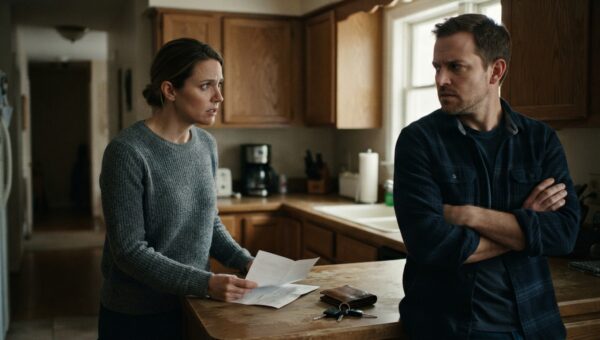
“My old neighbor died, and the lawyer asked me to come for the will reading,” I muttered, mostly to myself. “It was really weird, we had a terrible relationship, and he made my life miserable.”
Vance opened the top page with a slow, deliberate scrape of paper. He adjusted his wire-rimmed glasses down his nose and looked at me over the top of the frames. He didn’t rush. He let the silence stretch out until the ticking of the wall clock sounded like a bass drum in my ears.
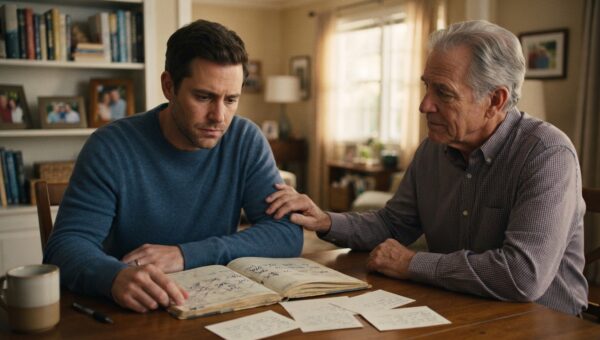
“Arthur was a complicated man,” Vance said softly. “He left instructions that this document be read to you in person, with no other beneficiaries present, because there aren’t any. He didn’t have family left. He didn’t have friends.”
“Then why am I sitting here?” I asked, my chest tightening. “Just tell me what he’s suing my estate for now that he’s gone.”
Vance leaned forward, resting his forearms on the desk, and read the clause straight from the vellum paper without blinking.
“Miller, you’ll inherit EVERYTHING Mr. Sloan ever had. His house, four hundred thousand dollars in municipal bonds, and his entire property now belong to you.”
The room tilted. My hands went cold against the wool of my cap. I gripped the brim so hard my knuckles turned white, my brain completely stalling out as the numbers echoed in the empty office.
“Gosh, I was shocked,” I whispered, the words tumbling out before I could catch them. “What?! Are you sure?!”
Vance didn’t flinch. He just folded the paper back down along the crease and looked right through me.
“Yes, but hear me out. You’ll get it only on one condition, if you…”
“Stop,” I said, holding up a hand. “Just stop right there, Vance. This is a joke. Arthur’s been dead six days and he’s still finding ways to twist the knife. Four hundred thousand dollars? That man wouldn’t lend me a cup of sugar during the blizzard of ninety-six.”
“It is no joke,” Vance said, his voice dropping into a register that brook no argument. “The assets are real, the deed is drawn, and the accounts are fully settled. But Arthur attached a restrictive covenant to the transfer. A strict condition. If you refuse it, the entire estate reverts to the county historical fund, and you get exactly what you earned from him over the last two decades. Nothing.”
I stood up so fast the leather chair scraped hard against the linoleum floor. My breath came short and shallow, the blood ringing in my ears like a distant train. I didn’t want his money. I certainly didn’t want his sprawling, rotting Victorian house sitting up on the hill like a haunted monument to our endless feuds.
“I’m not playing his games from beyond the grave,” I shouted, my voice bouncing off the paneled walls. “He spent twenty years calling the sheriff because my hound wandered onto his gravel. He spray-painted a red line down the middle of the access road. He poisoned my well water with lime runoff back in ninety-eight just to prove a point about property lines!”
“And you rebuilt your fence six times, refused to move your cattle, and told him to his face that his grandfather was a horse thief,” Vance replied calmly, stacking his papers together with a sharp snap. “Arthur respected that you never once backed down, Miller. You were the only person in this valley who didn’t tip their hat and walk away when he started shouting. Think about it overnight. The terms are written in the back of the ledger.”
I didn’t take the folder. I turned my back on Vance’s desk, slammed the frosted door behind me, and drove straight down to the diner on Route 4. The red vinyl booth at the back had a small split in the corner near the wall, leaking a little bit of yellow foam, exactly where I always sat when I needed to cool my head.
Delores brought me a cup of black coffee without asking, sliding the thick ceramic mug across the laminate table. She leaned her hip against the partition and looked down at my face.
“You look like you just saw a ghost, Miller. Or worse, like Arthur Sloan rose up out of the lower forty.”
“He might as well have,” I muttered, wrapping both hands around the hot ceramic. “The old bastard left me his house and four hundred grand.”
Delores let out a sharp, barking laugh that made the silverware rattle two tables over. “Arthur Sloan? Left you his money? Did you hit your head on your tractor lift again?”
“I’m serious,” I said, staring into the dark coffee. “House, cash, land. Everything. But there’s a catch. Some kind of condition attached to the will. Vance wouldn’t even let me hear the whole thing before I walked out.”
“Well, you’d be a fool not to listen,” she said, tapping her pencil against my coffee saucer. “Four hundred thousand dollars fixes a lot of bad memories, Miller. You could retire that old combine. You could pave your lane. You could finally fix the roof on the barn.”
“At what price?” I asked, looking up at her. “Arthur didn’t give away a nickel without expecting a pound of flesh in return. Everything he did was calculated.”
I sat there in the diner until the neon sign outside flickered on against the gathering dusk, turning the wet pavement outside a bruised shade of pink. By the time I drove back up the gravel lane to my small, drafty farmhouse, the wind had picked up, howling through the pines that separated my property from Sloan’s abandoned estate. The dark silhouette of his house sat up on the ridge, its broken weather vane squeaking in the dark like a trapped bird.
I didn’t sleep that night. I kept turning the whole thing over in my head, pacing across my creaking kitchen floorboards from midnight until the first gray light broke over the tree line. At 6:15 in the morning, I pulled my old work jacket back on, grabbed my heavy flashlight, and walked the fence line up to Sloan’s property. The iron gate was rusted shut, just like it had been for twenty years, but the padlock hung open on a rusted chain. Arthur hadn’t locked it. It was an invitation, plain and simple, left out in the open for the one person stubborn enough to walk through it.
I pushed the heavy iron gate open. It groaned on its hinges, the sound echoing across the overgrown pasture. The grass was waist-high, choked with briars and wild sumac, but the old stone pathway leading up to the wraparound porch was clear of debris. I walked up the steps, the wood solid beneath my boots, and tried the front door. It unlocked with a heavy, oiled click.
The inside of the house didn’t smell like mold or abandonment. It smelled of lemon oil, old paper, and pipe tobacco. It smelled like Arthur.
The front parlor was lined wall to wall with heavy oak bookshelves, and right in the center of the room sat a massive mahogany executive desk with a single green leather blotter. Resting squarely on top of the blotter was a thick, leather-bound ledger and a brass key. I walked across the Persian rug, my boots leaving tracks in the fine layer of dust that coated the floor. I didn’t touch the money yet. I picked up the ledger and flipped it open to the final, handwritten page dated three days before he died.
Arthur’s jagged handwriting filled the page from top to bottom. I stood under the flickering light of the hallway lamp and read every word.
“If you are reading this, Miller, it means Vance did his job and you didn’t run away like a coward,” the page began. “You always thought I hated you. Everyone in this town thought I was just a bitter old man holding a grudge. But truth is, you were the only man in this county with a spine. When the river flooded in eighty-four and everyone else abandoned the lower basin, you stayed and pulled my livestock out of the mud while cursing my name. I spent twenty years testing you. I pushed you because I needed to know if your character was as solid as your timber. I have no family left to leave my mistakes to. The house and the money are yours, but the condition is simple: you must restore the old community gristmill down by the creek, the one my grandfather let rot after the depression, and deed the land back to the township in my family name. Do that, and the rest is yours free and clear. Don’t, and you leave empty-handed.”
I stared at the paper for a long time, the silence of the big empty house pressing in from all sides. The terrible relationship, the petty disputes, the constant screaming matches across the fence line, it hadn’t been malice at all. It had been a twenty-year stress test administered by a lonely, proud old man who didn’t know how to ask for a friend.
Later that morning, I walked back down to Vance’s office before he even unlocked the front door, waiting on the wooden bench until he pulled up in his sedan.
“Well?” Vance asked, unlocking the frosted glass door and holding it open for me. “Did you read the rest of the terms?”
I stepped inside, dropped the leather-bound ledger right onto the center of his desk, and looked him straight in the eye.
“Tell me where we sign the papers for the gristmill restoration,” I said, my voice steady. “And get the title transfer ready for the house. We’ve got a lot of brush to clear off that creek bank before winter sets in.”
Vance smiled just a little bit, pulling a thick stack of documents from his bottom drawer with a dry rustle of paper. “I figured you would say that, Miller. Arthur always bet on your stubbornness.”
Three weeks later, the diesel engine of my tractor roared to life down by the old creek bed, cutting through the damp morning air as the grader blade scraped away decades of dead willow branches and silt. The townspeople drove by slow, slowing down their sedans and pickup trucks to stare at the commotion, shaking their heads at the sight of me hauling timber out of Arthur Sloan’s neglected mill site. They didn’t understand why I was out there busting my knuckles from dawn until dusk on a piece of property that used to belong to our worst enemy. Let them talk. They didn’t know about the ledger, and they didn’t know about the quiet respect forged in the mud and the shouting matches over boundary lines.
By the time the first hard freeze locked the soil in December, the gristmill roof was patched, the massive water wheel had been bolted back into its iron housing, and the legal transfer of the parkland back to the township was signed, sealed, and filed in Vance’s office. The four hundred thousand dollars sat untouched in a bank account in my name, a heavy financial cushion that I hadn’t yet touched, because the money had never been the point of the exercise anyway.
The work was what mattered. The hard, grinding physical labor of setting things right in a valley that had stayed broken for too long.
On a clear Sunday evening just before the new year, I walked back up the hill to Arthur’s old house. The sun was dipping low behind the ridge, painting the bare winter branches in shades of deep amber and cold slate. I didn’t go inside. I pulled a wooden rocking chair out onto the front porch, sat down facing the valley, and pulled my wool cap down against the rising chill.
The brass front-door key sat heavy in my palm, cool against my calloused skin. I tossed it up once in the air, caught it cleanly in my fist, and listened to the absolute quiet of the land stretching out all around me. The house finally belonged to me. Not because I fought for it, but because I was the only one stubborn enough to finish what my worst enemy started.